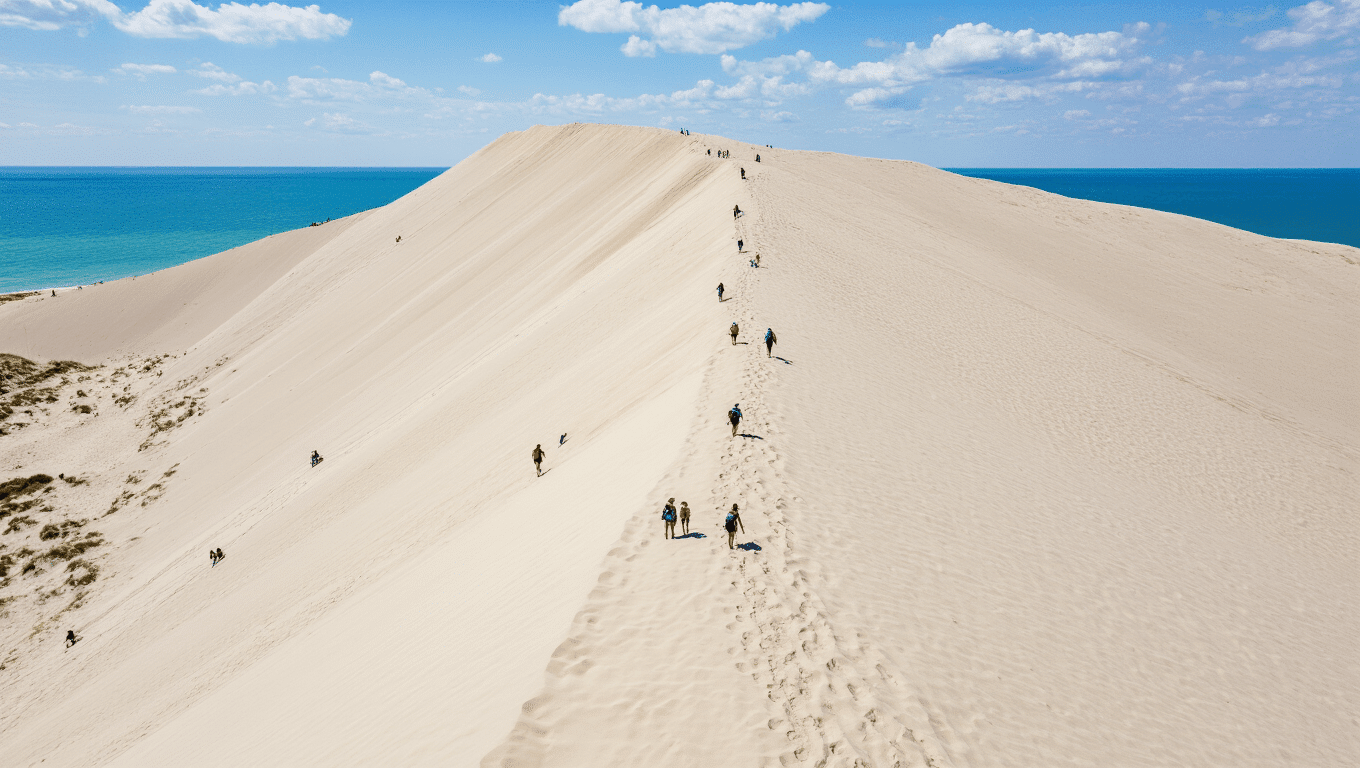
Climbing the dunes at Sleeping Bear Dunes National Lakeshore isn’t just another hiking trail.
Picture this: over a million people annually drag themselves up 284 feet of pure white sand, sweating buckets and questioning their life choices, all for a view that could make grown adults weep with joy.
I’ve been there. Done that. Got the sand burns to prove it.
Why Sleeping Bear Dunes Makes People Go Absolutely Mental
Located along the northeast shore of Lake Michigan in northwestern Lower Michigan, near Empire and Glen Arbor, Sleeping Bear Dunes National Lakeshore isn’t your typical national park experience.
These aren’t ordinary sand dunes. They’re perched sand dunes sitting atop glacial bluffs and plateaus like nature’s own skyscrapers.
The Dune Climb has earned its stripes as the National Park Service’s “most famous attraction” at the lakeshore. When more than a million visitors annually flock to a single spot, you know something special is happening.
But here’s what most people don’t realise: there are actually three completely different dune climbing experiences at Sleeping Bear, each designed to test different levels of human endurance and sanity.
The Three Faces of Dune Climbing Madness
The Official Dune Climb near Glen Lake offers family-friendly torture that’s strenuous enough to make you question your fitness level but safe enough for supervised children.
The Dunes Trail from the Dune Climb to Lake Michigan presents a 3.5-mile round trip through deep sand that the National Park Service diplomatically calls “the most strenuous hike” in the entire lakeshore.
The 450-foot Lake Michigan bluff descent near Pierce Stocking Scenic Drive is where good judgement goes to die. This extremely steep, high-risk climb regularly requires expensive rescues and has probably generated more rescue helicopter bills than any other tourist attraction in Michigan.
Who Actually Does This to Themselves?
Families with children seeking safe dune play on soft sand make up the largest group. They stick to the lower slopes where kids can tumble safely and parents can maintain their sanity.
Fitness enthusiasts and hikers looking for a proper sand workout that’ll leave their calves screaming for mercy tackle the full trail to Lake Michigan.
Adrenaline junkies drawn to that notorious 450-foot bluff climb often discover that what goes down must come up – and the coming up part can literally require professional rescue services.
Photographers and sightseers chase those panoramic views of Glen Lake, Lake Michigan, and dune landscapes that look absolutely stunning on Instagram but require genuine physical effort to capture.
The Main Dune Climb: Your Gateway Drug to Sand Addiction
Want to know exactly where to find this white sand wall of pain and pleasure? Head about 5 miles north of Empire on M-109, and you literally cannot miss it on the west side of the road. The address everyone uses is 6748 S Dune Highway, Glen Arbor, MI 49636.
What Makes This Dune So Bloody Special?
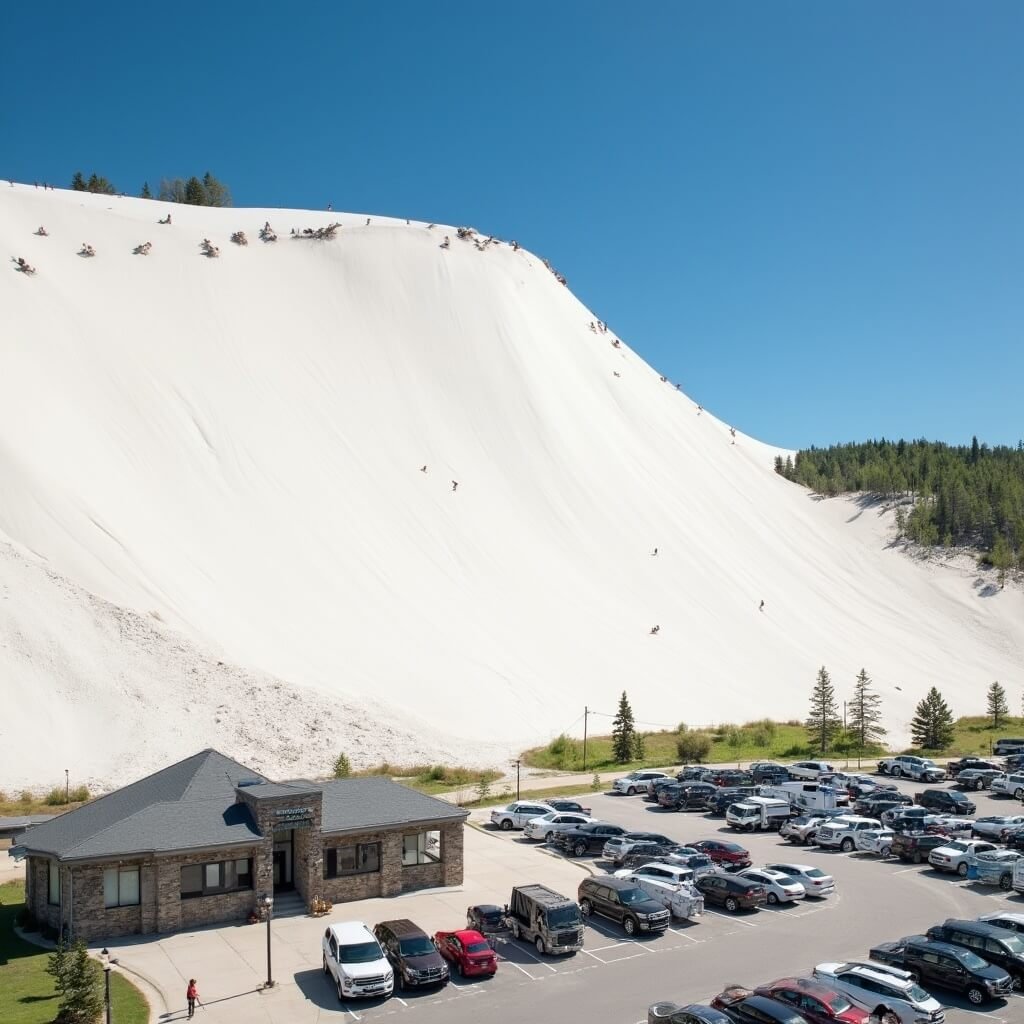
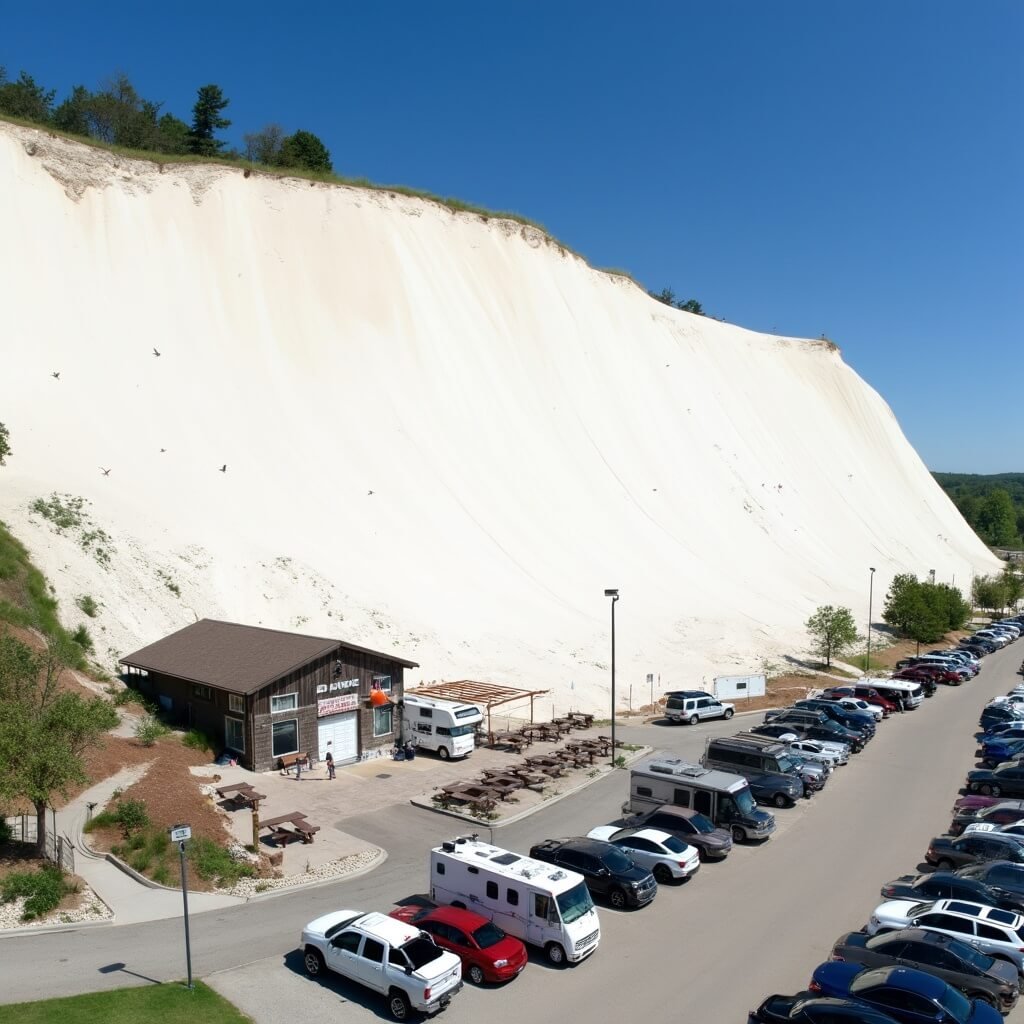
The Dune Climb rises 284 feet high as a massive wall of white sand, forming the eastern edge of the Sleeping Bear Plateau. But here’s the fascinating bit that blew my mind when I first learned it: this open dune is part of a 4-square-mile perched dune field extending toward Lake Michigan and Sleeping Bear Point.
Unlike most Lake Michigan dunes built from beach sand blown inland, the Dune Climb’s sand has never actually been in Lake Michigan or on its beaches. The sand came from higher dunes on the Sleeping Bear Plateau and has been blown downward, not upward.
This creates a geological oddity that most visitors never notice but makes the whole experience unique.
The Dune That Literally Moves Toward You
Here’s something that’ll make you feel insignificant: this entire wall of sand migrates approximately 2-4 feet per year toward the car park.
Former interpretive exhibits used a buried measuring stick to show visitors this long-term movement. Imagine coming back in a decade to find the dune has literally walked closer to your car.
What You’ll Actually Find When You Arrive
The facilities here are surprisingly well-thought-out for what amounts to a giant sandbox.
Parking and Access:
- Paved parking lot accommodating cars, buses, and RVs right next to the dune
- Accessible picnic area at the dune base for those who prefer spectating to suffering
Services That’ll Save Your Sanity:
- Dune Centre with summer bookstore south of the picnic area
- Modern restrooms near the base (port-o-johns in winter because Michigan)
- Drinking fountains and water spigots near parking
- Bicycle rack and park entrance pass sales on-site
The Pet Situation:
Pets are absolutely not allowed on the Dune Climb itself, though there’s a designated pet relief area on the north side of the car park. Your dog will thank you for leaving them in air-conditioned comfort anyway.
What Climbing the Main Dune Actually Feels Like
I’ll be brutally honest about my first Dune Climb experience. I was 28, reasonably fit, and cocky enough to think I’d sprint up that sand wall like some sort of dune-climbing gazelle.
I made it roughly 50 feet before my legs turned to jelly and my lungs felt like they were trying to escape through my throat.
The Reality of Sand Climbing
From the car park to the top of the first dune: short distance, steep angle, soft sand that swallows your feet with every step.
At the top of the first dune, you get a genuinely lovely view of Little Glen Lake that makes the initial burn worth it.
From the top of the second hill, the views improve dramatically, but Lake Michigan remains tantalizingly out of sight – still about 1.5 to 2 miles away through more dunes.
Why Your Body Will Hate You (Temporarily)
Climbing in loose sand makes even short distances feel like running through treacle uphill. In hot weather, this effect becomes almost comically brutal.
Gravity makes the descent fast and fun – some people literally run down whooping with joy. But that ascent back up moves at roughly the speed of continental drift and feels twice as tiring.
Park rangers consistently advise visitors to honestly evaluate their physical abilities before climbing, which is polite ranger-speak for “don’t be an idiot.”
Who Should Actually Attempt This
The main Dune Climb suits most reasonably fit adults and children, provided you use common sense about breaks, sun protection, and hydration.
The beautiful safety feature? Visitors can turn around at any time since the bottom remains visible, adding a crucial psychological safety margin that prevents true disaster.
Key takeaway: The main Dune Climb challenges you without trying to kill you.
The Dunes Trail: Where Good Intentions Go to Die
Think the main Dune Climb is tough? The Dunes Trail from the Dune Climb to Lake Michigan is where things get properly serious.
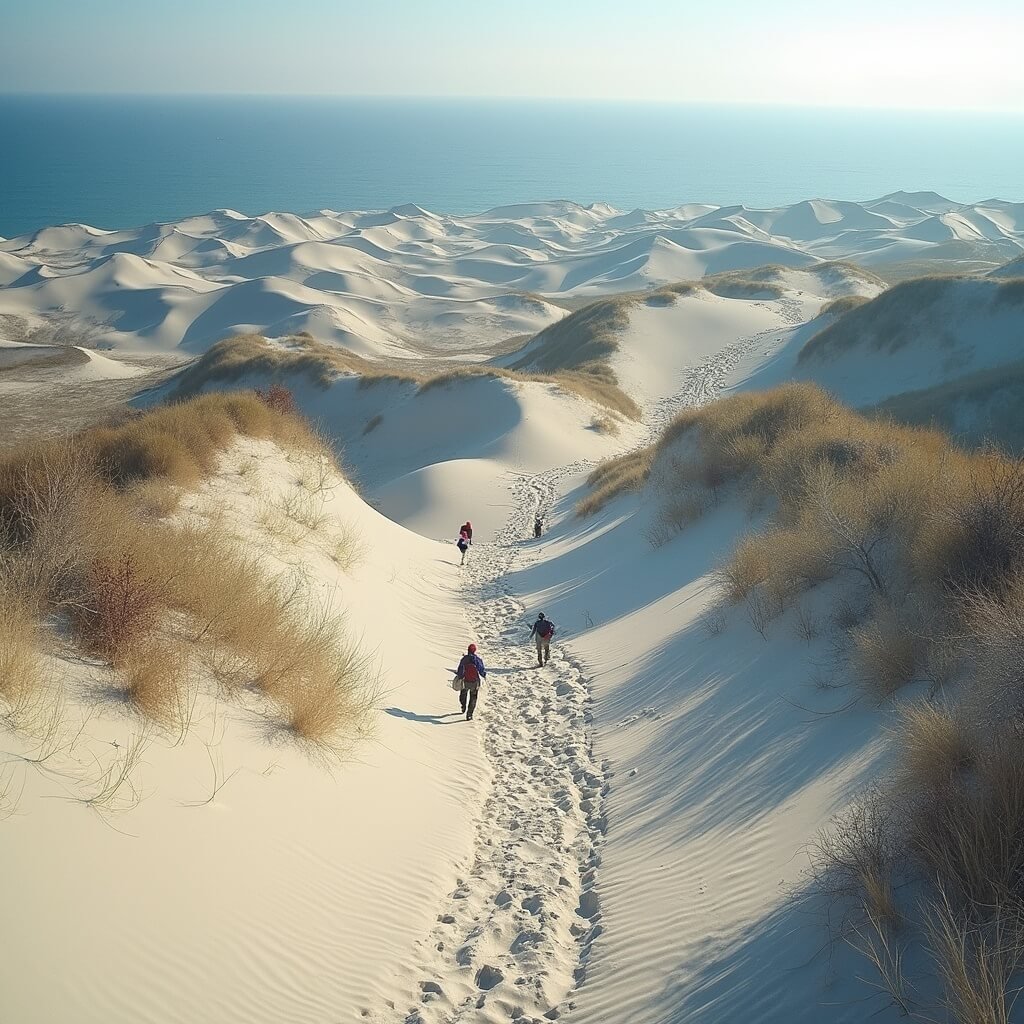
This trail begins at the Dune Climb and ends at actual Lake Michigan, covering roughly 1.75 miles one way across multiple dunes. The total hike clocks in at about 3.5 miles out and back, over rolling dunes that seem to multiply as you walk.
The National Park Service has classified this as difficult due to steep slopes, soft sand, and exposure. They also call it the most strenuous hike in the entire Sleeping Bear Dunes National Lakeshore, which should tell you everything you need to know.
Time Commitment That’ll Ruin Your Afternoon Plans
Park guidance suggests expecting 3-4 hours round trip, depending on fitness and weather conditions.
Most hikers catastrophically underestimate the time commitment because each dune crest hides more dunes beyond, creating a cruel psychological game of “surely the lake is just over this next hill.”
The Terrain That Breaks Dreams
Hikers must cross five or more large dunes with steep, sandy slopes. Each dune requires repeated climbing and descending in deep sand both on the way out and back.
Imagine doing squats in a sandbox for four hours while carrying water and trying not to die of heat exhaustion. That’s basically the Dunes Trail experience.
What You’ll Actually See (If You Survive)
The trail traverses the native plant communities of the Sleeping Bear Plateau, including hardy dune grasses and shrubs adapted to dry, sandy conditions that would make a cactus weep.
You can encounter “ghost forests” where long-buried trees have re-emerged as dunes move. These protected features create an almost post-apocalyptic landscape that’s both beautiful and slightly unsettling.
The Cruel Psychology of False Hope
The first glimpse of Lake Michigan typically appears about 0.5 miles from the Dune Climb. At this point, hikers still have more than a mile of strenuous dunes before reaching the shore.
This creates a psychological torture device where you can see your destination but still have over an hour of sand climbing ahead of you.
The payoff? A remote Lake Michigan beach with sweeping views and, about ¼ mile north of the trail’s end, a large wooden shipwreck that serves as a highlight for many visitors.
Why Rangers Conduct Searches Every Summer
The dune landscape is visually repetitive and genuinely disorienting, making it surprisingly easy to lose your sense of direction in what looks like endless rolling sand hills.
Official hiking routes are marked with posts topped in blue, and carrying a map is strongly recommended for anyone venturing beyond the obvious trails.
Rangers conduct numerous searches each summer because companions waiting at the Dune Climb become genuinely alarmed when hikers are overdue.
Groups are urged to agree on a clear plan and meet-up time before anyone heads deep into the dunes – a simple precaution that prevents unnecessary rescue operations.
Walking on narrow dune ridges increases erosion, so hikers are encouraged to stay on marked routes and broader dune plains. Avoiding very steep slopes helps keep dune grass roots intact, which helps stabilize the dunes for future generations of masochistic hikers.
Now that you understand what you’re getting into with the main attractions, there’s still the matter of that infamous 450-foot bluff climb that sends people to hospital and generates rescue bills that could fund a small car purchase.
For more challenging outdoor adventures in Utah or to experience a sunrise hike at Cadillac Mountain, check out these guides!
👇Find The Cheapest Flights To Anywhere Here👇
The 450-Foot Bluff: Where Tourist Confidence Goes to Die Expensive Deaths
Let me be absolutely clear about something that confuses thousands of visitors annually: the 450-foot Lake Michigan bluff climb is a completely different beast from the main Dune Climb near Glen Lake.
This isn’t friendly family fun. This is where ambulance services keep speed dial numbers handy.
Save this article
Enter your email and we'll send it straight to your inbox.
The Location That Fools Everyone
The 450-foot bluff is accessed from a Lake Michigan overlook area, commonly via the scenic drive, and sits entirely separate from the main Dune Climb.
Many tourists catastrophically assume all dune climbs offer similar difficulty levels. The bluff descent is substantially steeper and more dangerous than anything near the main Dune Climb area.
The Optical Illusion That Ruins Vacations
Here’s what happens to roughly 200 people every summer: the slope looks perfectly manageable from the top viewing area.
Then it gets much steeper mid-way down, surprising visitors who suddenly realize they’ve committed to something far beyond their abilities.
Some people sprint down without considering how demanding the return climb will be in loose sand on what amounts to a near-vertical slope.
The Physical Reality That Breaks Bodies
Video accounts describe taking only a couple of minutes to run down the bluff.
The climb back up? Thirty to sixty minutes or more, often resorting to hands-and-knees crawling that locals euphemistically call “going on all fours.”
Visitors regularly report intense fatigue, frequent mandatory rest stops, and the need for extremely careful pacing to avoid muscle cramps and heat exhaustion.
When Rescue Bills Exceed Vacation Budgets
The steep bluff has earned its reputation for requiring genuine medical rescues when visitors cannot physically climb back up due to exhaustion, dehydration, or cardiac issues.
Some rescue operations reference potential multi-thousand-dollar rescue fees designed as deterrents, emphasizing the critical need to be absolutely confident you can complete the entire climb before taking that first step down.
Think about that for a moment: people regularly get stranded halfway up a sand dune and require helicopter evacuation.
Who Should Absolutely Avoid This Death Trap
Visitors with any heart or respiratory conditions, poor cardiovascular fitness, young children, or mobility limitations are strongly discouraged from attempting the 450-foot descent.
Anyone even remotely unsure of their ability to complete an extremely steep, prolonged sand climb should admire the view from the overlook and call it a victory.
If You’re Determined to Risk It
Bring ample water – more than you think you need.
Go slowly on both the descent and ascent.
Be prepared for an intense cardiovascular workout that’ll leave you questioning every life choice that led to this moment.
Consider heat levels, time of day, and your overall trip schedule.
Allow far more time than the descent appears to require – seriously, triple your initial estimate.
Remember: what looks like a fun 5-minute adventure from the top becomes an hour-long survival challenge once you’ve committed.
Planning Your Sand-Based Suffering: Timing Is Everything
Seasonal Strategy for Maximum Enjoyment (Or Minimum Misery)
Summer delivers the classic experience with warm sand and water, but intense sun and heat can turn dune climbing into a genuine endurance challenge.
Spring and fall often provide cooler temperatures and blissfully fewer crowds, though freeze-thaw periods can create unstable dune slopes that add unexpected difficulty.
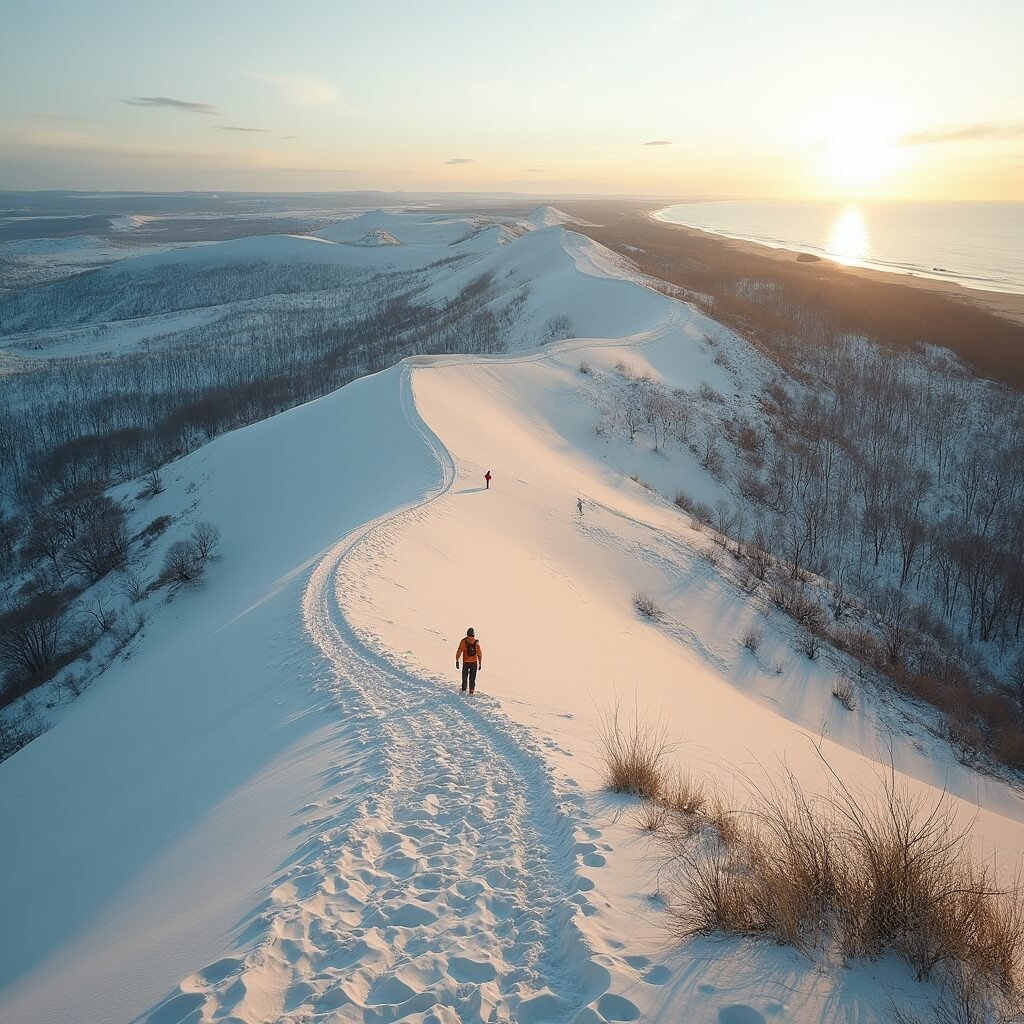
Winter offers a completely different experience: sledding on the Dune Climb when snow covers the sand, creating a controlled sliding experience between marked posts that’s actually safer than summer climbing.
Daily Timing That Won’t Kill You
Morning and late afternoon typically offer cooler temperatures and softer light that makes for stunning photography without the brutal heat exposure.
Midday sun in summer creates extreme heat on open sand that can cause rapid dehydration and genuine heat-related medical emergencies.
I learned this lesson the hard way during a July afternoon climb when the sand surface temperature reached levels that could literally cook an egg.
Your Survival Kit: What Separates Survivors from Rescue Statistics
Non-Negotiable Essentials According to Park Rangers
Water – at least 2 liters per person for the Dunes Trail, with more required on hot days when you’ll sweat more than you thought humanly possible.
Sunscreen and sun protection including hat, sunglasses, and UV-protective clothing because the dune environment offers roughly the same sun protection as the surface of Mars.
Salty snacks or substantial food to maintain energy and electrolyte levels during what amounts to a desert hiking experience.
Proper footwear to protect feet from hot, abrasive sand and sharp underground plant parts that can slice through skin like tiny sand-covered razors.
Additional Gear That’ll Save Your Sanity
Small backpack to carry water, snacks, and extra clothing without turning yourself into a pack mule.
Map and compass if venturing beyond marked trails – the dunes can be genuinely disorienting in ways that’ll surprise experienced hikers.
Light layers or windbreaker depending on season and the unpredictable lakeshore winds that can shift from calm to brutal in minutes.
Who Can Actually Handle This Challenge (And Who Shouldn’t Even Try)
Family Dynamics on Sand Mountains
The base and lower slopes of the Dune Climb create an ideal playground where children can tumble safely while adults supervise from the comfortable picnic area.
Parents should establish clear boundaries and maintain constant visual contact, especially when venturing deeper into the dune system where distances become deceptive.
Fitness Reality Check
Short climbs on the main Dune Climb are manageable for most people with reasonable health and mobility.
The full Dunes Trail to Lake Michigan demands genuinely strong cardiovascular fitness and stamina that exceeds typical weekend warrior capabilities.
Visitors with any health conditions should consult their physician and seriously consider staying near the base or exploring easier trail alternatives.
After watching dozens of overconfident visitors struggle halfway through the trail, I can confidently say that overestimating your fitness level is the most common mistake people make here.
Safety Rules That Keep You Out of Helicopter Bills
Core Ranger Wisdom About Desert-Level Conditions
Rangers consistently describe the dunes as “a bit like a desert environment” and urge visitors to bring water and drink regularly – this isn’t hyperbole.
Overheating, dizziness, and muscle cramps represent common risks on hot days when climbing in deep sand creates exertion levels most people never experience.
Foot Protection That Prevents Emergency Room Visits
Park information strongly advises against going barefoot due to hot sand that can cause burns, abrasive grains that create painful wounds, and sharp underground dune grass shoots that can puncture skin.
Running down dunes can result in falls, twisted ankles, or collisions with other visitors in what becomes an uncontrolled descent.
Environmental Stewardship That Protects Future Access
Staying on designated trails and avoiding fragile vegetation helps preserve the dune ecosystem that makes this experience possible.
Disturbing ghost forests or other protected features can result in significant fines and damages the environment for future generations.
Properly disposing of trash and human waste maintains the pristine conditions that keep this area accessible to the public.
The Real Reason Over a Million People Torture Themselves Here Annually
Despite everything I’ve shared about the physical challenges, potential dangers, and genuine suffering involved, climbing the dunes at Sleeping Bear remains an absolutely transformative experience.
There’s something primal about conquering a mountain of sand using nothing but your own physical effort.
The views from the top – whether it’s Glen Lake stretching out below the main Dune Climb or the endless blue expanse of Lake Michigan from the trail’s end – create memories that last decades.
The physical accomplishment of completing what amounts to an hour-long sand workout generates a genuine sense of achievement that differs completely from typical hiking experiences.
Why You Should Still Do This to Yourself
The dune climbing experience teaches you something valuable about your own physical capabilities and mental resilience.
Shared suffering with family or friends creates bonding experiences and stories that get retold at gatherings for years afterward.
The unique geological environment and stunning natural beauty justify the temporary discomfort for most visitors.
The sense of accomplishment from completing a genuinely challenging physical activity in a spectacular natural setting provides satisfaction that exceeds typical tourist attractions.
Your Personal Challenge Awaits
Whether you stick to the safer main Dune Climb, tackle the full trail to Lake Michigan, or simply enjoy the views from the bottom, Sleeping Bear Dunes offers an experience that’ll test your limits and reward your efforts.
Just remember to bring more water than you think you need, respect your physical limitations, and prepare for an adventure that’ll leave you simultaneously exhausted and exhilarated.
After all, there’s a reason over a million people annually choose to climb the dunes at Sleeping Bear Dunes, Michigan – and it’s not because it’s easy.
👇Ready To Book Your Trip?👇
This post may contain affiliate links. Please see my disclosure policy for details.
Want to keep this one?
We'll email you the link so you can find it again later.