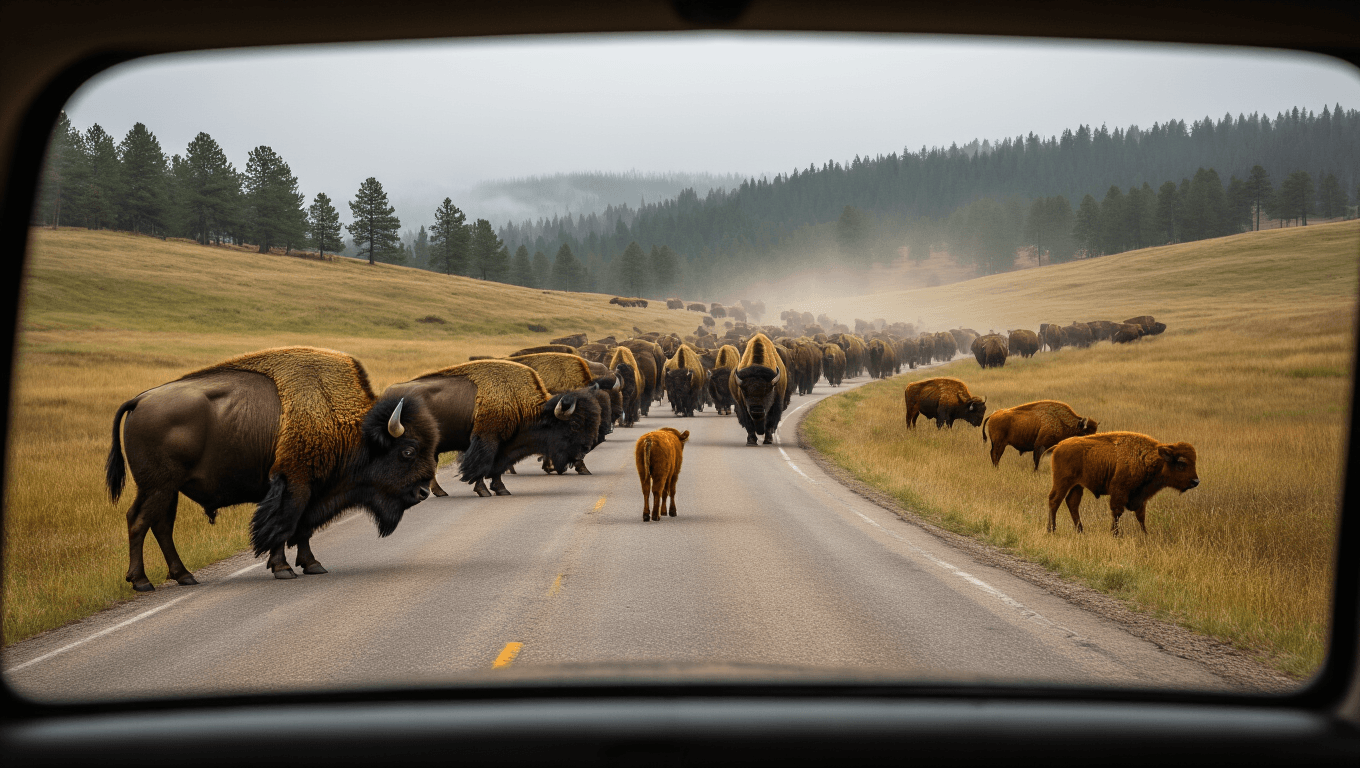
Seeing wild bison at Custer State Park is far easier than most first-time visitors expect, and I say that as someone who has watched people plan whole Yellowstone trips around the hope of a distant sighting. Custer’s herd numbers roughly 1,300 to 1,500 animals — one of the largest publicly owned, free-roaming herds anywhere — and it lives in a park compact enough that you can usually find them within an hour of arriving. If your main worry is “will we actually see any?”, relax. The odds here are about as good as they get for wild bison in North America.
Why Custer Is Such a Reliable Place for Bison
Custer State Park was South Dakota’s first state park and remains its largest, covering around 71,000 acres of the Black Hills. The habitat is the reason the bison thrive: mixed-grass prairie rolling into ponderosa forest, which is exactly what the species wants. And because the park is a fraction of Yellowstone’s size, the herd is concentrated rather than scattered across a wilderness the size of a small country.
I’ll be honest about the comparison, because people ask constantly. Yellowstone is magnificent, but bison there can mean a smudge on a hillside two miles away. At Custer, the animals graze beside the road, cross in front of you, and occasionally stare through your windscreen while you rethink your life choices. For predictable, close (but safe) viewing, Custer wins.
You’ll also see more than bison. Pronghorn, elk, bighorn sheep, deer, mountain goats, prairie dogs, and the famous begging burros all share the park. It’s genuinely one of the best multi-species wildlife drives in the country.
There are three main ways to experience the herd:
- Wildlife Loop Road — a self-drive scenic route through the southern prairie where the herd spends most of its time
- The Bison Center — an interpretive centre along the loop, all about the herd’s history and management
- The annual Buffalo Roundup — the last Friday in September, when riders drive the entire herd into corrals in front of thousands of spectators
A Herd With Over a Century of History
The story starts in 1914, when the park purchased 36 bison to establish a herd. That may not sound remarkable now, but at the time the species had been hunted to the brink, and this was one of the earliest serious public conservation efforts on their behalf. It worked almost too well. By the early 1940s the herd had grown to around 2,500 animals — more than the prairie could sustainably feed.
Custer’s quiet contribution to the wider recovery of American bison is one of my favourite parts of the story. The park hasn’t just maintained its own herd; for decades it has supplied healthy animals to strengthen other herds across the region, becoming a key node in the network of conservation herds preserving the species’ genetic diversity.
Overgrazing forced managers to get practical early on. A roundup system developed in the early twentieth century and became a formal annual event in 1965. Each year the herd is gathered, health-checked, vaccinated, and trimmed back to match what the rangeland can actually support. It sounds unromantic. It’s also the reason the herd still exists in good health today.
Driving Wildlife Loop Road
This is where most people meet the herd, and it’s the part of your visit I’d protect at all costs. The loop winds through the southern portion of the park, through open prairie and rolling hills that make up the core bison range. A large chunk of the herd tends to hang around the southern tip of the loop, near the corral complex, so if you strike out elsewhere, head that way.
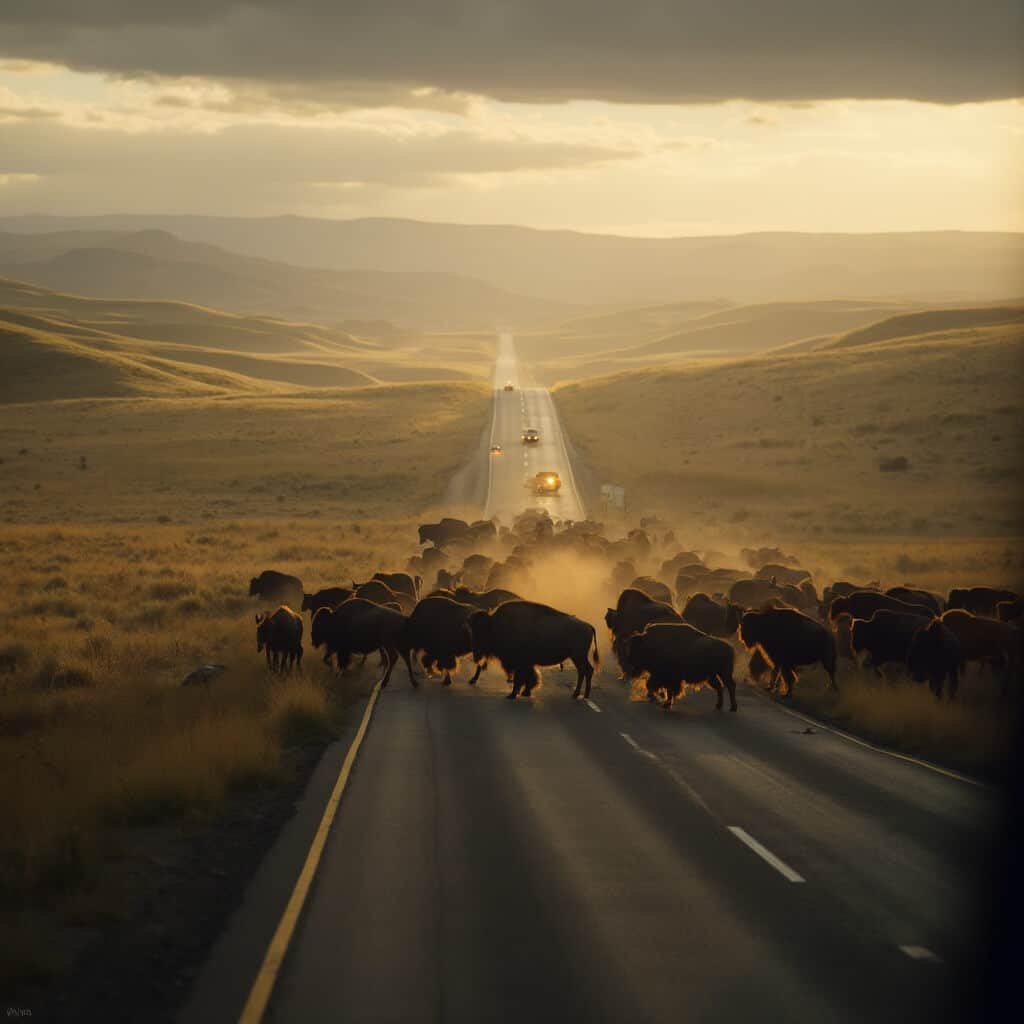
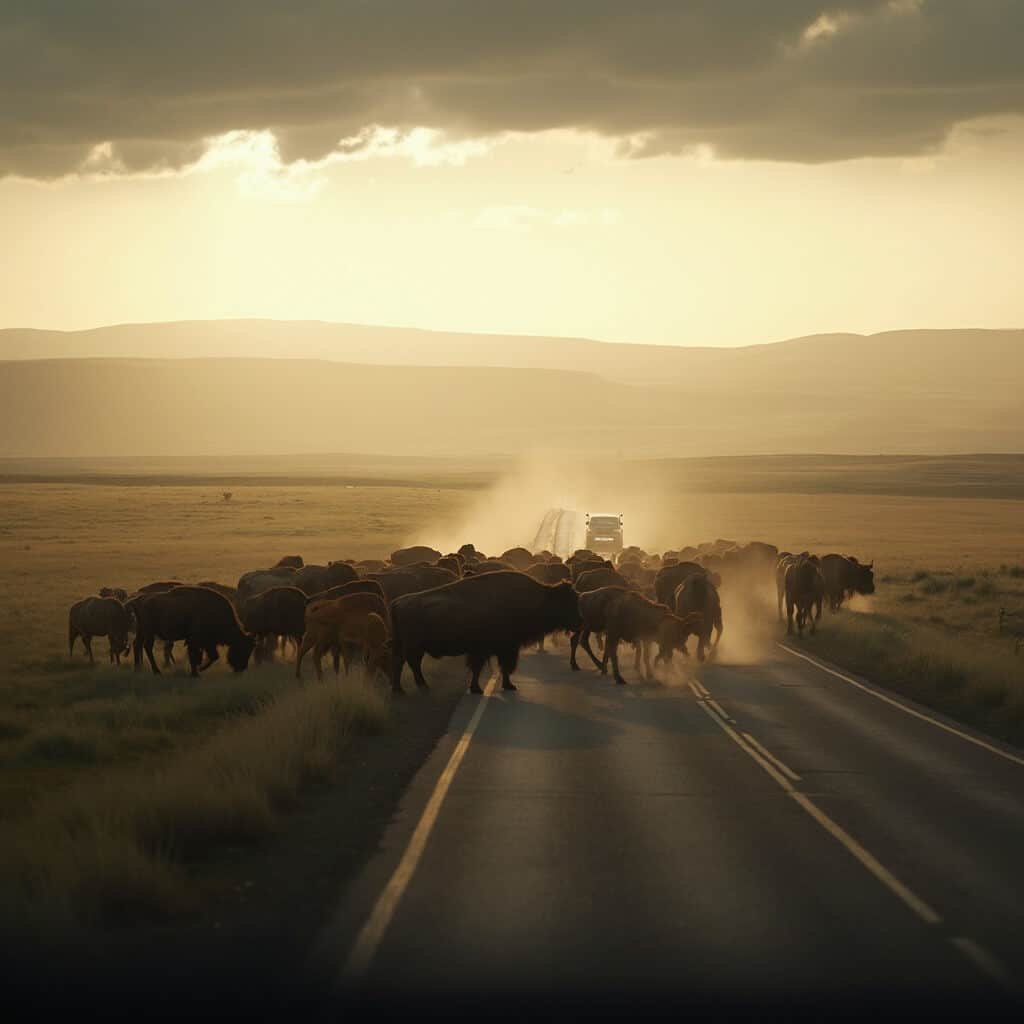
Expect a “bison jam” at some point. The animals cross the road entirely at their own pace, and a herd of half-tonne grazers does not hurry for anyone. Switch the engine off, keep your windows mostly up, and enjoy it — this is the show, not an inconvenience.
My first drive round the loop was a bit of a lesson. We set off at about half seven on a grey June morning, drizzle on and off, and I’d nearly talked us into a lie-in instead because the forecast looked miserable. Within twenty minutes we were stopped dead behind two other cars while forty-odd bison, including a handful of rust-coloured calves, wandered across the tarmac and stood there chewing. We sat for the best part of half an hour. By the time we did the loop again at 2 p.m. in sunshine, the same stretch was empty apart from a few pronghorn. Early morning is not optional advice. It’s the whole trick.
Dawn and dusk are also when you’ll see the supporting cast — pronghorn especially, plus deer picking through the meadows.
Stopping at the Bison Center
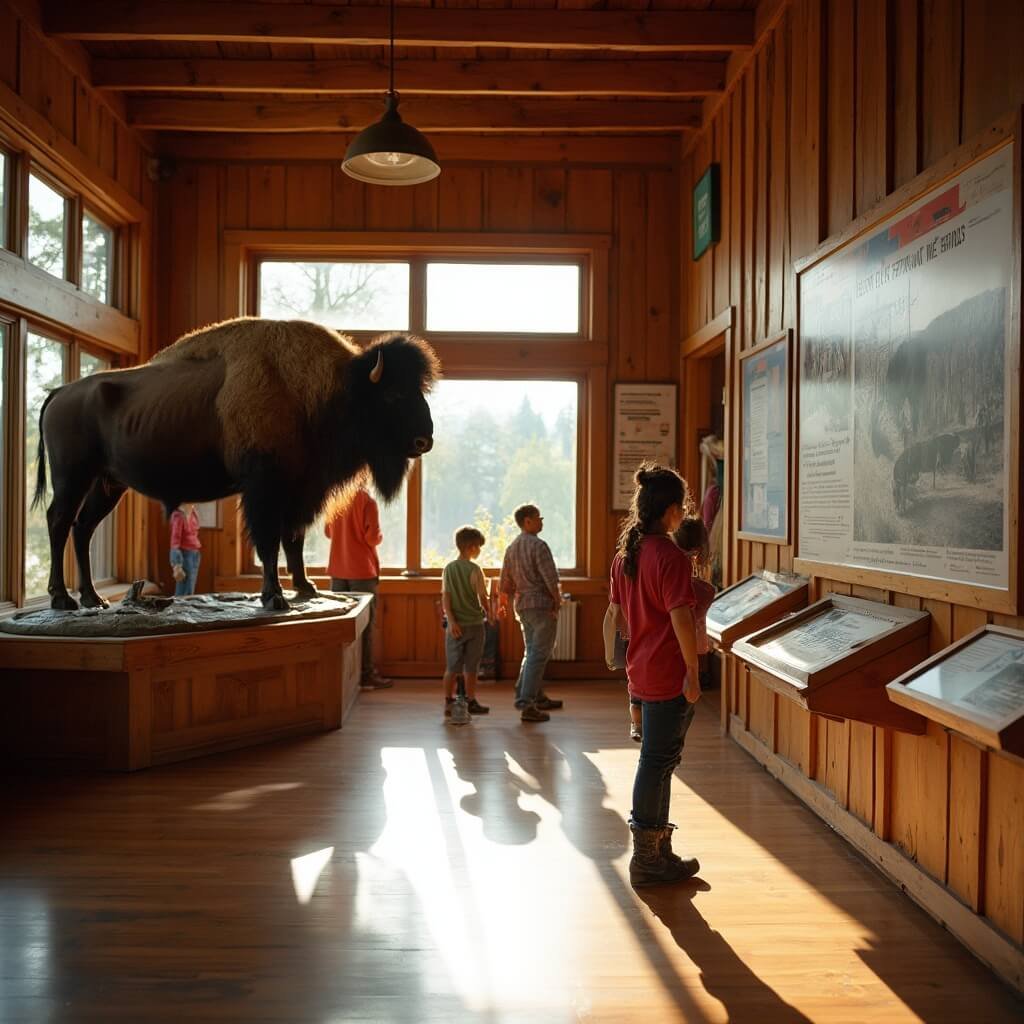
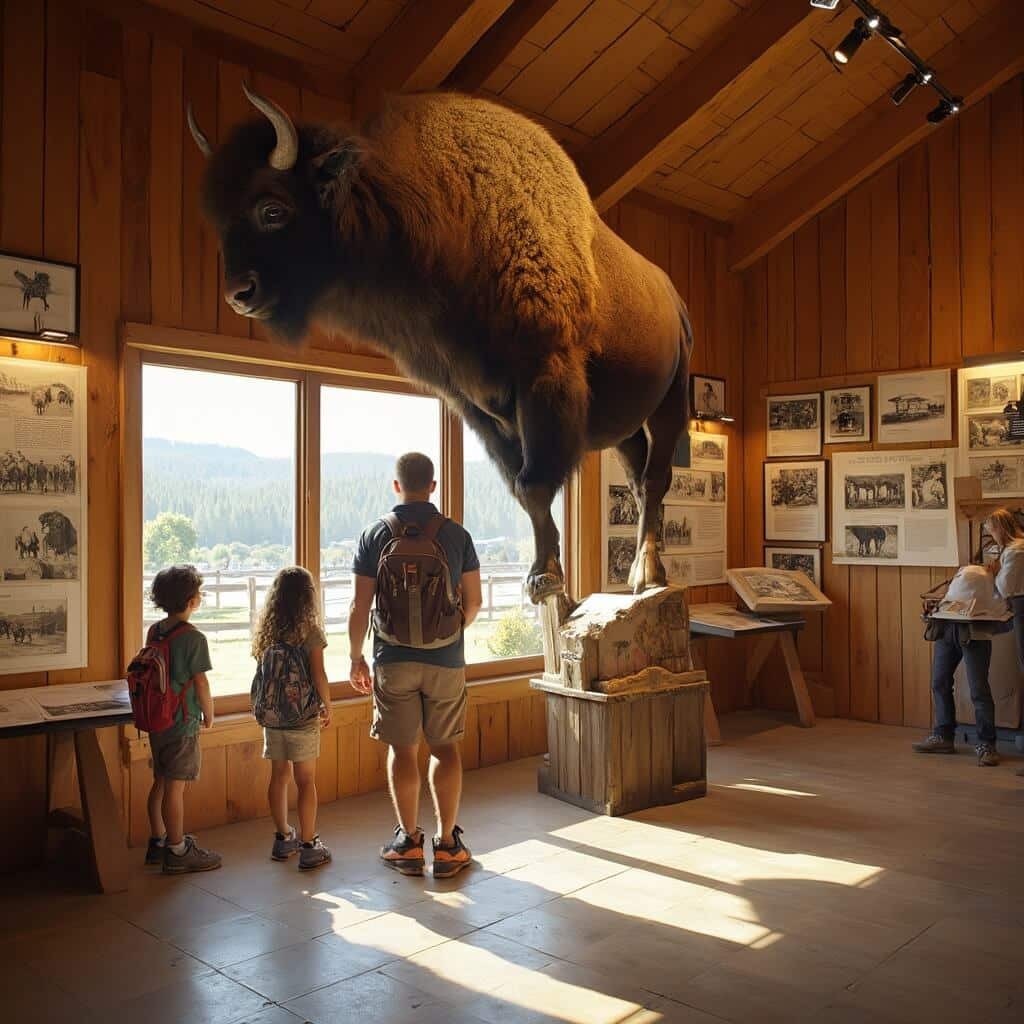
Along Wildlife Loop Road, near the Buffalo Corrals, sits the park’s Bison Center, and it’s worth thirty to forty-five minutes even if museums usually aren’t your thing. The whole place is dedicated to bison: exhibits on their natural history, a film, the story of the Custer herd from those original 36 animals onward, and a genuinely interesting look at modern herd management and genetics.
One planning note: it’s seasonal. The Center typically runs from Memorial Day to Labor Day, open 8 a.m. to 8 p.m., then on shorter hours into early November before closing for winter. If you’re visiting off-season, don’t build your day around it.
Other Spots Worth Checking
The loop isn’t the only game in town. The open grasslands near the State Game Lodge often host grazing bison, particularly at dawn and dusk, and there are meadows along other park roads where smaller groups turn up. Use the pullouts and designated viewing spots rather than stopping in the roadway — partly for safety, partly because nothing sours a bison jam faster than someone blocking both lanes for a phone photo.
The Buffalo Roundup
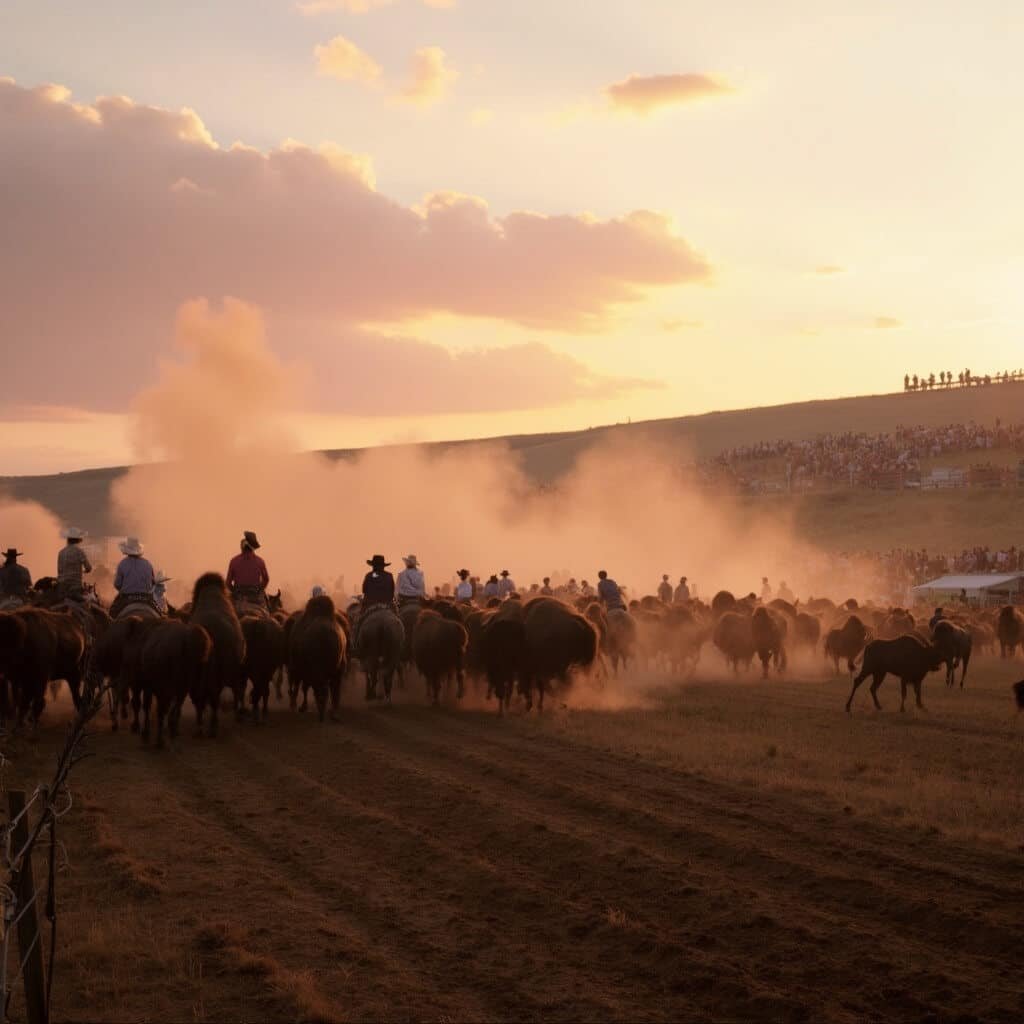
If you can time a trip for late September, do. The Buffalo Roundup, held annually on the last Friday of September, is one of the great wildlife spectacles in the United States, and unlike most spectacles it exists for entirely practical reasons.
Each autumn the entire herd is gathered so staff can assess animal health, vaccinate the calves, run pregnancy checks, and collect data. Several hundred animals are then removed and sold at auction to keep herd numbers matched to the available forage — the same overgrazing lesson learned back in the 1940s, applied every single year. The event also keeps a piece of Western ranching tradition alive, with cowboys and cowgirls on horseback doing the actual work of moving more than 1,300 bison across the prairie and into the corrals.
The day itself starts brutally early. Parking areas open around 6:15 a.m., and plenty of people queue well before dawn to secure a decent spot.
Save this article
Enter your email and we'll send it straight to your inbox.
👇Find The Cheapest Flights To Anywhere Here👇
Experience the Custer State Park Buffalo Roundup
I made that mistake myself the first time — turned up at half six thinking I was being sensible, only to find a queue of trucks and camper vans already backed up along the access road, headlamps on, engines idling in the cold. Get there earlier than you think you need to.
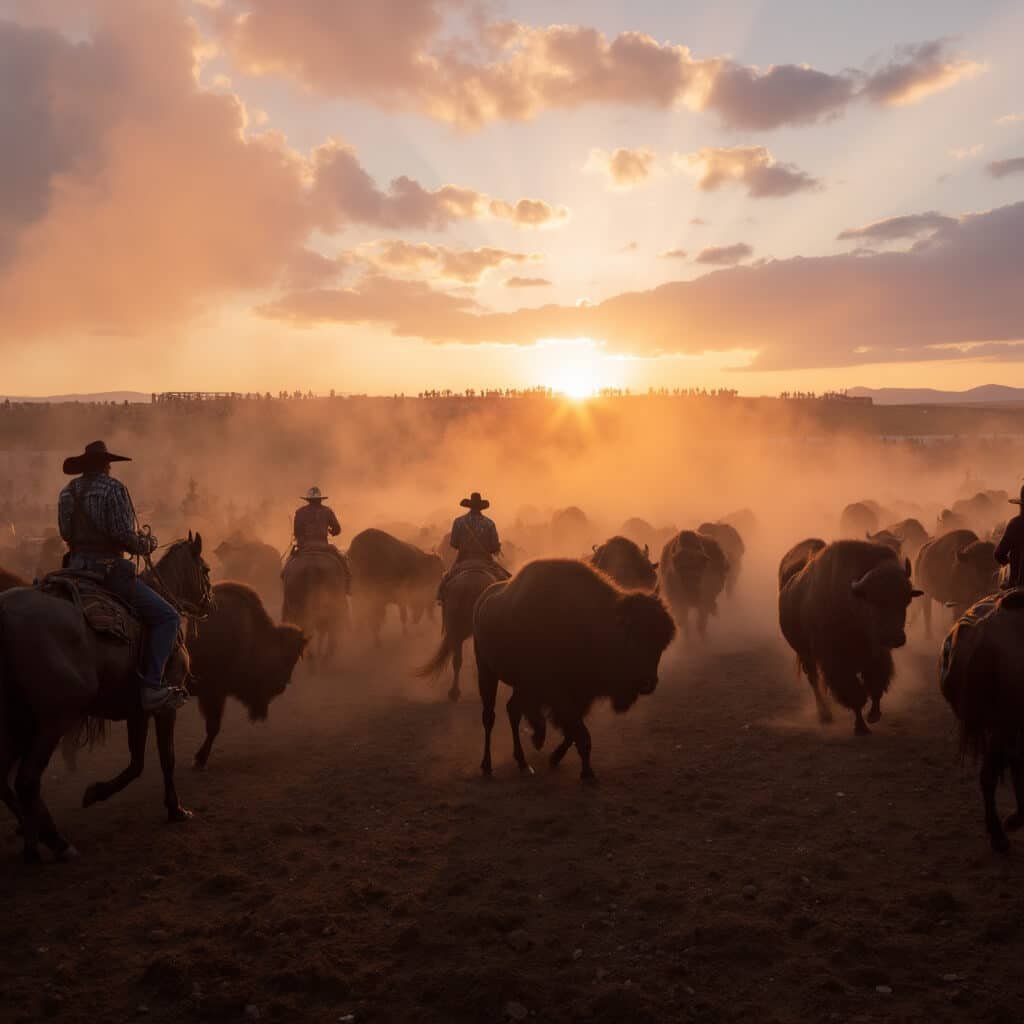
The Roundup itself usually kicks off around 9:30 a.m., when riders push the herd over the ridgeline and down into the valley toward the corrals. This is the moment everyone’s come for, and honestly, no photograph does it justice. You feel it before you properly see it — a low rumble through the ground, then the dust, then somewhere between one and one and a half thousand bison thundering past a few hundred feet from where you’re standing. The noise is a mix of hooves, snorting, and the shouts of riders trying to keep the whole mass moving in the right direction. Grown adults go quiet watching it. Kids scream. It’s the sort of thing that’s genuinely hard to overstate.
Once the herd’s in the corrals, the practical side of the day takes over. Branding, sorting, and veterinary work generally start around 1 p.m. and can run on into the afternoon, with some of the processing continuing into October. It’s less dramatic than the run itself but oddly compelling if you stick around — you get to watch the actual conservation work that makes the whole event more than a photo opportunity.
Logistics and Viewing Options
A few logistics worth knowing before you go. Park entrance is free on Roundup day itself, though the usual fees apply either side of it. There are two viewing areas, North and South, and they offer genuinely different experiences: the North lot has the herd running more or less straight at you, while the South lot gives a wider, more panoramic view of the whole valley. Choose before you join the queue, because once you’re lined up you can’t switch sides. This trips people up every year — someone in the queue ahead of us in 2023 tried to argue their way across to the other lot and was politely, firmly told no.
Crowds are substantial. Something like 20,000 to 25,000 people turn up most years — 2025 saw around 22,275 attendees — so expect a proper queue for parking and no shuttle service running out to the viewing areas themselves. There’s occasionally a limited shuttle between the corrals and other points after the main event, but don’t rely on it to get you there in the first place.
Running alongside the Roundup is the Buffalo Roundup Arts Festival, which is worth an hour of your time even if you’ve come purely for the bison. Regional artisans, Western art, craft stalls, and food vendors set up nearby, and a pancake breakfast or bison BBQ is a fairly perfect way to fill the gap between arriving in the dark and the herd actually appearing.
Behaving Yourself Around a Half-Tonne Animal
This part matters more than any of the scenic advice. Bison are wild animals, not slow-moving cattle with better PR, and they can accelerate to speeds that will genuinely surprise you from a standstill. Every year there are photos in the news of tourists in Yellowstone or Custer getting far too close for a selfie, and every year it ends the same way. Stay in your car on Wildlife Loop Road, or keep serious distance if you’re on foot. Don’t get out to “encourage” a bison off the road by revving your engine or honking — it doesn’t move them along any faster, and it does increase the chance of an animal deciding to take issue with you personally. Bulls especially, and particularly during the rut, should be given a wide berth; park staff exclude some of the more unpredictable bulls from the Roundup itself precisely because of the handling risk.
Never feed them. It sounds obvious written down, but I’ve watched people hold out crisps through a car window at a bison the size of a small car, apparently unaware that a bison learning to associate people with food is a bison that becomes a genuine danger to the next family that pulls up.
For photos, a telephoto lens solves most problems. You don’t need to be close to get a good shot of an animal that’s already enormous in the frame from thirty feet away. At the Roundup itself, stay behind the barricades and follow whatever the staff tell you — they’ve done this a long time and they’re not being cautious for fun.
When to Go, and How Long to Stay
Spring and early summer bring the calves — those distinctive rust-red youngsters that turn up as the grass greens up, and honestly one of the nicest reasons to visit outside Roundup season. Late summer edges into the rut, when bulls get vocal and start posturing in the open prairie, which is a different kind of spectacle. Late September, obviously, is Roundup territory, and if you can only pick one time of year, I’d pick that.
Early morning and early evening consistently produce better sightings and nicer light. Midday isn’t hopeless, particularly on cooler days, but the herd tends to rest up rather than move around much once the sun’s properly out.
A single day is enough to cover Wildlife Loop Road, the Bison Center, and a few other scenic drives, with several realistic chances at a sighting along the way. But if you can stretch to two or three days, especially around Roundup weekend, you’ll have room for hiking trails and the wider Black Hills besides, rather than trying to cram it all into one long, slightly frantic day.
Pack for both extremes if you’re going in September — Roundup mornings are properly cold, and by early afternoon you’ll likely be down to a t-shirt. Bring binoculars, a decent telephoto lens if you’ve got one, sunscreen, and more water than you think you need. There’s very little shade out on that prairie, and you’ll be standing around for longer than you expect.
If I were planning this for someone from scratch, I’d tell them to skip the Yellowstone gamble entirely and build a long weekend around Custer instead — Wildlife Loop Road at first light, the Bison Center on a lazy afternoon, and the Roundup if the calendar allows it. You’ll see wild bison at Custer State Park more reliably than almost anywhere else in the country, and you won’t need a single stroke of luck to do it.
👇Ready To Book Your Trip?👇
This post may contain affiliate links. Please see my disclosure policy for details.
Want to keep this one?
We'll email you the link so you can find it again later.