
Ziplining through the mountains in North Carolina sounds brilliant on paper, but the moment you start researching, you hit a wall of near-identical websites all promising “breathtaking views” and “the adventure of a lifetime.” I’ve lived in western North Carolina long enough to have done most of these tours, dragged visiting relatives on several, and formed some fairly firm opinions about which ones deserve your money. So let me save you a few hours of tab-hopping.
First, a quick bit of vocabulary, because operators use these terms loosely. A canopy tour is the classic version — you move tree to tree on platforms built into the forest, riding a series of lines through the woods. A mountaintop tour is a different beast: fewer trees, bigger drops, longer and faster lines strung across open terrain, sometimes on man-made towers. Then there are aerial adventure parks, which mix short zips with obstacle elements like rope bridges and cargo nets. They’re all sold under the “zipline” banner, but the experiences are genuinely different, and picking the wrong one for your group is the most common mistake I see.
North Carolina is unusually good at this. The Blue Ridge and Smokies give operators steep ridgelines, deep gorges, and mature forest to work with, and the tourism infrastructure around Asheville, Boone, Bryson City, Highlands, and Saluda means you can bolt a zipline onto a weekend without much planning. The industry here grew quickly through the 2010s, and most tours now sit alongside rafting outfitters, bike trails, and hiking, so it’s easy to build a full adventure day rather than a single two-hour outing.
The Four Regions, Briefly
You’ve got four main pockets to choose between, and where you’re staying will probably decide this for you:
- Asheville and the central Blue Ridge — the biggest concentration of canopy tours, plus an urban zipline with views over downtown
- The High Country (Boone, Banner Elk, Sugar Mountain) — high-elevation courses with long runs, handy if you’re already up there for skiing or summer holidays
- The Nantahala Gorge and Bryson City — ziplines tied to whitewater rafting and deep gorge scenery
- The southern mountains (Saluda, Lake Lure, Highlands) — home to the steepest descents in the state
None of these is a bad choice. But they suit different people, so let’s get into specifics.
Ziplining Around Asheville
If you want variety, Asheville wins. The Adventure Center of Asheville runs several options from one site, which is convenient if your group can’t agree on a difficulty level. Their main Asheville Zipline Tour takes about two hours and covers nine ziplines and a sky bridge, moving between treetop platforms and adventure towers with the city skyline in view — an odd but rather pleasing combination of urban and mountain. If you’re short on time or money, the Skyline Tour is roughly an hour and five lines, built around 1,200-foot side-by-side runs, and it typically prices around $45, which is genuinely good value for this industry.
The Adventure Center also has KidZip, and I’d flag this for anyone traveling with small children. It’s nine kid-scaled ziplines between 50 and 250 feet long, plus four climbing elements, designed specifically for ages 4 to 10. Most standard tours won’t take children under eight, so if you’ve got a five-year-old who’s desperate to fly, this is essentially your only proper option in the region.
Then there’s Navitat Canopy Adventures, north of the city, which is where I’d send anyone chasing speed. Their Mountaintop Tour features side-by-side lines running over half a mile long and up to 350 feet off the ground. It is fast. Properly fast. They also run a Treetop Tour that’s entirely tree-based — no man-made supports at all — which appeals if you want the forest-immersion version rather than the adrenaline version. I think Navitat is the best-run operation in the Asheville area, though you pay for it.
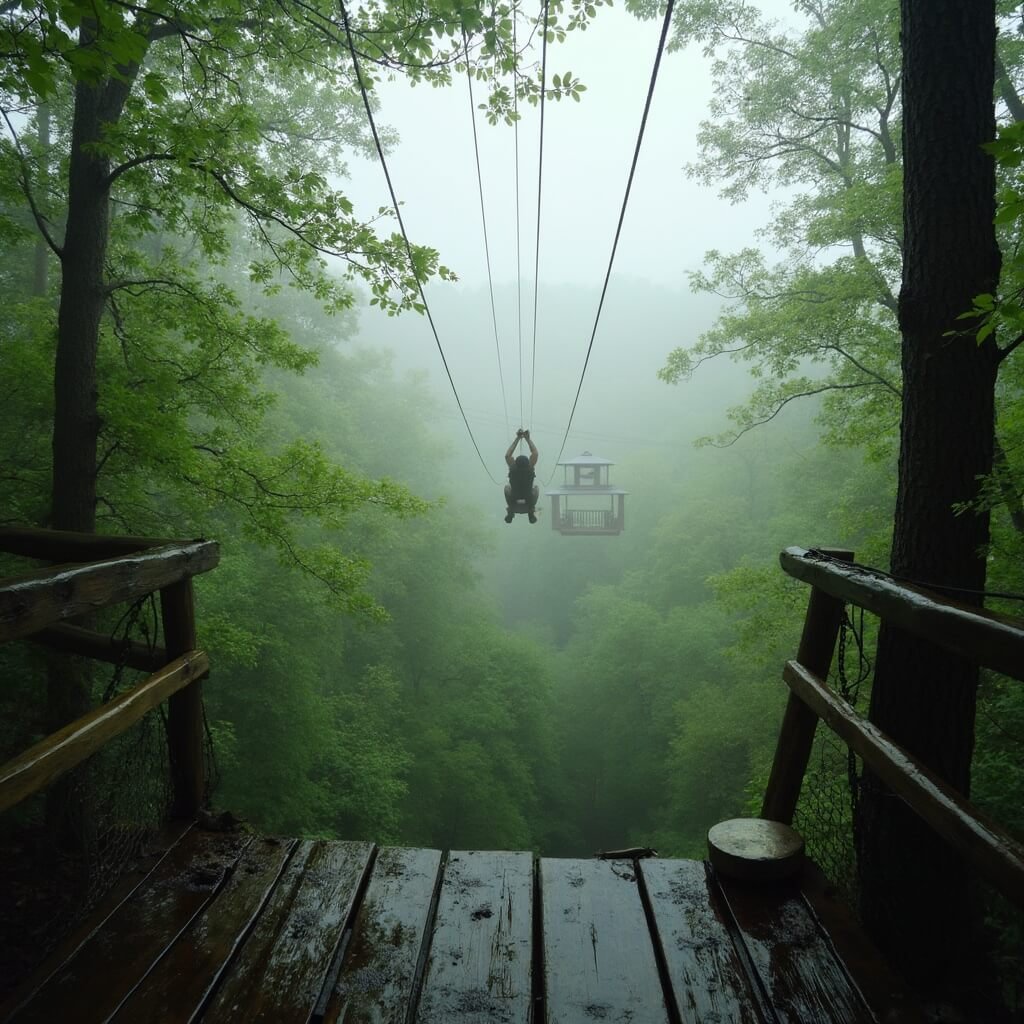
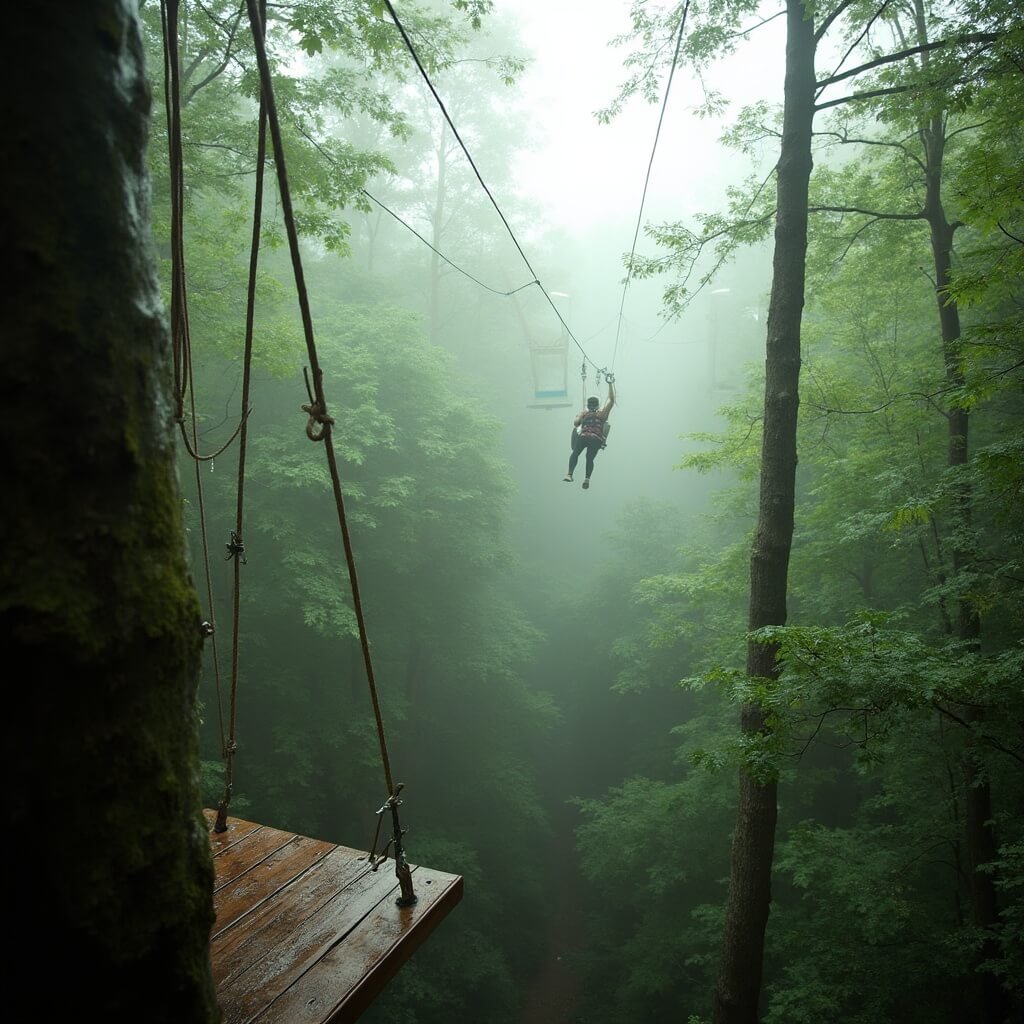
A word on French Broad Adventures in Marshall, about half an hour north. Their canopy tour sits in a quiet mountain cove and includes seven lines, two rappels, and a treehouse deck you reach via a 100-foot treetop walkway. I did this one on a drizzly Tuesday morning in late April — we’d booked the 9 am slot to beat the rain, the car park was nearly empty, and I’d stupidly worn trainers with worn-out soles, which made the wet platforms interesting. The guides were relaxed about our group of four faffing with cameras, and the rappels were the surprise highlight; nobody warns you how much fun controlled rope descents are. They operate roughly March through the start of November, and their zipline-plus-rafting combo packages are one of the better full-day deals near Asheville.
The Gorge in Saluda — The Steep One
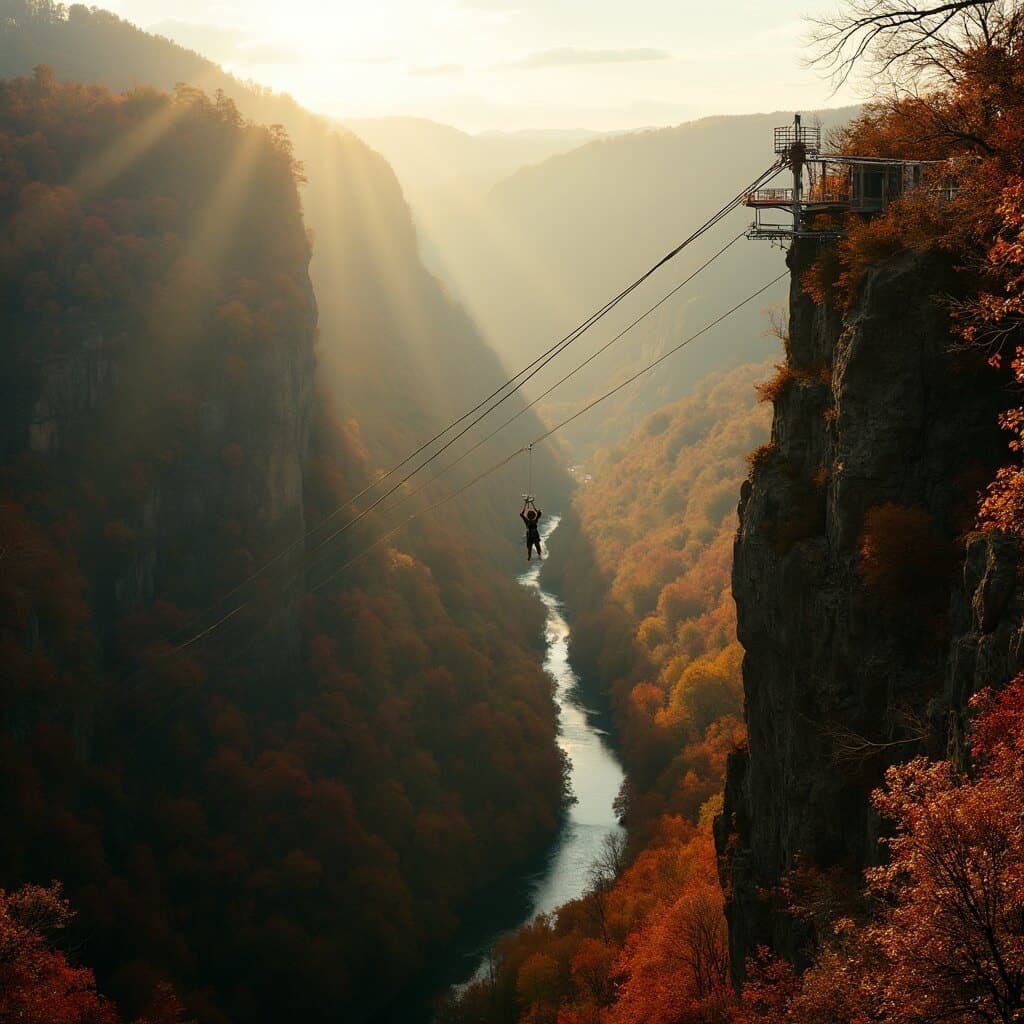
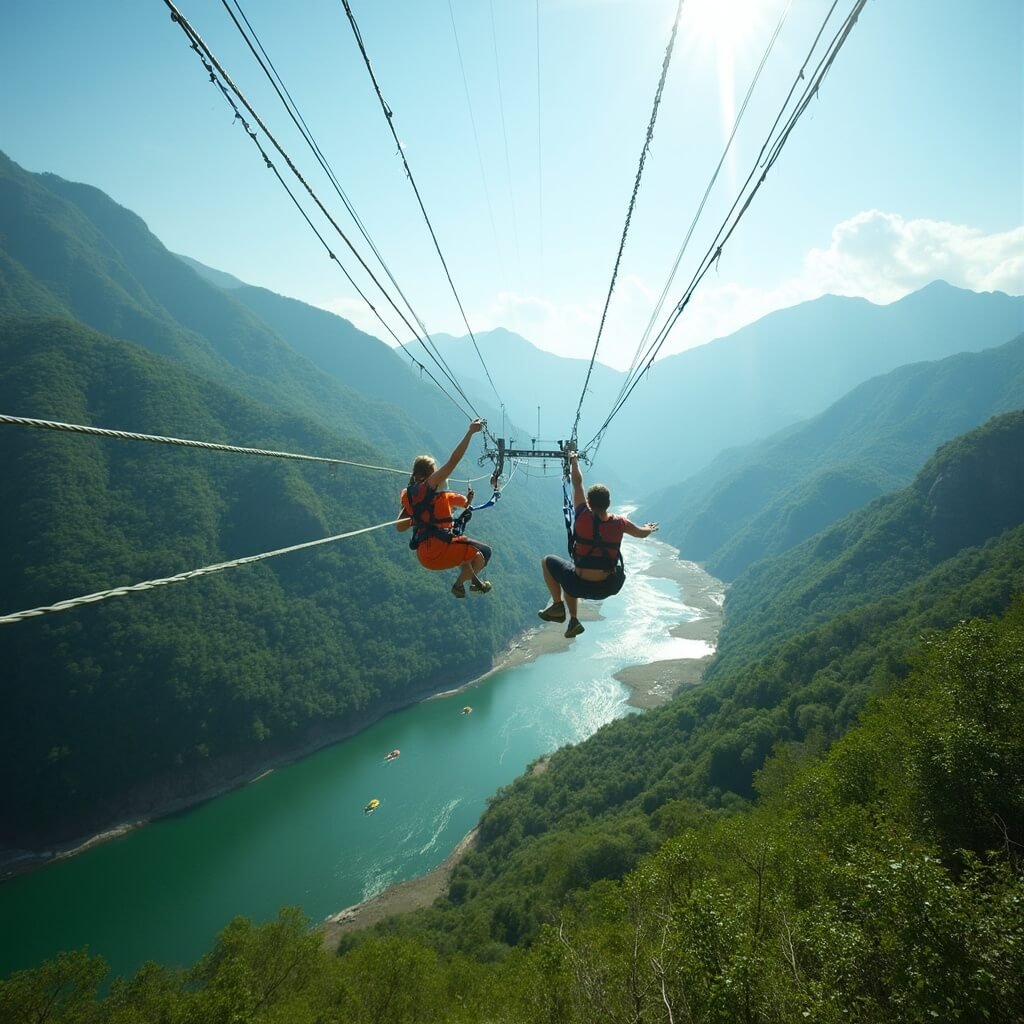
If you only remember one name from this article, make it The Gorge Zipline in Saluda. It’s marketed as one of the steepest and fastest zipline tours in the country, and for once the marketing is defensible. The course packs in 11 ziplines, 3 rappels, and a sky bridge while dropping roughly 1,100 vertical feet down the Green River Gorge. You feel that gradient in your stomach on the later lines.
It’s not cheap — expect somewhere in the $119–$139 range depending on season — and I wouldn’t send a nervous first-timer here. But if you’ve ziplined before and found it a bit tame, this is the tour that fixes that. Experienced adventurers rate it above everything else in the state, and I’m inclined to agree.
Bryson City and the Nantahala Gorge
The Nantahala Outdoor Center near Bryson City is the adventure hub of southwestern North Carolina, and its Mountaintop Zip Line Tour delivers big open views above the Nantahala Gorge, with signature dual lines so you can race a friend. Pricing usually lands around $109–$129. They also run a Zip Line Adventure Park — locals call it ZLAP — with 16 aerial elements and a 550-foot dual zipline, which suits groups who want to climb and clamber rather than just ride.
The real argument for NOC, though, is everything around it. Whitewater rafting on the Nantahala, mountain biking, hiking — you can fill two full days without repeating yourself. If your group has mixed interests, this is the region where nobody gets bored.
Closer to Lake Lure, Canopy Ridge Farm offers a more compact mountain course surrounded by forested ridges. It’s a gentler, family-friendly setup, good for first-timers, though note their operating days tend to concentrate around Thursday to Sunday with seasonal changes, so check before you drive out.
The High Country: Hawksnest and Beyond
Up near Boone, Hawksnest is the volume play — one of the largest zipline operations in the state, with two full tour options, 20 ziplines, and around four miles of total cable. The variety in line length and height means it works for a group with mixed nerve levels, and its location makes it an easy add-on if you’re already in the area for Sugar Mountain or a summer cabin week. It’s not the most scenic tour in North Carolina, in my view, but for sheer quantity of zipping per pound spent, it’s hard to beat.
Down in the southwestern corner, Highlands Aerial Park at Scaly Mountain runs canopy tours with broad views over the Highlands plateau, usually priced around $89–$109. They lean into the eco-conscious angle, with guides who actually talk about the mountain ecosystems you’re flying through rather than just clipping you in and counting heads. If you want your adrenaline with a side of education, this is the one.
Rounding out the list: Wildwater’s Nantahala Gorge Adventure Center ties ziplining to river trips, and ZipQuest near Fayetteville — technically Piedmont rather than mountains, but it turns up on every NC zipline list because of its waterfall views.
Save this article
Enter your email and we'll send it straight to your inbox.
Matching the Tour Type to Your Group
This is where most people go wrong, so it’s worth being honest about what each style actually delivers. Canopy tours — the tree-to-tree kind at French Broad or Navitat’s Treetop option — are about forest immersion and steady, moderate thrills. You get multiple shorter lines, time on platforms, and guides pointing out the ecology. They’re the right call for first-timers and anyone who wants the experience of being in the mountains rather than hurtling above them.
The mountaintop and gorge descents are a different proposition entirely. Long lines, serious height, real speed — Navitat’s half-mile racing zips, The Gorge’s 1,100-foot drop, Hawksnest’s sprawling 20-line complex. If anyone in your group is shaky about heights, these tours will find that out quickly, and there’s usually no easy exit halfway through.
For more adventurous experiences, you might also be interested in exploring Climb the Dunes at Sleeping Bear Dunes Michigan or perhaps trying a thrilling ride on the coaster at Silver Dollar City Coaster in Branson.
👇Find The Cheapest Flights To Anywhere Here👇
Urban Hybrid Ziplining Adventures
Then there’s the urban hybrid — the Adventure Center’s Asheville tours, or the zipline built into the Crowne Plaza’s grounds — where the novelty is the skyline rather than the wilderness. These work well if you’ve got someone in the group who wants the photos more than the terror, or if you’re squeezing an activity into a city break rather than a dedicated mountain trip.
And then the combo packages, which I’d genuinely encourage more people to consider. Pairing a zipline with rafting at French Broad Adventures or NOC turns a two-hour activity into a proper day out, and the pricing usually works out better than booking both separately. If you’re only in the mountains for a long weekend, this is how you avoid the feeling of having driven three hours for ninety minutes of fun.
Safety, Regulation, and the Bits Nobody Reads
North Carolina actually regulates this industry more tightly than most people assume. Zip lines and aerial adventure courses fall under specific statutes covering safety standards, operation, and accident investigation, and operators are required — under Article 47 of Chapter 66 — to carry liability insurance and demonstrate financial responsibility before they can legally run a course. There’s also a piece of legislation known informally as Sanders’ Law, passed as House Bill 380, which put statewide rules around aerial adventure courses after a fairly high-profile accident years back. None of this makes headlines, but it’s worth knowing that you’re not dealing with an unregulated cowboy industry, even if a particular operator’s website looks like it hasn’t been updated since 2014.
On the ground, decent operators all run the same basic playbook: full-body harnesses, helmets, and double-clip systems so you’re never fully unclipped between platforms, guides who’ve gone through proper training, and a safety briefing before you’re allowed anywhere near the first line. Weight and age restrictions exist for good reason — they’re not there to annoy you, they’re there because the equipment has physical limits and because small children genuinely can’t manage some of the harness systems safely, hence things like KidZip existing as a separate product entirely.
The questions I get asked most often by nervous first-timers are about equipment maintenance and guide certification, and honestly, that’s the right thing to be asking. Before booking anywhere obscure, have a quick look for reviews mentioning safety briefings and guide professionalism — if a tour’s reviews are all about the view and nobody mentions feeling safe, that’s a gap worth noticing. Weather is the other practical concern. Thunderstorms shut down mountain courses fast, for obvious reasons, and some of the higher-elevation parks near Boone reduce or suspend operations in winter conditions. Always ring ahead if the forecast looks iffy rather than assuming your booking is guaranteed to run.
For your own part: wear closed-toe shoes (my drenched trainers at French Broad were a lesson learned), dress for the weather rather than the Instagram photo, and actually tell your guide if you’ve got a bad knee or a heart condition or anything else relevant. Guides can adjust plenty of things quietly if they know in advance. They can’t fix a mid-course problem they didn’t see coming.
When to Go and What It’ll Cost You
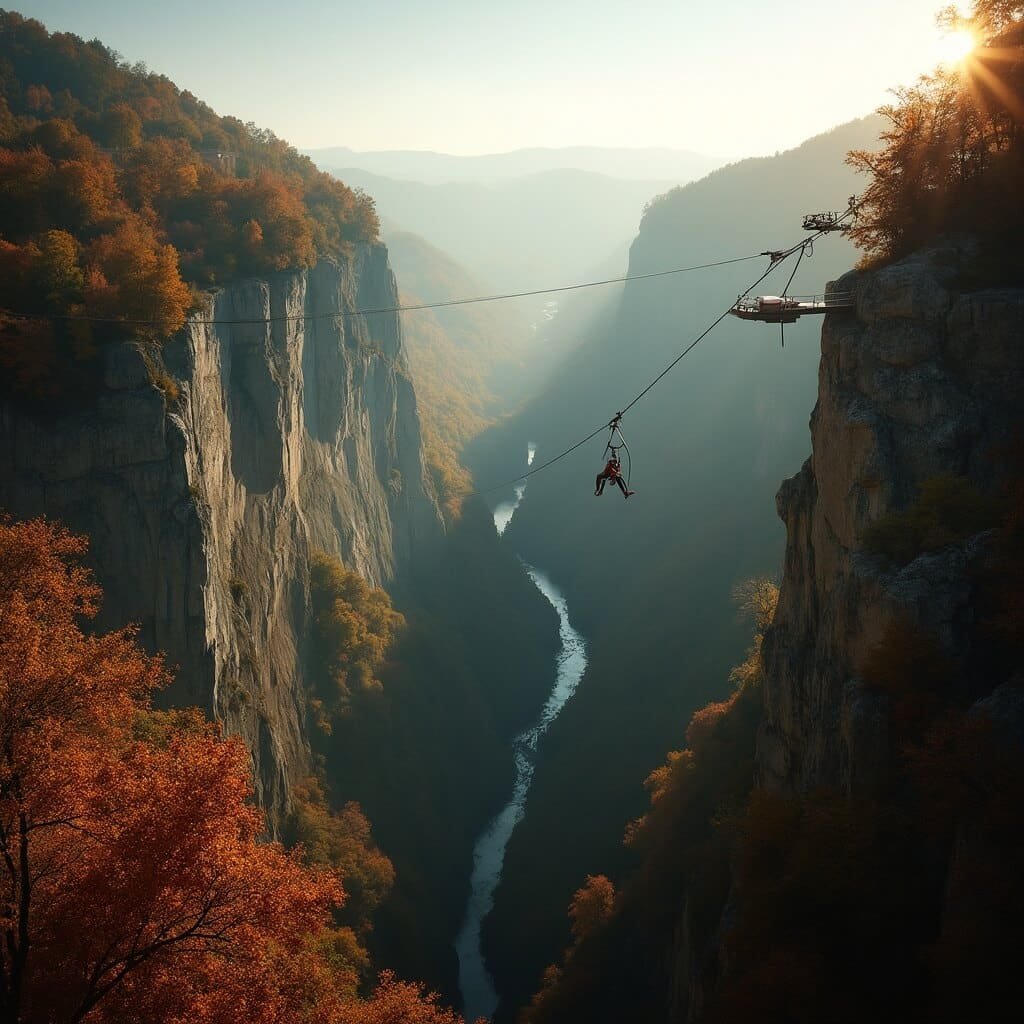
Late spring through autumn is the sensible window for most of these tours, and if you can time a visit for fall colour season in the Blue Ridge or High Country, do it — flying over a gorge full of turning leaves is a genuinely different experience from the same run in July. Summer is busier and hotter but reliable. Winter narrows your options considerably; some High Country and gorge-based operators cut back hours or close entirely, so check before building a trip around them if you’re travelling outside the main season.
On price, budget roughly $59 to $109 per person for a standard canopy tour, with the premium adrenaline experiences — The Gorge, Navitat’s Mountaintop Tour — running closer to $109–$139. Shorter or kid-focused options sit well below that; the Skyline Tour at around $45 and KidZip’s children’s rates are the best value in the region if you’re not after the full two-hour experience. Book ahead for summer weekends and fall foliage season especially, as the good slots at places like Navitat and NOC disappear fast, and most parks want you on-site around 30 minutes before your booked time for gear fitting and the safety talk.
Is It Worth Doing?
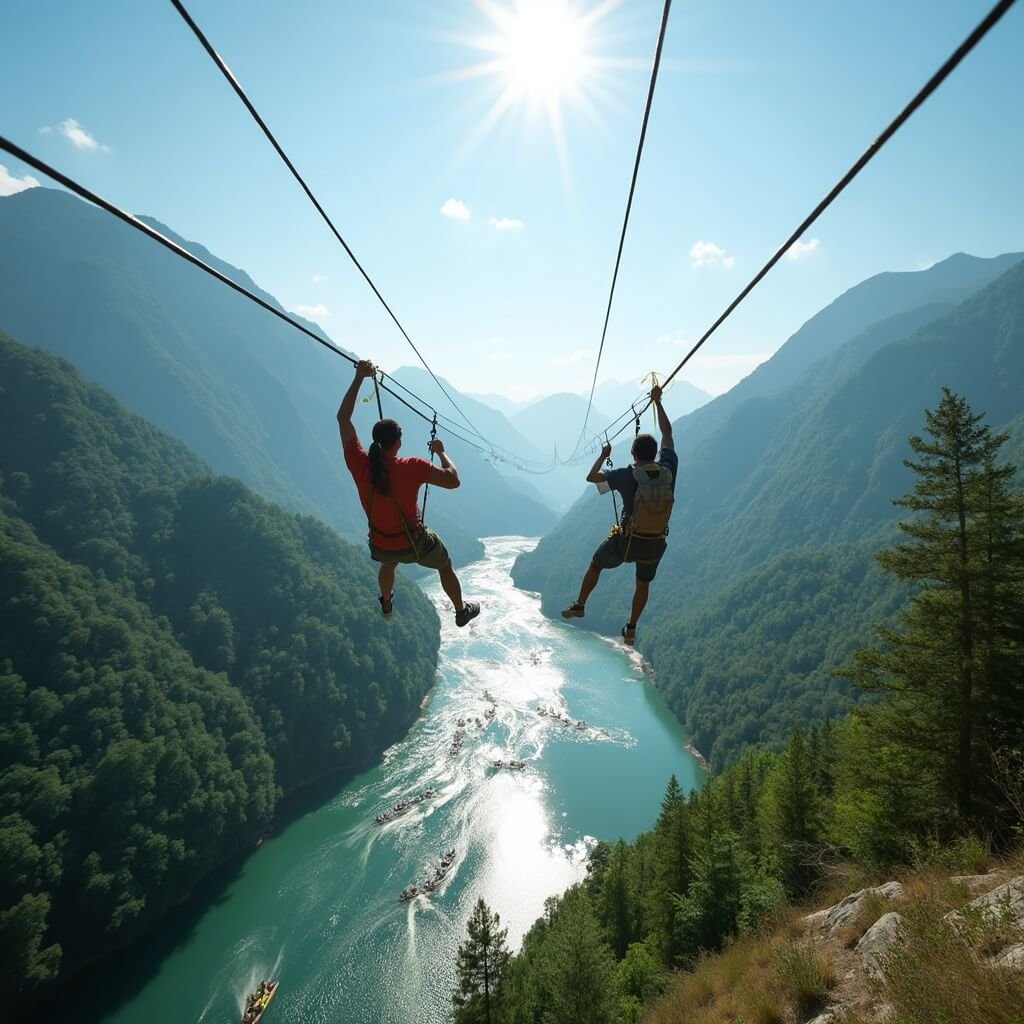
Yes, with caveats. The view from 300 feet up over a Blue Ridge ridgeline isn’t something you get any other way short of a small plane, and you don’t need climbing experience or any particular fitness to have a genuinely brilliant time. The range on offer — from a gentle family canopy tour to Saluda’s stomach-dropping descents — means there’s a version of this for almost anyone, fear of heights aside. The main drawbacks are cost, which adds up fast for a family of four, and the fact that a bad-weather day can cancel your one shot at it if you haven’t built in flexibility.
My honest recommendation: if this is your first time and you’re travelling with kids, go to the Adventure Center in Asheville and split your group between the Skyline Tour and KidZip. If you’ve done a zipline before and want to remember why people rave about ziplining through the mountains in North Carolina, book The Gorge in Saluda and go in autumn when the gorge is at its best.
👇Ready To Book Your Trip?👇
This post may contain affiliate links. Please see my disclosure policy for details.
Want to keep this one?
We'll email you the link so you can find it again later.