
Joshua Tree National Park sits about two hours east of Los Angeles, and if you’re wondering whether it’s worth the drive, I’ll save you some scrolling: yes, but only if you plan properly. This isn’t a park you can wing. There’s no petrol station inside, no café to duck into when you’ve underestimated the sun, and mobile signal drops out the moment you’re a mile past the entrance gate. I’ve made most of the mistakes so you don’t have to.
Where Exactly Is Joshua Tree?
The park straddles Riverside and San Bernardino Counties in southeastern California, east of Palm Springs and roughly 60 miles from San Bernardino. What makes the location genuinely interesting, rather than just geographically convenient, is that it sits on the seam between two deserts. The Mojave Desert — higher, cooler, and home to the Joshua trees themselves — meets the Colorado Desert, which is lower, hotter, and covered in creosote and cholla. You notice the shift as you drive through; the vegetation changes almost like flicking a switch.
From Los Angeles it’s about 140 to 160 miles depending which entrance you’re heading for. Nearby towns worth knowing are Palm Springs (glossy, full of good food), and the smaller gateway trio of Joshua Tree, Yucca Valley, and Twentynine Palms, which are scrappier and, frankly, more useful for actual trip logistics.
How Big Is It, and Why Does That Matter?
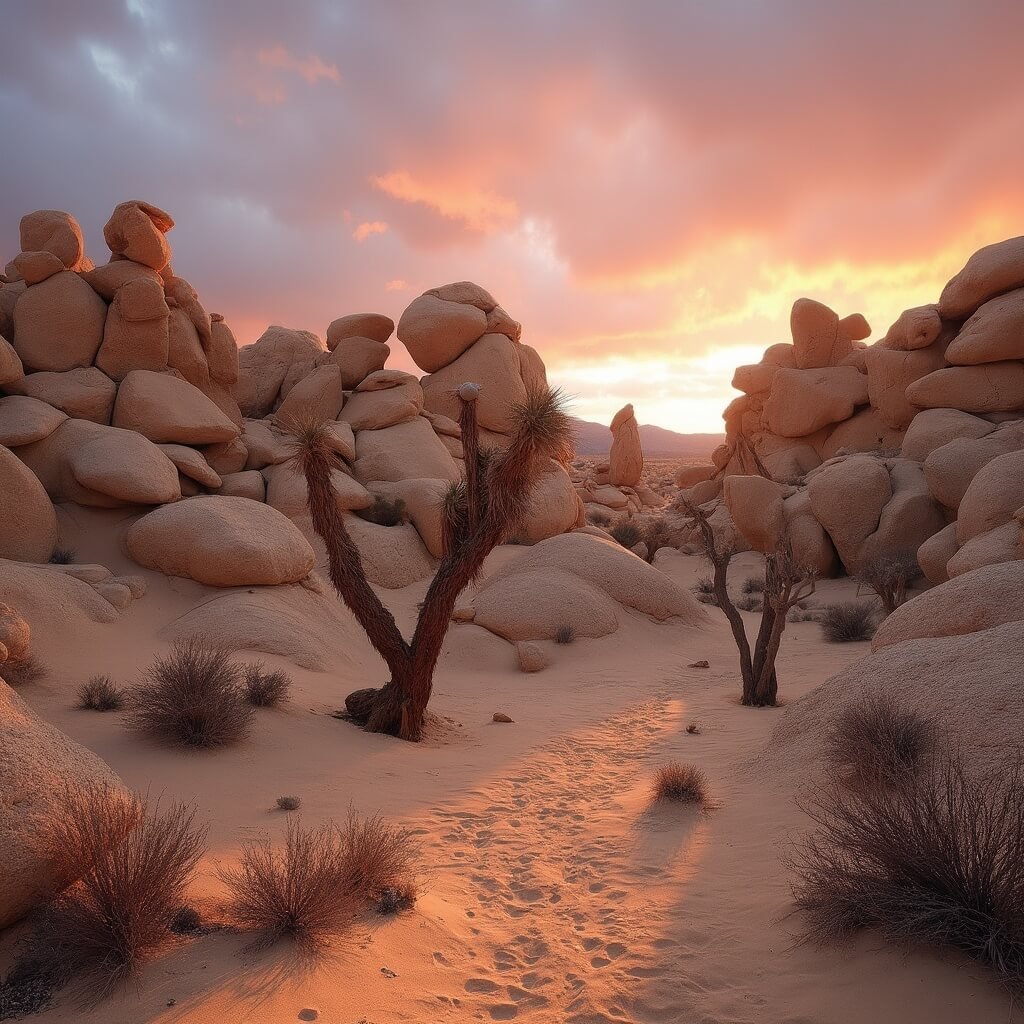
The park protects around 792,000 to 800,000 acres — bigger than Rhode Island, if that helps you picture it. Over 80% of that is designated wilderness, meaning no roads, no development, just rock and scrub stretching further than feels reasonable. This matters practically: it means huge stretches of the park are only reachable on foot, and cell coverage is patchy to nonexistent once you’re off the main roads.
It started life as Joshua Tree National Monument in 1936, protected by Franklin D. Roosevelt. UNESCO named it a Biosphere Reserve in 1984. It wasn’t until 1994, under the California Desert Protection Act, that it became a full national park, with its boundaries expanded to roughly 794,000 acres. About 3 million people visit every year now, which puts it among the busier desert parks in the country — busier than you’d expect for somewhere with so little infrastructure.
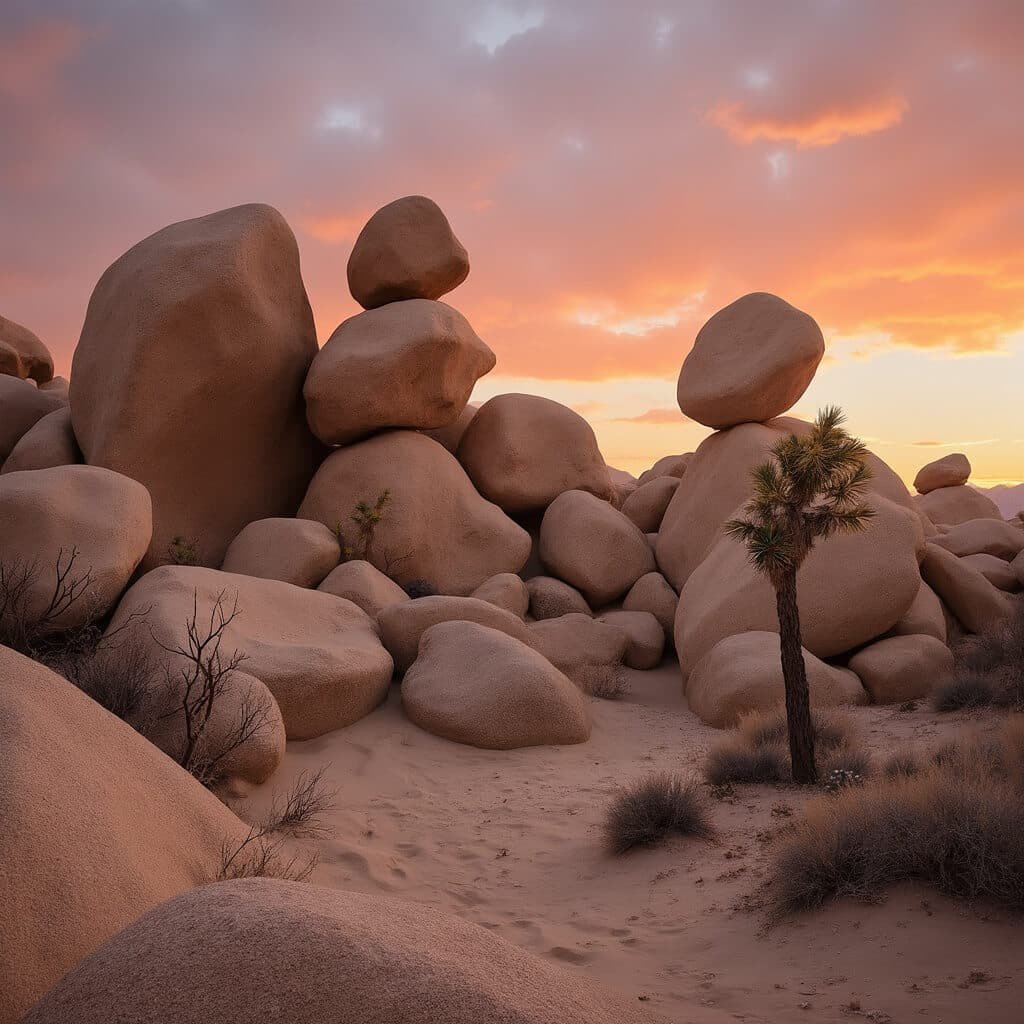
What draws people, beyond the name-brand Joshua trees, is the strangeness of the place. Piles of monzogranite boulders sit stacked as if arranged deliberately. The light does odd things at dawn and dusk. People reach for words like “surreal” and “otherworldly” a lot when describing it, and normally I’d roll my eyes at that kind of language, but here it’s earned.
When Should You Go?
The park never closes. It’s open 24 hours a day, every day of the year, and you can enter or leave whenever you like. That flexibility is handy, but it doesn’t mean every season is equally pleasant.
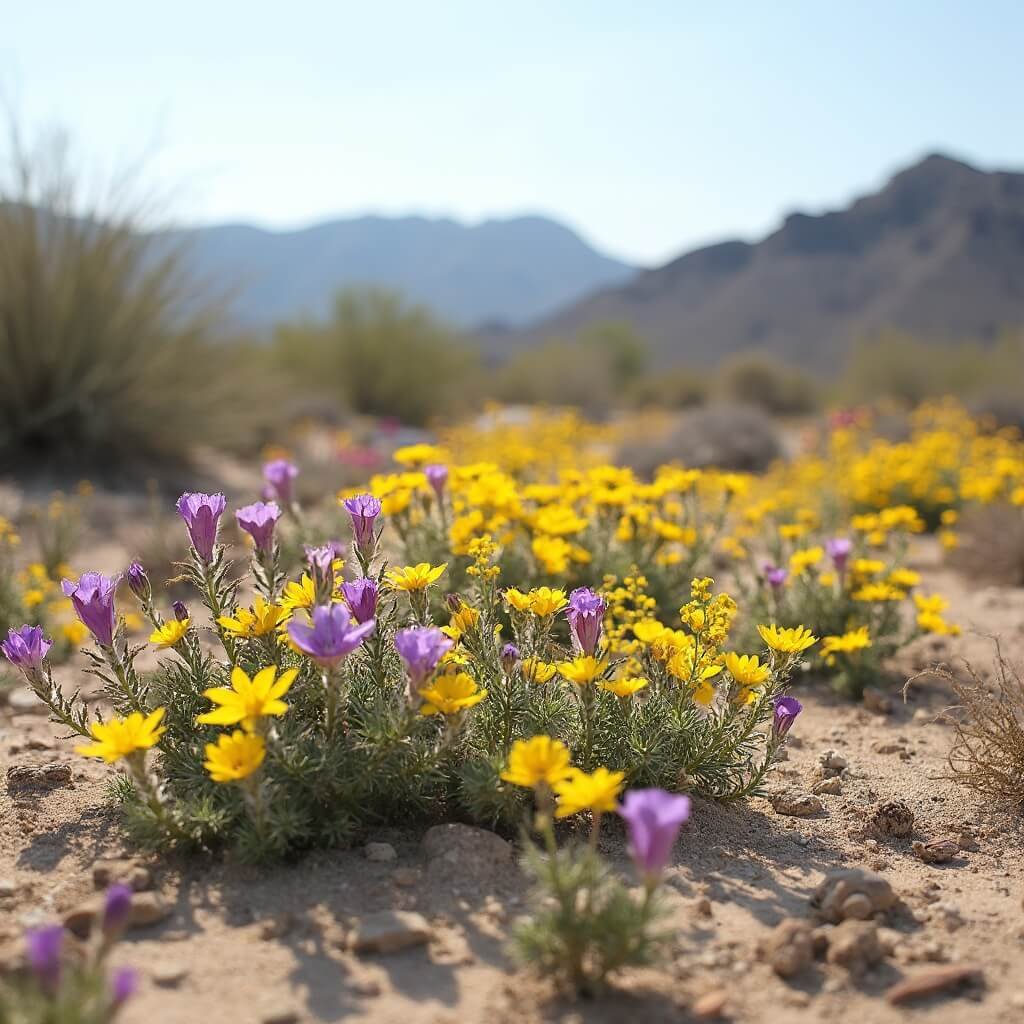
Spring and autumn are the sweet spot, with daytime highs typically in the 70s to mid-80s Fahrenheit and nights dropping to around 50°F. Spring brings wildflowers too — they start low down in January and February, then the bloom spreads through the park from April into June, depending on winter rainfall. Summer, on the other hand, is brutal. I wouldn’t hike midday in July if you paid me; temperatures regularly exceed anything comfortable, and there’s no shade to speak of. Winter is the opposite problem: nights get properly cold, and you can get wind, rain, even the odd dusting of snow at higher elevations.
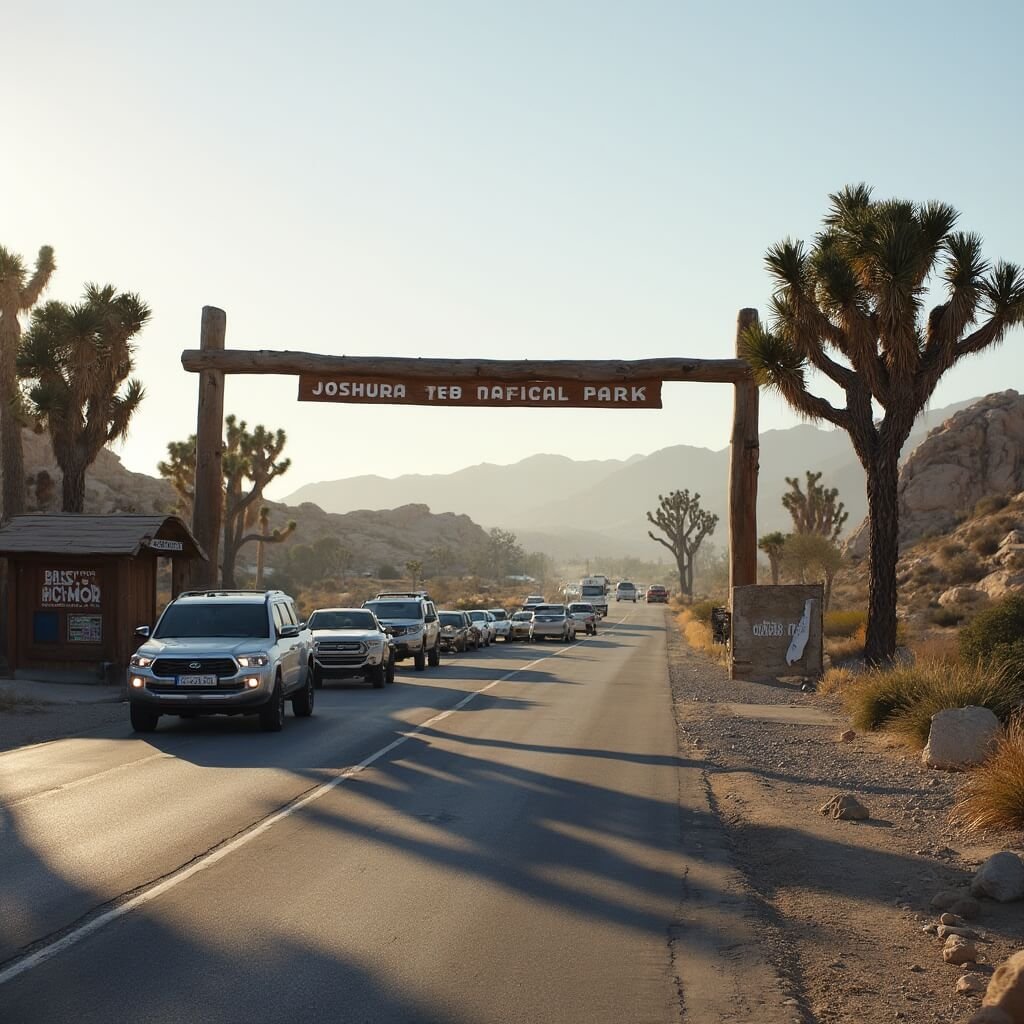
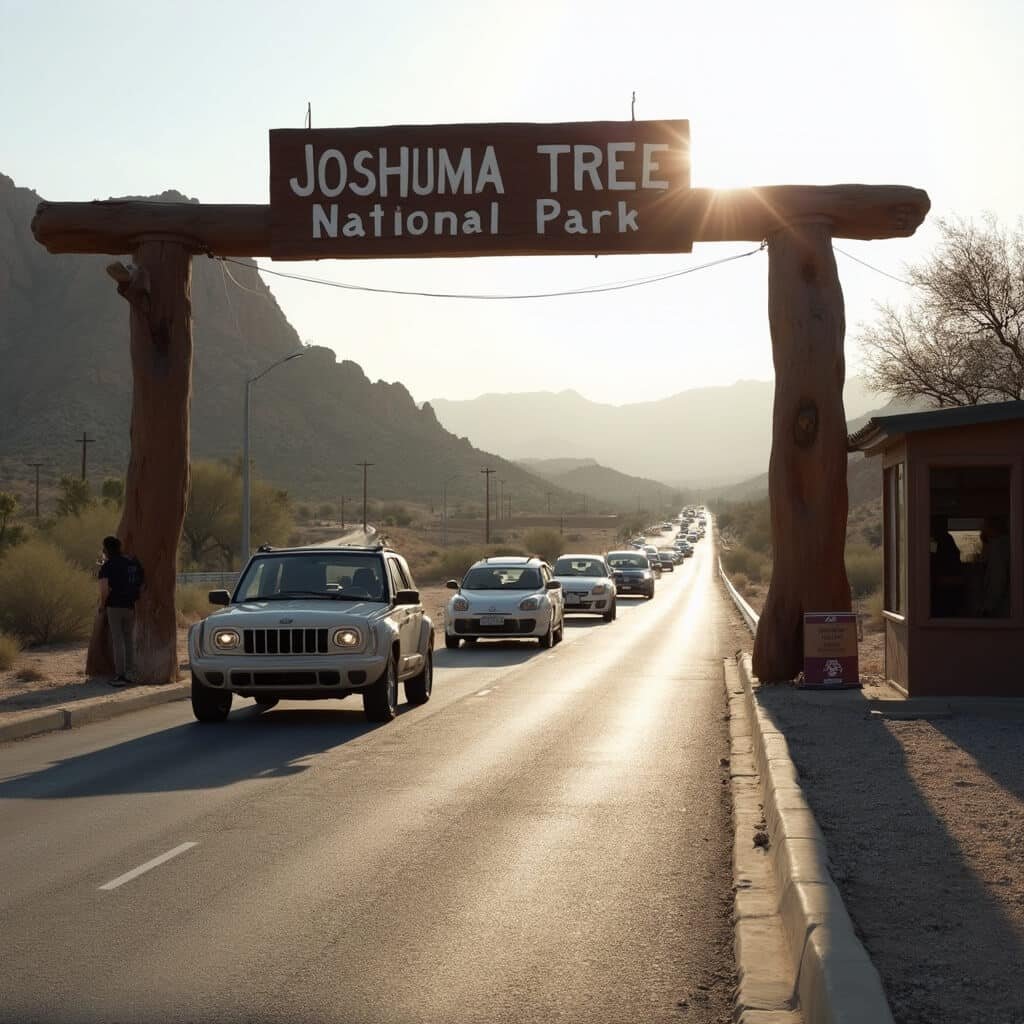
Here’s the catch with the “good” seasons — everyone else knows about them too. Spring weekends, holidays, and pretty much any weekend from October through May can mean queues at the entrance, full car parks at popular trailheads, and campgrounds booked out weeks ahead. I turned up on a Saturday in March a few years back, thinking I’d beat the crowds by arriving at 9am. I hadn’t. The West Entrance queue took forty minutes, and by the time I reached Hidden Valley the car park was already full, cars circling like it was a supermarket at Christmas. Weekday visits, even in peak season, make an enormous difference.
Getting In — Entrances and Routes
There are three main entrances, and which one you use depends on where you’re coming from and what you want to see first:
- West Entrance, near the town of Joshua Tree, reached via Highway 62 — this gets you into the heart of the park quickest and is usually the busiest.
- North Entrance, at Twentynine Palms, also off Highway 62 — a good option if you’re staying on that side.
- South Entrance, at Cottonwood Spring, off Interstate 10 — this drops you into the lower, hotter Colorado Desert section, and tends to be quieter.
From LA, most people take I-10 to Highway 62 for the west or north entrances, or continue on I-10 toward Indio for the south entrance. If you’re only doing a day trip and want to see the classic Joshua tree scenery, the west or north entrances make more sense than the south.
Fees and Whether You Need a Reservation
Entrance fees run around $30 per private vehicle, $25 for motorcycles, and $15 for anyone arriving on foot or by bike — though it’s worth checking current rates, as these do shift. You can buy passes ahead of time on recreation.gov or pick them up at a visitor centre, which is worth doing if you want to skip the booth queue. You don’t need a reservation just to enter the park; if the fee booth’s unstaffed when you arrive (early morning, for instance), you may be asked to pay or show your pass on the way out instead.
Camping is a different story. There are nine campgrounds with over 500 sites combined, and about 85% of those are reservation-only through recreation.gov, bookable up to six months out. The remaining first-come, first-served sites disappear fast on weekends and holidays — don’t count on turning up at 4pm on a Friday in April and finding a spot.
Photograph the Wave in Arizona (Permit Required)
What You Won’t Find Inside the Park
There’s no petrol, no restaurants, no shops, and no hotels inside Joshua Tree itself. None. Whatever food and fuel you need, bring it with you before you enter. Water is the same story — there’s no reliable potable water source inside the park interior, so fill up beforehand. This catches people out constantly, and it caught me out once too: I drove in on a half tank thinking I’d “sort it later,” forgot how large the park actually is, and ended up white-knuckling it back out to Yucca Valley with the fuel light on. Don’t do that.
For sleeping indoors, look to the towns ringing the park — Twentynine Palms, Joshua Tree, Yucca Valley, or further out to Palm Springs if you want more polish and don’t mind the extra driving.
Hike the Kalalau Trail in Kauai
Save this article
Enter your email and we'll send it straight to your inbox.
👇Find The Cheapest Flights To Anywhere Here👇
Visitor Centres and Getting Your Bearings
Each of the three main entrances has a visitor centre attached, and they’re genuinely worth a stop rather than just a box to tick. You’ll find maps, bookshops with decent field guides, and rangers who know current trail conditions better than anything you’ll read online. Twentynine Palms also has the newer Joshua Tree National Park Visitor & Cultural Centre, which opened in 2022 and does a good job covering the park’s Native American history — something that gets glossed over if you only stick to the boulders-and-cacti version of the story.
Pick up the official park map and brochure if you haven’t already downloaded it. More importantly, get the NPS app before you go, not once you’re there, because you won’t have signal to download it once you’re inside. I learned this the hard way trying to find a trailhead near Ryan Mountain with a half-loaded map and a phone that had given up on life. The app works offline once downloaded, which given the patchy coverage across the park, is close to essential rather than a nice-to-have.
Accessibility
The main roads through the park — from the north, northwest, and south entrances — are paved and fairly straightforward for standard vehicles, no high-clearance nonsense required unless you’re heading down specific backcountry routes. Visitor centres are accessible, and a handful of viewpoints and shorter trails are manageable for visitors with mobility limitations, though it’s patchy rather than comprehensive. Ranger-led programmes run mainly from autumn through spring and are generally good about accommodating different needs if you ring ahead and ask.
The Two Deserts, Up Close
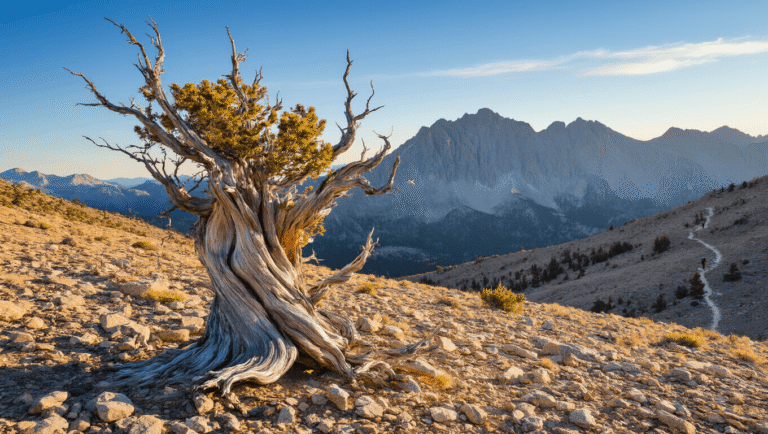
I mentioned the Mojave-Colorado boundary earlier, but it’s worth dwelling on because it shapes almost everything you’ll actually do in the park. The higher, cooler Mojave section is where the Joshua trees dominate — sprawling woodlands of them, oddly humanoid against the sky, especially at golden hour. This is also where you get the big monzogranite formations: domes, stacked boulders, cliffs that look sculpted rather than eroded. Climbers love this zone for obvious reasons.
Drop down into the Colorado Desert in the park’s southern half and the whole character changes. Joshua trees vanish, replaced by creosote bush, ocotillo, and dense cholla stands. The Cholla Cactus Garden is the obvious stop here — a short, flat loop through what looks like a field of golden, glowing cacti in the right light, though I’d warn you not to brush against them; those spines detach if you so much as look at them wrong. Nearby, the Mastodon Peak area gives you old mining history alongside the desert scenery, which I found more interesting than I expected going in.
Then there’s the Wonderland of Rocks, a genuinely disorienting maze of boulders in the park’s north-central section. It’s not somewhere to wander into casually without a map or a plan — people do get turned around in there. And for the classic postcard view, Keys View is the one everyone drives up to at sunset, looking out over the Coachella Valley toward the San Jacinto and Santa Rosa mountains. It gets crowded, but it earns the crowd.
What to Actually Do While You’re There
Most first-time visitors default to driving Park Boulevard and stopping wherever looks interesting, and honestly, that’s not a bad strategy. The road links most of the park’s highlights, and pullouts let you hop out for photos without committing to a full hike. Skull Rock is a good example — a genuinely skull-shaped boulder right off the road, reachable via a short trail, and one of the easiest “wins” in the park for anyone travelling with kids or short on time.
If you want to walk further, a few trails come up again and again for good reason:
- Ryan Mountain — a proper climb, but the summit view over the Joshua tree flats is the best in the park, in my opinion.
- Barker Dam — an easy loop past a historic dam, some rock art, and usually a decent chance of spotting wildlife around the water.
- Arch Rock — short and family-friendly, ending at a natural stone arch that photographs better than you’d expect.
- Mastodon Peak — combines old mining history with proper Colorado Desert views.
Bring more water than you think you need on any of these, even the short ones. There’s no shade out there, and the dry air means you dehydrate faster than you’d notice.
For climbers, this park barely needs an introduction — it’s one of the most storied bouldering and trad-climbing destinations in the country, with thousands of routes across the granite formations. Even if you’ve never climbed, watching people work their way up the boulders near Hidden Valley is entertainment in itself.
And then there’s the sky. Joshua Tree has some of the darkest night skies left within reach of Southern California, and on a clear, moonless night the Milky Way is properly visible without any special equipment. The park runs seasonal ranger-led night programmes, and there are informal star parties too, though honestly, just parking up away from the campgrounds with a blanket and letting your eyes adjust for twenty minutes does the job nearly as well.
If I were planning this trip again from scratch, I’d budget at least two full days rather than trying to cram it into one, book a campsite the moment the six-month window opens, and fill the car with fuel and water before I got anywhere near the entrance gate. Joshua Tree National Park rewards patience and a bit of preparation far more than it rewards spontaneity — go in with a plan, and it’s one of the best desert landscapes in the country.
For more essential tips on visiting Joshua Tree National Park and to plan your adventure, check out this comprehensive guide.
👇Ready To Book Your Trip?👇
This post may contain affiliate links. Please see my disclosure policy for details.
Want to keep this one?
We'll email you the link so you can find it again later.