
If you’re wondering whether a Texas Hill Country wildflower trip is actually worth planning your spring around, I’ll save you some scrolling: yes, but only if you treat it as more than a bluebonnet photo op. I’ve driven these roads in years when the hills looked like they’d been dipped in blue dye, and in years when a dry winter meant you had to hunt for colour. Both trips were worthwhile. The difference was expectations.
The Hill Country isn’t flat farmland with flowers scattered on top. It’s limestone hills, river canyons, granite domes, ranchland and spring-fed creeks, and the wildflowers are woven into all of it rather than sitting separately from it. You get the colour, sure, but you also get small towns with decent German bakeries, wineries that don’t take themselves too seriously, swimming holes, and hiking that ranges from a gentle stroll to something that’ll have you sweating through a t-shirt by 10am. A wildflower trip here is really a Hill Country trip that happens to have a very good reason behind it.
What makes it distinctly seasonal is worth understanding before you book anything. Spring is the headline act, no argument there. But Central Texas isn’t a place where flowers switch off completely outside March and April — four-nerve daisies can be blooming in January and still going in November, and in a mild winter you’ll spot lantana holding on well past when you’d expect it to have given up. Nature doesn’t read the tourism brochures.
What You’ll Actually See Beyond Bluebonnets
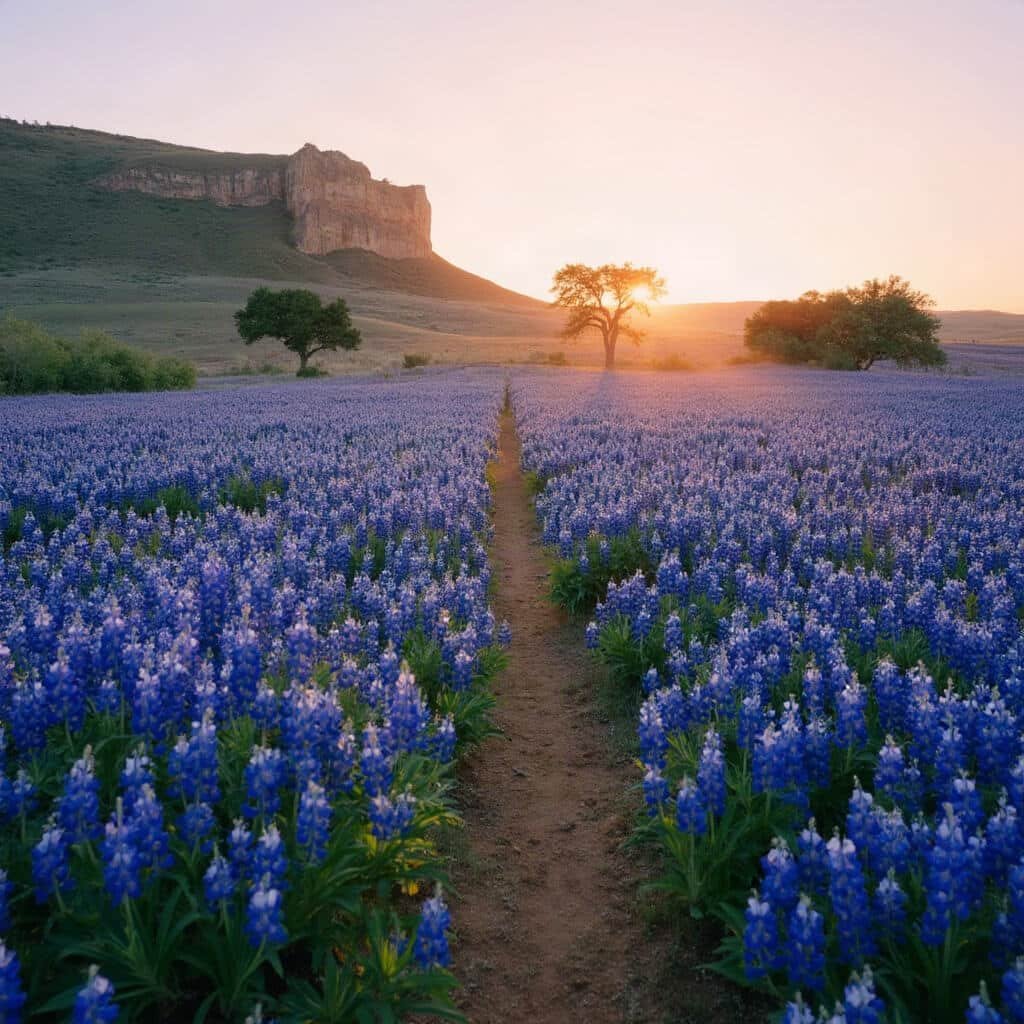
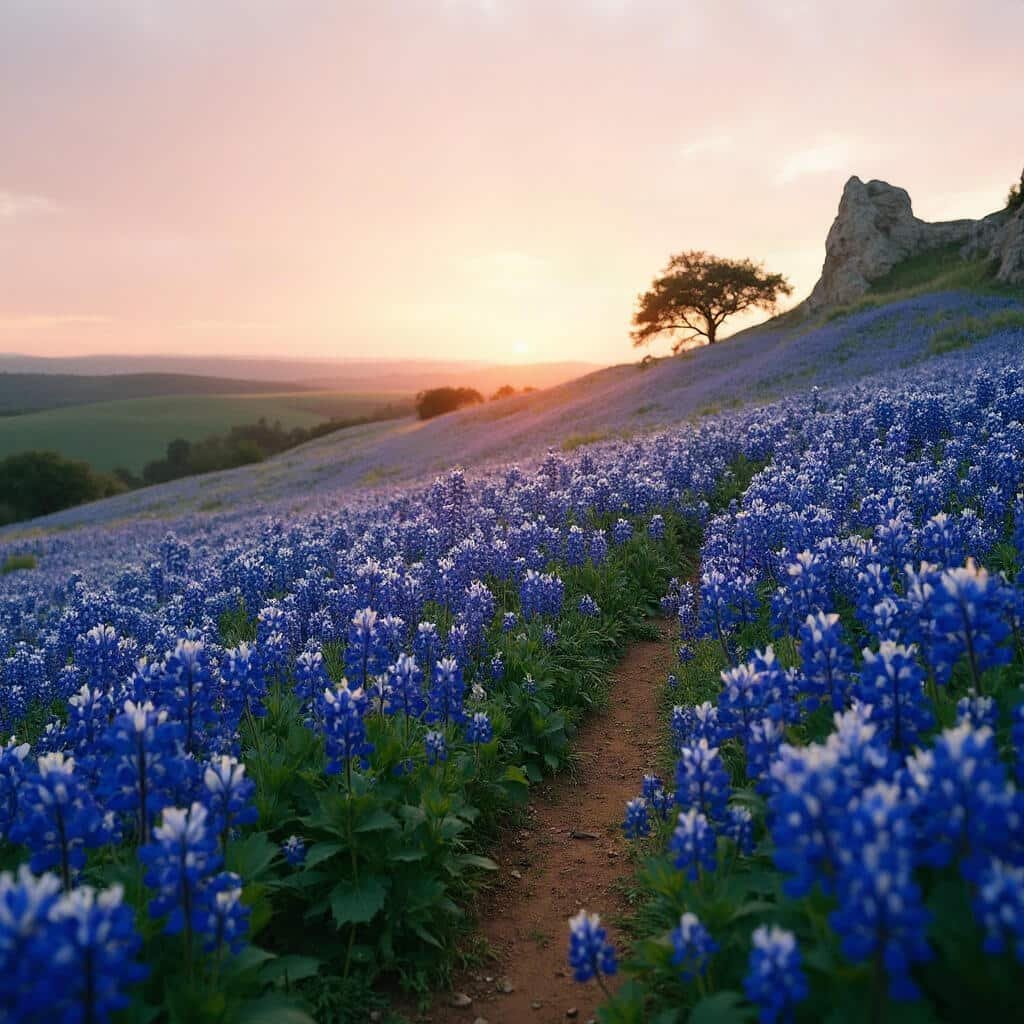
The bluebonnet is the one everyone comes for, and fair enough — it’s the state flower, it photographs beautifully against limestone and blue sky, and there’s something genuinely moving about a hillside full of them at sunrise. But if bluebonnets are all you’re looking for, you’ll miss most of what makes the season interesting.
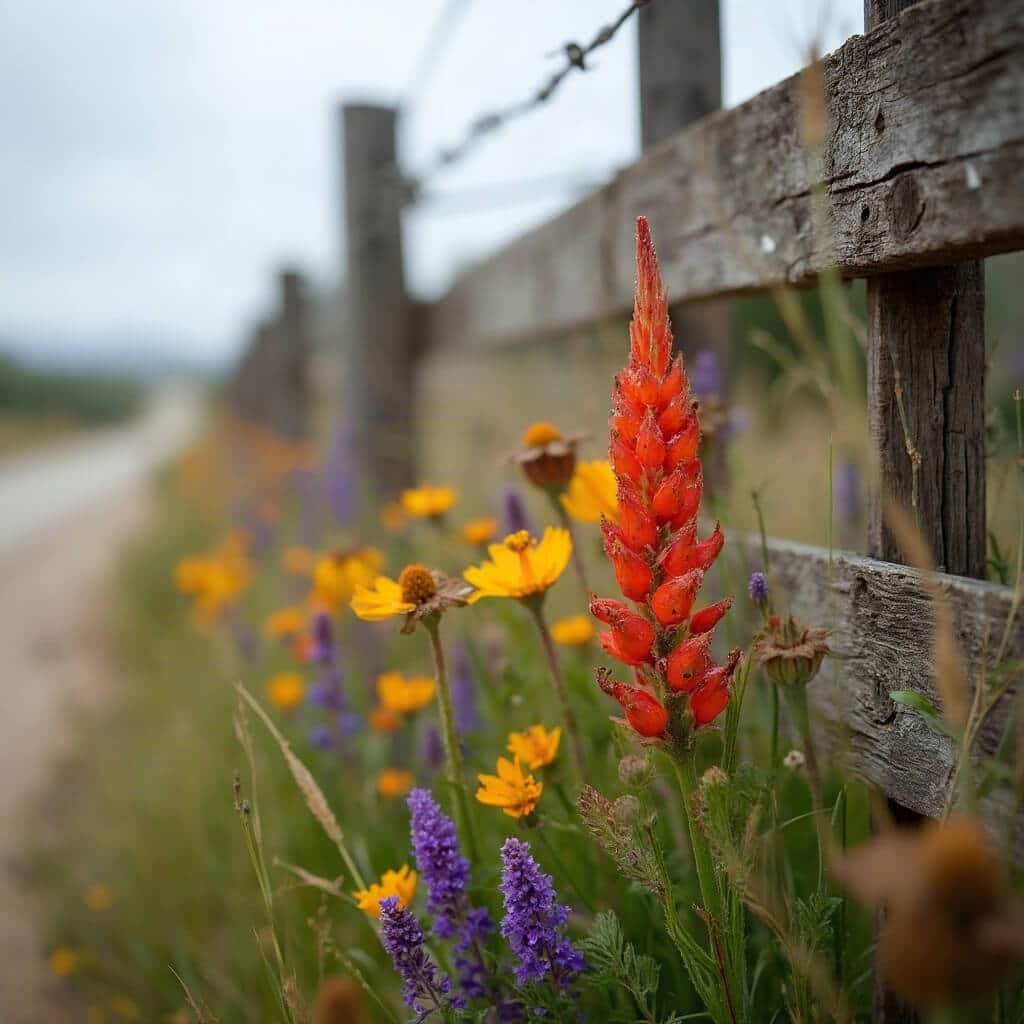
Keep an eye out for Indian paintbrush, with its vivid red-orange bracts that look almost artificial next to the softer blue of the bluebonnets. There’s Indian blanket and firewheel, both red-and-yellow daisy types that show up a bit later in the season. Coreopsis brings bright yellow drifts, winecup brings a deep magenta that’s easy to miss if you’re driving too fast, and phlox and prairie verbena fill in gaps with pinks and purples. Mexican hat looks exactly like its name suggests. Drummond’s skullcap and Lindheimer’s paintbrush are the ones most visitors walk straight past without realising what they are. Add red poppy, purple tansy, blackfoot daisy and Engelmann’s daisy, and you start to see this isn’t a one-flower show — it’s a whole native ecosystem doing its thing for a few weeks each year. Treat the trip as an exercise in noticing that complexity, not a checklist hunt for blue.
When Wildflower Season Actually Happens
Late winter, roughly January through February, is the quiet opening act.
You won’t get the big displays yet, but early daisies, mustard and winecups start appearing, and bluebonnet foliage — those low rosettes of leaves — begins carpeting roadsides well before any flowers show. How much shows up this early depends almost entirely on how wet and how mild the preceding winter has been.
The main event runs March through April.
Bluebonnets typically bloom from early March through late April, though this shifts year to year and place to place — don’t treat any date as gospel. Interestingly, the Hill Country often peaks a bit later than the fields around Austin, so if you’ve seen photos from Austin-area roadsides already fading, it doesn’t mean you’ve missed your window further west.
Peak colour generally lands somewhere between late March and mid- or late April.
Fredericksburg tourism officials have noted that the timing moves around enough that a late-April peak isn’t unusual at all. Routes like Willow City Loop, further into the western Hill Country, often stay colourful after the Austin displays have gone past their best, which is worth remembering if your schedule is flexible.
May and June bring a shift toward heat-tolerant species
— coreopsis, firewheels, sunflowers, and various prairie flowers take over as the bluebonnets fade. Through summer and into autumn, lantana, maximilian sunflowers and salvias keep roadsides from looking entirely spent. It’s not the dramatic blue-and-red spectacle of April, but there’s colour out there longer than most visitors assume. By late autumn and winter, the show moves from flowers to seed — this is when places like Wildseed Farms and native plant nurseries are doing the unglamorous work of collecting and propagating seed for next year’s display, which is worth understanding if you want to know why some fields look better than others season to season.
Why Weather Matters More Than the Calendar
Here’s the honest bit nobody likes hearing: there is no reliable bloom forecast. Fall rainfall sets the stage for germination, winter temperatures determine how much survives, and spring rain finishes the job — or doesn’t. A drought year can mean thin, patchy colour and a bloom season that’s over almost before it starts. Too much rain, on the other hand, can flatten fields and turn unpaved backroads into something your rental car really won’t appreciate. A mild winter can trick flowers into blooming early, leaving you a fortnight behind if you’ve planned your trip around last year’s dates.
My advice, which I’ve learned the hard way after driving out in a year that turned out to be unusually dry: check current conditions in the days before you travel rather than trusting a date you circled months ago. Local tourism offices and state park social media accounts tend to post honest updates, including the slightly deflating “not much happening yet” kind.
The Best Time of Day to Go Looking
Early morning is my preference, and not just for the Instagram-friendly light. The air’s cooler, the light is softer and more forgiving for photos, there are fewer people trampling around your chosen spot, and you’ve got a decent shot at seeing deer or wild turkey while you’re at it. Late afternoon is the other good window — that warm, low side-light that makes landscape photography look far more skilled than it actually is.
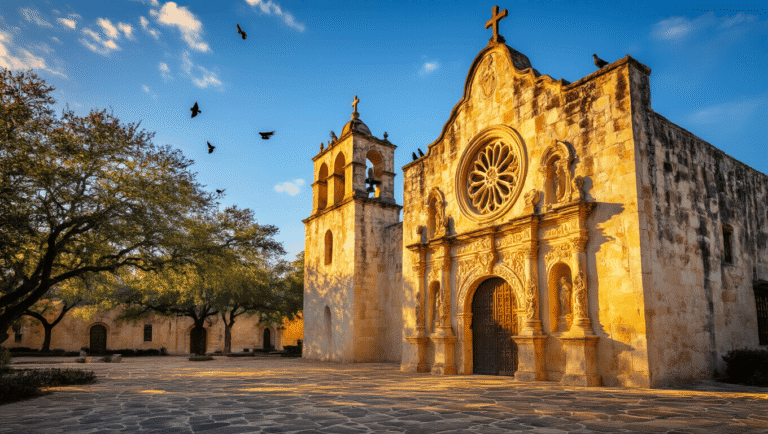
Midday is the one I’d generally steer you away from. The light goes flat and harsh, the heat climbs fast once you’re into April, parking areas fill up, and there’s often no shade to retreat to on exposed trails. If you’ve only got one window in your day, pick either end of it. If you’re extending your trip to the city, you can also tour the missions in San Antonio.
👇Find The Cheapest Flights To Anywhere Here👇
Where to Actually Go
Fredericksburg and the Western Hill Country
Wildseed Farms, just outside Fredericksburg, is the place I send people who want a guaranteed result. It’s a working seed farm with more than 1,000 cultivated acres, over 200 of which are given over to wildflower fields planted specifically to look spectacular through spring. You can walk the paths, buy native seed packets to take home, wander the nursery, and get a decent meal at the café afterwards. It’s the trade-off worth understanding clearly: Wildseed Farms gives you reliable, well-maintained colour almost regardless of how the wild season is going, while a roadside field down the road might be patchy or might be the best thing you’ve ever seen. Cultivated isn’t a dirty word here — it’s just a different, more predictable experience than chasing wild bloom reports.
Enchanted Rock State Natural Area pairs wildflowers with one of the genuinely strange landscapes in Texas — a pink granite dome that looks like it’s been dropped from somewhere else entirely. Beyond the flowers, there’s hiking, birding, climbing, camping and stargazing that’s good enough to justify the trip on its own. The Summit Trail is the demanding one, steep and exposed, while the Interpretive Loop and Scenic View Trail suit people who want the views without the burn in their thighs. Worth knowing: the more exposed trails can close in wet weather, and spring weekends sell out, so book ahead rather than turning up hopeful.
Lyndon B. Johnson State Park and Historic Site is the quieter option nearby, combining native flowers with ranch landscape and the history of a president who clearly loved this stretch of country. It’s a good half-day add-on rather than a standalone destination, but the setting makes the history feel less like a museum exhibit and more like a place people actually lived.
Beyond the named sites, the rural roads around Fredericksburg are full of unplanned colour — bluebonnets, paintbrush, poppies, winecup and firewheel along fences and verges. Just check before you stop that you’re on public right-of-way and not somebody’s front paddock.
Willow City Loop
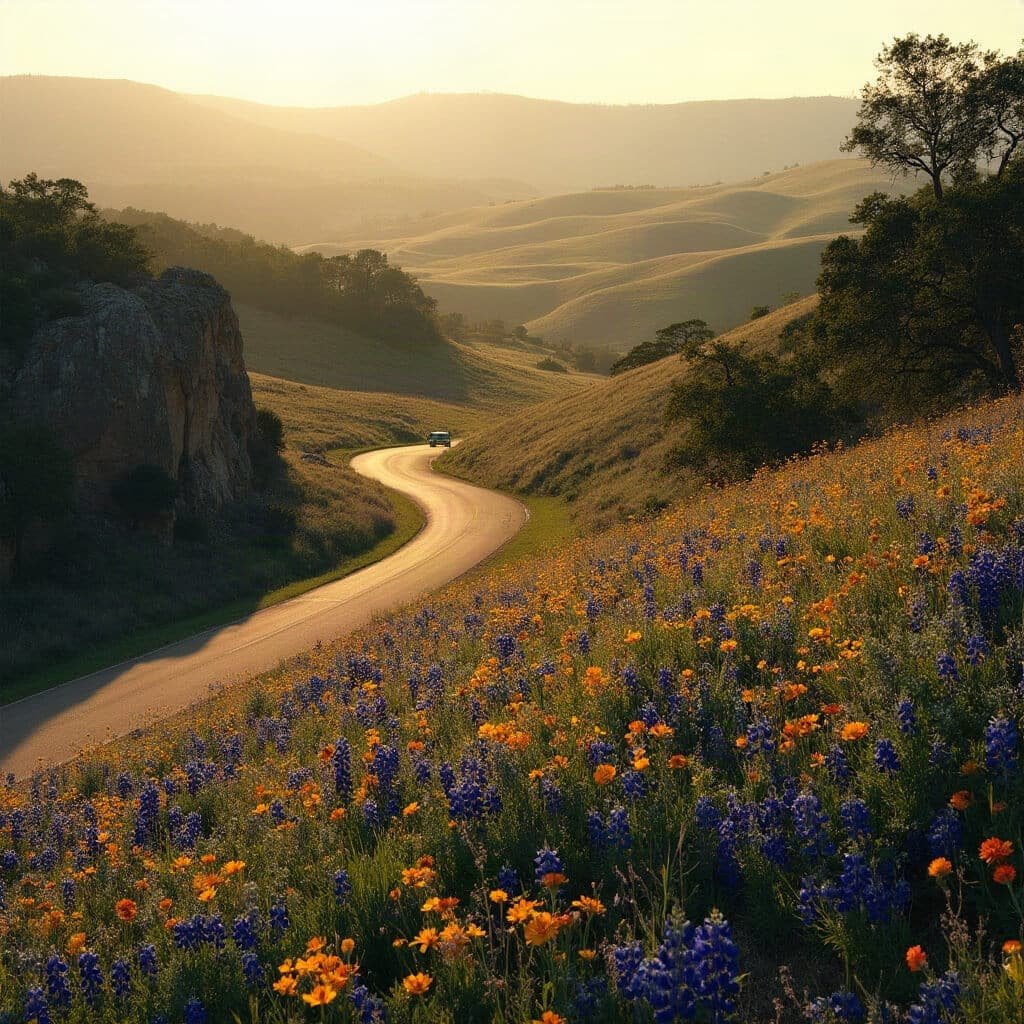
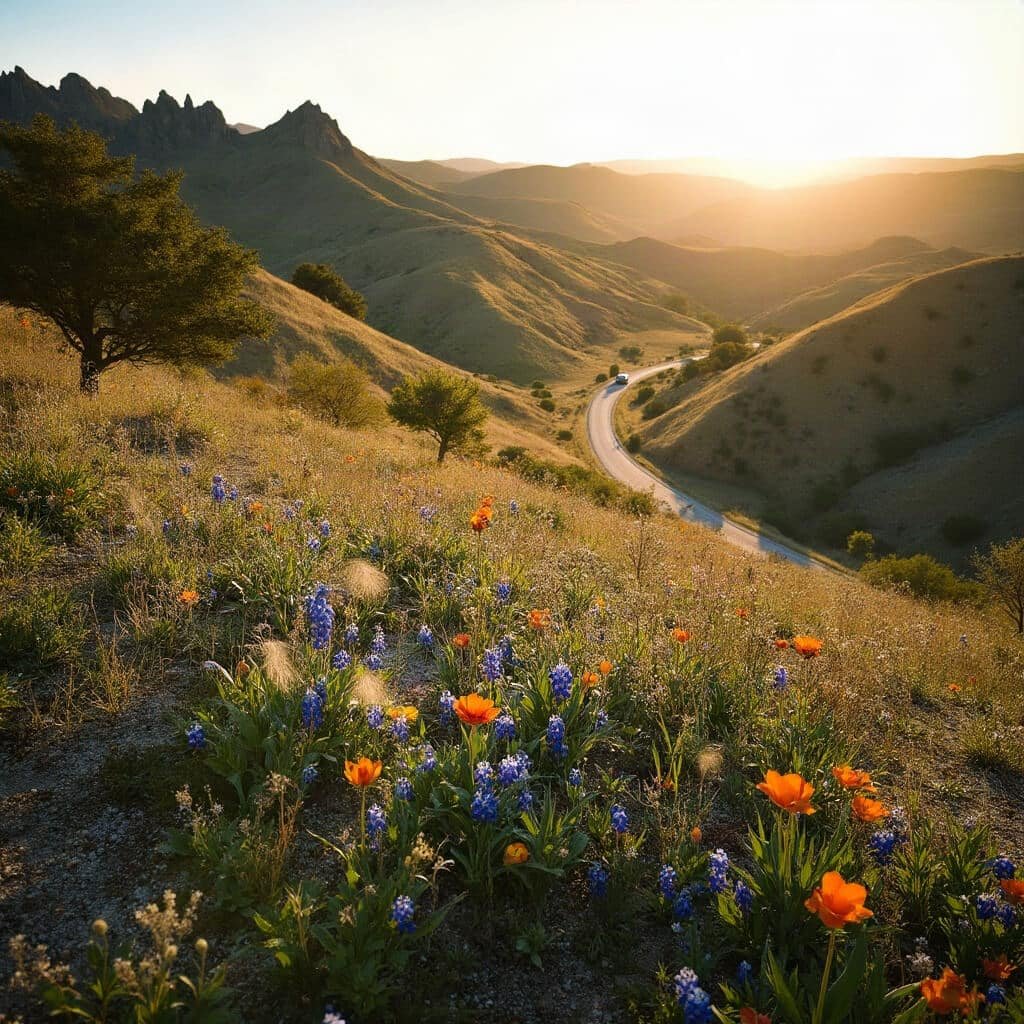
This 13-mile ranch road is the one locals talk about in hushed tones, and for good reason. It winds through hills, canyons and granite outcrops with bluebonnets, paintbrush, phlox, coreopsis, prickly poppies, sunflowers, firewheels, winecups and prairie verbena all doing their thing at various points along the route. It’s genuinely one of the best drives in the state during a good year.
The catch is that most of the loop runs through private ranchland, and the owners have been generous about tolerating visitors rather than obligated to. Stay on the road, use only the recognised pullouts, and don’t block gates or driveways — this isn’t pedantry, it’s the reason the loop hasn’t been fenced off entirely. If it’s rained recently, think twice about taking a low-clearance car; some sections get rough.
Save this article
Enter your email and we'll send it straight to your inbox.
Burnet and the Highland Lakes
Burnet calls itself the Bluebonnet Capital of Texas, and whether or not you buy the claim, it’s a sensible base for exploring the surrounding flower drives, with decent local dining and small-town charm thrown in. The drive out toward Lake Buchanan and Canyon of the Eagles runs through proper bluebonnet country, and the local bluebonnet festivals — when they’re running — bring live music, food stalls and enough local colour to fill an afternoon even if the flowers themselves are having an off year. Check dates annually; festival schedules shift and I’ve turned up a week early more than once.
Inks Lake State Park
Inks Lake gives you water and wildflowers in the same stop, which is a good combination when you’re travelling with people who don’t share your enthusiasm for staring at flowers for hours. The Bluebonnet Trail runs through rocky outcrops and cactus-studded hills, Pecan Flats Trail starts easy and gets rugged toward the end, and the Devil’s Backbone Nature Trail gives you granite scenery and lake views alongside the plant life. There’s swimming, paddling and picnicking too, though it’s worth knowing the swimming areas generally don’t have lifeguards, so keep an eye on anyone in the water.
Other State Parks Worth the Detour
Colorado Bend State Park combines wildflowers with waterfalls and river hiking, and it’s less crowded than the bigger-name parks, which counts for something in peak season. Garner State Park has canyons, the Frio River, limestone cliffs and a mix of vegetation — bald cypress, Texas madrone, lacey oak — that makes the wildflowers feel like one part of a larger, richer picture rather than the whole point. Guadalupe River State Park offers similar river-and-trail access closer to San Antonio.
If you’re staying near Austin and don’t want to drive far, McKinney Falls State Park has bluebonnets and brown-eyed Susans alongside its water features and is about as convenient as this gets. Government Canyon State Natural Area is worth it for the canyon woodland species — plateau spiderwort, red columbine, Texas milkweed — that you won’t see in the open hill country, and Lost Maples State Natural Area is better known for autumn colour but puts on a good spring show too, set against some genuinely rugged canyon terrain.
Lady Bird Johnson Wildflower Center
If you want to actually learn what you’re looking at rather than vaguely admiring it, start here before you head further out. The native plant gardens are curated and labelled, which makes identification far easier than squinting at a mixed roadside field trying to work out if that’s prairie verbena or something else entirely. There are walking trails, decent photography opportunities, family-friendly activities and seasonal plant sales if you want to take a bit of the Hill Country home with you. Check the hours and programming before you go — it’s an easy add-on to an Austin-based trip and a sensible first stop if you’re new to Texas wildflowers altogether.
Planning the Trip Properly
Work out what kind of trip you actually want before you start booking. A scenic-drive itinerary — looping through Fredericksburg, Willow City, Johnson City and Enchanted Rock — suits people with limited time or limited interest in hiking. A hiking-focused trip should centre on the state parks with proper trail networks, matched sensibly to fitness level and heat tolerance. Families do well with a mix of short trails, picnic spots and places like Wildseed Farms where kids can run about without wrecking anything important. Photographers should build the day around sunrise and late afternoon, and should scout legal parking in advance rather than discovering on the day that the only pull-off is somebody’s gate. And if you’re travelling with anyone who needs accessible paths, don’t assume — check trail surfaces and parking specifically, because a lot of the best flower fields are nowhere near a flat, paved path.
A one-day Fredericksburg trip might run: morning at Wildseed Farms, lunch and a wander around downtown, afternoon at Enchanted Rock or a permitted scenic drive, evening meal or stargazing if the sky’s clear. A Burnet and Highland Lakes day could be morning flower viewing around Burnet, a picnic near Lake Buchanan or Inks Lake, then an afternoon trail at Inks Lake State Park. If you’re coming from Austin, start at the Wildflower Center in the morning, hit McKinney Falls or a nearby park midday, then use the afternoon for a reserved state park visit further out. For a proper weekend, I’d do Fredericksburg, Wildseed Farms and Enchanted Rock on day one, then Willow City Loop, LBJ State Park and a winery or farm-to-table dinner on day two.
Book ahead for the popular parks — Enchanted Rock sells out on spring weekends with some regularity — and check current conditions rather than assuming last year’s dates apply. Carry water, sunscreen, a hat and proper footwear, because April heat arrives faster than you expect. Phone signal gets patchy out in ranch country, so download offline maps before you leave town, and keep cash on hand for the smaller vendors and festival stalls that don’t always take cards. And resist the urge to cram six stops into one day — the best moments on these trips tend to be the ones you weren’t rushing toward.
For more ideas, see Best Wildflower Drives to Experience Texas Hill Country in Bloom and How to Find Wildflowers Year-Round Across Texas.
Doing It Without Wrecking It
Stay on trails and designated viewing spots, and never drive into a field for a photo — I’ve seen people do this and it’s as damaging as it looks, flattening the very thing they’re there to photograph. Annual wildflowers need to set seed to come back next year, and TxDOT has been fairly blunt about discouraging the kind of photography that tramples plants before they’ve had the chance. Don’t dig anything up, don’t take seed heads from protected land, and keep dogs leashed where it’s asked of you.
Private land is private land, loop roads and all — don’t cross fences or open gates without permission, and stay alert for livestock, uneven ground and the usual hazards of rural Texas, which include cactus, ticks and the occasional snake.
On the question everyone asks: no, picking a bluebonnet isn’t a blanket crime in Texas, despite what you’ll hear repeated as fact. But picking flowers on private land without permission is trespassing, picking them in state parks is prohibited, and messing with anything on a transportation right-of-way can land you in trouble too. My advice is simpler than memorising the legal nuance — just photograph them and leave them where they are.
Roadside safety deserves its own mention because people get hurt here every year doing something avoidable. Pull completely off the road where it’s legal and safe to do so, never stop on a blind curve or narrow shoulder, and never cross live traffic to reach a flower patch on the other side. It’s not worth it, and no photo is either.
Worth Knowing About the Roadsides Themselves
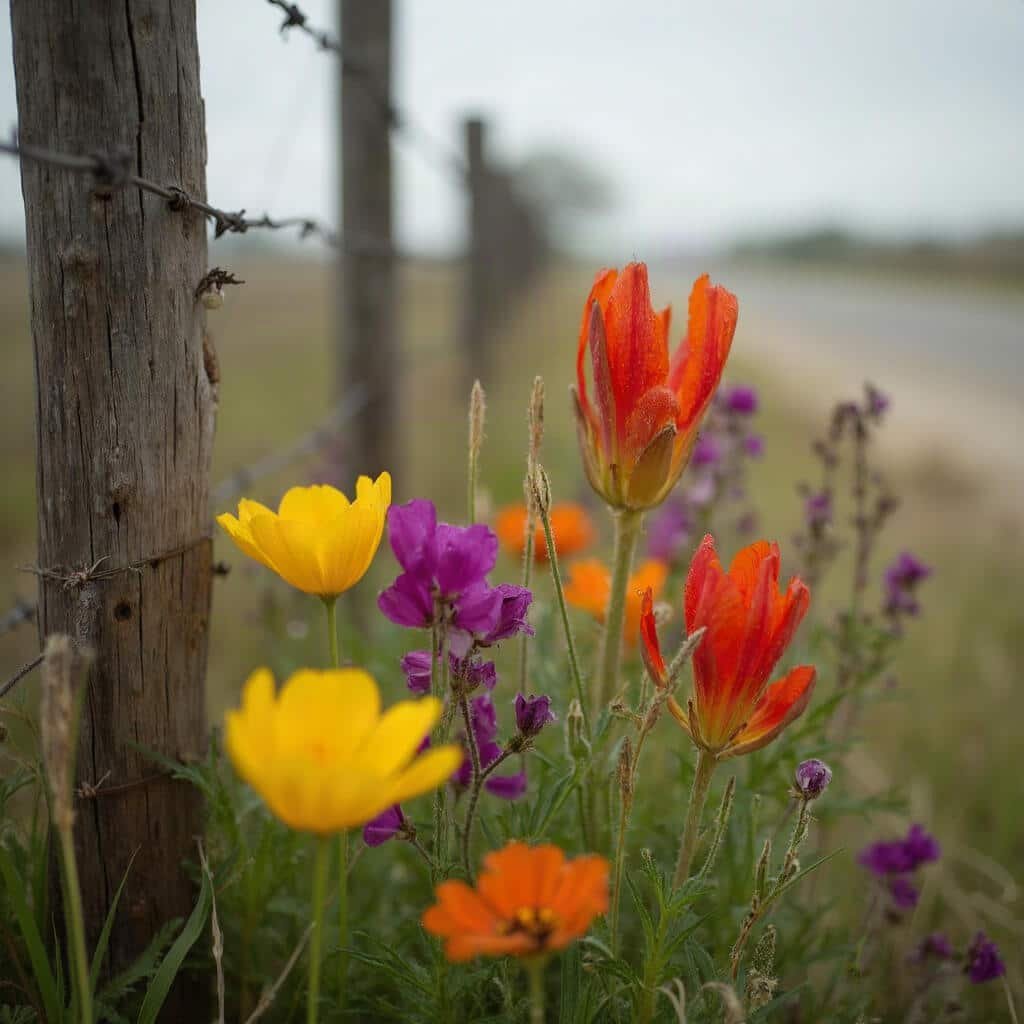
Texas roadsides support more than 5,000 species of wildflowers and native grasses, and a lot of that is down to TxDOT deliberately delaying mowing until flowers have set seed — a quiet, unglamorous bit of land management that covers more than 800,000 acres of roadside habitat statewide. It’s the reason the displays keep coming back year after year rather than depending entirely on luck, and it’s worth a moment of appreciation next time you’re stuck behind a slow-moving mower in May.
That habitat does real ecological work beyond looking good — feeding pollinators, holding soil in place, supporting wildlife, keeping genetic diversity alive in a way a seed packet from a nursery never quite replicates. Tourism brings real money into these towns, which is partly why the festivals and farms exist at all, but it also brings crowds, litter and the occasional flattened field, so there’s a genuine tension between wanting people to come and wanting the roadsides to survive the visit.
If you’re planning this trip, my actual advice is to go in late March with a flexible few days either side, check conditions the week before, pick two or three base locations rather than trying to see everything, and leave the fields exactly as you found them. The Texas Hill Country wildflowers reward that kind of patience far more than they reward a tightly scheduled itinerary built around somebody else’s photos from three years ago.
More outdoor and garden inspiration
Discover Valley of Fire State Park in Nevada
Hike the Devils Garden Trail in Arches
Walk Among the Bristlecone Pines in Nevada
Go Whale Watching in Monterey Bay
👇Ready To Book Your Trip?👇
This post may contain affiliate links. Please see my disclosure policy for details.
Want to keep this one?
We'll email you the link so you can find it again later.