Front Door Wreaths That’ll Make Your Neighbors Jealous (And It’s Easier Than You Think)
Front door wreaths transformed my bland entryway into the most photographed house on the block, and I’m not even remotely crafty.
I used to walk past my front door and feel… nothing.
Just a slab of wood with a sad little doormat that had seen better days.
Then I hung my first wreath—a simple eucalyptus and white rose combo I threw together in about 45 minutes—and suddenly strangers were stopping to take photos.
My mail carrier complimented it.
The UPS guy asked where I bought it.
Even my perpetually unimpressed teenage nephew said, “Huh, that’s actually cool.”
Why Your Front Door Is Begging for a Wreath
Your front door gets judged before anyone even knocks.
It’s the handshake of your home, the first impression, the visual “hello” that tells visitors whether you give a damn about aesthetics.
A wreath fixes that instantly.
It says “someone lives here who cares” without screaming “I spent my entire weekend on Pinterest.”
The circular shape has been a symbol of eternity and welcome since ancient Rome, but honestly, you don’t need a history lesson to know that wreaths just work.
They soften harsh architectural lines.
They add color to neutral exteriors.
They give your eyes something interesting to land on besides that doorbell camera.
Here’s what shocked me most: wreaths aren’t expensive or time-consuming if you approach them right.
You can spend anywhere from $20 for a basic DIY version to $150 for a jaw-dropping statement piece, and both can look equally impressive depending on how you style them.

🎨 Steal This Look
- Paint Color: Benjamin Moore Hale Navy HC-154
- Furniture: a slim teak console table just inside the entry for mail and keys
- Lighting: a brass lantern-style sconce flanking the door
- Materials: weathered cedar, brushed brass hardware, matte black metal door accents
Your front door works harder than any room in your house—it greets every guest, every delivery driver, every neighbor who walks by with their dog. A wreath is the quickest way to make that daily performance feel personal.
The Wreath Styles That Actually Work (Not Just Look Pretty on Instagram)
Holiday/Christmas Wreaths That Don’t Look Like Every Other House
Everyone does the standard evergreen-with-red-bow thing.
Boring.
I learned this the hard way my first Christmas when my wreath looked identical to seven other houses on my street.
What works instead:
- Layer different types of greenery—mix cedar with pine and add some silvery-tipped fir for depth
- Skip the red entirely and go with jewel tones like deep purple, emerald, and gold
- Add LED string lights woven throughout so your wreath glows at night (this was the single addition that got the most compliments)
- Cluster ornaments in one section instead of scattering them evenly—asymmetry looks intentional and expensive
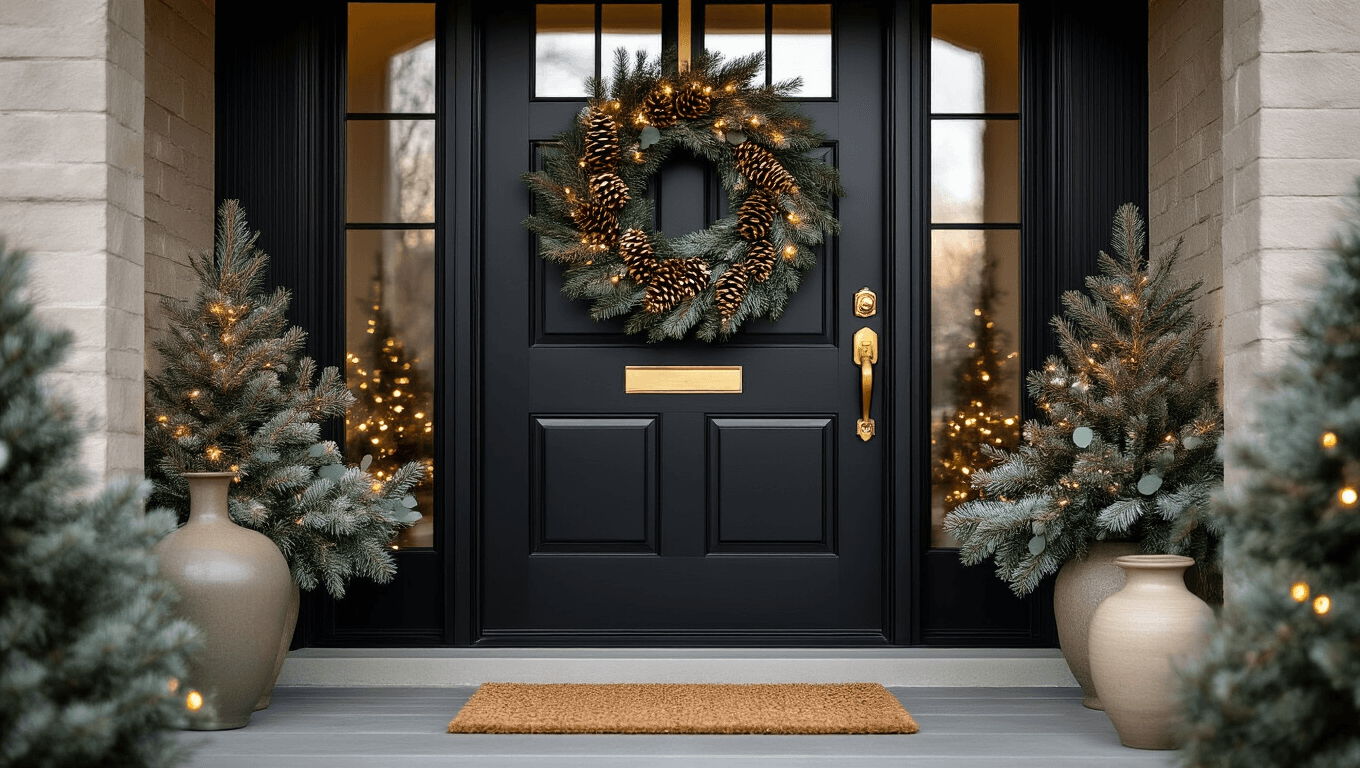
My current Christmas wreath has frosted pinecones, cream-colored berries, and warm white lights on a dark green base.
Zero red.
Everyone assumes I hired someone to make it.
Save this article
Enter your email and we'll send it straight to your inbox.
Spring Wreaths That Actually Feel Fresh
Spring wreaths fail when they look like a craft store exploded.
Too many pastels.
Too much fake-looking stuff crammed together.
The spring formula that works:
- Start with a simple grapevine wreath base
- Use mostly greenery (eucalyptus, ferns, or boxwood)
- Add just ONE type of flower as your hero element—I’m obsessed with white peonies because they photograph beautifully
- Tuck in something unexpected like a small bird’s nest or vintage garden tool
I made a spring wreath last year with mostly green, a few cream-colored tulips, and an old rusty garden spade I found at a flea market.
Cost me about $30 total.
Looked like it cost ten times that.
Summer Wreaths Nobody Expects
Summer is the forgotten wreath season, which is exactly why you should do it.
Most people take their wreaths down after spring and leave their doors naked until fall.
Summer wreath secrets:
- Go coastal with natural dried elements like sea grass, white-washed driftwood, or shells
- Use bright but sophisticated colors—navy and white with pops of coral beats pastel beach vibes
- Incorporate actual greenery like olive branches that can withstand heat
- Keep it lighter in weight and visual density than winter wreaths
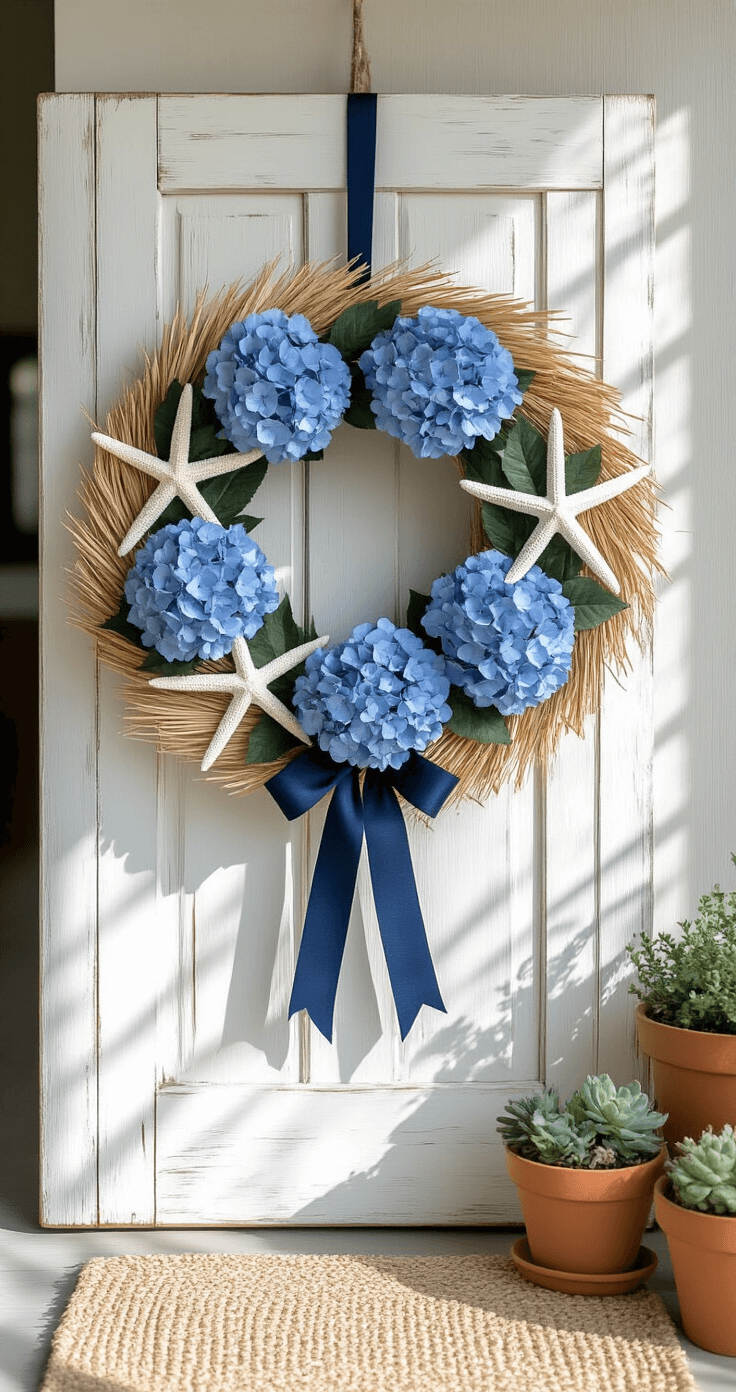
I have a summer wreath that’s basically a simple straw base with blue hydrangeas, white starfish, and navy ribbon.
Takes me twenty minutes to assemble every June.
Gets more comments than my Christmas version.

Fall Wreaths Beyond Orange Pumpkins
Fall is wreath season, but most people default to the same orange-and-brown combo that reads “generic autumn.”
Better fall approach:
- Use unexpected color palettes like burgundy, mustard, and cream instead of traffic-cone orange
- Mix in texture like wheat stalks, cotton bolls, or preserved oak leaves
- Add one substantial bow in velvet ribbon for richness
- Include dimensional elements like mini gourds or lotus pods
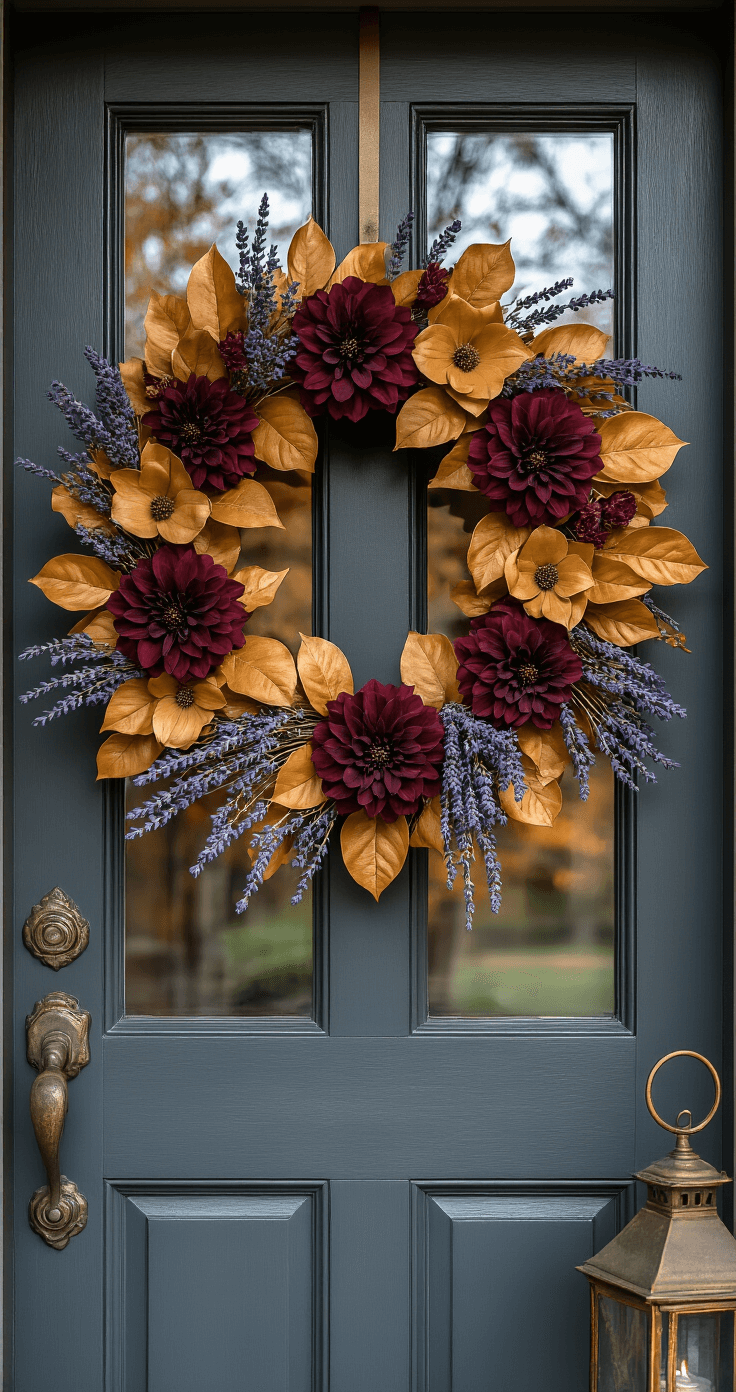
My go-to fall wreath uses magnolia leaves (which I spray paint a soft gold), burgundy dahlias, and dried lavender bundles.
Nobody sees it coming.
Everyone wants to copy it.

💡 Steal This Look
- Paint Color: Farrow & Ball Green Smoke 47
- Furniture: A vintage brass umbrella stand positioned just inside the entry for wet winter boots
- Lighting: Hardwired exterior sconces with warm 2700K bulbs flanking the door to highlight the wreath after dark
- Materials: Fresh cedar and pine branches, frosted faux fir picks, velvet ribbon in deep amethyst, matte gold wire for LED integration
I still remember walking my dog that first December and doing a double-take at my own house—my wreath was the visual equivalent of a beige sweater at a holiday party. Now I spend an extra twenty minutes layering textures and clustering ornaments off-center, and I’ve had three neighbors actually knock to ask where I bought it.
Building Your Wreath: The Method That Actually Makes Sense
I’ve watched approximately 847 YouTube tutorials on wreath-making.
Most overcomplicate things with specialized tools and techniques you’ll never remember.
Here’s what actually works in real life:
What You Actually Need
- The base: I keep three
This post may contain affiliate links. Please see my disclosure policy for details.
Want to keep this one?
We'll email you the link so you can find it again later.