

White Bedroom Ideas That Actually Feel Warm (Not Like a Hospital Room)
Contents
White bedrooms scare people because they picture cold, sterile spaces that feel more clinic than cozy retreat. I get it—I’ve walked into white bedrooms that made me want to grab a blanket and flee.
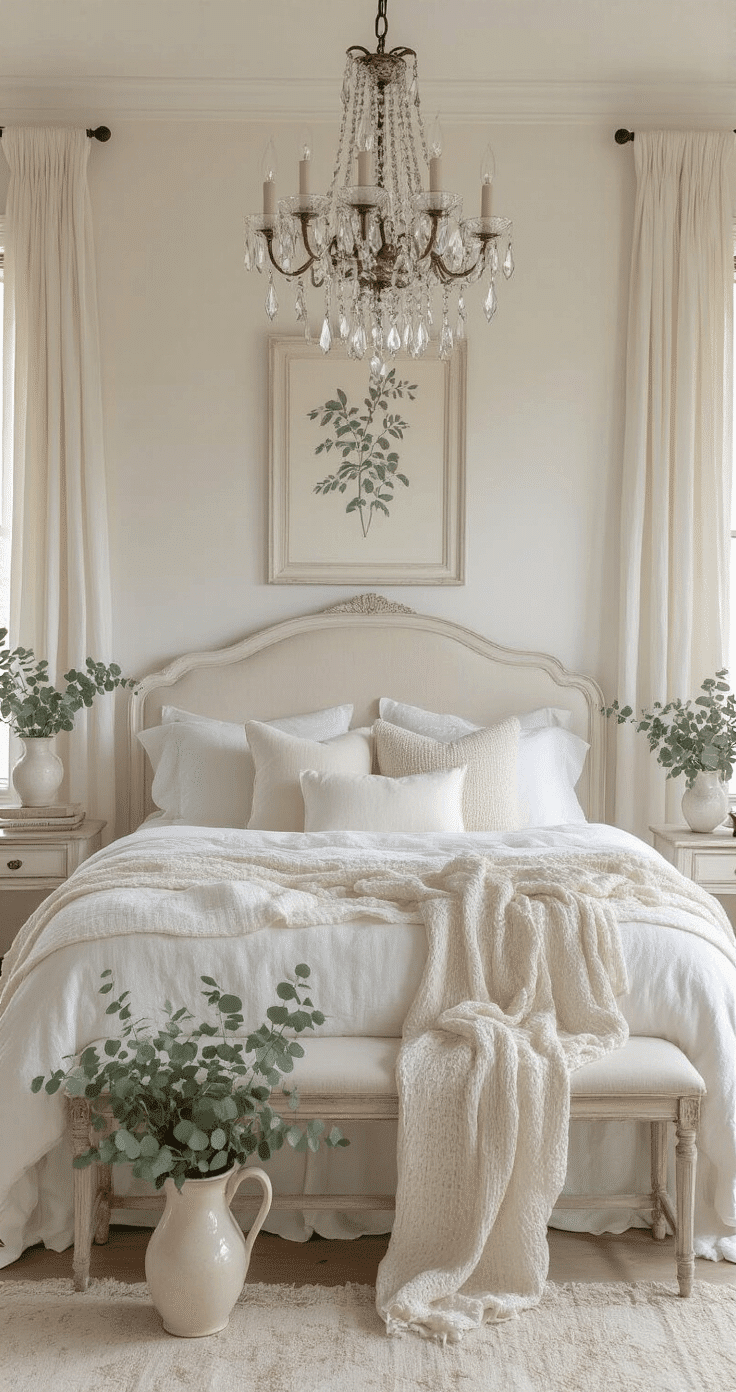
But here’s what changed my mind: a truly gorgeous white bedroom isn’t about one shade of white slapped everywhere. It’s about layering textures, mixing warm and cool tones, and adding just enough contrast to make your eyes dance around the room instead of glazing over.

Why Your White Bedroom Looks Flat (And How to Fix It)
The Problem Nobody Talks About
Most white bedrooms fail because they’re too matchy-matchy. Same white walls, same white bedding, same white furniture—all in the exact same undertone. Your eye has nowhere to rest, nothing to discover.
The Solution: Think in Layers, Not Matching Sets
I learned this the hard way after painting my bedroom “Pure White” and wondering why it felt like a doctor’s waiting room. The fix wasn’t adding color—it was adding depth through contrast.
Here’s what actually works:
- Mix cool whites (think crisp linen) with warm whites (creamy ivory)
- Pair smooth textures with chunky ones
- Add wood tones that bring warmth without screaming for attention
- Use off-whites and creams as your secret weapons

The Foundation: Getting Your Whites Right
Wall Color Makes or Breaks Everything
Not all whites are created equal, and this matters more than you think.
Your walls need to work with your natural light:
- Warm whites (with hints of yellow, peach, or red) work magic in rooms with northern light or limited windows
- Cool whites (with blue or grey undertones) shine in sun-drenched spaces facing south
Test your paint samples at different times of day. I’m serious—that “perfect white” at noon might look dingy yellow at sunset or icy blue in the morning.
White paint samples saved me from a third repaint disaster.
Furniture in Shades You Didn’t Know Existed
Skip the matching bedroom set in “white.” Instead, mix it up:
- Weathered oak nightstands
- A cream upholstered headboard
- White-washed wood dresser
- Natural rattan chair
See what I did there? Each piece reads “light and airy” but in completely different ways.
Texture Is Your Best Friend (Seriously)
Bedding That Doesn’t Bore You to Tears
This is where magic happens. Start with your base white cotton sheets, then pile on the interest:
- Linen duvet cover in off-white or natural (that wrinkled look is chef’s kiss)
- Chunky knit throw in cream draped at the foot
- Waffle-weave blanket folded over
- Mix of pillow textures: smooth velvet, nubby bouclé, soft cotton
None of these textures match, but they all play together because they’re in the same tonal family.
Textile Layers Beyond the Bed
Don’t stop at bedding:
- Jute or sisal rug under the bed (warm, natural, textured)
- Linen curtains that puddle slightly on the floor (romantic, not fussy)
- Chunky woven basket for extra blankets
- Sheepskin throw over a reading chair

The Elements That Make It Feel Collected (Not Decorated)
Wood Tones: The Unsung Heroes
Wood grounds a white bedroom faster than anything else. I’m talking about:
- Reclaimed wood bench at the foot of the bed
- Live-edge shelf as a floating nightstand
- Vintage wooden ladder for displaying throws
- Raw wood picture frames
The wood doesn’t need to match—in fact, it looks better when it doesn’t. Mixing oak, pine, and walnut adds that “collected over time” vibe.
Mirrors That Do More Than Reflect
A strategic oversized floor mirror changes everything:
- Bounces light around like nobody’s business
- Makes small bedrooms feel twice the size
- Adds architectural interest
Place it perpendicular to your window, not directly across from it. You want reflected light, not a spotlight on your bed at 6 AM.
Greenery: The Pop That Doesn’t Feel Like a “Pop of Color”
Fresh flowers or plants add life without breaking your serene vibe:
- Simple white pitcher with eucalyptus branches
- Oversized potted fiddle leaf fig in the corner
- Small succulents on the nightstand
- Dried pampas grass in a vintage urn
The green reads as natural, not as a color accent screaming for attention.

When to Add Actual Color (And How Much)
The “Just a Whisper” Approach
If all-white feels too stark for you, add color like you’re seasoning soup—a little at a time.
This post may contain affiliate links. Please see my disclosure policy for details.


