The Spare Bedroom That Pulls Double Duty: Guest Room Meets Home Office Without the Chaos
Multi-functional spare bedrooms are the unsung heroes of modern homes, and I’m about to show you exactly how to nail one.
Look, I get it. You stare at that spare room and feel stuck between two impossible choices: keep it as a dusty guest room that sits empty 350 days a year, or turn it into your office and scramble when visitors announce they’re coming to stay.
Neither option feels right because, frankly, neither is right.
The good news? You don’t have to choose.
I’ve designed, tweaked, and lived with multi-functional spaces for years, and I can tell you this: a properly planned spare bedroom can be a serene guest retreat AND your daily workspace without feeling cramped, chaotic, or like a sad hotel lobby.
Let me walk you through exactly how I’d do it—no fluff, no “transformative journeys,” just real talk about creating a room that works overtime.
Why Your Spare Bedroom Deserves Better Than Becoming a Junk Drawer
Before we dive into paint colors and furniture, let’s address the elephant in the room.
Most spare bedrooms become one of three things:
- The forgotten room where old exercise equipment goes to die
- The always-a-guest-room that wastes valuable square footage 51 weeks a year
- The makeshift office with a folding table and nowhere for Aunt Linda to sleep when she visits
None of these scenarios serve you well.
Your home isn’t that big (mine isn’t either), and every room needs to earn its keep.
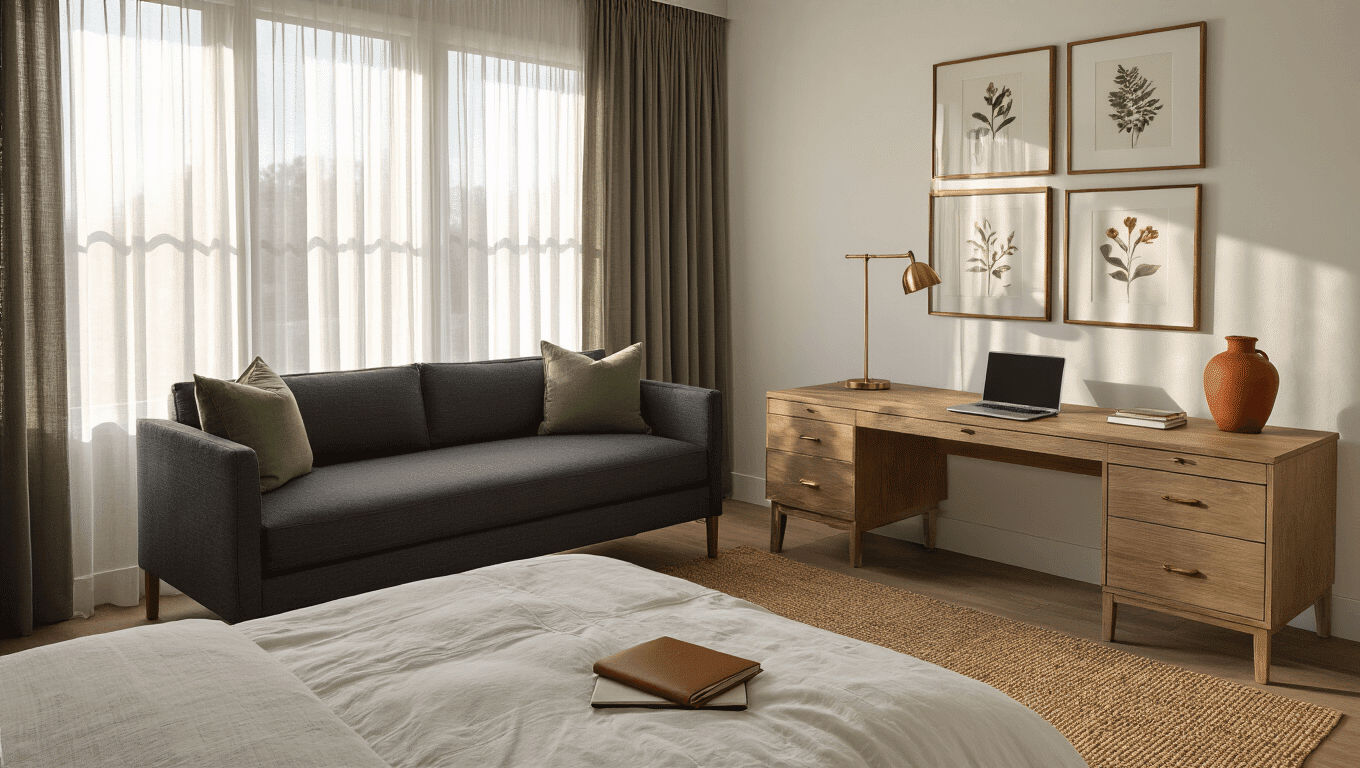
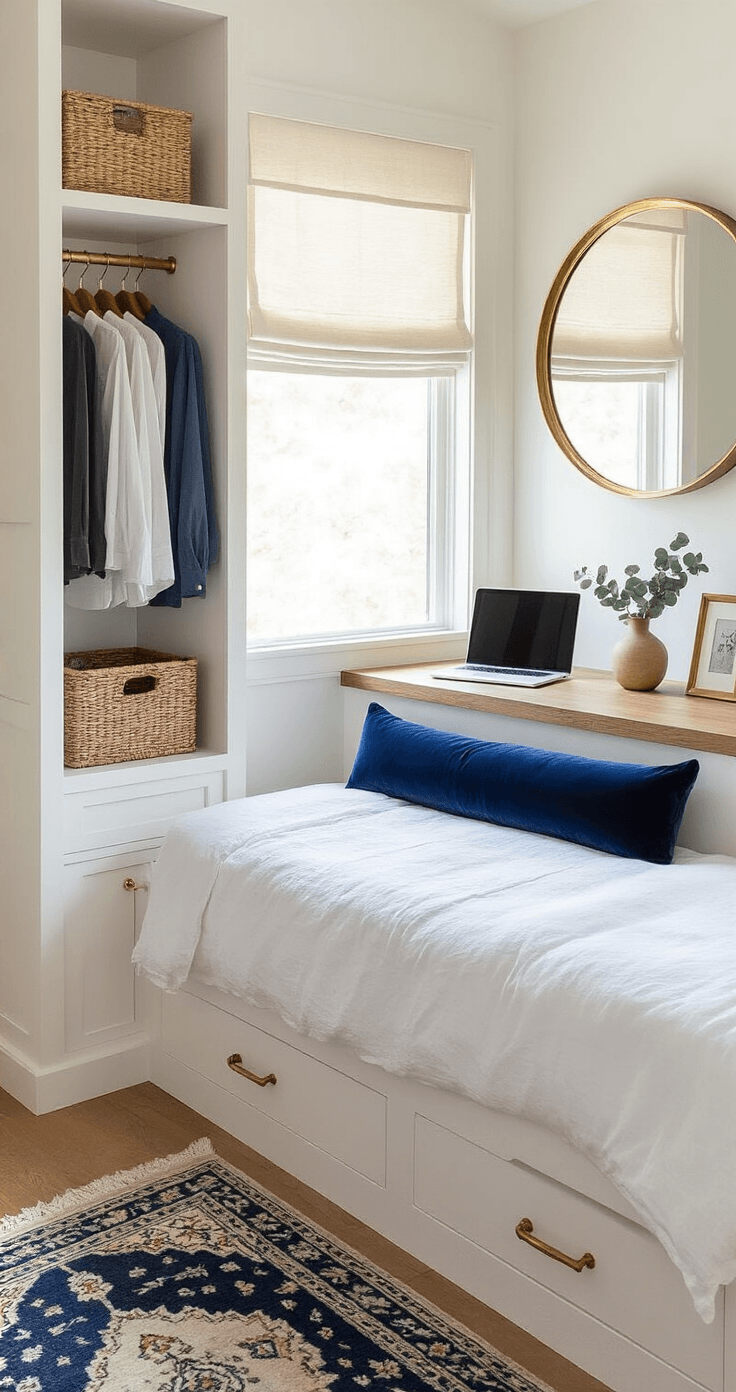
A multi-functional spare bedroom combines a calm guest retreat with everyday usefulness—typically as a home office, reading nook, or hobby space.
And when it’s done right? Nobody can tell it’s doing double duty.
Project Reality Check: Time, Money, and Skills
Let me shoot straight with you about what this actually takes.
Time Investment
Plan for 1-2 weekends to get this right.
That includes:
- Painting (if you’re doing that)
- Moving and arranging furniture
- Hanging artwork and mirrors
- Styling all the finishing touches
If you’re ordering custom pieces or built-ins, add a few weeks for delivery and installation.
I learned this the hard way when I ordered a custom Murphy bed and had to work around a construction-paper-and-tape floor plan for three weeks.
Budget Breakdown
Budget approach ($500-$1,200):
- Reuse furniture you already own
- Hit up thrift stores and estate sales
- Simple blackout roller blinds instead of custom window treatments
- DIY artwork and accessories
Mid-range ($1,500-$4,000):
- New sofa bed as your hero piece
- Decent desk that doesn’t scream “office supply catalog”
- Quality area rug
- Layered window treatments
- Proper lighting
Luxe version ($5,000+):
- Custom cabinetry that hides your desk setup
- Made-to-measure blinds and curtains
- Designer lighting fixtures
- Original art
I always tell people to start mid-range and upgrade strategically. You can’t get those foundational pieces wrong, but you can absolutely swap in better accessories later.
Space Requirements
This setup works in small bedrooms starting at 8′ x 10′ and scales up beautifully.
I’ve done this in a 9′ x 11′ room, and it felt spacious because we planned the layout obsessively.
Save this article
Enter your email and we'll send it straight to your inbox.
The layout changes with your square footage, but the principles stay the same.
Skill Level
Beginner to Intermediate covers most of this project.
You’ll need to handle:
- Basic wall painting
- Flat-pack furniture assembly (hello, allen wrenches)
- Hanging artwork and mirrors
- Styling surfaces
Hire out electrical work for new outlets or hardwired sconces. Same goes for custom built-ins unless you’re genuinely skilled at carpentry.
I tried to DIY floating shelves once. Once.
Year-Round or Seasonal?
This is a year-round flexible space with easy seasonal updates.
Swap pillows, throws, and small decor items when the mood strikes, but the bones stay constant.
I change mine out maybe three times a year: spring refresh, cozy fall mode, and a lighter summer vibe.
The Design Identity That Makes It All Work
Here’s where most people go wrong: they try to make the room look like two separate spaces.
Bad idea.
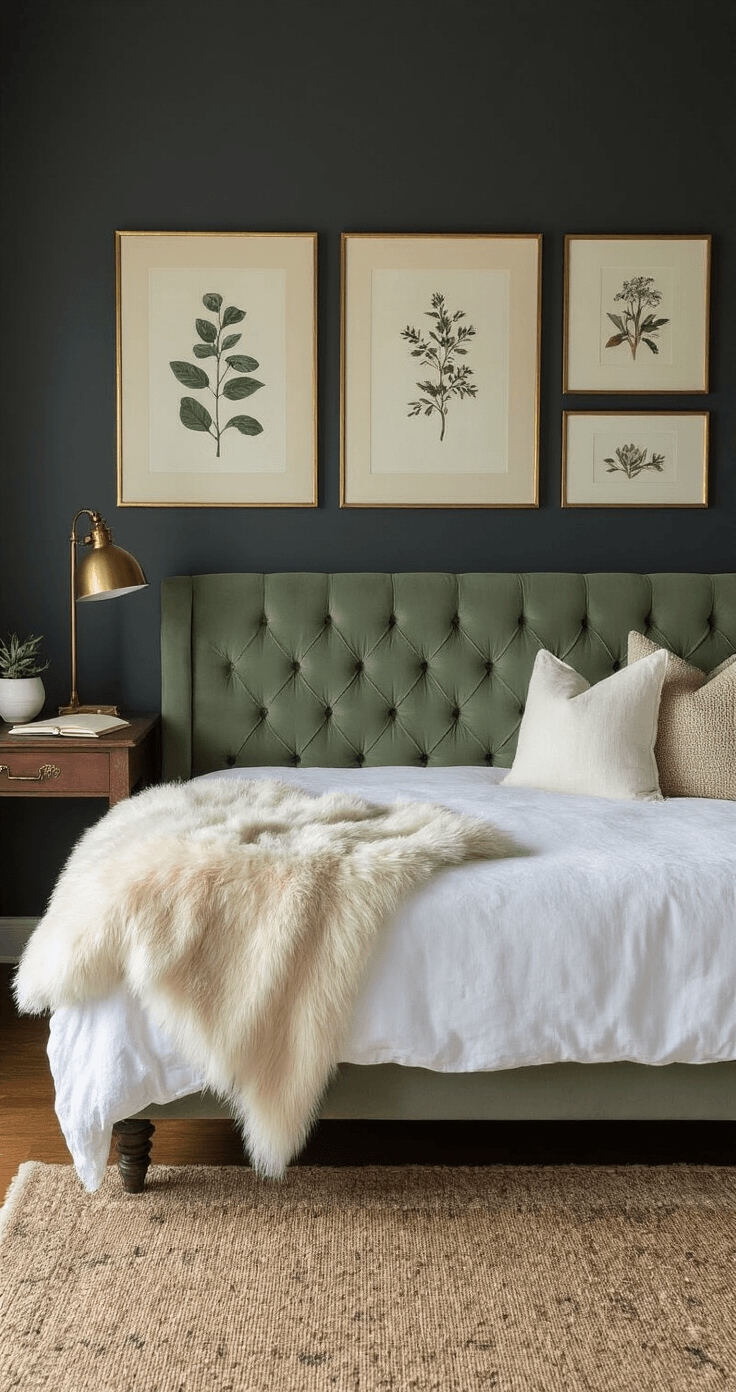
The magic happens when you commit to one cohesive design identity that accommodates both functions seamlessly.
The Style That Never Fails
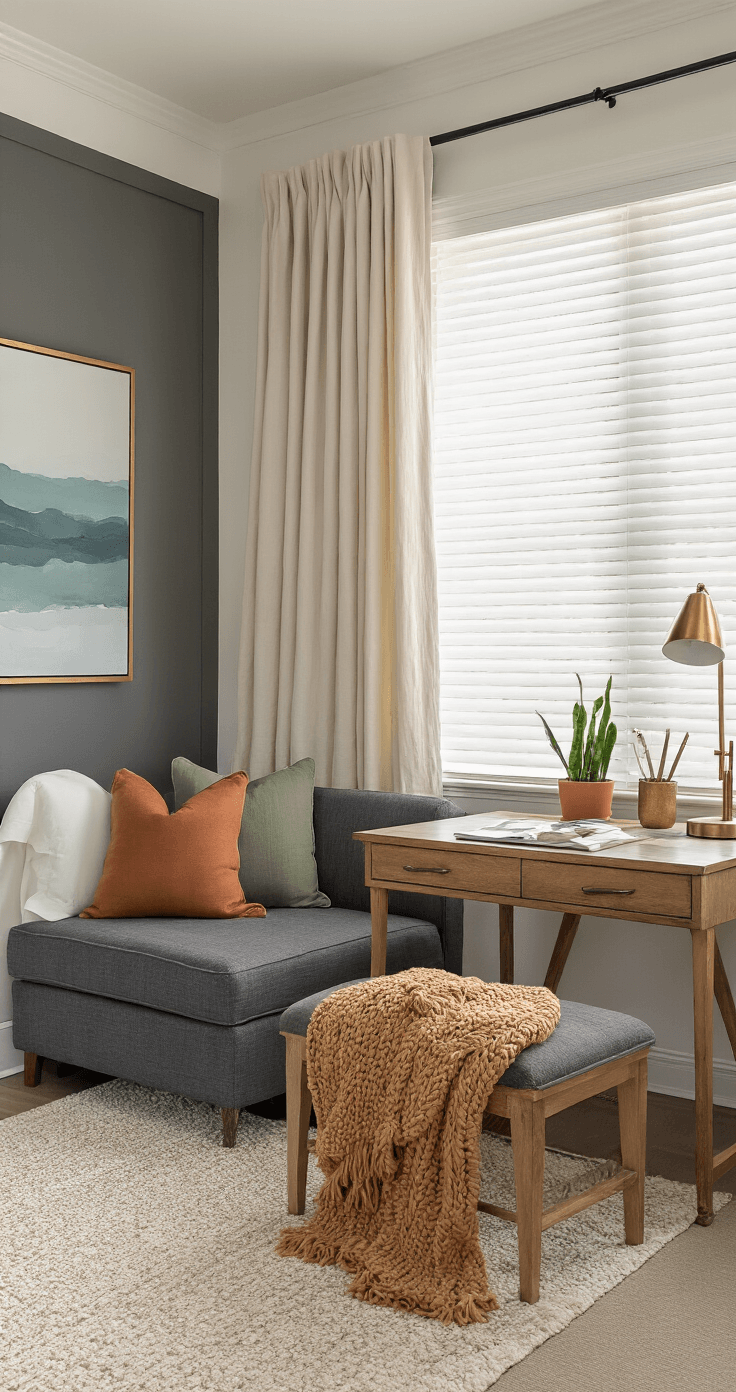
I’m talking Modern Cozy Minimalist with Scandi or Transitional influences.
Why this style?
- It’s timeless—you won’t be redecorating in two years
- It’s renter-friendly if you don’t own
- It photographs beautifully for all you content creators out there
- It feels expensive without requiring an expensive budget
- Guest and work modes blend naturally
Color Palette Decoded
Walls: Stick with soft, warm neutrals.
Think:
- Warm whites
- Greige (gray + beige, the hybrid that saved interior design)
- Soft sage
These colors create a calm, adaptable backdrop that doesn’t compete with furniture or make the space feel smaller.
I painted my spare bedroom Benjamin Moore’s “Revere Pewter” and have never looked back.
Accent colors (2-3 maximum):
- Muted blues
- Camel or cognac leather tones
- Charcoal gray
- Terracotta
Choose colors that feel good to you—you’re working in here daily, remember?
Materials to prioritize:
- Light wood (oak, maple, light walnut)
- Linen or cotton textiles
- Boucle or wool textures for depth
- Matte black or brushed brass metals for hardware and fixtures
Mix
This post may contain affiliate links. Please see my disclosure policy for details.
Want to keep this one?
We'll email you the link so you can find it again later.