Spring Door Wreaths That’ll Make Your Neighbors Stop and Stare
Spring door wreaths transform your front entrance from drab to fab faster than you can say “curb appeal.”
I’ll be honest with you. Last March, I watched my neighbor hang the most stunning peony and eucalyptus wreath on her door, and I felt a pang of decorating envy so strong I almost ordered three wreaths that same afternoon.
We’ve all been there, right? You walk past house after house with bare doors or sad, leftover winter decorations, and suddenly you spot that home—the one with the gorgeous wreath that screams “spring is here and I have my life together.”
The truth is, you don’t need a design degree or a massive budget to nail this look. You just need to understand what makes a spring wreath work and how to style it so it feels intentional, not like you panic-bought something at a craft store.
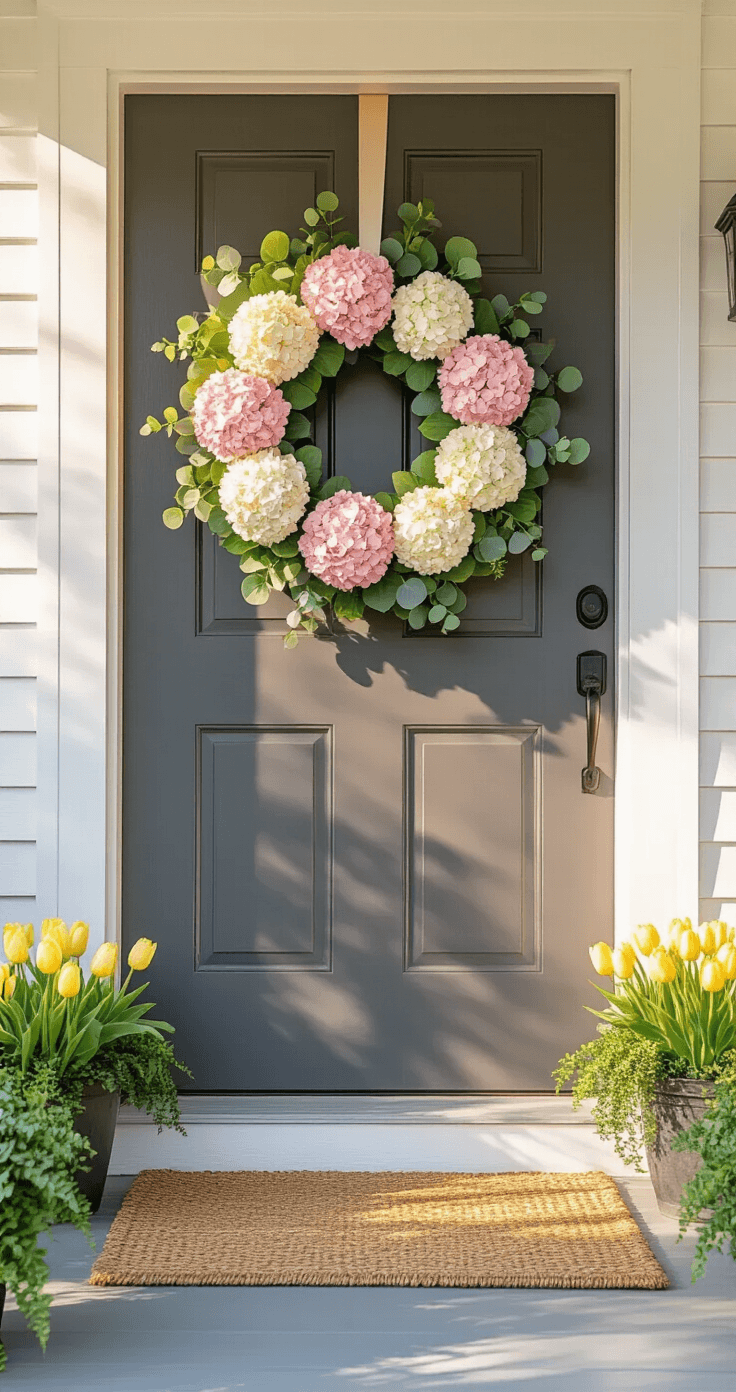
Why Your Front Door Deserves Better Than Last Year’s Wreath
Your front door is the first thing guests see. It’s the opening shot of your home’s story. And right now, if you’re still rocking that dusty pinecone situation from December, you’re telling the wrong story.
Spring wreaths do three brilliant things:
They signal the season change without you having to say a word. They make your home feel welcoming before anyone even knocks. They’re stupidly easy to swap out when you get bored or want to refresh for summer.
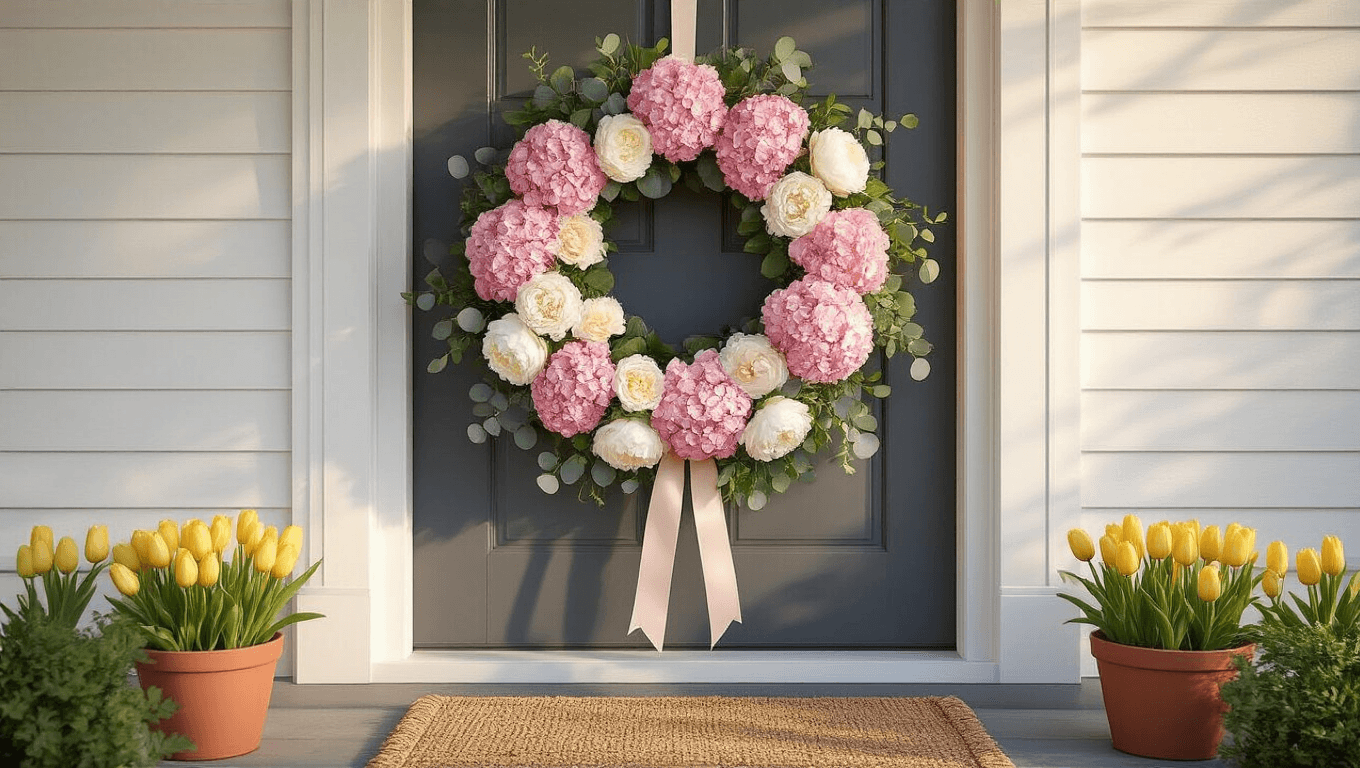
I learned this the hard way after spending two springs with a “fine” wreath that was really just… forgettable. Then I invested 90 minutes on a Saturday morning making a grapevine wreath base loaded with faux hydrangeas and eucalyptus, and suddenly my mail carrier was complimenting my decorating skills.
Quick Style Snapshot: Know Before You Commit
Time Investment
Ready-made wreath: 5–10 minutes total. You unbox it, fluff the stems like you’re fixing bedhead, hang it up, adjust the ribbon so it’s not wonky, done.
DIY from scratch: 45–90 minutes. This includes assembling stems, hot-gluing accents, cursing when a peony falls off, and re-gluing it. Worth it if you want something custom, but don’t start this project 20 minutes before guests arrive.
What You’ll Spend
- Budget tier: $20–$40 gets you simple greenery or smaller faux floral wreaths that still look decent from the street.
- Mid-range sweet spot: $40–$90 buys fuller, more realistic wreaths with hydrangeas, tulips, and mixed textures—this is where most people land.
- Luxe investment: $90–$200+ for designer pieces, artisan-made dried florals, or massive statement wreaths that could double as wall art.
I’ve bought from every tier. The budget ones work great if you’re renting or love to switch things up every few weeks. But my mid-range wreath from three springs ago is still going strong, so the cost-per-use math actually makes sense.
Size Matters (Yes, Really)
Standard front doors: Go for 18″–26″ diameter. Anything smaller looks timid. Anything larger overwhelms the frame unless you have a grand entrance.
Oversized or double doors: 26″–30″ diameter, or get two matching smaller wreaths for symmetry.
I made the mistake once of ordering a 16″ wreath for a standard door. It looked like a sad little dinner plate. Learn from my failure.
Save this article
Enter your email and we'll send it straight to your inbox.
Skill Level Reality Check
Beginner: You can absolutely handle a simple hoop or grapevine base with a few stems tucked in. If you can tie a bow, you’re qualified.
Intermediate: Full, layered wreaths with multiple flower types and greenery require more patience and a vision for how elements work together.
If you’ve never done this before, start simple. You can always add more later, but you can’t un-glue a hot mess.
Seasonal Staying Power
Most spring wreaths shine from March through May. But here’s the hack: if you build or buy a neutral greenery base—boxwood, eucalyptus, magnolia leaves—you can swap out small accents and stretch it into summer or even keep it year-round.
I have a eucalyptus wreath that’s been on my door for 14 months. I just change the ribbon and add seasonal stems, and nobody knows it’s the same wreath underneath.
Design Identity: Finding Your Wreath Personality
Spring wreaths fall into a few core styles, and knowing yours makes shopping or DIY-ing so much easier.
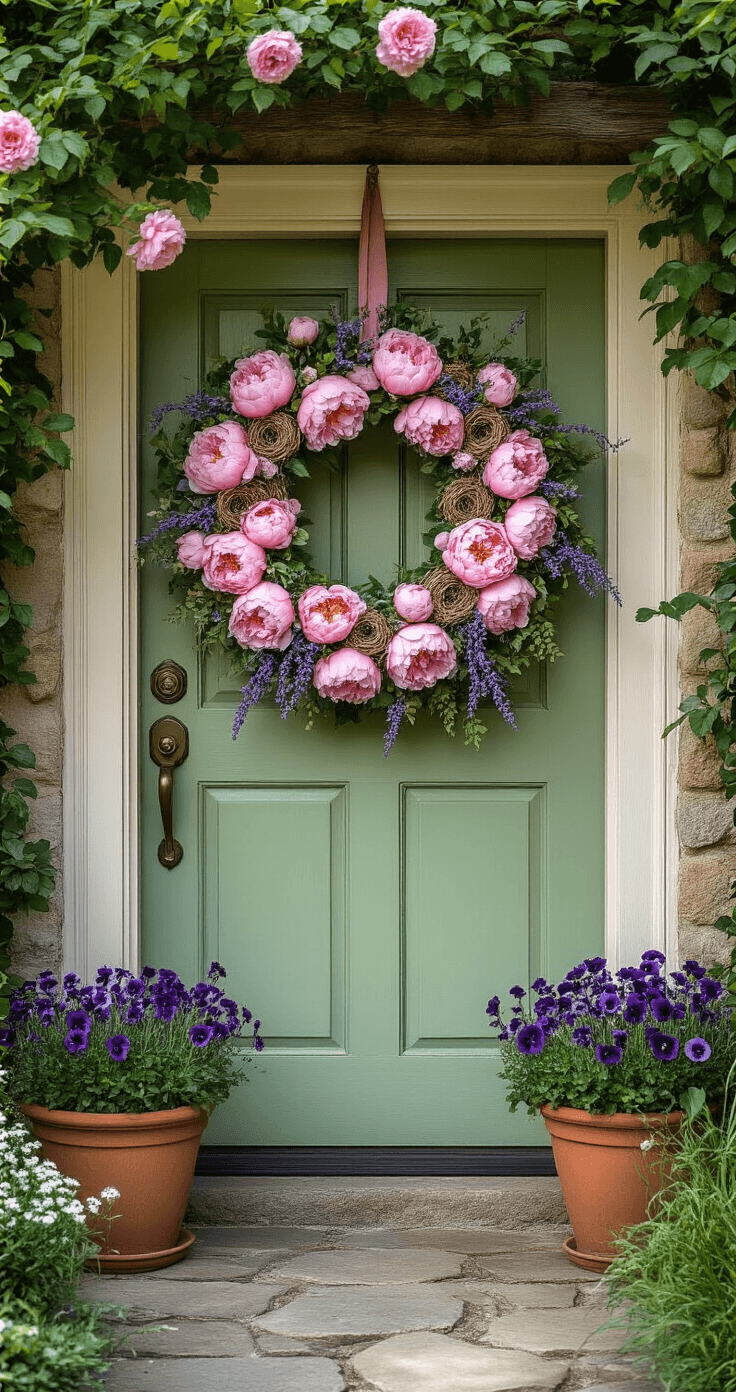
Spring Floral / Fresh Cottage is the classic. Think soft, romantic, lots of petals and greenery. This is hydrangeas, peonies, tulips, and trailing ivy.
Modern Traditional keeps the floral elements but adds structure—symmetry, cleaner lines, maybe a beautiful satin ribbon instead of burlap.
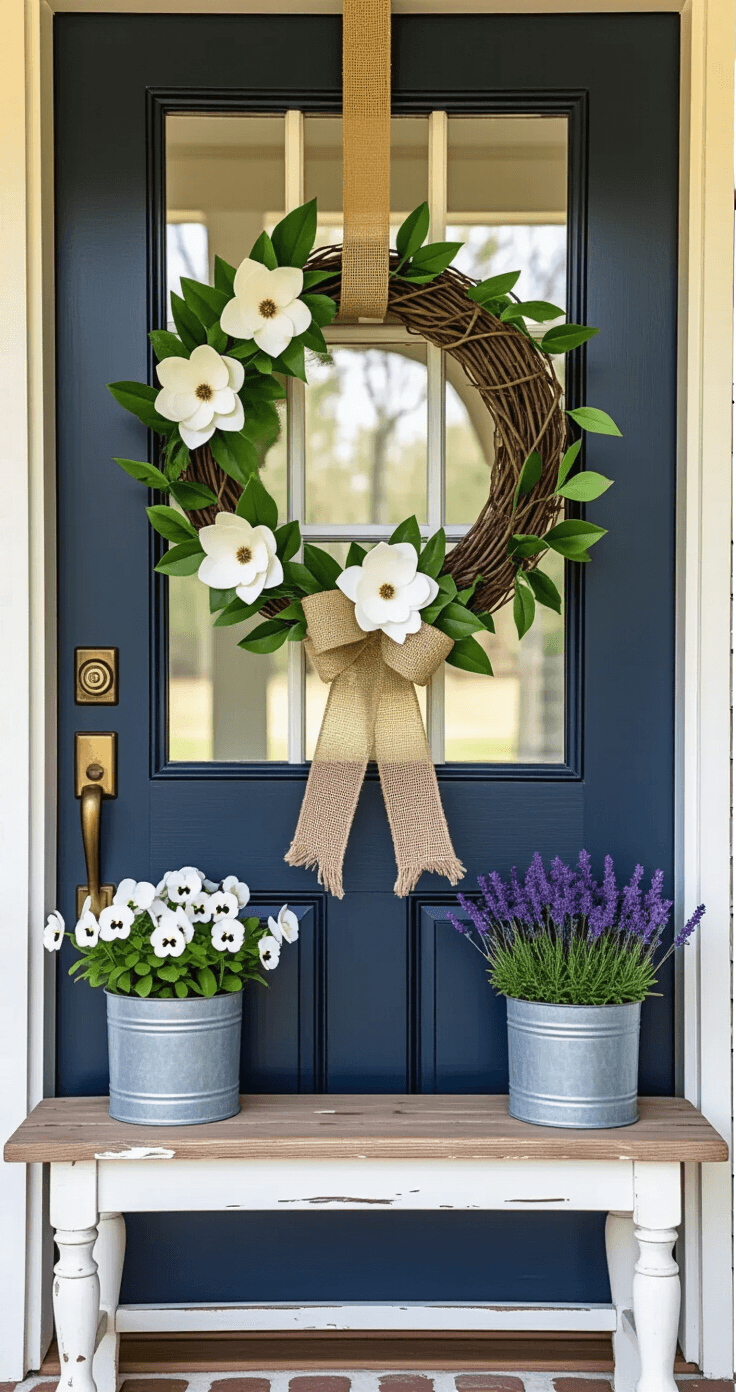
Farmhouse leans into grapevine bases, burlap bows, wildflowers, and that lived-in, slightly imperfect charm.
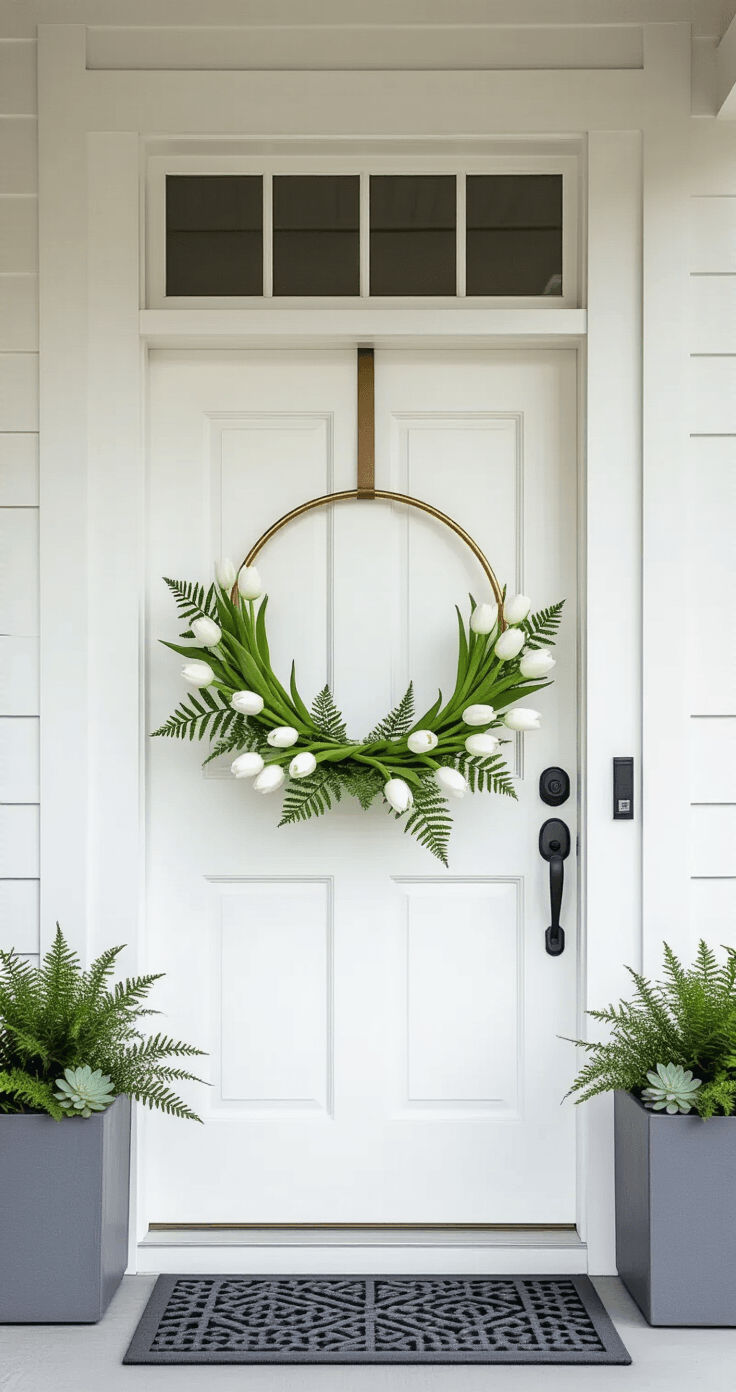
Minimalist is a metal hoop or simple greenery wreath with just a few carefully placed blooms. Less is absolutely more here.
I bounce between Modern Traditional and Minimalist depending on my mood. Last spring I went full minimalist with a brass hoop and three white tulip stems. This year I’m feeling the floral overload energy.
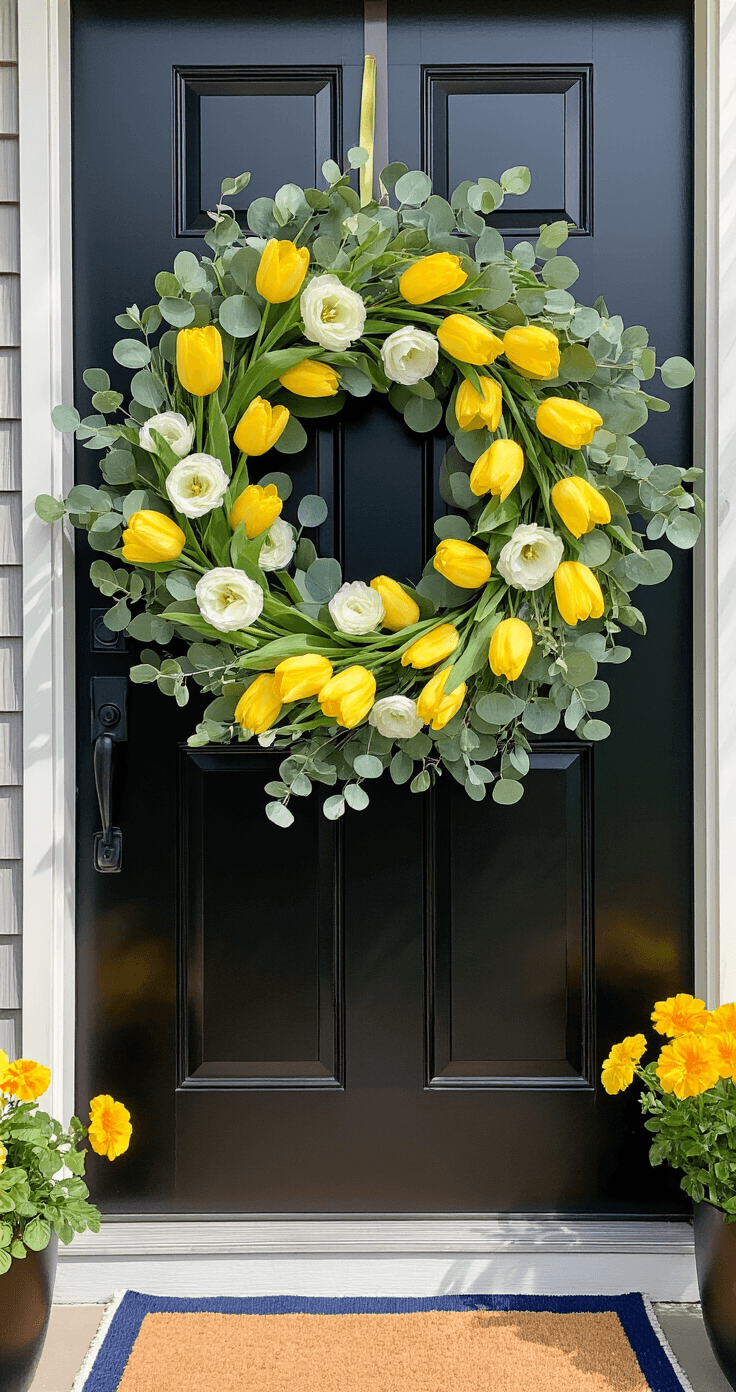
Color Palette That Actually Works
Spring wreaths thrive on:
- Soft pastels: blush pink, lavender, butter yellow
- Fresh greens: the backbone of everything
- Whites and creams
This post may contain affiliate links. Please see my disclosure policy for details.
Want to keep this one?
We'll email you the link so you can find it again later.