

Bedroom Layout Ideas That Actually Work
Contents
Bed placement makes or breaks your bedroom, and I’ve rearranged mine enough times to know this intimately.
Your bed isn’t just furniture—it’s the anchor that determines whether your bedroom feels like a peaceful retreat or a cluttered nightmare.
I spent three years in a shoebox apartment where every inch mattered, and I learned the hard way that getting your bed position wrong turns your entire room into an obstacle course.
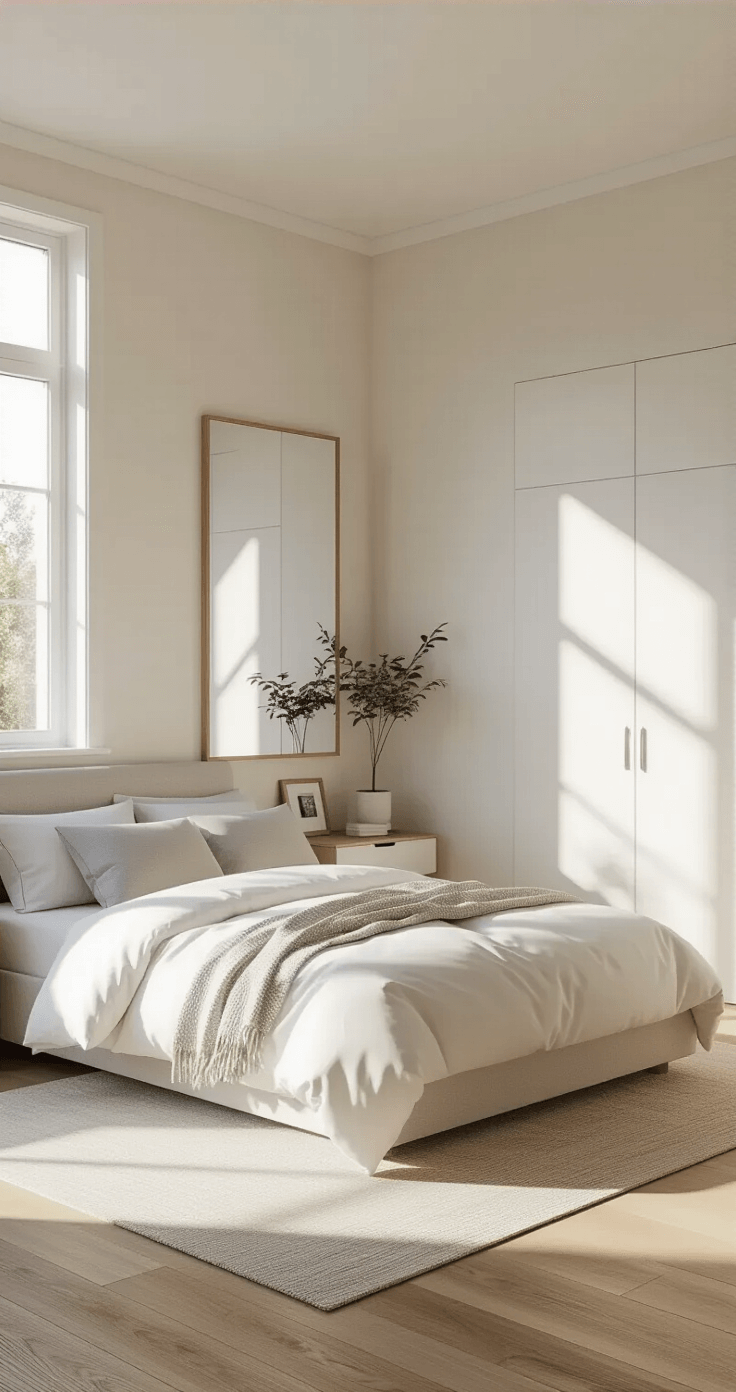
Where to Actually Put Your Bed (The Foundation Everyone Gets Wrong)
Small bedrooms demand strategic thinking, not random furniture placement.
Here’s what works:
Against the wall facing your doorway gives you the hotel room effect—that immediate sense of intentionality when you walk in.
I positioned my queen bed this way in my 10×12 bedroom, and suddenly the space felt deliberate instead of accidental.
The longest wall is your second-best option, especially if your room resembles a bowling alley more than a square.
Lengthwise placement in narrow rooms prevents that suffocating hallway feeling.
Centered with matching nightstands creates symmetry that your brain interprets as “this person has their life together.”
I use slimline nightstands with drawers on both sides—emphasis on slimline, because bulky nightstands in small spaces make you feel like you’re navigating a furniture maze at 3 AM.
Pro tip: If your bed faces the door but isn’t directly in line with it, you’ve hit the feng shui sweet spot without even trying.
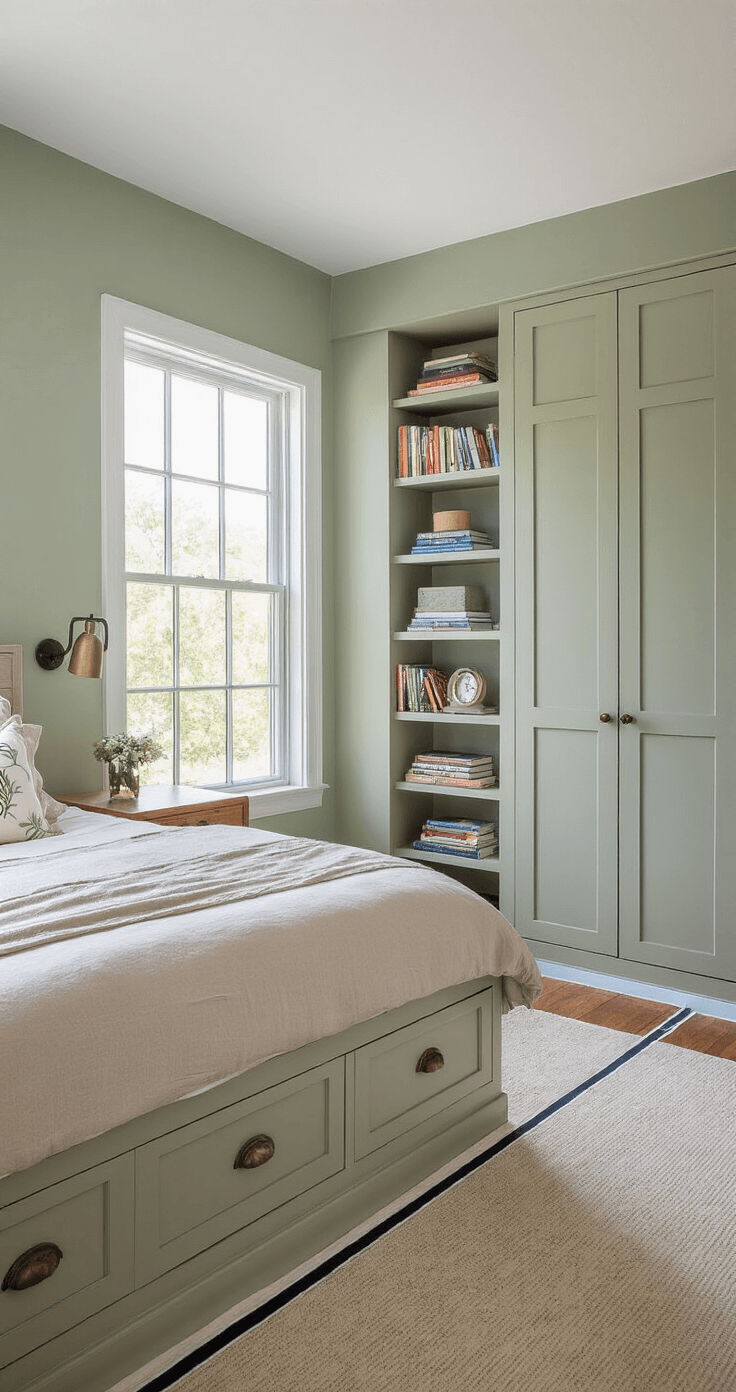
Make Every Piece of Furniture Earn Its Keep
I’m ruthless about this now.
If it doesn’t serve multiple purposes, it doesn’t deserve floor space.
Storage beds changed my entire approach to bedroom organization.
My storage bed with built-in drawers holds off-season clothes, extra bedding, and all the random items that used to clutter my closet.
That’s six extra dresser drawers without taking up a single additional inch.
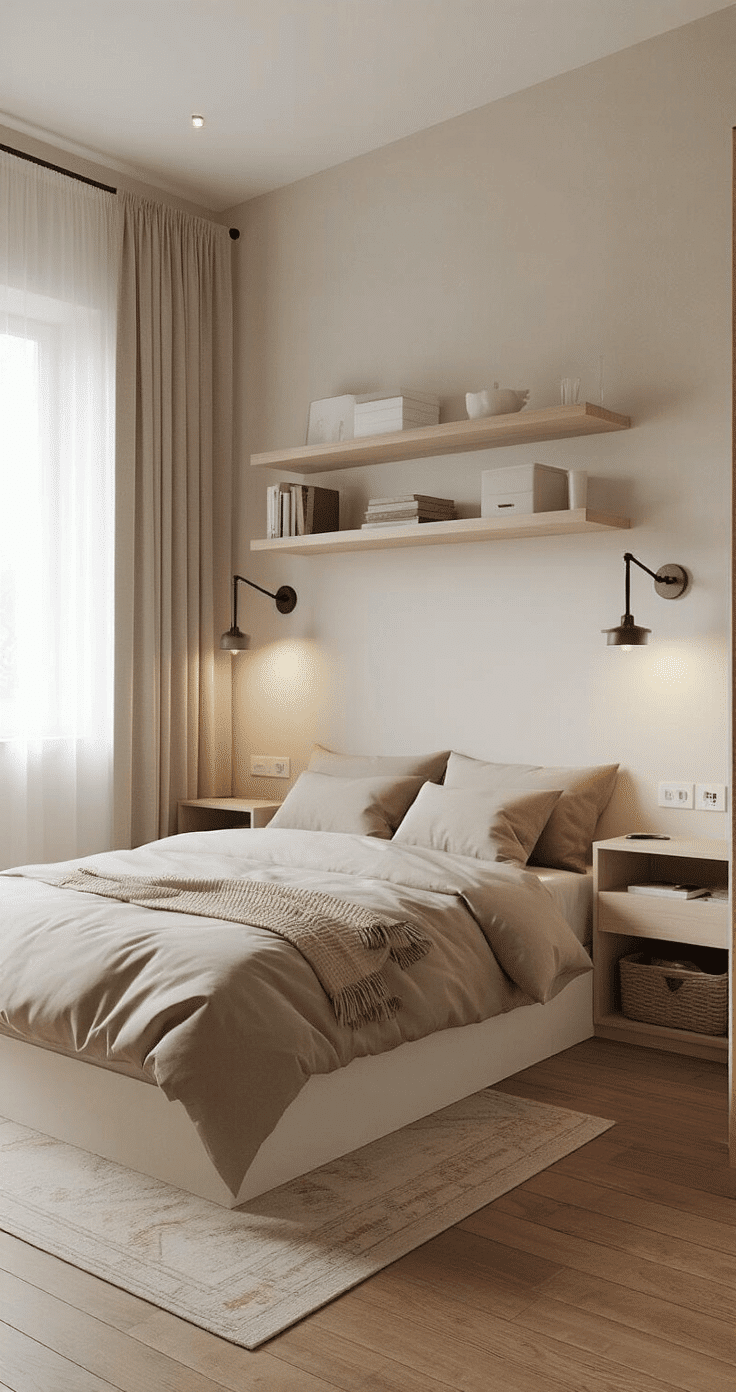
Wall-mounted solutions are your secret weapon:
- Floating desks mount directly to walls and fold up when not needed
- Wall-mounted shelves replace bulky bookcases
- Floating nightstands (more on these later) eliminate leg clutter and make vacuuming actually possible
Vertical storage beats horizontal every time in small spaces.
I replaced my wide, squat dresser with a tall narrow wardrobe armoire and reclaimed about 15 square feet of floor space.
Your eyes travel upward, and suddenly the room feels taller and more spacious.
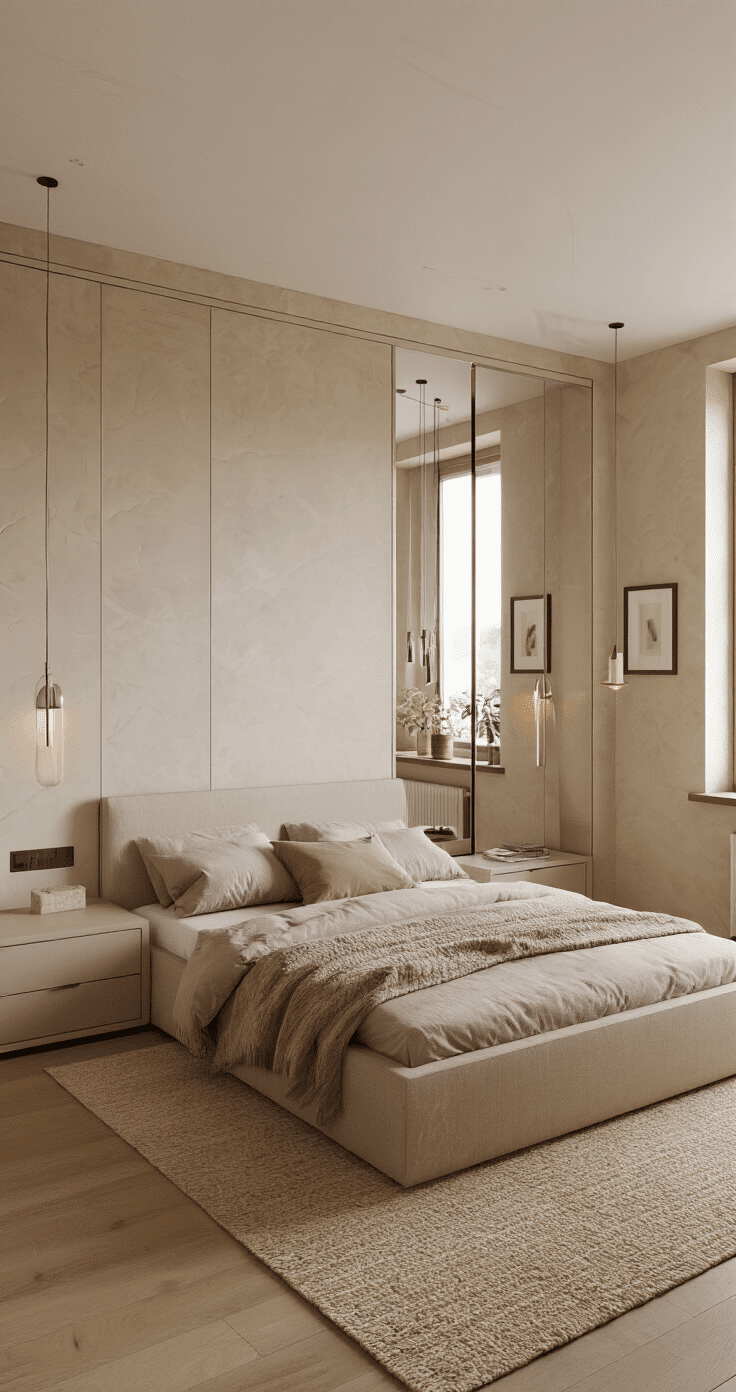
Nightstands that multitask are worth their weight in gold:
- Look for drawers, not just surface space
- Consider ones with built-in charging stations
- Filing storage underneath works brilliantly for home office/bedroom combos
Break the Symmetry Rules When They Don’t Serve You
Design magazines love perfect symmetry, but real bedrooms have radiators, awkward windows, and doors that swing into inconvenient places.
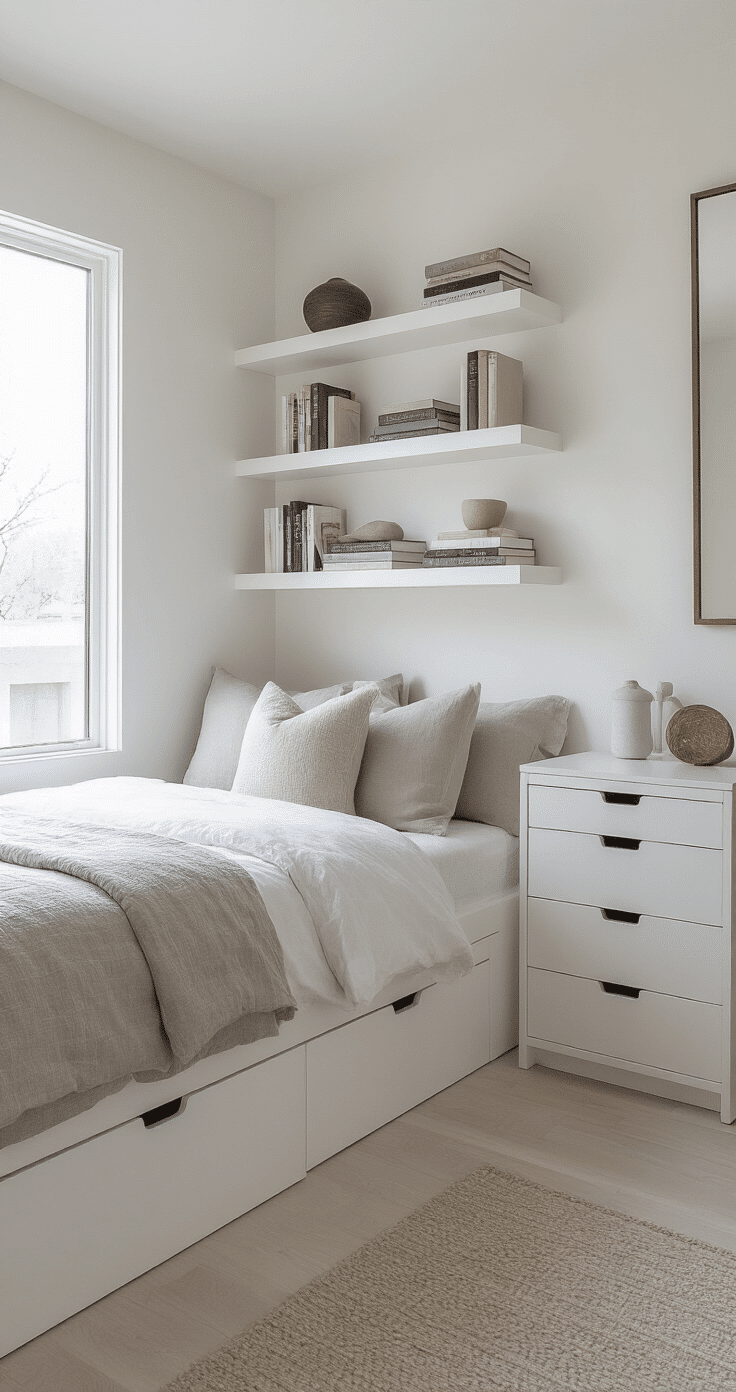
Asymmetrical layouts saved my sanity when I couldn’t fit matching nightstands on both sides of my bed.
One side got a regular nightstand.
The other got a wall-mounted shelf with a clip-on reading light.
Nobody who’s ever visited has commented on the “imbalance”—they just see a functional bedroom.
When to embrace asymmetry:
- One side of your bed sits against a wall or in a corner
- A window, radiator, or closet door blocks traditional nightstand placement
- Your room is genuinely too small for two nightstands without creating a traffic jam
Use one substantial nightstand on the accessible side instead of two cramped ones squeezing in where they don’t fit.
Quality over forced symmetry.
Clear Pathways Aren’t Optional (They’re Safety)
I’ve stubbed my toe on badly placed furniture enough times to become evangelical about walkways.
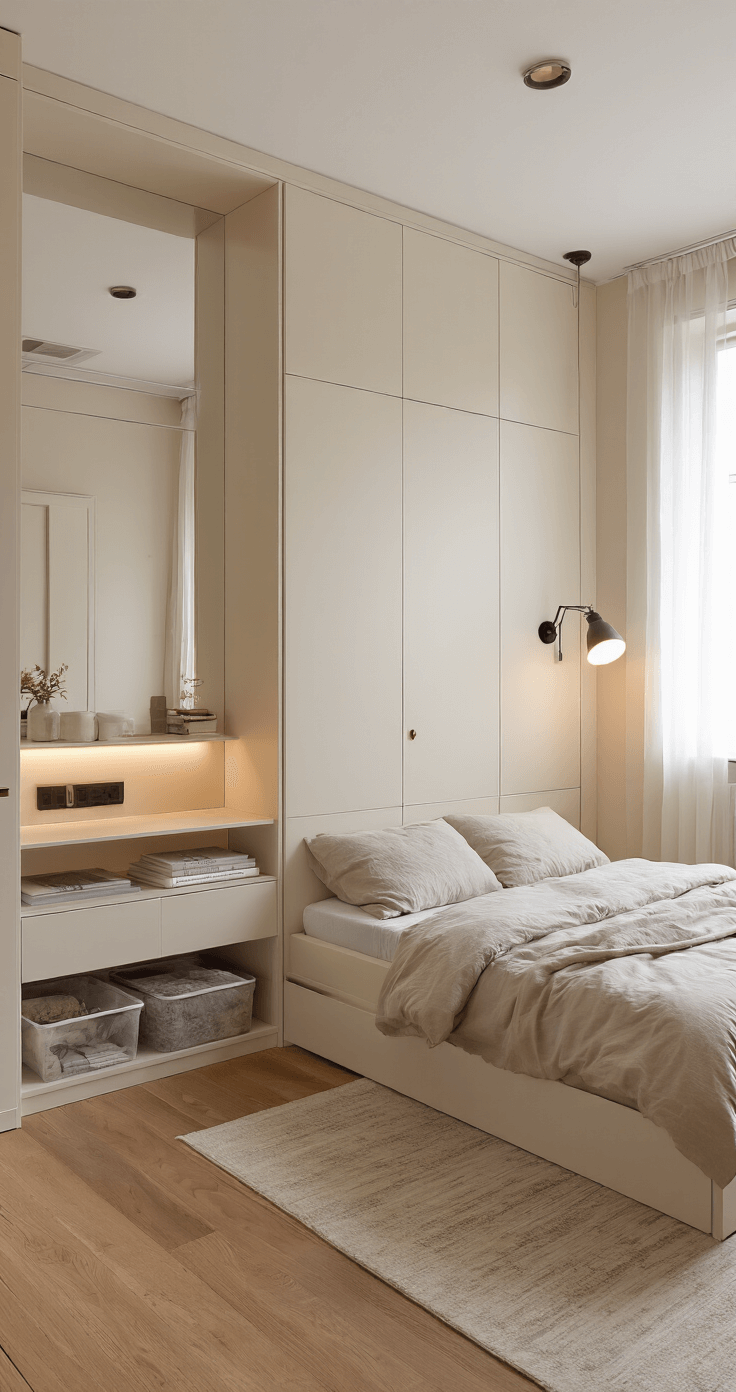
You need minimum 24 inches of clearance around your bed for comfortable movement.
30 inches is better.
36 inches is luxury.
Measure before you commit to a layout.
I use painter’s tape on the floor to map furniture footprints before moving anything heavy—saves my back and my walls.
Don’t block your natural light sources with tall furniture.
I made this mistake with a massive bookshelf in front of my only window and spent six months in a cave before admitting defeat.
Light makes spaces feel larger, and blocking it for storage is a terrible trade-off.
Keep these paths completely clear:
- Door to bed (the midnight bathroom route)
- Bed to closet (getting dressed shouldn’t require furniture parkour)
- Bed to window (emergencies, but also opening windows without climbing)
Storage That Doesn’t Look
This post may contain affiliate links. Please see my disclosure policy for details.
This post may contain affiliate links. Please see my disclosure policy for details.


