
Mammoth Cave in Kentucky isn’t just another tourist trap collecting dust on your bucket list. It’s the world’s longest known cave system with over 400 miles of mapped passages, and honestly, most people have no clue what they’re missing when they drive past those brown National Park signs.
I’ve spent countless hours exploring caves across three continents, but nothing quite prepared me for my first descent into Mammoth Cave’s otherworldly passages. The moment our tour group stepped off that bus and approached the cave entrance, I knew this wasn’t going to be your typical underground stroll.
The Shocking Truth About America’s Most Underrated Natural Wonder
Here’s what blew my mind: *Mammoth Cave has been welcoming visitors for over 4,000 years.*
You read that right – four thousand years. Ancient peoples were exploring these passages when Stonehenge was still under construction. Stephen Bishop, one of the cave’s most famous early guides, described it perfectly as a “grand, gloomy and peculiar place.” But he was selling it short.
This isn’t just some hole in the ground in Kentucky. UNESCO designated it as both a World Heritage Site in 1981 and an International Biosphere Reserve in 1990. When the United Nations calls your local cave system globally significant, you pay attention.
The numbers that matter:
- Over 365 miles already mapped across five distinct levels
- Potentially hundreds more miles waiting to be discovered
- 52,800 acres of protected wilderness above ground
- 130 different animal species call this cave system home
What makes this even more remarkable? Scientists believe they’ve barely scratched the surface of what lies beneath Kentucky’s rolling hills.
Why Most Visitors Get Mammoth Cave Completely Wrong
Most people show up expecting glittering formations and Instagram-worthy mineral displays. *Wrong approach entirely.*
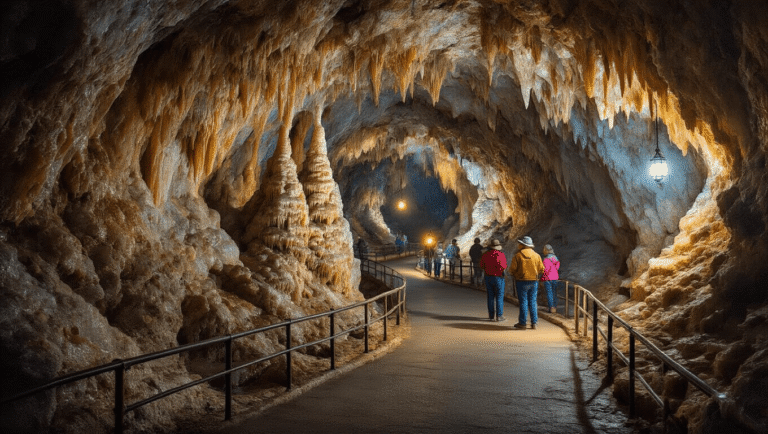
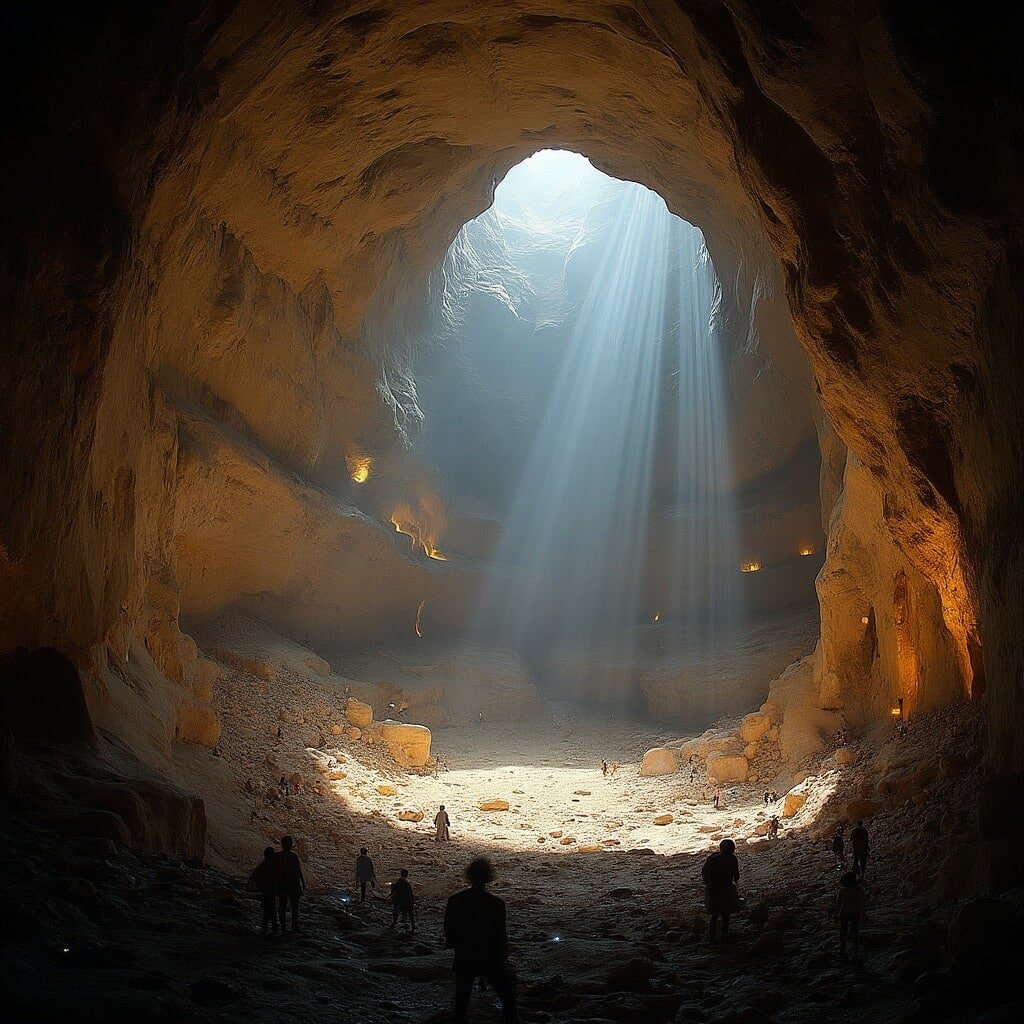
Mammoth Cave is what cavers call a “dry cave” – you won’t find the dense concentration of stalactites and stalagmites that make other cave systems famous. Instead, you’ll discover something far more impressive: *sheer, mind-bending scale.*
I learned this lesson during my first Historic Tour when our guide led us through a passage called Fat Man’s Misery. One moment you’re squeezing through a narrow corridor, the next you’re standing in a chamber so vast that your flashlight beam disappears into darkness above.
The cave maintains a constant 54°F temperature year-round, which means you’ll want that light jacket even in Kentucky’s sweltering summer heat. But here’s the thing – that consistent temperature creates an entirely unique ecosystem that scientists are still studying.
What you’ll actually see underground:
- Rainbow Dome – A massive natural amphitheater
- Snowball Room – Where formation clusters create otherworldly landscapes
- Crystal Lake – An underground pool that reflects light like a black mirror
- Bottomless Pit – A chasm that seems to disappear into the earth’s core
- Frozen Niagara – The cave’s showcase formation area
The acoustic properties alone are worth the trip. Stand in the right chamber and whisper to someone 100 feet away – they’ll hear every word with crystal clarity.
The Tour That Changed How I Think About Underground Exploration
Every cave system offers tours, but Mammoth Cave’s range from gentle family strolls to hardcore spelunking adventures.
The beginner-friendly options:
- Frozen Niagara Tour – Perfect for families, focuses on the cave’s most photogenic formations
- Historic Tour – Combines human history with geological wonders, including passages through Fat Man’s Misery
For serious adventurers:
- Domes and Dripstones Tour – Two hours of moderate difficulty that showcases the cave’s incredible scale
- Wild Cave Tour – Six hours covering five miles of authentic spelunking that’ll leave you “delightfully dirty, damp, and spooky”
Here’s where I made my biggest mistake on that first visit: I booked just one tour. *Big error.*
Each tour reveals completely different aspects of this underground world. The Historic Tour taught me about the cave’s human story, while the Domes and Dripstones adventure showed me geological features I never knew existed.
Pro tip that’ll save you major disappointment: *book your tours 3-6 months in advance* through Recreation.gov. Summer and autumn tours sell out regularly, and standing in the visitor centre hoping for cancellations is not a winning strategy.
The Above-Ground Secret That Most Visitors Never Discover
Everyone comes for the cave and misses the incredible wilderness sitting right above their heads.
Mammoth Cave National Park encompasses over 80 miles of hiking trails, two river systems, and some of Kentucky’s most pristine forest ecosystem. The Green River cuts through the park east to west, creating perfect opportunities for canoeing, kayaking, and riverside camping.
Trail highlights you shouldn’t miss:
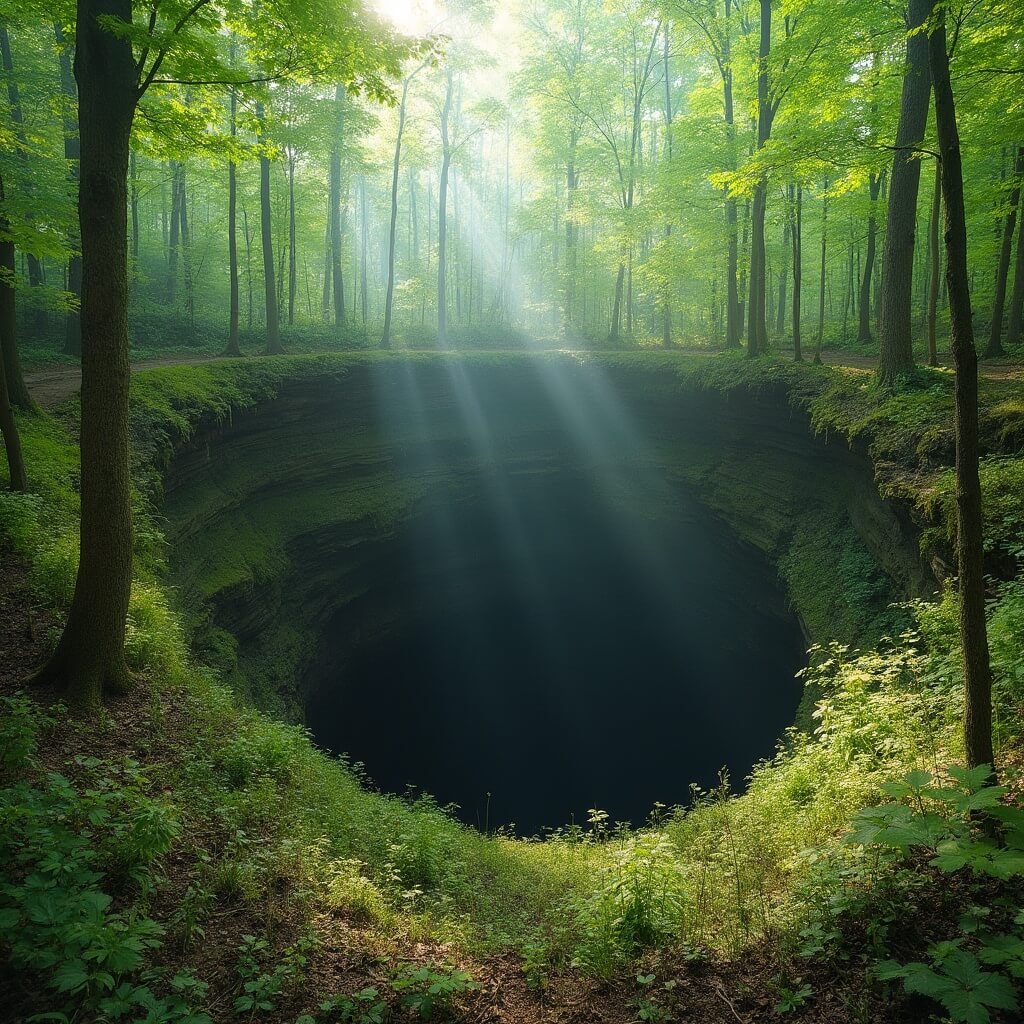
- Cedar Sink Trail – Easy walk to a massive collapsed sinkhole
- Sand Cave Trail – Another cave entrance with its own geological story
- Mammoth Cave Railroad Bike and Hike Trail – 11 miles of converted railway perfect for cycling
- Backcountry trails north of Green River – Primitive hiking for those seeking solitude
I discovered the park’s above-ground treasures by accident when a cave tour was cancelled due to equipment issues. Instead of driving home disappointed, I grabbed a trail map and spent the afternoon hiking to Cedar Sink. The 60-foot-deep collapsed cavern gave me an entirely new perspective on the underground world I’d been exploring.
The park offers three developed campgrounds plus 12+ primitive backcountry sites along both the Green and Nolin rivers. Waking up to morning mist rising off the Green River while knowing 400 miles of cave passages stretch beneath your tent creates an almost spiritual connection to this place.
What 130 Species of Cave Animals Taught Me About Adaptation
The biological diversity hiding in Mammoth Cave’s darkness rivals anything you’ll find in tropical rainforests.
130 different animal species have adapted to life in this underground world, including three endangered species found nowhere else on Earth. Bat populations fluctuate seasonally, but the year-round residents have evolved extraordinary adaptations to survive in permanent darkness.
Cave crickets navigate using incredibly sensitive antennae. Blind fish have developed enhanced sensory systems that put sonar to shame. Salamanders have learned to slow their metabolism to survive on limited food sources.
Above ground, the International Biosphere Reserve status protects plant and animal communities of unusual scientific interest. Spring wildflower blooms attract photographers from across the region, while the forest ecosystem supports diverse mammal and bird populations.
Wildlife watching opportunities:
- Seasonal bat emergence – Spectacular evening displays during summer months
- Spring wildflower blooms – Peak viewing in April and May
- Bird migration routes – Green River Valley serves as major flyway
- Diverse mammal tracking – From white-tailed deer to elusive nocturnal species
The conservation aspect runs deeper than simple protection. Scientists use Mammoth Cave as a living laboratory to understand how ecosystems adapt to extreme environments.
The Planning Mistakes That Ruin Most Visits
I’ve watched countless visitors show up unprepared and miss the best parts of their Mammoth Cave experience.
Timing your visit strategically:
Year-round access means you can explore the cave system in any season, but your experience will vary dramatically depending on when you arrive. Summer and autumn bring maximum tour variety but also maximum crowds. Winter offers smaller groups and more intimate experiences, while spring combines pleasant surface weather with manageable visitor numbers.
What to pack for success:
- Comfortable walking shoes with excellent traction – Cave floors can be slippery and uneven
- Light jacket or fleece – That 54°F temperature feels cold after summer heat
- Layers for temperature transitions – Moving between surface and underground environments
- Closed-toe hiking boots – Essential for adventurous tours like Wild Cave
The financial reality:
- No park entrance fee – Everything above ground is completely free
- Cave tour fees vary – Budget for multiple tours to get the full experience
- Camping costs – Developed campgrounds charge modest fees
- Book through Recreation.gov – Official platform for all reservations
Physical preparation matters more than most people realize. Even “easy” tours involve uneven surfaces, stairs, and potentially tight passages. Assess your fitness level honestly and choose tours that match your capabilities rather than your aspirations.
The park’s accessibility varies significantly between tour options. Families with young children or visitors with mobility concerns have excellent options, while adventure seekers can push their limits on challenging expeditions.
Why Your Cave Tour Guide Makes or Breaks the Experience
Not all Mammoth Cave guides are created equal.
Some deliver dry recitations of geological facts, while others transform your underground journey into an unforgettable adventure. The quality varies, and knowing how to get the best guides can completely change your experience.
During my Domes and Dripstones tour, our guide Sarah possessed an infectious enthusiasm for cave geology that turned rock formations into fascinating stories. She explained how water carved these passages over millions of years, making complex geological processes understandable and engaging.
Getting the most from your tours:
- Ask at the visitor centre – Rangers know which guides excel at different tour types
- Research recent reviews – TripAdvisor and Google reviews often mention specific guides
- Consider multiple tours – Different guides offer varying perspectives and expertise
- Arrive early – Chat with your guide before the tour begins
The educational value differs dramatically between tour types. Historic Tours focus on human stories and early exploration, while geology-focused tours dive deep into cave formation processes. Wild Cave adventures prioritise authentic spelunking experience over classroom-style education.
Your guide controls group pacing, rest breaks, and how much detail you receive about specific formations. Great guides read their groups and adjust accordingly, ensuring everyone stays engaged without feeling rushed or overwhelmed.
The acoustic demonstrations alone make certain guides worth seeking out – they know exactly which chambers showcase the cave’s incredible sound properties and how to demonstrate them effectively for maximum impact.
For those interested in exploring more adventure travel, consider exploring Crater Lake National Park or enjoying Cape Cod beach adventures.
👇Find The Cheapest Flights To Anywhere Here👇
The Regional Cave Secret That Adventure Companies Don’t Want You to Know
Here’s something that shocked me during my third visit to Kentucky’s cave country: Mammoth Cave is just one of nine incredible cave systems within a 30-minute drive.
Save this article
Enter your email and we'll send it straight to your inbox.
Most visitors spend their entire trip focused solely on Mammoth Cave and miss out on a completely different underground experience waiting just down the road.
Cave Systems Worth Exploring Nearby:
- Lost River Cave – Offers underground boat tours through active waterways
- Diamond Caverns – Features the mineral formations that Mammoth Cave lacks
- Onyx Cave – Showcases brilliant flowstone formations and underground pools
- Crystal Onyx Cave – Perfect for photography enthusiasts seeking dramatic formations
Each system offers unique geological features and tour experiences that complement rather than compete with Mammoth Cave’s vast passages.
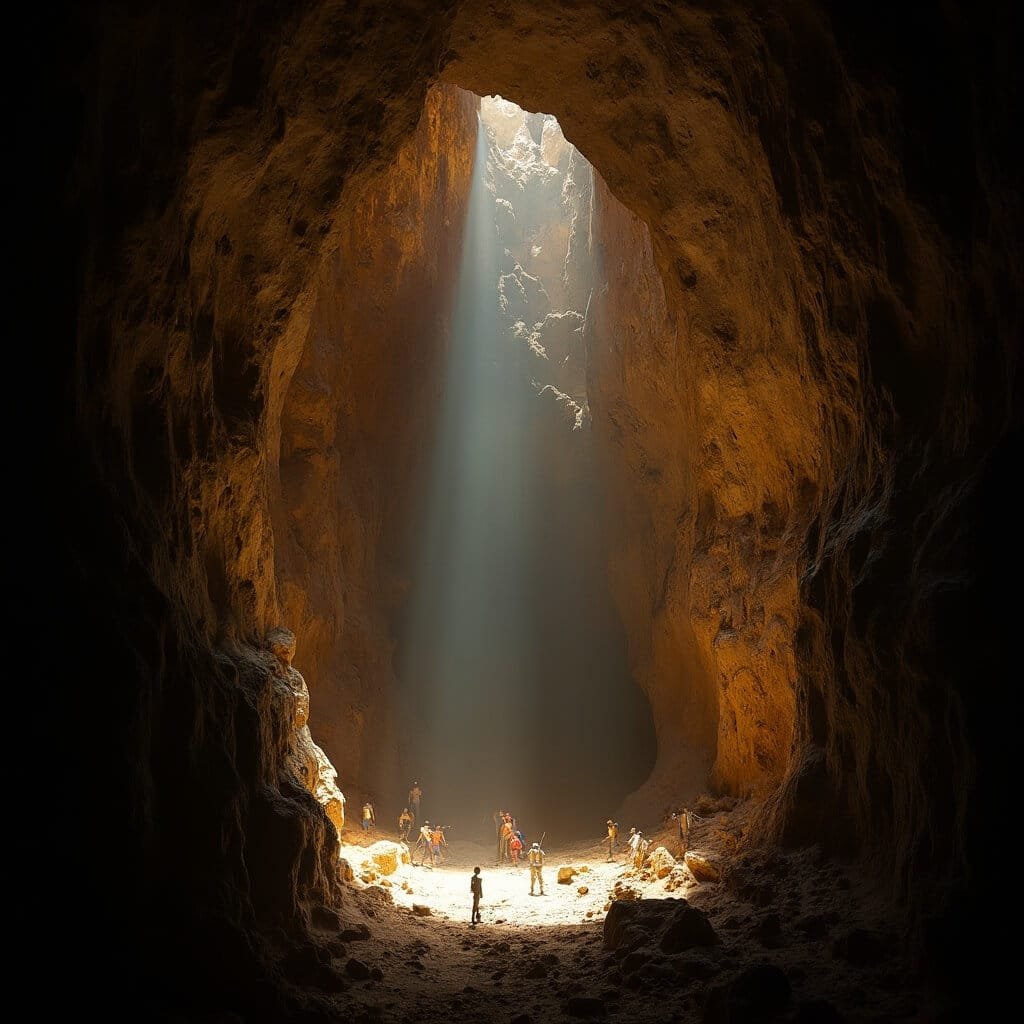
During my extended cave country exploration, I discovered that Diamond Caverns delivers the Instagram-worthy formations most people expect from Mammoth Cave, while Lost River Cave provides the only underground boat tour in Kentucky.
Smart Multi-Cave Strategy:
- Start with Mammoth Cave – Understand the scale and history first
- Follow with Diamond Caverns – Experience stunning mineral displays
- Add Lost River Cave – Enjoy unique underground boating
- Plan 3-4 days minimum – Allow proper time for each experience
The regional approach transformed my understanding of Kentucky’s underground world from a single attraction into a comprehensive cave ecosystem spanning millions of years of geological development.
The Family Attractions That Make This a Perfect Multi-Day Destination
Kentucky’s cave region offers far more than underground exploration.
Within 20 minutes of Mammoth Cave National Park, you’ll find adventure activities that turn a simple cave visit into a complete family vacation.
Adventure Activities Nearby:
- Mammoth Cave Adventures – Zipline canopy tours through old-growth forest
- Kentucky Action Park – Go-karts, mini golf, and outdoor adventure courses
- Kentucky Down Under Adventure Zoo – Australian animals and educational programs
- Dinosaur World – Life-sized dinosaur replicas and fossil dig experiences
I initially dismissed these attractions as tourist traps until my nephews convinced me to try the zipline tour. Racing through Kentucky’s forest canopy 40 feet above ground while knowing 400 miles of cave passages stretched beneath us created an incredible perspective on this region’s natural complexity.
The Kentucky Action Park surprised me with legitimate adventure challenges rather than typical roadside attractions. Their aerial adventure course requires genuine physical problem-solving skills and provides excellent conditioning for more challenging cave tours.
Extended Itinerary Benefits:
- Justify longer travel distances – Turn day trips into meaningful vacations
- Weather backup options – Indoor alternatives during poor surface conditions
- Age-appropriate variety – Activities for different family members and interests
- Economic efficiency – Spread travel costs across multiple experiences
Bowling Green sits just 30 minutes away, offering additional dining, lodging, and entertainment options that make extended stays both practical and enjoyable.
The Underground Photography Challenge Nobody Talks About
Cave photography presents unique challenges that catch most visitors completely off guard.
Standard camera equipment and smartphone photography techniques fall apart in Mammoth Cave’s low-light environment, but understanding these limitations beforehand can help you capture incredible memories.
Lighting Reality in Caves:
- Minimal artificial lighting – Tours use limited illumination for safety
- Flash restrictions – Many areas prohibit flash photography to protect formations
- Equipment limitations – Smartphones struggle with extreme low-light conditions
- Motion blur challenges – Long exposures difficult during moving tours
During my Wild Cave Tour photography attempt, I learned that authentic cave experiences prioritize exploration over documentation. The six-hour adventure through undeveloped passages offers incredible memories but very few photo opportunities.
Better Documentation Strategies:
- Focus on entrance and exit shots – Capture the transition between worlds
- Visitor centre exhibits – Professional displays and educational materials
- Above-ground landscape photography – Stunning forest and river scenery
- Purchase official park materials – Professional photographers with proper equipment and permits
The most memorable cave moments happen when you put the camera away and fully immerse yourself in the underground environment. Your eyes adjust to low light conditions in ways that cameras cannot, revealing details and perspectives that no photograph could capture.
The Conservation Story That Changes How You Experience Every Passage
Understanding Mammoth Cave’s conservation challenges completely transforms your underground experience.
This fragile ecosystem faces constant pressure from over 500,000 annual visitors, each potentially impacting formations that took millions of years to develop. Every step you take, every breath you exhale, and every surface you touch affects this underground world.
Conservation Realities:
- Irreversible formation damage – Human oils permanently stain limestone surfaces
- Ecosystem disruption – Light and noise pollution affect cave-adapted species
- Structural integrity – Unlimited access could damage passage stability
- Air quality management – Large groups alter cave atmosphere composition
The park service implements strict protocols that might seem restrictive but protect this World Heritage Site for future generations. Designated tour routes, group size limitations, and seasonal access restrictions all serve critical conservation purposes.
Your Role in Preservation:
- Follow all guide instructions – Stay on marked paths and avoid touching formations
- Respect wildlife habitat – Minimize noise and disturbance in sensitive areas
- Support sustainable tourism – Choose official tours over unofficial exploration
- Educate others – Share conservation awareness with fellow visitors
During a ranger-led evening program, I learned that three endangered species found in Mammoth Cave exist nowhere else on Earth. Their survival depends entirely on maintaining the precise environmental conditions that this cave system provides.
The Seasonal Strategy That Maximizes Your Underground Adventure
Timing your Mammoth Cave visit strategically can mean the difference between a crowded, rushed experience and an intimate exploration of America’s most significant cave system.
Each season offers distinct advantages that savvy visitors can leverage for optimal experiences.
Spring Advantages (March-May):
- Moderate crowds – Post-winter, pre-summer tourism levels
- Wildflower blooms – Above-ground hiking at its most beautiful
- Mild surface weather – Perfect conditions for combining cave and trail activities
- Full tour schedules – Most tour options available without peak season crowds
Summer Considerations (June-August):
- Maximum tour variety – All tours operating at full capacity
- Self-guided tour availability – Independent exploration options
- Extended operating hours – More daily tour departures
- Heavy crowds – Advanced booking absolutely essential
Autumn Benefits (September-November):
- Spectacular above-ground scenery – Fall foliage enhances hiking experiences
- Comfortable surface temperatures – Ideal conditions for extended outdoor activities
- Photography opportunities – Enhanced lighting and colors for above-ground activities
- Moderate crowds – Post-summer but pre-holiday visitor levels
Winter Advantages (December-February):
- Intimate tour experiences – Smaller groups and more personal attention
- Underground comfort – Cave’s constant temperature feels warm compared to surface cold
- Authentic cave atmosphere – Closest to historical exploration conditions
- Accommodation availability – Better rates and wider selection
My favourite visit occurred during a February snowstorm when our Historic Tour group consisted of just eight people instead of the typical 30. Our guide tailored the experience to our interests, spending extra time in formations areas and sharing stories impossible with larger groups.
Booking Timeline Strategy:
- 6 months ahead – Peak season tour reservations
- 3 months ahead – Moderate season planning
- 1 month ahead – Check current schedules and availability
- Day of visit – Last-minute availability rare but possible
The Physical Reality Check That Prevents Underground Disasters
Mammoth Cave tours vary dramatically in physical demands, and honestly assessing your capabilities before booking prevents disappointing and potentially dangerous situations.
I’ve witnessed visitors on challenging tours who clearly hadn’t prepared for the physical reality of authentic cave exploration.
Fitness Requirements by Tour Type:
Easy Tours (Frozen Niagara, Historic):
- Basic walking ability – Uneven surfaces and stairs
- 45 minutes to 2 hours duration – Moderate endurance required
- Some tight passages – Fat Man’s Misery requires flexibility
- Suitable for most ages – Family-friendly with reasonable fitness
Moderate Tours (Domes and Dripstones):
- Good cardiovascular fitness – Two hours of continuous walking
- Stair climbing ability – Multiple elevation changes
- Balance and coordination – Uneven, potentially slippery surfaces
- Moderate endurance – Limited rest breaks during tour
Challenging Tours (Wild Cave):
- Excellent physical condition – Six hours of demanding activity
- Crawling and climbing – Authentic spelunking movements
- Upper body strength – Navigating obstacles and tight spaces
- Mental preparedness – Claustrophobia and darkness tolerance
Special Considerations:
- Claustrophobia assessment – Some passages quite narrow
- Vertigo sensitivity – Certain viewpoints involve significant heights
- Mobility limitations – Wheelchairs and walkers not practical for most tours
- Age restrictions – Some tours have minimum age requirements
The Wild Cave Tour description warns participants they’ll emerge “delightfully dirty, damp, and spooky” – this isn’t marketing exaggeration. You’ll crawl through mud, squeeze through tight spaces, and navigate challenging terrain in complete darkness except for headlamps.
Preparation Strategies:
- Cardiovascular conditioning – Build endurance through regular hiking
- Flexibility training – Yoga or stretching to handle tight spaces
- Balance practice – Uneven surface training on local trails
- Equipment familiarity – Practice with headlamps and cave gear
The Underground Experience That Connects You to 4,000 Years of Human History
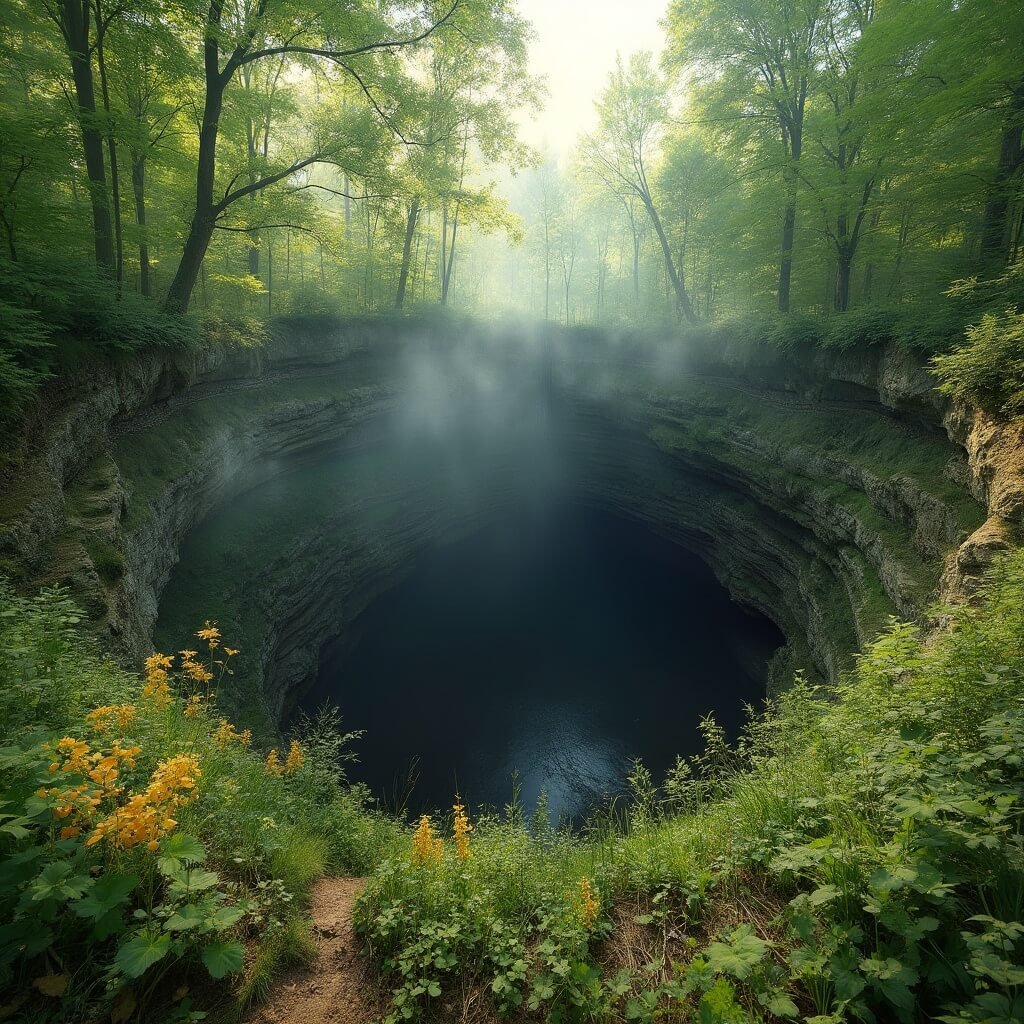
Standing in Mammoth Cave’s vast chambers connects you to an unbroken chain of human exploration spanning four millennia.
Ancient peoples explored these passages with primitive torches, followed by early American settlers, enslaved guides who became cave legends, and modern visitors like yourself.
Historical Timeline Highlights:
- 4,000+ years ago – First documented human exploration
- Early 1800s – Commercial tour development
- Stephen Bishop era – Legendary enslaved guide who mapped major passages
- 1941 – National Park designation
- 1981 – UNESCO World Heritage Site status
The human stories embedded in these limestone passages rival any geological wonder. Stephen Bishop, an enslaved person who became the cave’s most famous guide, discovered many of the formations and passages still featured on modern tours.
His maps proved so accurate that modern cartographers use them as reference points. Bishop’s description of Mammoth Cave as “grand, gloomy and peculiar” captures something essential that hasn’t changed in over 150 years.
Cultural Significance Aspects:
- Native American exploration – Artifacts and remains found throughout cave system
- Underground Railroad connections – Historical significance beyond tourism
- Scientific advancement – Early geological and biological research site
- Tourism industry pioneer – North America’s oldest tour attraction
During the Historic Tour, standing in the same chambers where Bishop led visitors by candlelight creates a profound connection to this place’s human heritage.
The Scientific Research Happening Beneath Your Feet
Mammoth Cave serves as a living laboratory where scientists study everything from climate change to astrobiology.
The International Biosphere Reserve designation brings researchers from around the world to investigate questions impossible to study elsewhere.
Active Research Areas:
- Cave formation processes – How water creates these massive underground systems
- Ecosystem adaptation – How life thrives in extreme environments
- Climate change impacts – Underground systems as climate indicators
- Astrobiology studies – Cave environments similar to potential extraterrestrial habitats
NASA scientists use Mammoth Cave to understand how life might exist on Mars or other planets. The extreme conditions and unique ecosystems provide insights into life’s possibilities beyond Earth.
Conservation Science:
- Species monitoring – Tracking endangered cave-adapted animals
- Water quality research – Underground hydrology and pollution impacts
- Visitor impact studies – Balancing access with preservation
- Restoration techniques – Healing damage from past less-careful tourism
The three endangered species found only in Mammoth Cave represent evolution in action – animals that adapted so specifically to this environment that they cannot survive anywhere else.
Understanding this ongoing scientific work adds depth to every passage you explore and formation you observe.
The Ultimate Mammoth Cave Experience Blueprint
After multiple visits and extensive exploration of Kentucky’s cave country, I’ve developed a strategy that maximizes both underground adventure and above-ground discovery.
The Perfect 3-Day Itinerary:
Day 1 – Foundation and Scale:
- Morning: Historic Tour for human context and cave introduction
- Afternoon: Easy hiking trails (Cedar Sink, Sand Cave) for surface perspective
- Evening: Ranger program and early rest
Day 2 – Deep Exploration:
- Morning: Domes and Dripstones Tour for geological understanding
- Afternoon: Green River activities (canoeing, fishing, or riverside relaxation)
- Evening: Mammoth Cave Lodge dining and cave research
Day 3 – Adventure or Alternative:
- For adventurers: Wild Cave Tour (full day commitment)
- For families: Frozen Niagara Tour + nearby attractions
- For cave enthusiasts: Additional cave systems (Diamond Caverns, Lost River Cave)
Extended 5-7 Day Exploration:
- Regional cave systems – Experience different geological formations
- Backpacking adventures – Multi-day hiking in backcountry areas
- Photography workshops – Above-ground landscape and wildlife photography
- Educational programs – Ranger-led activities and citizen science participation
Essential Booking Strategy:
- Research current tour schedules 1-3 months before travel
- Book primary tours 3-6 months in advance through Recreation.gov
- Plan backup options in case of weather or equipment issues
- Reserve accommodations early for peak season visits
- Check regional attractions for package deals and combination tickets
The key lies in balancing underground exploration with above-ground activities, allowing time for the full scope of this World Heritage Site to reveal itself.
Why Mammoth Cave Will Forever Change Your Understanding of Natural Wonder
Most people visit Mammoth Cave expecting another tourist attraction and leave with a completely transformed understanding of our planet’s hidden complexity.
This isn’t just the world’s longest cave system – it’s a window into geological processes, biological adaptation, and human exploration that spans millennia.
The moment you stand in those vast chambers, listening to your own voice echo back from passages that disappear into darkness, you understand why UNESCO considers this place globally significant.
The 400+ miles of mapped passages represent only the beginning of what lies beneath Kentucky’s rolling hills.
Scientists estimate potentially hundreds more miles waiting for discovery, meaning your visit contributes to ongoing exploration of one of Earth’s least understood environments.
The combination of underground wonder and above-ground wilderness creates a destination unlike anything else in North America.
Where else can you explore the world’s longest cave system, paddle pristine rivers, hike through International Biosphere Reserve forests, and camp beneath stars while knowing vast underground chambers stretch beneath your tent?
Whether you choose the gentle introduction of a Frozen Niagara Tour or commit to the challenging adventure of a Wild Cave expedition, you’ll leave with memories and perspectives that no other natural attraction can provide.
Plan your visit with the respect this World Heritage Site deserves, book your tours well in advance, and prepare for an experience that will fundamentally change how you think about the hidden wonders waiting to explore Mammoth Cave in Kentucky.
👇Ready To Book Your Trip?👇
This post may contain affiliate links. Please see my disclosure policy for details.
Want to keep this one?
We'll email you the link so you can find it again later.