
Kitchen Backsplash Ideas That Actually Transform Your Space
Kitchen backsplashes offer an incredible opportunity to transform your cooking space with both function and style.
I’ve renovated three kitchens in the past decade, and every single time, the backsplash decision kept me up at night.
The thing is, you’re staring at this surface every single day—while making coffee, washing dishes, cooking dinner—so getting it right matters way more than people think.

Project Overview
Quick Style Snapshot
The scope of a backsplash project is highly flexible.
You can refresh just the wall space behind your sink or cooktop in a single weekend, or expand the design to full-height installations that run from countertop to ceiling.
Budget ranges dramatically depending on material choice, from around $2-$10 per square foot for ceramic tile to premium natural stone and handcrafted options.
Most DIY-friendly installations work well for intermediate skill levels, though professional installation is recommended for more complex materials like natural stone or metal panels.
Design Identity
Your backsplash design should reflect your personal style and complement your cabinet color, countertops, and overall kitchen aesthetic.
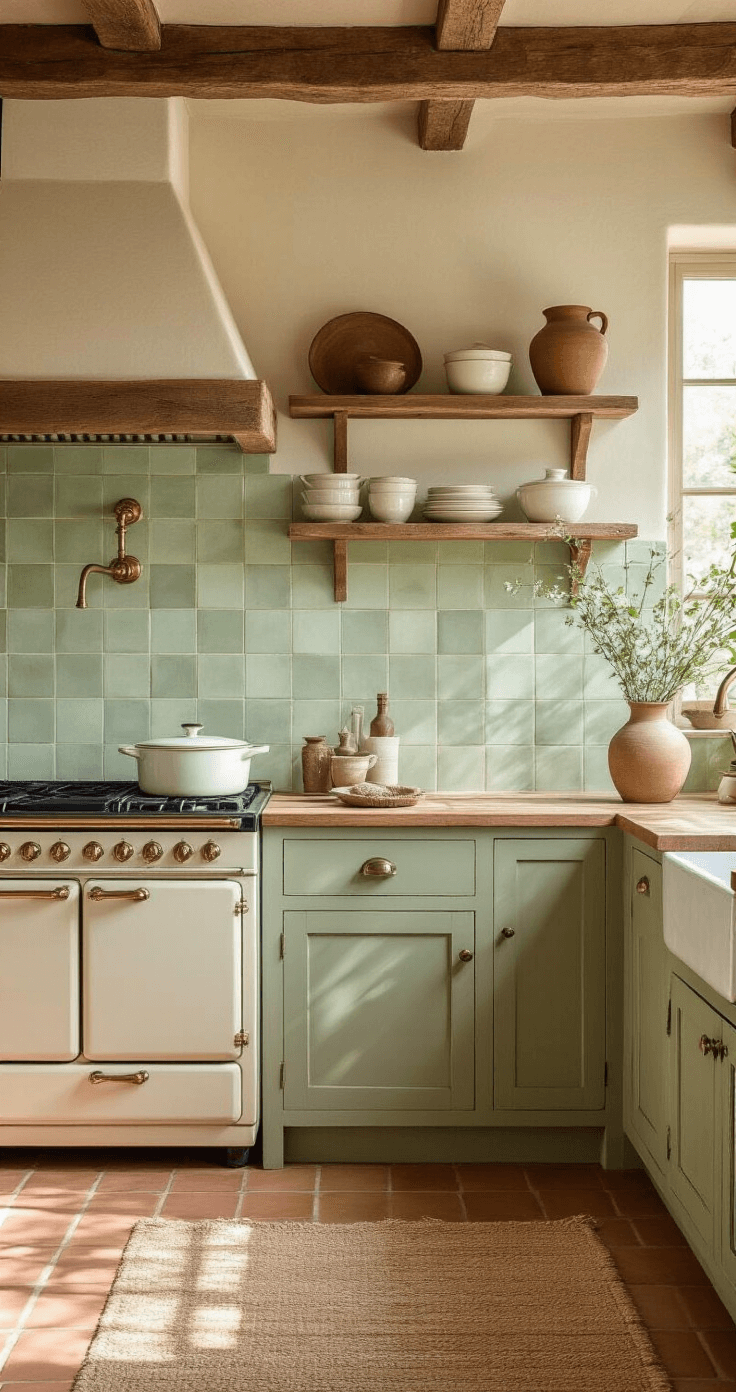
White subway tiles remain a timeless favorite for their clean lines and versatility, but 2026 brings exciting new directions.
Strongly veined stone slabs, hand-painted decorative tiles, and wallpaper-inspired patterns are commanding significant design attention.
I personally went with zellige tiles in my last kitchen renovation—that soft, handcrafted texture makes me smile every morning.
Material Options That Actually Work
Ceramic & Porcelain Tiles
Ceramic and porcelain tiles dominate the backsplash market due to their resilience, affordability, and endless variety in color and shapes.
Porcelain is technically superior—made from higher-quality clays fired at greater temperatures, making it more durable and less porous than standard ceramic.
Both materials are nonporous when glazed, making them easy to clean and resistant to splashes and spills.
Installation is straightforward for DIY projects, particularly with ceramic, which cuts more easily than porcelain.
Here’s what you need to know:
- Price range typically spans $2–$10 per square foot for materials
- Installation runs $10–$35 per square foot if you hire professionals
- Ceramic cuts easier than porcelain (trust me on this—I learned the hard way)
- Both resist stains and moisture brilliantly
- Endless design options mean you’ll never feel limited
Natural Stone
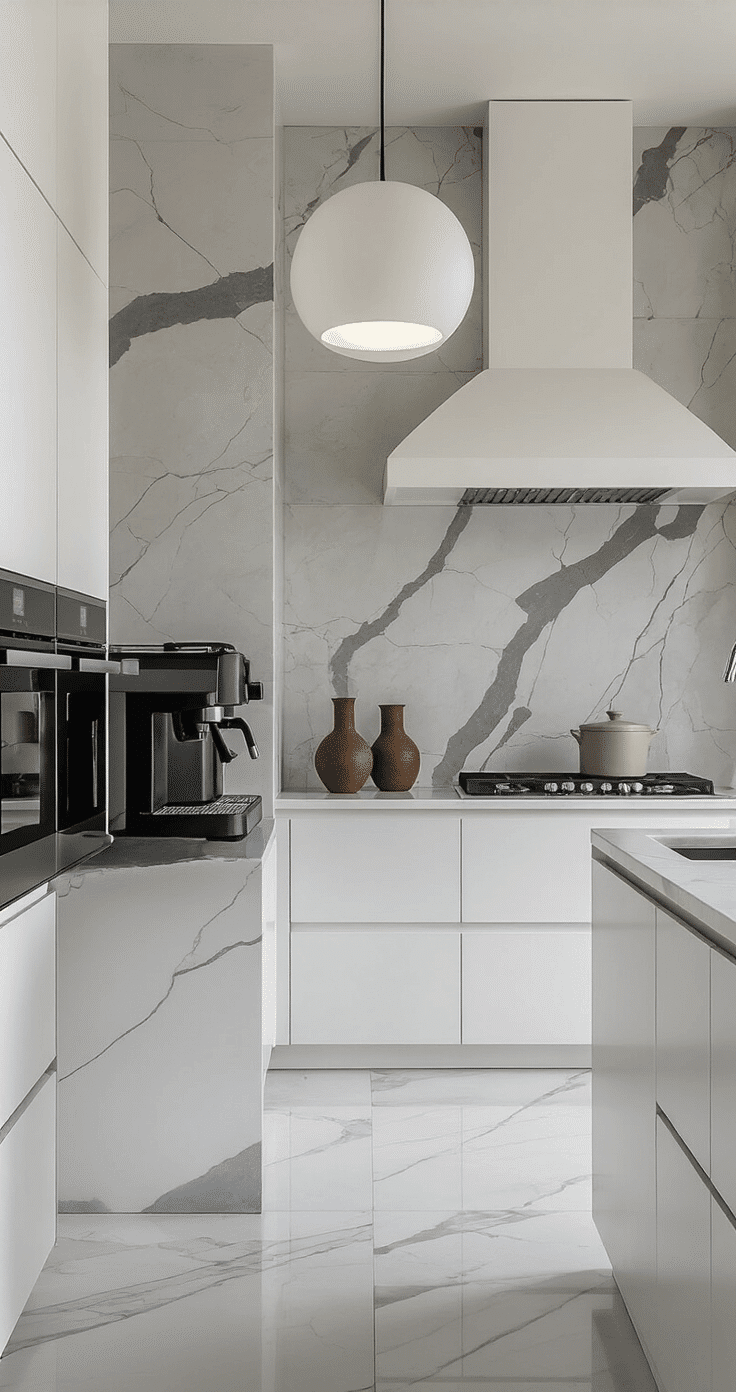
Natural stone backsplashes—including marble, granite, slate, and quartzite—bring warmth, movement, and luxury to your kitchen.
Granite offers remarkable durability and heat resistance, available in numerous textures and colors, with each piece featuring unique patterns.
The primary consideration: natural stone is porous and requires sealing to prevent stains and moisture damage.
Marble provides elegance with a softer aesthetic when honed rather than polished.
These materials command premium pricing ($7–$30+ per square foot) but create stunning focal points that never go out of style.
My neighbor installed marble tile behind her range three years ago, and it still looks absolutely breathtaking.
Quartz & Engineered Stone
Quartz backsplashes combine abundance with performance.
Minerals are mined, ground, combined with pigments, and formed into slabs.
The major advantage:
- Quartz is non-porous
- Durable beyond belief
- Requires no sealing, unlike natural stone
- Available in numerous colors, with white and black being most popular
- Maintenance is basically wipe-and-forget
Composite Materials
Composite or solid-surface materials like Corian and Hi-Macs blend resin with natural minerals, offering extraordinary design flexibility.
They can be seamlessly molded into curves and angles, creating uninterrupted surfaces between countertop and backsplash with no seams where dirt can accumulate.
The tradeoff: composites can be scratched (though often sanded out) and aren’t heat-resistant behind gas cooktops.
Laminate
If budget constraints are primary, laminate delivers significant value.
It’s water-resistant, affordable, and available in high-definition prints that convincingly mimic wood or stone.
Laminates offer easy cleaning and durability at a fraction of the cost of natural materials, making them practical for renters or temporary solutions.
I used laminate in my first apartment kitchen, and honestly, guests couldn’t tell it wasn’t real stone.
Metal Tiles & Panels
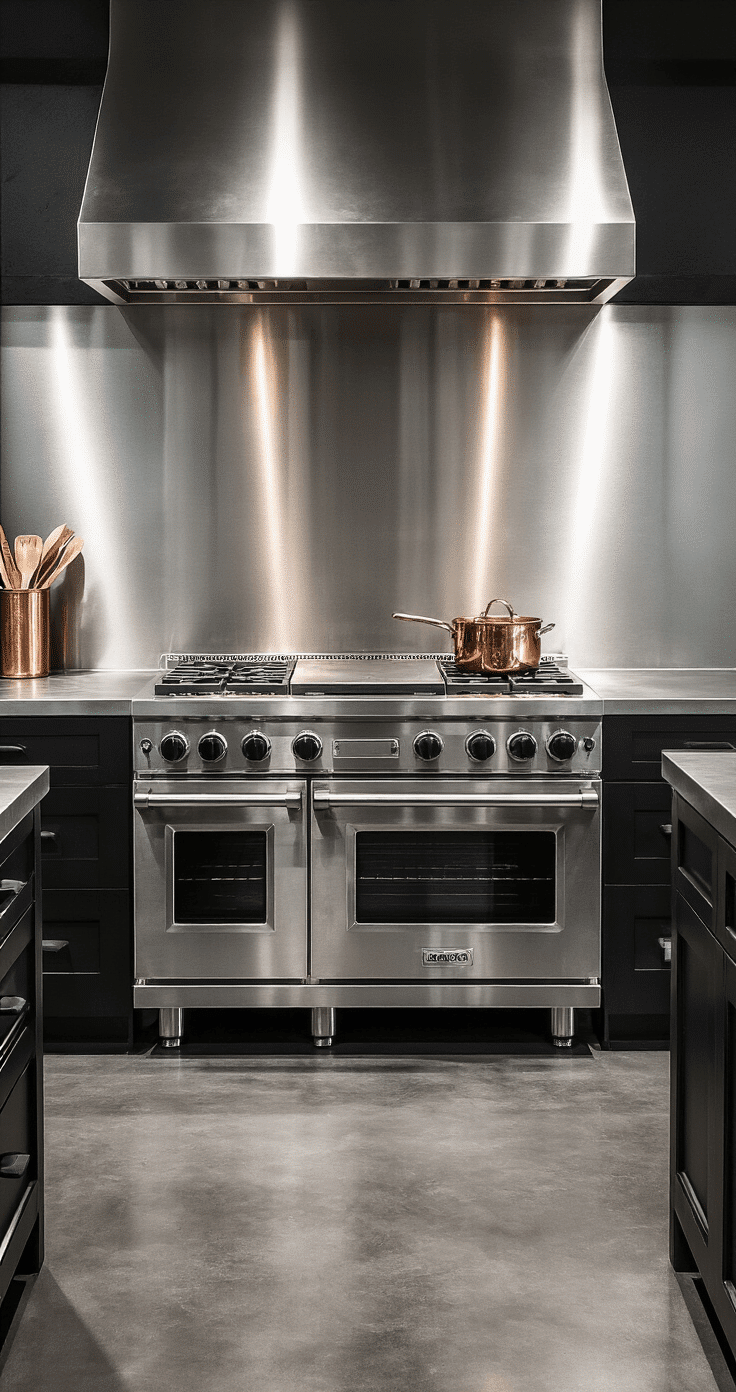
Metal backsplashes—typically copper, stainless steel, aluminum, or tin—bring industrial or contemporary edge to modern kitchens.
They’re nonporous and stain-resistant, available in penny-round mosaics or large panels that cover expansive areas.
Stainless steel backsplash panels work particularly well behind ranges where heat resistance is critical.
Design Styles That Never Disappoint
Classic & Timeless
White subway tiles remain a perpetually popular choice, with their glossy finish perfectly complementing white cabinets and any kitchen style.
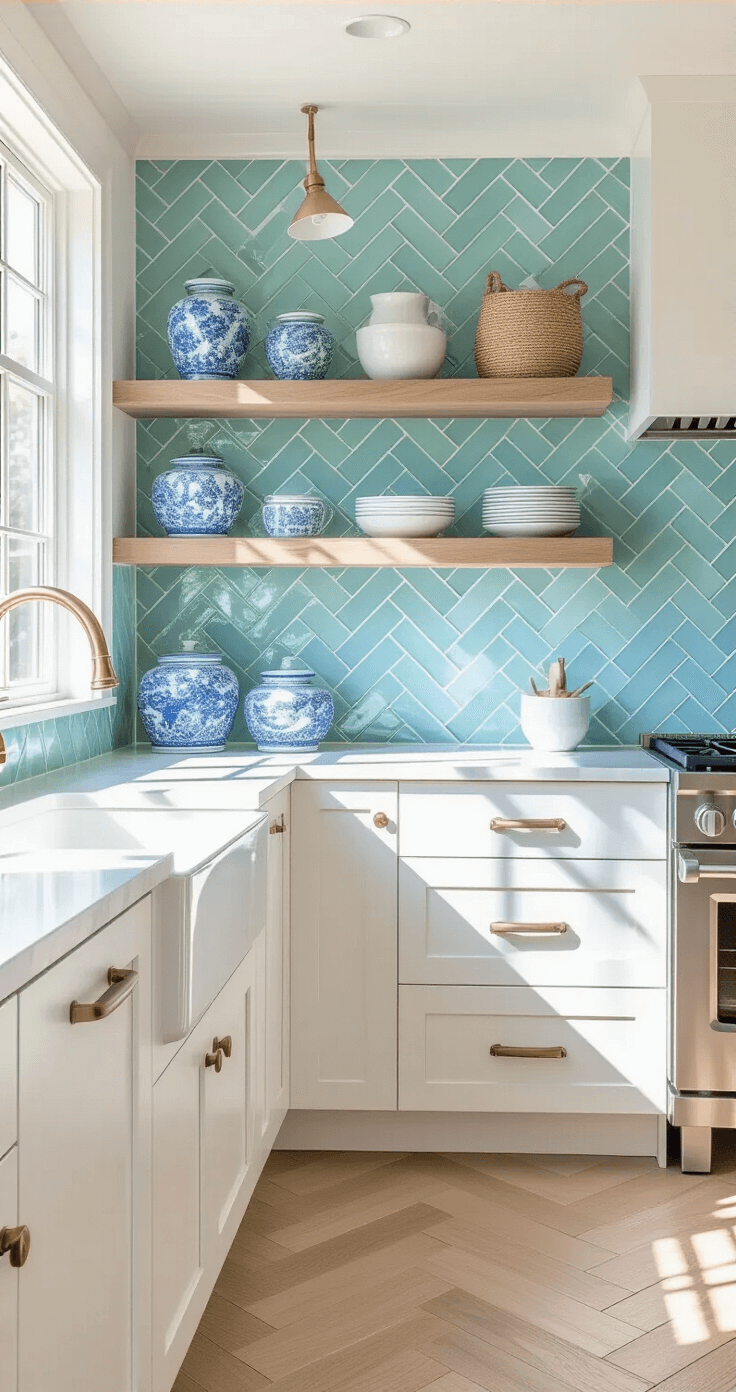
Herringbone patterns using white tiles or brick create classic yet contemporary visual interest.
For monochromatic sophistication, layer varying shades of white and gray for understated contemporary elegance.
I’ve installed white subway tile in two different kitchens, and it’s aged beautifully in both—never looks dated.
Nature-Inspired & Organic
Bring the outdoors in with earthy tones, leaf patterns, and botanical motifs that create calming, organic atmospheres.
Coastal vibes leverage aqua, turquoise, and sandy beige to evoke beachside tranquility.
Rustic brick backsplashes deliver farmhouse charm with warmth that beautifully complements white cabinetry.

This post may contain affiliate links. Please see my disclosure policy for details.