
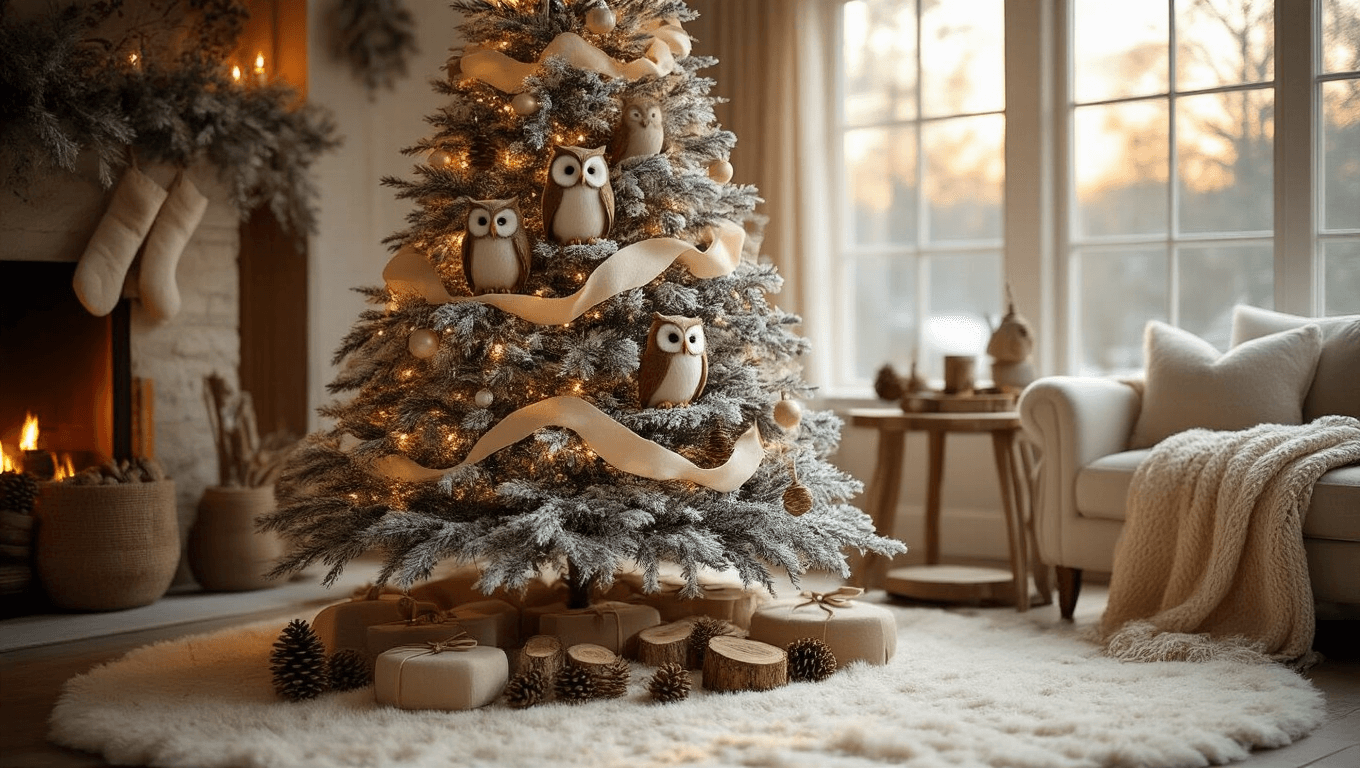
Woodland Christmas Tree: How I Brought the Forest Inside (And You Can Too)
Contents
Woodland Christmas tree decorating has completely transformed how I approach holiday decor, and I’m about to show you exactly how to create this magical, nature-inspired look in your own home.
Forget those cookie-cutter red-and-green trees your neighbors are putting up. We’re going wild this year—literally.

Why Your Christmas Tree Probably Feels Like Something’s Missing
You’ve stood in front of your tree for the third time this week, head tilted, wondering why it looks…fine, but not fabulous.
Maybe you’ve thrown every ornament you own at it. Maybe you’ve followed those Pinterest boards religiously. Maybe you’ve spent a fortune on decorations that just don’t feel right together.
Here’s what nobody tells you: Most Christmas trees fail because they lack a cohesive story.
The woodland Christmas tree? It tells a story. Your story. A narrative about bringing nature’s quiet beauty indoors during the coldest, darkest months.
I discovered this approach three years ago when I was completely burnt out on traditional holiday decorating. That year, I walked through a snow-covered forest near my home and thought: “Why am I trying to make my house look like a department store when this exists?”
Everything changed after that walk.

What Makes a Woodland Christmas Tree Actually Work
A woodland Christmas tree embraces nature instead of fighting it.
Think forest floor meets winter wonderland. Think textures you want to touch. Think animals that look like they wandered in from the woods and decided to stay.
The core identity centers on:
- Earthy, natural color palettes: Creams, whites, soft browns, forest greens
- Real (or realistic) textures: Wood, felt, feathers, burlap, faux fur
- Woodland creatures: Owls, foxes, deer, birds, raccoons
- Winter forest elements: Birch bark, pinecones, frosted branches, berry sprigs
This isn’t your grandmother’s Christmas tree (unless your grandmother was a woodland fairy, in which case, respect).
Time Investment: 2-4 hours for initial setup
Budget Range: $150-$600+ (I’ll show you how to stay on the lower end)
Skill Level: Intermediate (but beginners who can follow directions will be fine)

The Non-Negotiable Foundation Pieces
Start With Your Tree (The Biggest Decision You’ll Make)
I use a flocked Christmas tree as my base.
That snow-dusted look? It’s the secret sauce. It creates an instant winter wonderland vibe before you hang a single ornament.
If you already have a regular green tree, don’t panic. You can work with it—just lean harder into natural wood tones and forest greens rather than the snowy white palette I prefer.
Pro move: Position your tree near a window if possible. Natural light makes those white and cream tones absolutely glow during the day.
The Statement Pieces That Make People Stop and Stare
Large woodland animal ornaments become your celebrities.
I’m talking about those big, fluffy owl Christmas ornaments that look like they might actually hoot at you.
These aren’t supporting characters. These are your headliners.
Position 2-3 oversized owls or other woodland creatures at different heights throughout your tree. I nestle mine onto birch branches like they’re perched there naturally.
One lives at the top third of my tree, looking slightly to the left. Another sits mid-tree, facing forward. The third perches lower, angled right.
This creates a triangular sight line that guides viewers’ eyes around the entire tree rather than just staring at the front.
Birch Branches: Your Secret Weapon
Real talk: birch branches and logs changed everything for me.
These aren’t just decorations. They’re architecture.
I buy bundles of white birch branches and position them throughout the tree, especially in the upper sections. They add height, create natural “perches” for ornaments, and break up the triangular tree shape in interesting ways.
What this does: Transforms your tree from “decorated evergreen” to “enchanted forest scene.”
Last year, I positioned a thick birch log horizontally across one section and perched three small felt foxes on it like they were crossing a fallen tree. Guests literally took photos of just that section.

Building Your Ornament Collection (Without Going Broke)
The Woodland Animal Ornaments You Actually Need
Here’s where I see people overspend: buying every single woodland creature they see.
My rule: Choose 2-3 animal types and stick with them.
I focus on:
- Owls (various sizes)
- Foxes
- Cardinals
That’s it.
Within those three categories, I mix different materials and styles:
Felt and wool animals: Felt woodland ornaments bring softness and handmade charm. They’re usually lightweight, so they won’t drag down branches.
Carved wood pieces: These add authentic rustic texture and weight to anchor lower branches.
Hand-painted glass: These catch light beautifully and add unexpected elegance to the rustic theme.
I learned this the hard way: Don’t buy 47 different animals thinking “more variety equals better tree.” It equals visual chaos.

Garland and Ribbon: The Backbone Nobody Talks About
Before you hang a single ornament, you need foundation layers.
Start with
This post may contain affiliate links. Please see my disclosure policy for details.


