

Your Bedroom Doesn’t Need a Complete Renovation (Just Better Ideas)
Contents
- Your Bedroom Doesn’t Need a Complete Renovation (Just Better Ideas)
- The Centerpiece: Your Bed Needs to Stop Apologizing for Existing
- Layer Your Bedding Like You’re Building a Nest (Because You Are)
- Lighting: Stop Living Under That Depressing Overhead Fixture
- Color Psychology Isn’t Nonsense (Your Walls Are Talking to Your Brain)
Time investment: 4-6 hours for initial transformation
Budget range: $300-$5,000+ depending on ambition
Difficulty level: Easy to moderate
Best for: All bedroom sizes from cozy 10×10 spaces to sprawling master suites
Listen, I’m not here to tell you to rip out walls or hire an interior designer with a waiting list longer than your grocery receipt. What I will show you are practical bedroom ideas that actually work in real homes where people live, work, and occasionally eat cereal in bed at midnight.
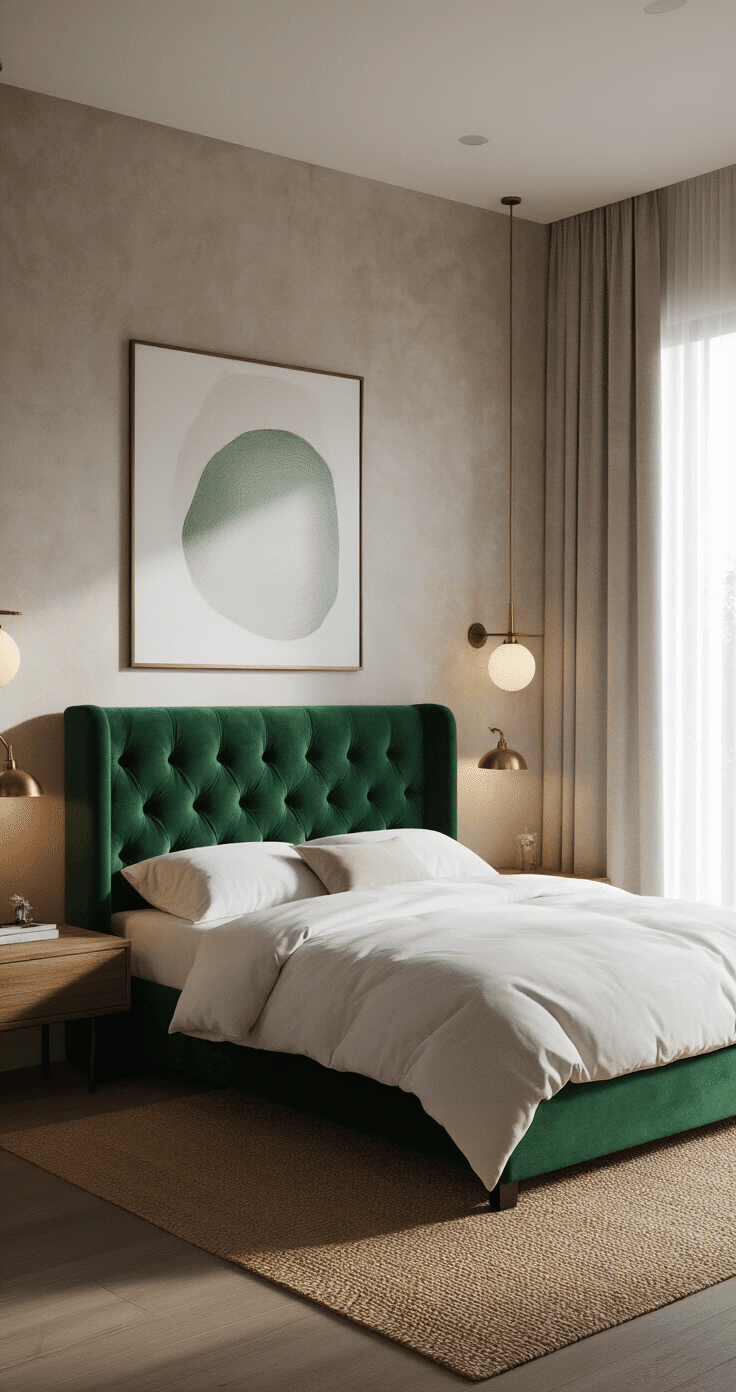
The Centerpiece: Your Bed Needs to Stop Apologizing for Existing
Your bed takes up roughly 40% of your bedroom’s floor space. It should command attention, not hide in the corner like it’s done something wrong.
Statement headboards changed my entire bedroom game. I’m talking floor-to-ceiling drama here—tufted velvet that makes you feel like royalty, reclaimed wood that adds warmth, or even an upholstered panel in a bold color you’d never dare put on four walls.
When I finally invested in a velvet upholstered headboard, visitors stopped mid-conversation. The headboard wasn’t expensive or fancy, but it transformed a sad bed frame into a focal point worth photographing.
Bed frame options that actually matter:
- Low-profile platform beds create modern, minimalist vibes and make small rooms feel larger
- Four-poster beds add architectural interest without construction
- Upholstered frames in neutral tones provide softness against hard flooring
- Metal frames introduce industrial edge for eclectic spaces
If you’re on a budget, skip the expensive frame entirely. Mount wood planks, fabric panels, or even peel-and-stick wallpaper directly on the wall behind your bed. Same dramatic effect, fraction of the cost.
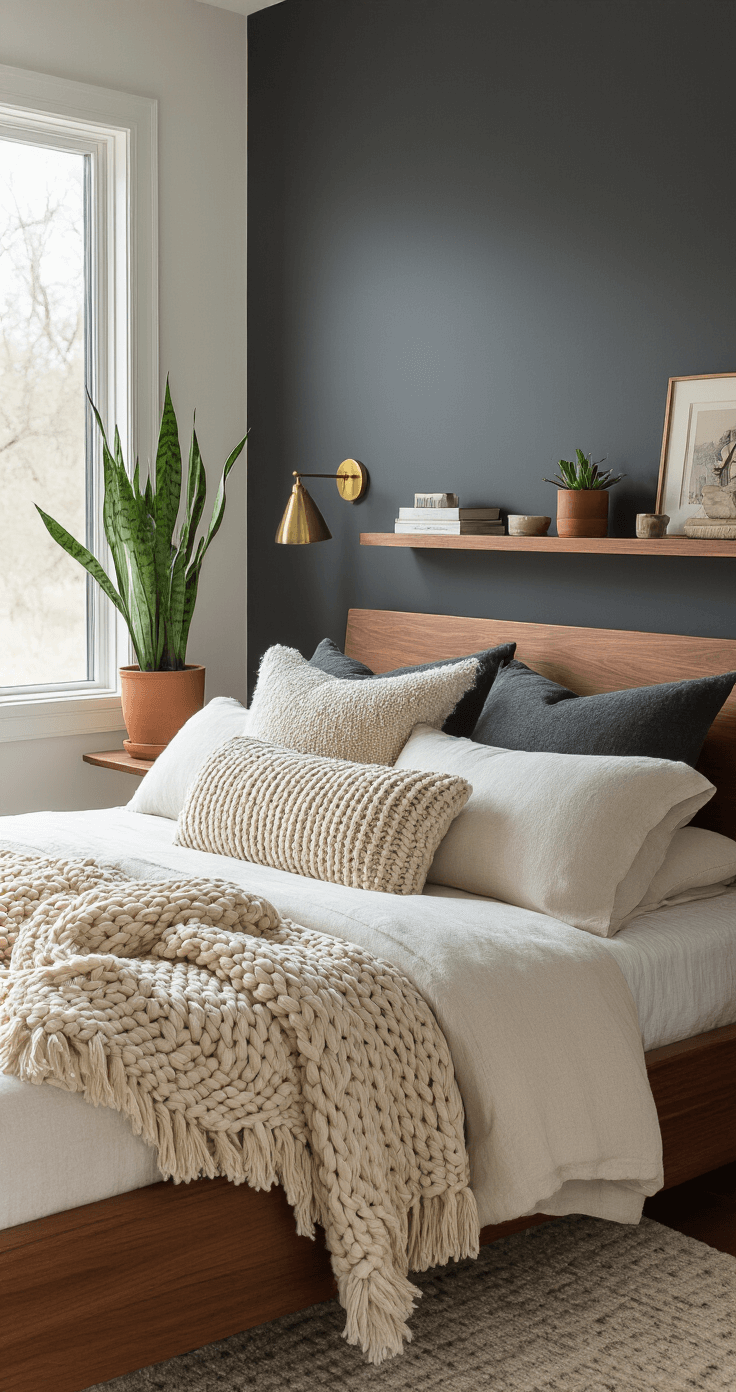
Layer Your Bedding Like You’re Building a Nest (Because You Are)
Flat sheets and a comforter haven’t been exciting since 2003. Modern bedrooms layer textures like fashion editors layer clothing—thoughtfully and with purpose.
My bedding formula that works every single time:
- Start with quality fitted sheets in soft, neutral colors (white, cream, light gray)
- Add a flat sheet or skip it entirely if you’re anti-sheet like half of America
- Layer a lightweight quilt or coverlet for texture
- Top with a duvet in a complementary color or pattern
- Throw on 2-3 different sized pillows (not 47 decorative pillows—this isn’t a hotel)
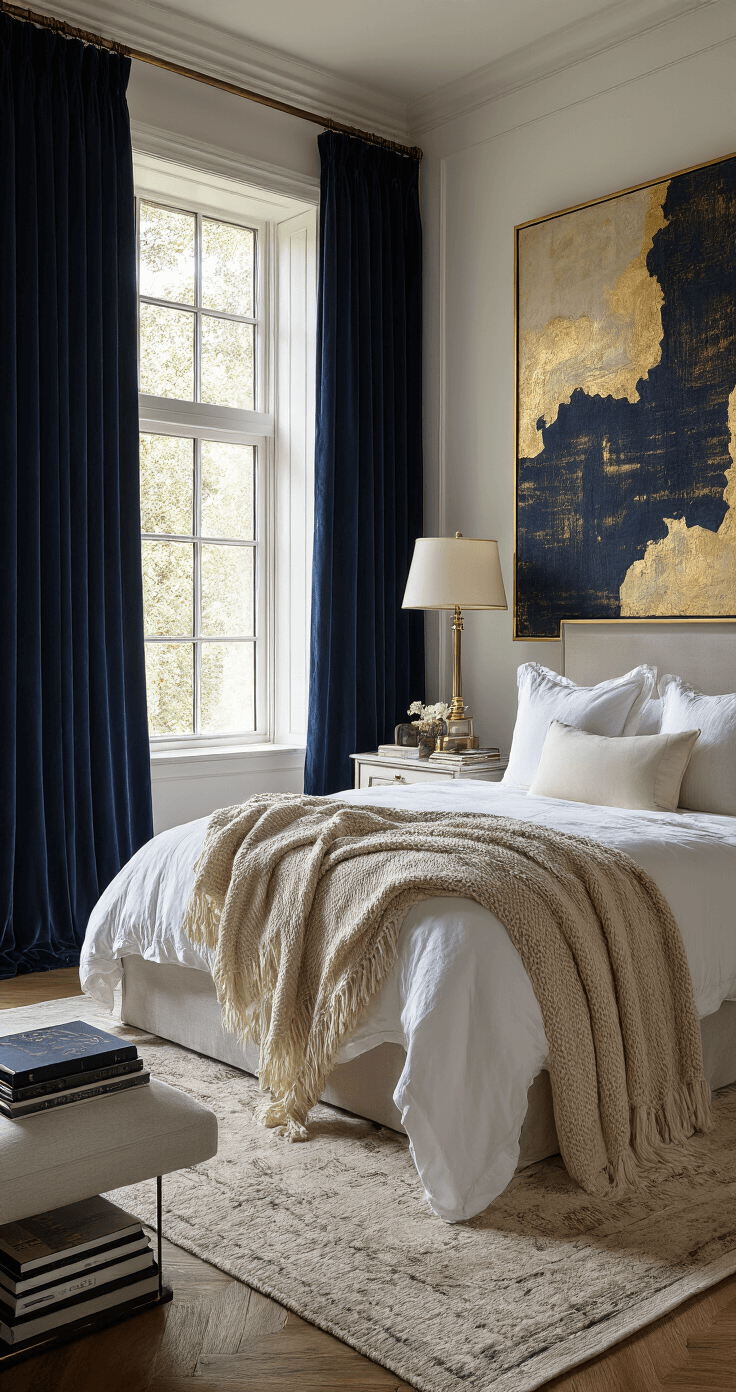
- Finish with a textured throw blanket casually draped at the foot
When I implemented this approach with linen duvet covers and mixed textures, my bedroom suddenly looked like those magazine photos I’d been saving for years. The secret isn’t expensive bedding—it’s creating visual depth through contrast.
Texture combinations that create magic:
- Smooth cotton sheets + chunky knit throw + velvet pillows
- Crisp linen + waffle-weave blanket + faux fur accent pillow
- Sateen sheets + quilted coverlet + cable-knit throw
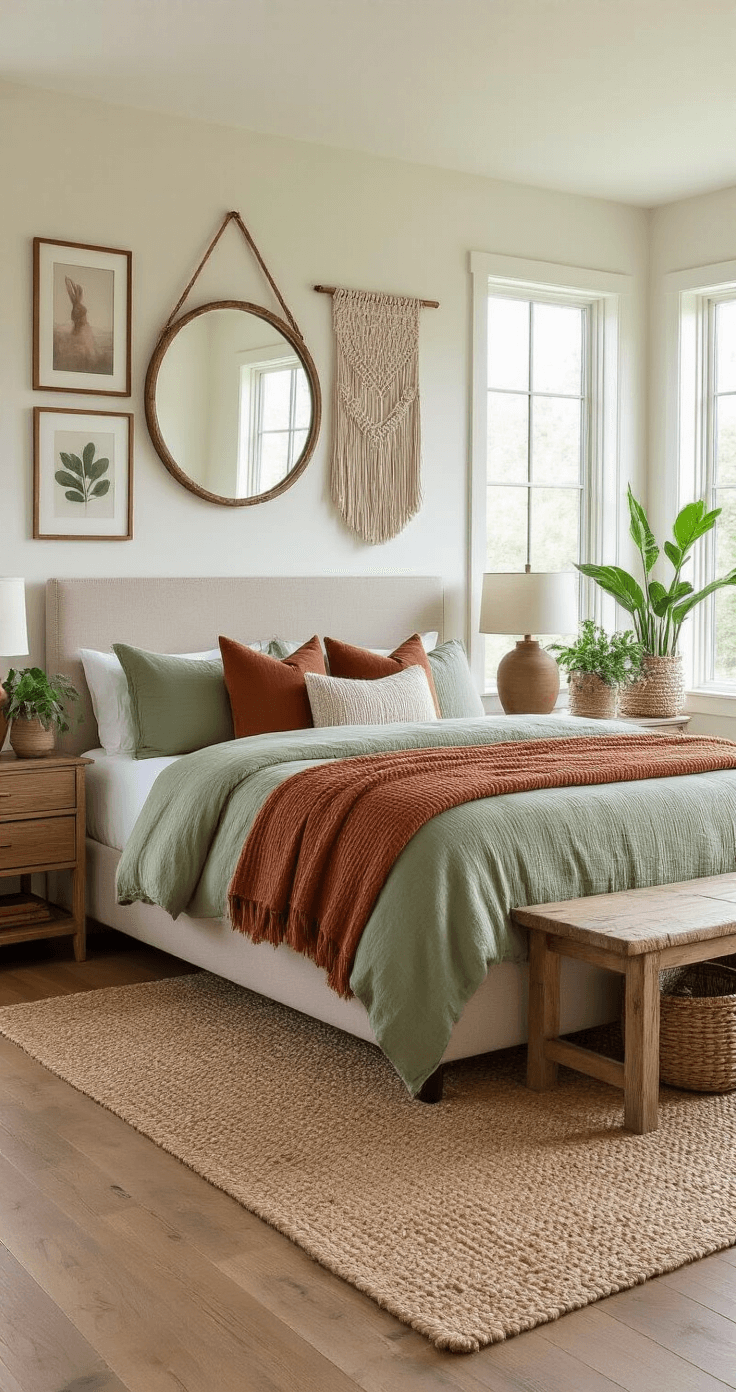
Lighting: Stop Living Under That Depressing Overhead Fixture
Harsh overhead lighting makes everyone look terrible and kills bedroom ambiance faster than discussing taxes.
I learned this the hard way after wondering why my beautifully decorated bedroom felt like a dentist’s waiting room every evening. The culprit? One sad ceiling light doing all the work.
The three-light rule transforms bedrooms:
- Ambient lighting provides overall illumination without harshness. Install dimmer switches on existing overhead fixtures or replace them with statement chandeliers or pendant lights that add personality.
- Task lighting helps you read, work, or find your phone at 3 AM. Bedside table lamps with adjustable brightness save marriages and prevent middle-of-the-night arguments about light levels.
- Accent lighting creates atmosphere and highlights design elements. String lights, LED strips behind headboards, picture lights above artwork, or small uplights in corners add layers without adding clutter.
When I added a dimmer switch ($15 and 20 minutes), installed bedside lamps with warm bulbs, and placed a small uplight behind a plant, my bedroom went from functional to actually inviting.
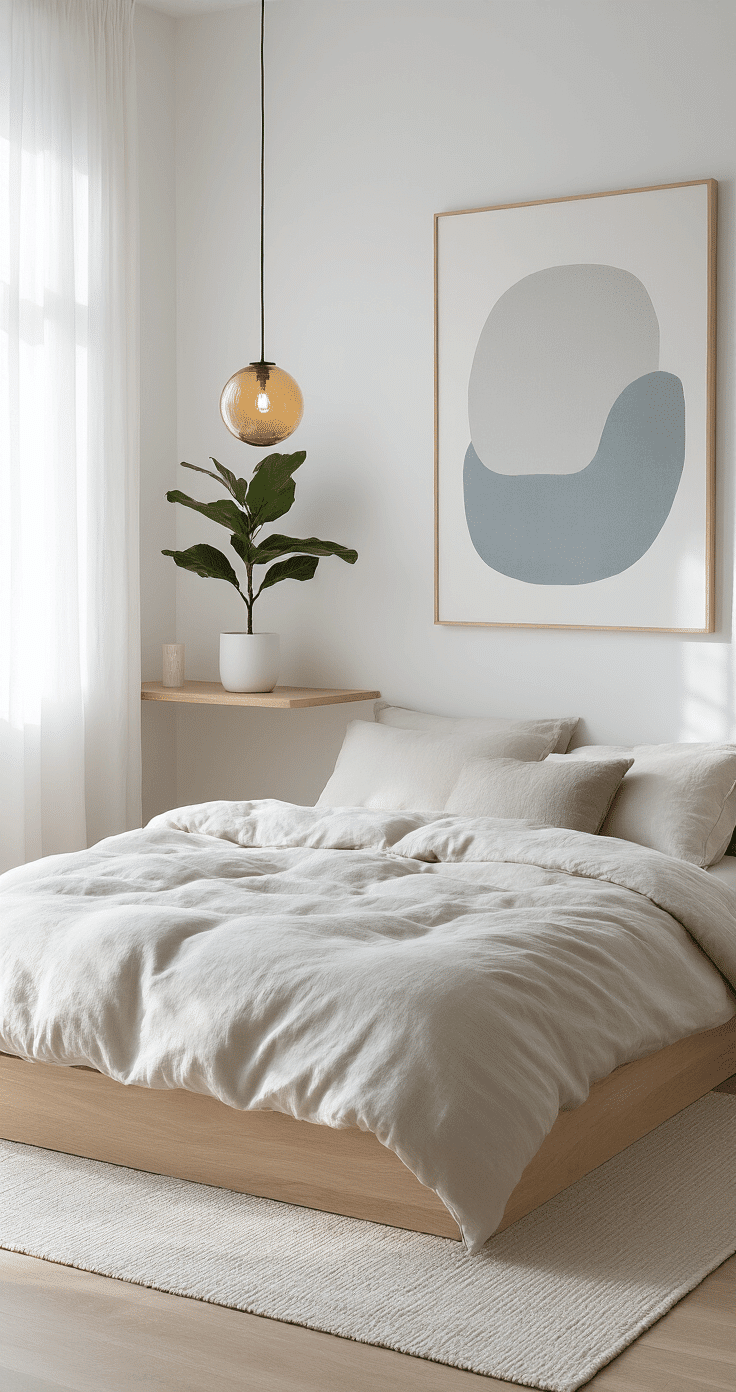
Color Psychology Isn’t Nonsense (Your Walls Are Talking to Your Brain)
Painting your bedroom neon orange because it’s “energizing” guarantees you’ll never sleep again. Colors affect mood, and bedrooms demand colors that calm rather than stimulate.
Bedroom color schemes that actually promote rest:
- Soft neutrals (warm whites, beiges, taupes, soft grays). These create clean, serene foundations that work with any decor style and don’t require repainting when you change your mind next season.
- Muted earth tones (sage green, terracotta, dusty blue, warm clay). These bring nature indoors and create cocooning effects perfect for sleep spaces.
- Dramatic darks (charcoal, navy, forest green, deep burgundy). Contrary to popular belief, dark walls create intimate, restful environments when balanced with lighter bedding and adequate lighting.
I painted my bedroom a deep charcoal gray despite everyone’s warnings that it would feel like a cave. With white bedding, warm wood furniture, and proper lighting layers, it became the most restful room in my house. Dark walls absorb light rather than reflect it, reducing visual stimulation when you’re trying to wind down.
The 60-30-10 rule saves you from color chaos:
- 60% dominant color (walls, large furniture)
- 30% secondary color (bedding, curtains, rug)
- 10% accent color (pillows, artwork, accessories)
This post may contain affiliate links. Please see my disclosure policy for details.


