

Modern Kitchen Cabinets: Everything You Need to Know Before Your 2026 Renovation
Contents
Modern kitchen cabinets are transforming how we think about kitchen design, and I’ve spent the last three months diving deep into what actually works versus what just looks good on Pinterest.
You’re probably staring at your outdated kitchen right now, wondering where to even start. Maybe your cabinets are stuck in 2010, or you’re drowning in clutter with nowhere to put anything. I get it—I was there two years ago, and the overwhelm nearly made me give up entirely.

Why Curved Cabinets Are Stealing the Show
I’ll be honest—I thought curved cabinets were just another passing fad until I visited my sister’s newly renovated kitchen.
The difference hit me immediately. Her curved island didn’t just look softer and more inviting. It actually made the kitchen flow better because no one was bumping into sharp corners anymore.
Here’s what curved and fluid geometries bring to your kitchen:
- Smoother traffic patterns that make cooking with multiple people actually pleasant
- Natural gathering spots where people instinctively want to stand and chat
- A softer aesthetic that feels less institutional and more home-like
- Better flow in smaller kitchens where every inch of movement matters
The trick is not going overboard. One curved element—like an island or a peninsula—creates impact without looking like you’re trying too hard.
If you’re considering this style, pair it with curved cabinet hardware that echoes the gentle lines.
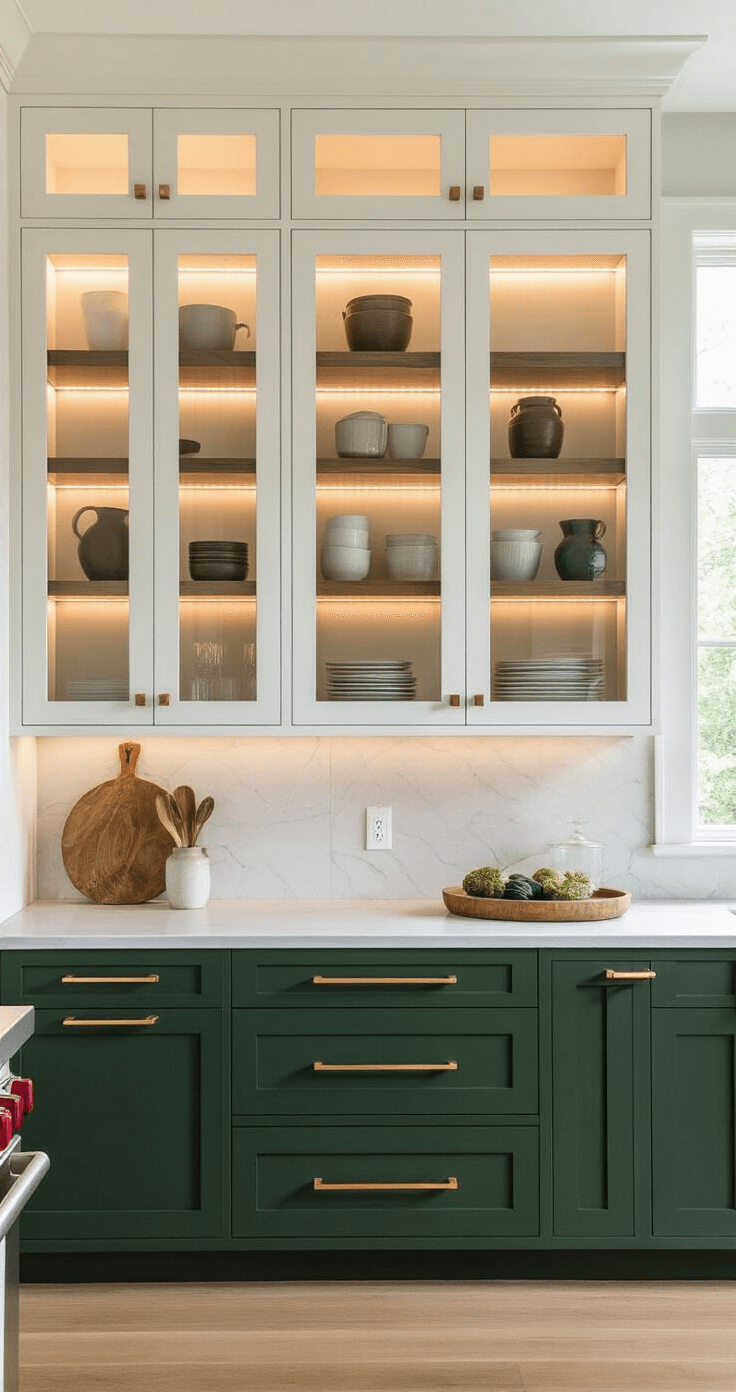
Glass-Front Cabinets: Display Without the Disaster
My mother always said glass cabinets meant you had to keep everything perfect. She was wrong, and I’m going to tell you why.
Mixed glass applications are the secret weapon here. You’re not installing clear glass on every cabinet door like it’s 1995.
Instead, you’re strategically combining:
- Clear glass for items you’re proud to display (nice dishes, colorful glassware)
- Textured or reed glass that shows shapes and colors but blurs the details
- Frosted sections that hide everyday chaos while still feeling open and light
- Tinted panels in bronze or grey that add depth and conceal imperfections
I installed reed glass on three upper cabinets in my kitchen last year. The visual rhythm it creates against solid doors is genuinely striking, and guests always comment on it.
The game-changer? Adding LED strip lights inside those glass cabinets. The ambient glow at night turns your kitchen into something that feels professionally designed.
Pro tip from my contractor friend Mike: Install dimmable LEDs so you can adjust the brightness for different times of day.
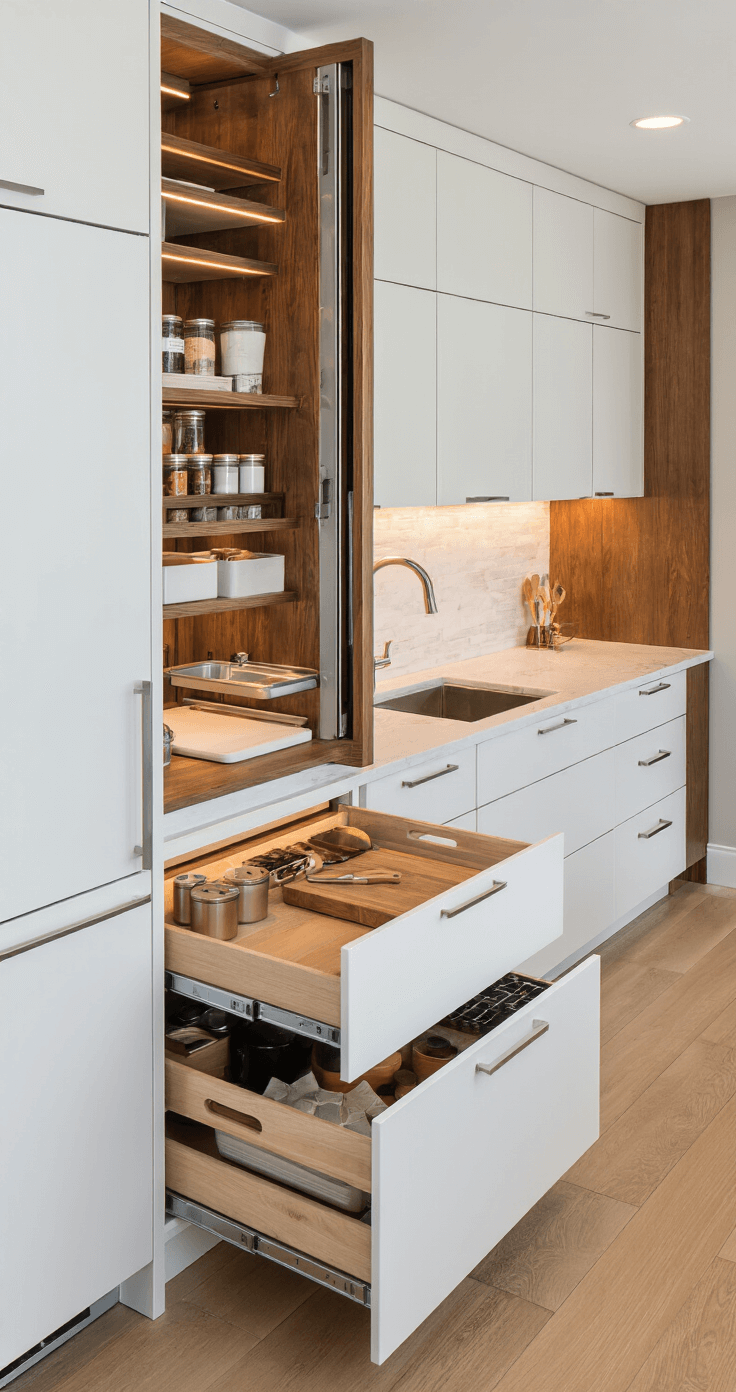
Shaker vs. Slab-Front: The Great Cabinet Door Debate
This is where people get stuck, and I’m going to make it simple.
Shaker cabinet doors feature that classic flat center panel with a frame. They’re timeless because they work in virtually any style kitchen—traditional, transitional, or modern.
I chose shaker style cabinet doors for my own kitchen because:
- They add subtle visual interest without screaming for attention
- They handle bold colors beautifully (I went with a moody sage green)
- They age well and won’t look dated in five years
- They’re easier to clean than ornate traditional doors
Slab-front cabinets are the sleeker, more minimalist option. Completely flat with no frame or detailing.
Choose slab-front when:
- You want a truly modern, streamlined look
- Your kitchen is small and you need visual simplicity
- You’re planning to use statement hardware as the main design element
- You’re pairing cabinets with busy countertops or backsplashes
The beauty of slab-front is that the hardware becomes the star of the show.

Two-Tone Cabinets: How to Not Mess This Up
Two-tone kitchens are everywhere right now, and for good reason—they add dimension without chaos.
But I’ve seen this trend go horribly wrong. My neighbor did navy blue uppers with white lowers, and the kitchen feels top-heavy and dark.
The formula that actually works:
- Lighter colors on upper cabinets
- Deeper, richer colors on lower cabinets or islands
This grounds the space visually and doesn’t make your ceiling feel like it’s closing in.
Color Combinations I’ve Seen Work Beautifully:
For the base cabinets or island:
- Smoky jade green (sophisticated and works in both modern and traditional spaces)
- Rich navy blue paired with stone counters and brushed brass hardware
- Deep espresso brown for a moody, modern English vibe
- Burgundy for bold personalities who want something unexpected
For upper cabinets:
- Warm white or cream to keep things bright
- Light grey for a softer neutral
- Natural light wood stain for warmth
My kitchen has warm white uppers with a deep forest green island. The green cabinet paint I used required three coats, but the depth of color was worth every minute of extra work.
Word of warning: Get actual cabinet samples or paint large poster boards before committing. Cabinet colors look completely different under your specific lighting than they do in showrooms or on Instagram.
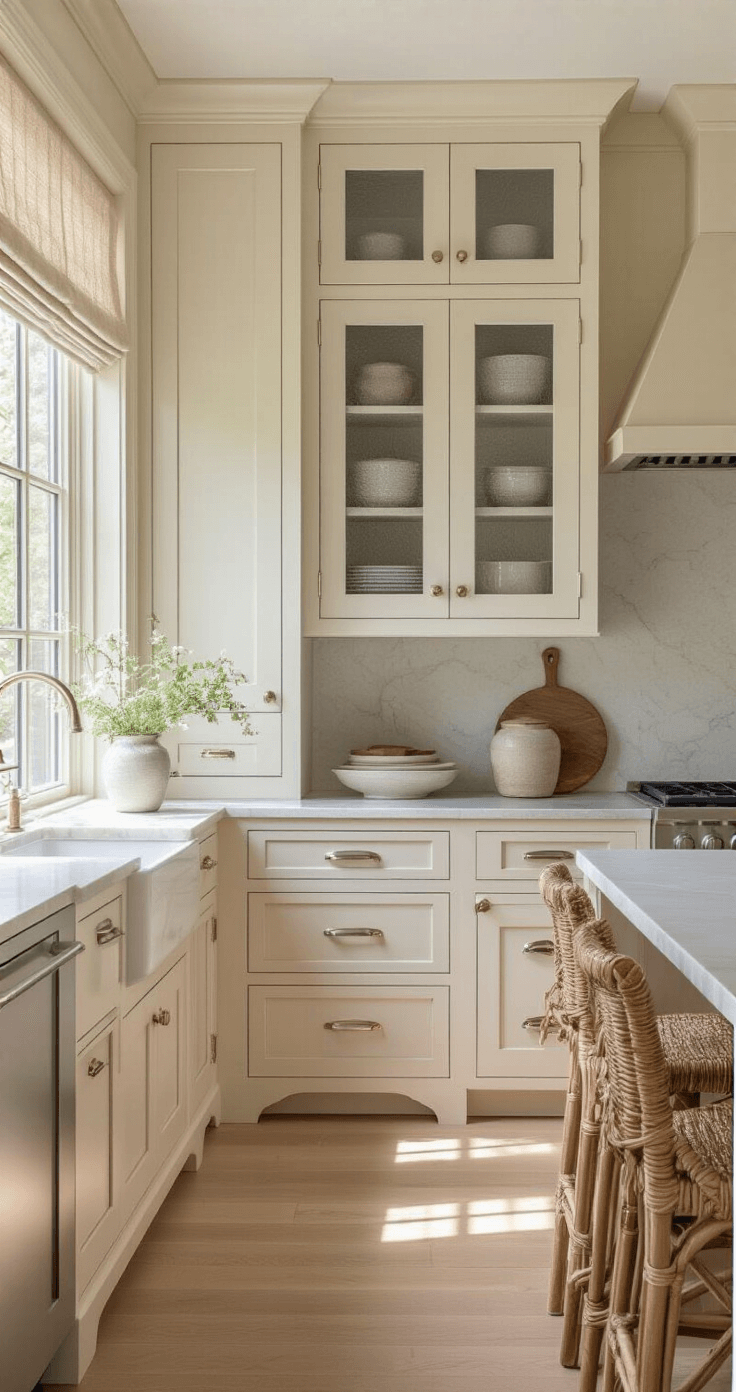
Hardware That Makes or Breaks Your Cabinet
This post may contain affiliate links. Please see my disclosure policy for details.
This post may contain affiliate links. Please see my disclosure policy for details.


