

Dark Bedroom Ideas: Creating a Moody, Restful Retreat
Contents
Dark bedrooms provide a sophisticated, intimate sanctuary that promotes better sleep while adding depth and drama to your space.
I’ll be honest with you.
When I first painted my bedroom walls a deep charcoal gray, my mother thought I’d lost my mind.
“It’ll look like a cave,” she warned, shaking her head with that concerned look mothers perfect over decades.
But six months later, she admitted something surprising during her visit: she’d never slept better than the night she stayed over.
Unlike bright, airy bedrooms that seem to be everywhere on Instagram, dark walls create a cocoon-like comfort that wraps around you like a favorite blanket.
They help you feel cozy and protected in ways I never expected.
Project Overview
Design Identity:
Dark bedrooms aren’t just for goths or dramatic teenagers anymore.
They work across multiple aesthetics—from sleek modern to swoon-worthy romantic to clean minimalist.
The range of dark colors available makes it ridiculously easy to match your personal style.
Think deep emerald that feels like a jewel box, navy that channels sophisticated hotel vibes, charcoal that reads modern and clean, or eggplant that adds unexpected warmth.
Even black works beautifully when styled right.
Best for:
Anyone craving a luxurious, intimate bedroom environment where they actually want to spend time.
Dark bedrooms are particularly brilliant for people who struggle to sleep because every passing car’s headlights turns their room into a disco.
If you’re a light sleeper, work night shifts, or just value that cave-like darkness for quality rest, this might change your life.
Skill level:
Beginner to intermediate.
Mostly paint and styling choices, nothing that requires an engineering degree or calling in favors from contractor friends.
Styling & Decor Essentials
Color Choices That Actually Work
Listen, not all dark colors are created equal.
Some make your bedroom feel like a luxury spa, while others create an accidental dungeon vibe.
Here’s what actually works:
- Black or charcoal – Creates that dramatic, modern contrast that photographs beautifully and never goes out of style
- Deep navy or forest green – Adds rich depth with surprising warmth that makes the room feel expensive
- Dark gray – The most versatile option that works with virtually any accent color you throw at it
- Moody purples (eggplant, plum, burgundy) – Brings unexpected elegance and coziness that feels both bold and comforting
I went with charcoal because I’m a bit of a commitment-phobe with color.
It lets me switch up my bedding and accessories without repainting every time I get bored.
Must-Have Balance Strategies
Here’s where people mess up dark bedrooms.
They go all-in on darkness and end up with a space that feels oppressive rather than cozy.
Light Bedding:
This is non-negotiable.
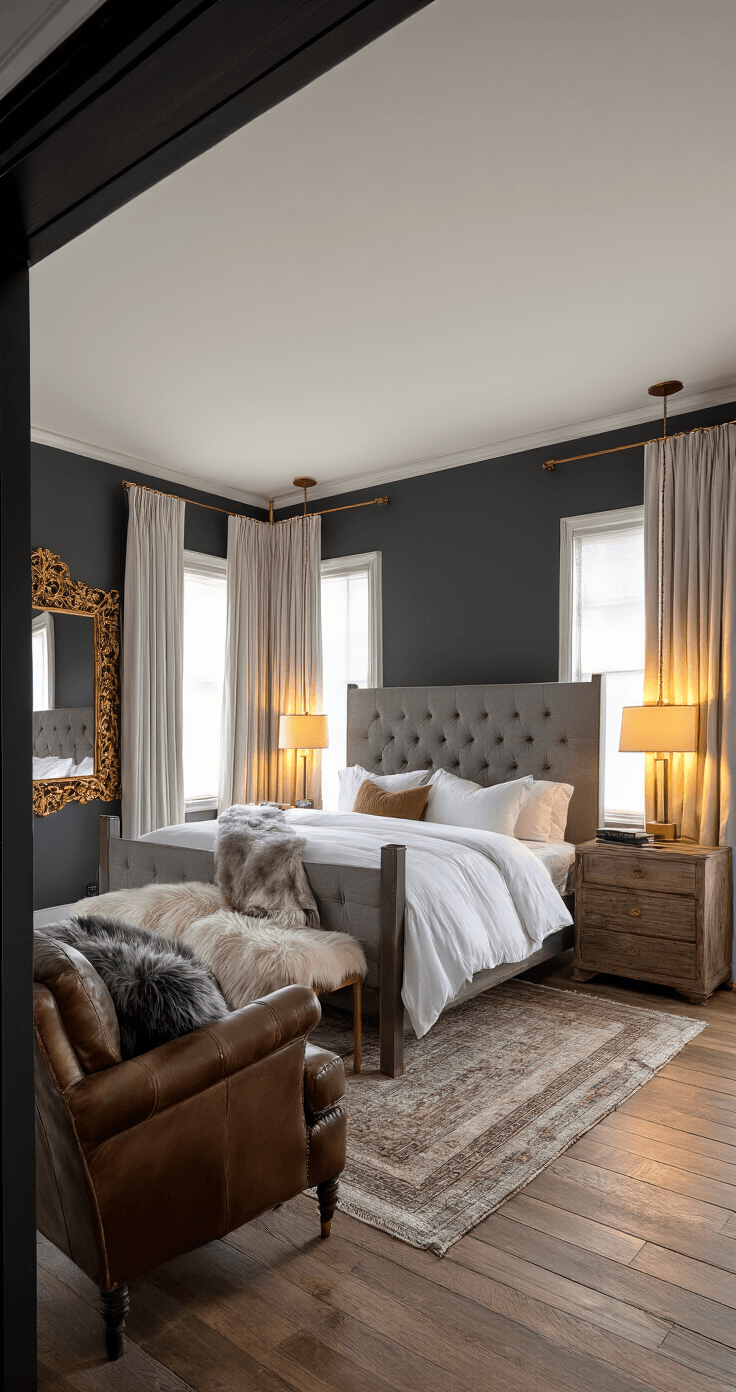
Pair your dark walls with crisp white, ivory, or light gray bedding to prevent the room from swallowing you whole.
I use white cotton sheets that create this beautiful visual contrast against my charcoal walls.
The difference is night and day—literally.
This simple trick maintains an airy, inviting element despite the dark walls, keeping the space from feeling like you’re sleeping inside a shadow.
Natural Textures:
Cold, flat darkness feels sterile and unwelcoming.
You need to warm it up.
Incorporate weathered wood finishes, leather upholstery, or a rustic wood bed frame to soften those dark colors and add warmth.
I have this reclaimed wood nightstand that looks incredible against the dark walls.
The natural grain and lighter wood tones complement deep emerald or navy particularly well, creating layers of interest your eye naturally appreciates.
Strategic Lighting Layers:
This is where dark bedrooms live or die.
Since dark rooms risk feeling gloomy during the day, you absolutely must create multiple light sources.
One sad overhead light won’t cut it.
Here’s what works:
- Overhead ceiling light – I installed LED ceiling lights for optimal light distribution when I need the room bright
- Bedside sconces or table lamps – These create that warm glow that makes you actually want to read in bed instead of scrolling your phone
- Floor lamps next to seating areas – Essential if you have a reading chair (which you should, because dark bedrooms make perfect reading nooks)
- Wall lights or swing arm lights – These make the room feel larger and more intentional, like someone actually designed the space
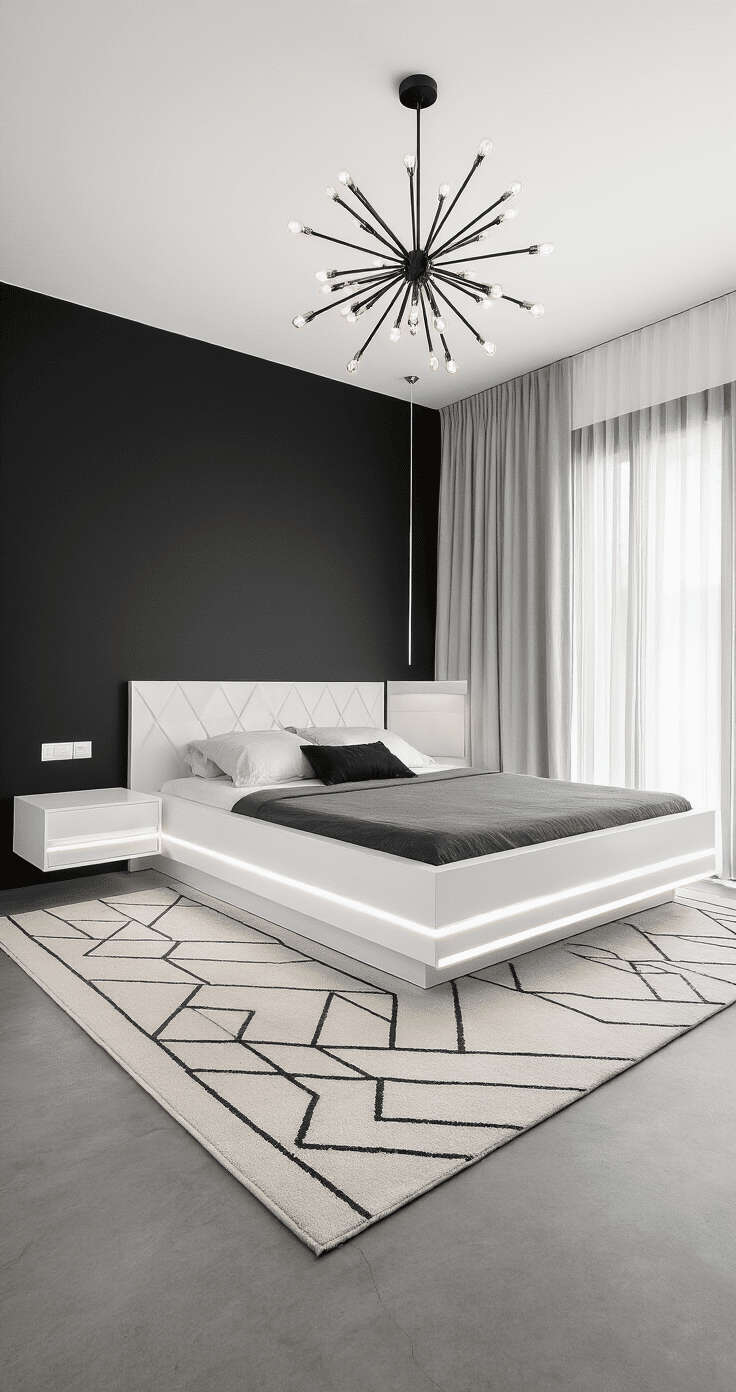
- LED strips behind furniture – I added these under my bed for modern ambiance, and guests always ask about them
The layered approach means you can adjust the mood from “bright and energizing” in the morning to “cozy and restful” at night.
Reflective Elements:
Dark colors absorb light like a thirsty sponge.
You need to bounce that light back into the room.
Add decorative wall mirrors, metallic accents in gold, silver, or brass, or shiny surfaces throughout the space.
I positioned a large mirror opposite my window, and it genuinely amplifies the natural daylight during the day.
The room feels twice as bright without changing a single thing about the wall color.

Focal Point Pieces
Every dark bedroom needs something that makes people stop and stare.
Statement beds:
A matte black four-poster bed, channel-tufted headboard, or dark wood frame anchors the entire room.
This is your investment piece.
Everything else can be budget-friendly, but splurge here if you’re going to splurge anywhere.
Modern accents:
A sputnik-style chandelier or sleek pendant light creates beautiful contrast against dark walls.
The unexpected shine catches your eye immediately when you walk in.
Built-in storage:
If you’re renovating anyway, floor-to-ceiling dark cabinetry can double as an accent wall while keeping your clutter hidden.
I’m jealous of my friend who did this—her dark bedroom feels like a boutique hotel.
Setup & Execution
Pro Styling Tips That Make the Difference
Coordinate colors thoughtfully:
You have two paths here, and
This post may contain affiliate links. Please see my disclosure policy for details.


