Kitchen Decor Ideas That’ll Make Your Space Feel Like Home
Kitchen decor ideas can transform your cooking space from purely functional to the warm, inviting heart of your home you’ve always wanted.
Look, I get it.
You walk into your kitchen every morning, and something just feels… off.
The counters are cluttered with mail and random appliances you never use.
Your walls are bare except for that calendar from 2019.
And don’t even get me started on those wire shelves you’ve been meaning to do something with for the past three years.
Why Your Kitchen Probably Feels Blah Right Now
Here’s what I’ve learned after styling my own kitchen approximately seventeen times (yes, I have a problem): most kitchens feel uninspired because we treat them like workspaces instead of living spaces.
We cook there. We clean there. We pile our stuff there.
But we forget to actually design there.
And honestly? That’s a missed opportunity, because your kitchen is where life actually happens.
The good news?
You don’t need to gut your kitchen or spend thousands of dollars to make it feel special.
You just need to understand a few simple principles and be willing to edit ruthlessly.
The Foundation: Starting With What Actually Matters
Kitchen decor ideas work best when you understand this one crucial thing: your kitchen needs to function first, look pretty second.
I learned this the hard way after I styled my counters with seven different decorative ceramic vases and then had absolutely nowhere to prep dinner.
Rookie mistake.
So before we dive into the pretty stuff, let’s talk about the framework:
Clear Your Surfaces First
Remove everything from your counters.
Every. Single. Thing.
Then add back only:
- Daily-use appliances (coffee maker, toaster—whatever you genuinely use every day)
- Items that earn their spot through beauty or function
- Grouped essentials in contained displays
This alone will transform your space more than any decorative item ever could.
Identify Your Display Zones
Walk around your kitchen and spot these key areas:
- Counter corners (perfect for small grouped displays)
- Islands (your kitchen’s main stage—treat it that way)
- Open shelving (if you have it, use it intentionally)
- Wall space (stop leaving it naked)
- Windowsills (natural light makes everything prettier)
Building Your Kitchen’s Personality Through Decor
Now here’s where it gets fun.
Kitchen styling ideas should reflect how you actually live, not what some design magazine says you should do.
I’m a plant person, so my kitchen has approximately fourteen herbs in small terracotta pots scattered around.
My friend Sarah? She collects vintage plates and displays them on her walls.
Another friend has literally zero decorative items except for one really beautiful wooden cutting board leaning against her backsplash.
All three kitchens look intentional and beautiful because they’re authentic.
The Elements That Actually Work
Through trial and plenty of error, I’ve discovered these elements consistently make kitchens feel more designed:
Greenery (Real or Really Good Faux)
Nothing—and I mean nothing—makes a kitchen feel more alive than plants.
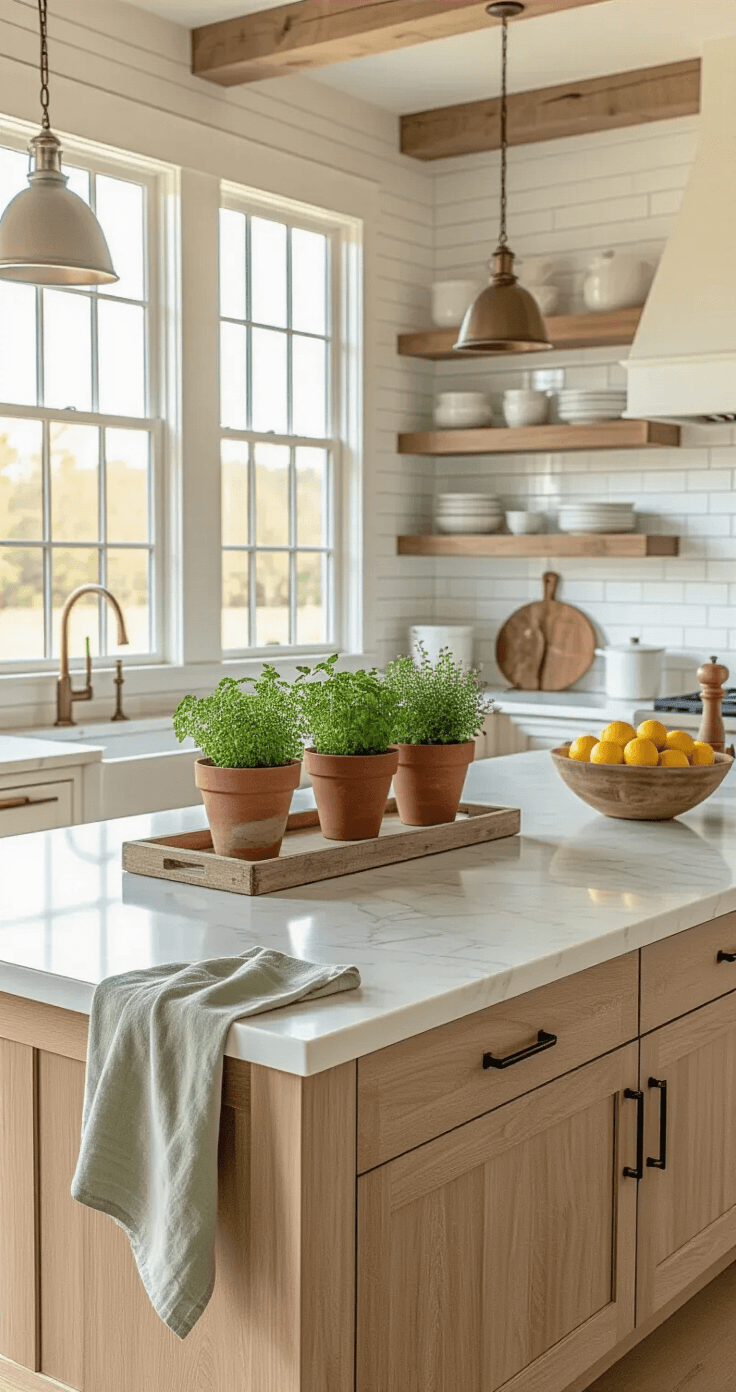
Fresh herbs serve double duty: they look beautiful AND you can cook with them.
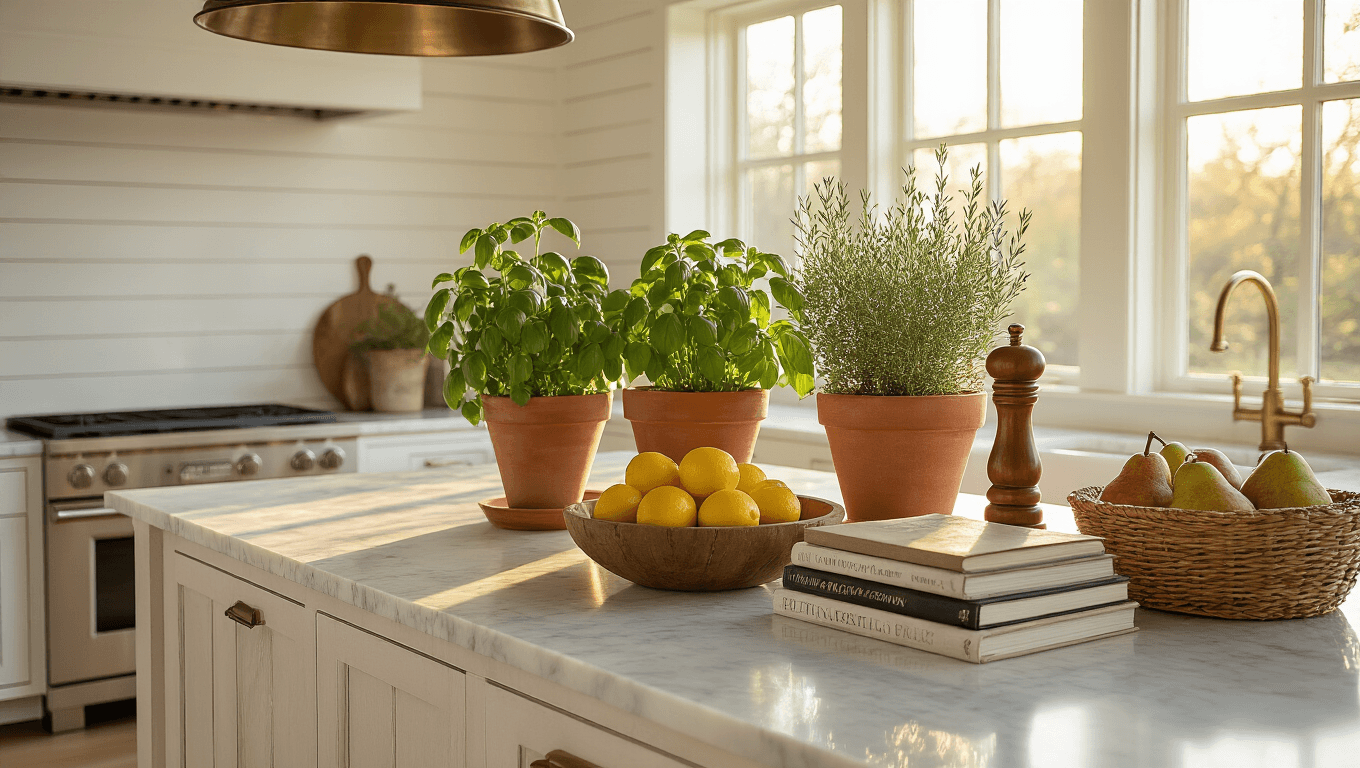
I keep basil, rosemary, and thyme in matching pots on my windowsill.
When they start looking scraggly (because let’s be honest, I forget to water them), I trim them for dinner and feel like a genius.
If you kill everything you touch, invest in high-quality faux plants.
The keyword here is high-quality—those sad plastic plants from 1987 aren’t fooling anyone.
Texture Layering
This sounds fancy, but it just means mixing materials:
- Smooth ceramic next to rough wood
- Glossy tiles with matte containers
- Metal hardware against natural fibers
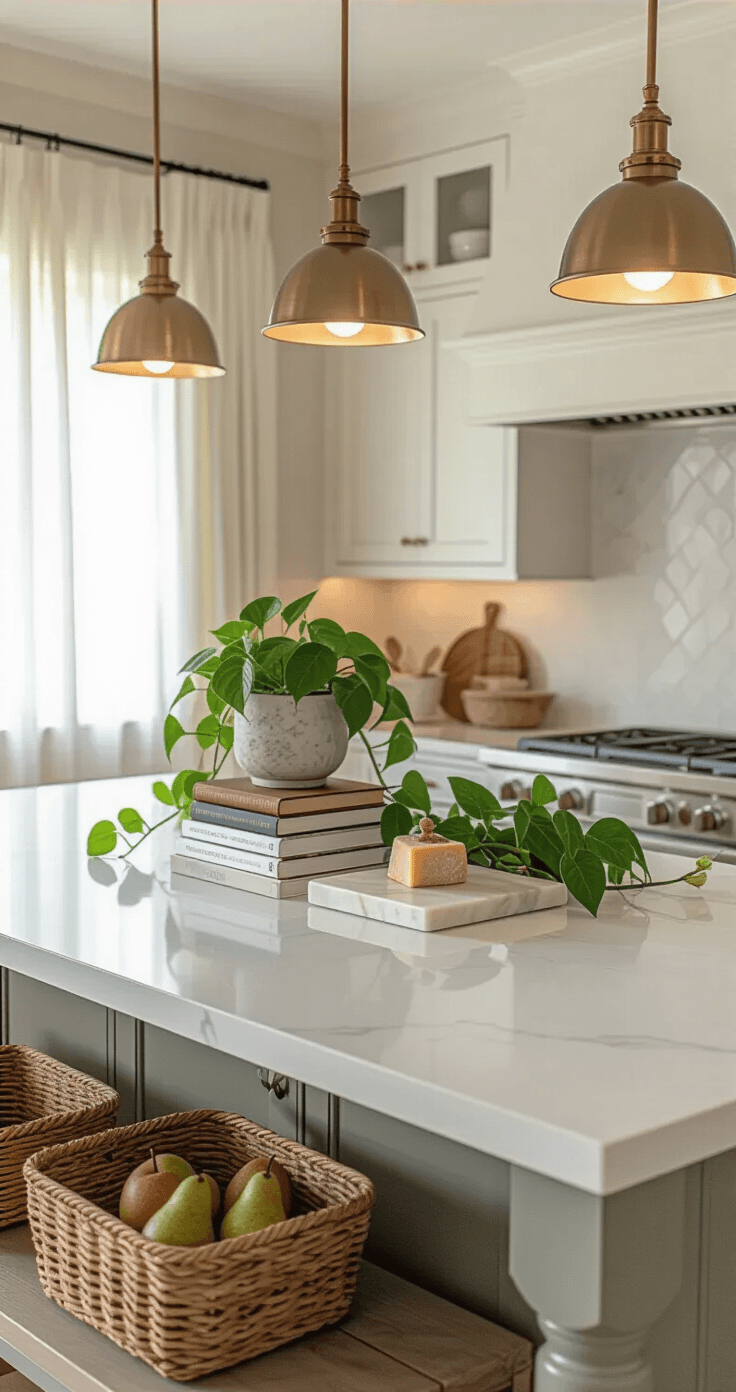
I have a woven basket on my counter that holds fruit.
Next to it? A marble board for cheese.
Next to that? A brass container with wooden spoons.
Different textures create visual interest even when you’re using neutral colors.
Vertical Interest
Most people style horizontally—everything sitting flat on surfaces.
Boring.
Add height by:
- Stacking cookbooks with a plant on top
- Using tiered displays
- Leaning artwork against the backsplash
- Hanging things at different levels
Color Coordination Without Losing Your Mind
Here’s my foolproof approach to kitchen color:
Pick two or three colors and stick with them religiously.
I went with:
- Warm white (my dishes, walls, main containers)
- Natural wood tones
- Soft sage green (plants, one statement piece, kitchen towels)
Every single thing I bring into my kitchen has to work with this palette.
It sounds restrictive, but it’s actually freeing because it makes decisions simple.
That gorgeous turquoise pitcher at the thrift store? Beautiful, but it doesn’t work with my palette, so I leave it.
Pro move: If you love lots of color, keep your permanent elements neutral (dishes, containers, walls) and add color through easily changeable items like flowers, fruit displays, and textiles.
The Island Situation: Making Your Centerpiece Count
If you have a kitchen island, congratulations—you have prime real estate.
If you don’t, these kitchen island styling principles work just as well on your main counter.
The Basic Formula
I use what I call the “triangle of interest”:
Back corner: Tallest element (a vase with branches, stacked cookbooks, a large ceramic piece)
Middle section: Medium-height grouped items (cutting board with small plant, bowl of fruit, herb garden)
Front corner: Lowest element or negative space (small container with utensils, simple candle, or just empty space
This post may contain affiliate links. Please see my disclosure policy for details.