
Visit Crater Lake National Park and you’ll understand why it’s called one of Oregon’s 7 Wonders. But here’s what most visitors don’t realise: they’re making crucial mistakes that rob them of the full experience.
I’ve seen families drive four hours from Portland only to find key areas closed. Hikers arrive unprepared for the elevation and weather changes. Photography enthusiasts miss the best viewpoints because they followed outdated advice.
Let me share what I’ve learned from multiple visits and conversations with park rangers who’ve worked there for decades.

The Lake That Defies Logic (And Why Scientists Still Study It)
What makes Crater Lake so extraordinary?
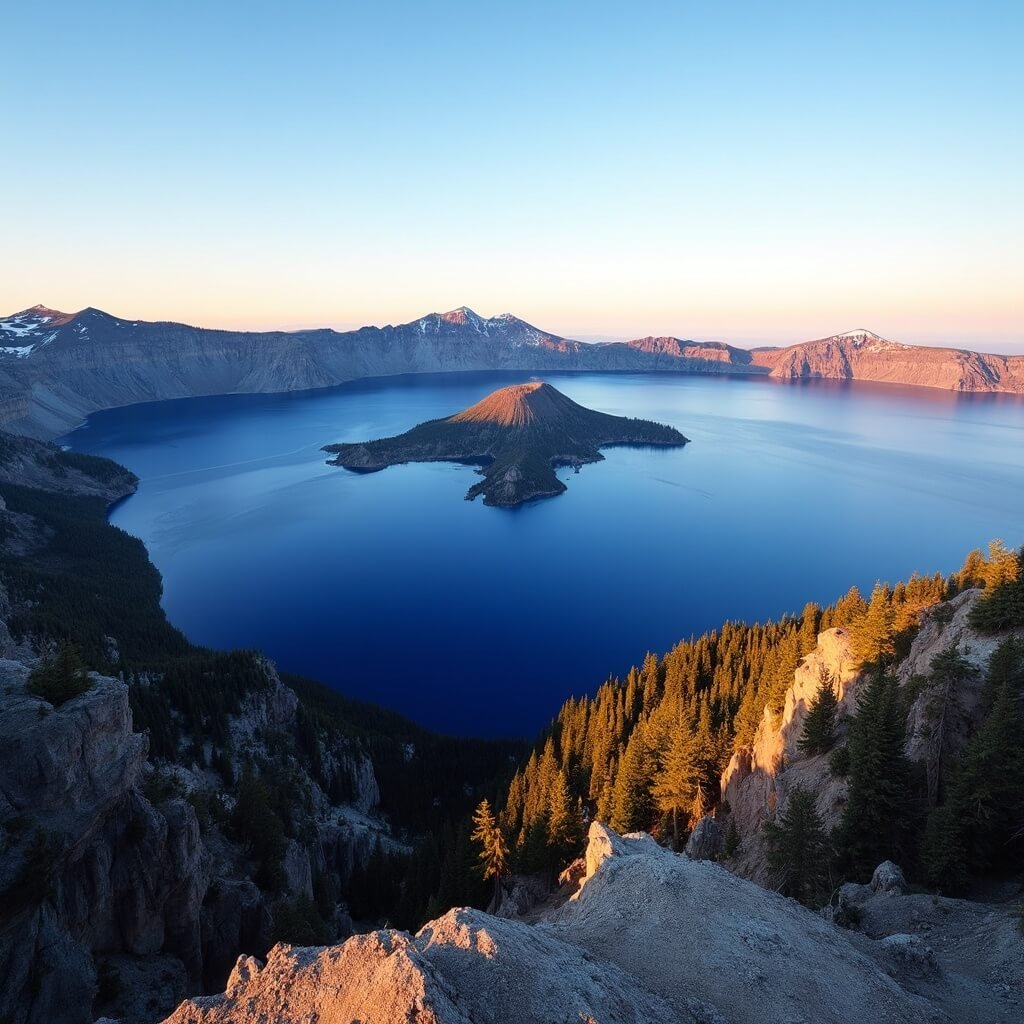
At 1,949 feet deep, Crater Lake is the deepest lake in the United States. But depth isn’t what makes it special.
This volcanic crater formed 7,700 years ago when Mount Mazama collapsed. The resulting caldera filled entirely from rain and snowmelt. No streams flow in or out.
The water is so pure that visibility extends down 100 feet on a clear day. The blue colour isn’t enhanced or filtered – it’s the result of the lake’s depth and purity reflecting sunlight.
Here’s what shocked me during my first visit:
The cliffs surrounding the lake rise almost 2,000 feet straight up from the water. Standing at the rim feels like peering into another world.
Scientists continue studying Crater Lake because it’s one of the most pristine bodies of water on Earth. The ecosystem hasn’t been contaminated by outside water sources.
Key facts that matter for your visit:
- Elevation at Rim Village: 7,100 feet
- Park Headquarters elevation: 6,500 feet
- Location: Cascade Mountain Range, southern Oregon
- Status: Oregon’s only national park
The elevation affects everything from weather to your energy levels, so plan accordingly.
The Timing Mistake That Ruins 90% of Visits
When should you actually visit Crater Lake National Park?
Most people think summer means crowds and winter means closed. They’re half right.
Summer (July through mid-September):
- Over 750,000 visitors arrive during these months
- All facilities and roads open
- Mild weather with minimal precipitation
- Gate lines can stretch for hours during peak times
The insider trick I learned from a veteran ranger:
Arrive before 8 AM or after 4 PM during summer months. The crowds thin dramatically, and you’ll get parking spots at popular viewpoints.
Shoulder seasons (May, June, October):
These months offer the sweet spot many visitors miss.
- Significantly fewer crowds
- Most facilities open by late June
- Weather remains manageable
- Snow may linger at higher elevations through June
Winter (November through April):
Don’t write off winter visits entirely.
- Most roads close, but the park stays open
- Snowshoeing and cross-country skiing available
- Dramatic winter landscapes
- Extreme conditions: blizzards, high winds, temperatures well below freezing
I made the mistake of visiting in early May once, expecting full access. Half the rim drive was still snow-packed, and several trails remained closed. Check current conditions before you go.
Weather reality check:
Conditions change rapidly at this elevation. Summer mornings might start at 35°F and reach 70°F by afternoon. Always pack warm layers, even in July.
How do you actually reach Crater Lake National Park?
The biggest mistake visitors make is underestimating the drive and overestimating cell service.
Distance from major cities:
- Portland: 4 hours
- Eugene: 3 hours
- Bend: 2 hours
- Portland International Airport: 5 hours
Critical preparation step:
Download directions before you leave. Cell reception becomes spotty 30 minutes before you reach the park.
Three entrance options:
- South Entrance (most popular and reliable)
- West Entrance
- North Entrance (closes seasonally)
The South Entrance stays open year-round and offers the most direct route to major attractions.
My personal navigation disaster:
During a September visit, I relied on my phone’s GPS. Signal dropped completely near the park boundary. I spent 45 minutes driving in circles on forest roads before finding another visitor who could point me toward the South Entrance.
Smart approach:
- Print or write down directions
- Download the NPS app before your trip
- Fill up your petrol tank in the last major town
- Bring physical maps as backup
The drive itself becomes part of the experience once you’re prepared for it. The Cascade Mountain scenery builds anticipation for what you’re about to see.
The Ultimate Crater Lake Activities Guide (Including Hidden Gems)
What should you actually do at Crater Lake National Park?
Skip the generic advice about “taking photos.” Here’s what actually creates memorable experiences.
The Drive That Changes Everything
Rim Drive: 33-mile circuit of pure scenery
This isn’t just a drive – it’s Oregon’s highest paved road. Over 30 scenic pullouts offer different perspectives of the lake.
Strategic approach:
- Start early morning for best lighting
- Allow 3-4 hours with stops
- Drive counter-clockwise for easier pullout access
- Full loop typically open late June through mid-October
I’ve driven Rim Drive six times. Each season offers completely different photographic opportunities. Early morning mist creates ethereal lake views. Afternoon light brings out the deep blues.
Hiking That Actually Rewards You
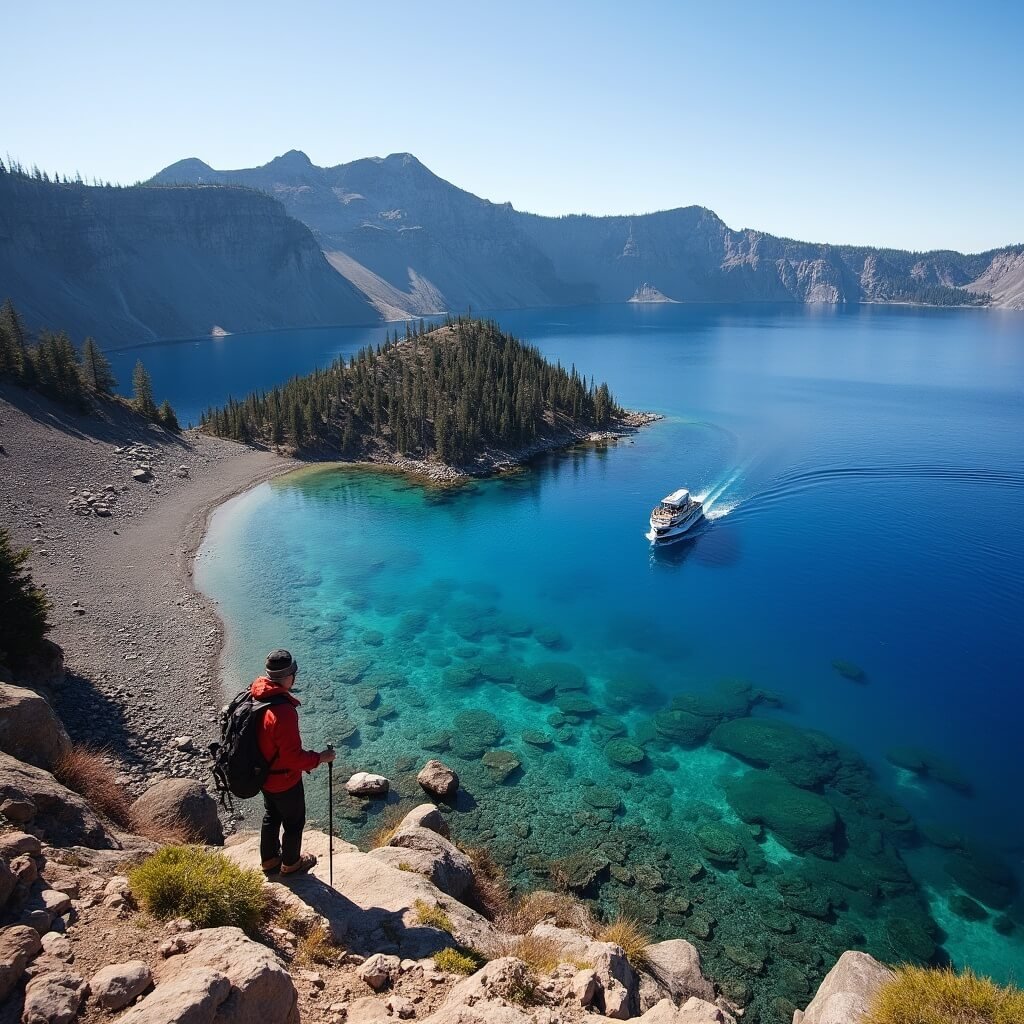
Cleetwood Cove Trail: Your only water access
This 2.2-mile roundtrip hike drops 625 feet to the shoreline. It’s the only trail that reaches the water.
What makes it special:
- Only place to swim in Crater Lake
- Access point for boat tours
- Fishing opportunities
- Water temperature stays around 55°F even in summer
Reality check:
The hike down takes 30 minutes. The climb back up takes 45 minutes and leaves most people winded. Start early to avoid afternoon heat on the exposed trail.
Watchman Peak Trail: Best sunrise in Oregon
This 1.6-mile roundtrip climb gains 420 feet. The payoff? Panoramic views of Crater Lake and Wizard Island from a historic fire lookout.
I hiked this trail at sunrise last October. Watching the sun illuminate the lake from this vantage point ranks among my top outdoor experiences in the Pacific Northwest.
Family-friendly options:
Sun Notch Trail: 0.5 miles roundtrip with only 115 feet elevation gain
- Views of Phantom Ship island
- Easy walk suitable for children
- Less crowded than main viewpoints
Discovery Point Trail: 2.2 miles roundtrip with minimal elevation change
- Follows the rim near Wizard Island
- Historical significance as the lake’s discovery point
- Wide, well-maintained path
Water Adventures Beyond the Obvious
Crater Lake boat tours: The perspective that changes everything
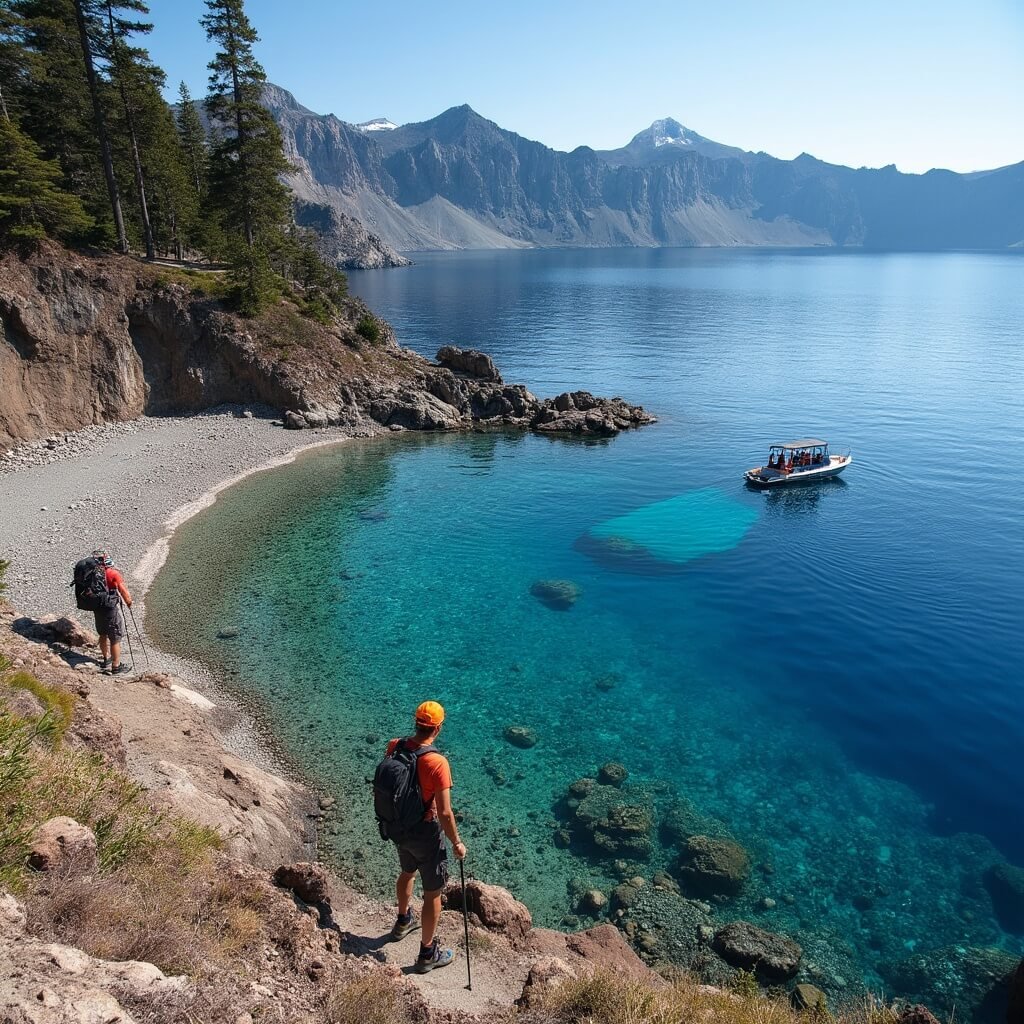
These tours offer the only way to experience the lake from water level. You’ll see waterfalls cascading down the caldera walls. The famous “Old Man of Crater Lake” – a 450-year-old log that floats vertically – often appears during tours.
Wizard Island access:
Special boat shuttles transport visitors to this volcanic cinder cone rising from the lake. You get approximately 3 hours to explore the island. Swimming and fishing opportunities exist in complete solitude.
Booking reality:
Boat tours sell out quickly during peak season. Reserve tickets online well before your visit. Tours operate weather permitting, typically June through September.
The boat perspective reveals details invisible from the rim: underwater rock formations, hidden coves, and the true scale of the surrounding cliffs.
👇Find The Cheapest Flights To Anywhere Here👇
### The Facilities That Make or Break Your Experience
**Where should you actually spend your time inside the park?**
Most visitors rush between viewpoints and miss the facilities that enhance their understanding of what they’re seeing.
### Steel Visitor Center: Your Strategic Starting Point
Located at Park Headquarters, this center offers more than typical tourist information.
**The 22-minute park film changes everything.** I initially skipped it, thinking I’d rather spend time outdoors. Huge mistake.
The film explains the geological forces that created Crater Lake. Understanding the volcanic history makes every viewpoint more meaningful. You’ll spot geological features you would have walked past otherwise.
Save this article
Enter your email and we'll send it straight to your inbox.
**Practical details:**
– Summer hours: 9 AM to 5 PM (May-October)
– Winter hours: 10 AM to 4 PM
– Limited parking for RVs and oversized vehicles
– Staffed by rangers who answer specific questions
**Insider tip from a park ranger:** Visit the center first thing in the morning. Rangers share current conditions for trails and boat tours. They’ll warn you about weather changes before you head out.
### Rim Visitor Center: The View That Justifies the Drive
This facility sits directly on the caldera rim. The views from inside rival any outdoor vantage point.
**Don’t miss Sinnott Memorial Overlook:** Stone stairs lead down to this 1930s overlook carved directly into the caldera wall. It’s buried under snow all winter, making summer access feel like discovering a hidden gem.
The overlook provides the closest rim access to the water. Photography opportunities here surpass the crowded main viewpoints.
**Operating schedule:**
– Open May through September
– Daily hours: 9:30 AM to 5 PM
– Staffed by rangers with specialized geological knowledge
### Crater Lake Lodge: More Than Accommodation
Even if you’re not staying overnight, the lodge lobby offers spectacular lake views. Built in 1915, it provides historical context for the park’s development.
The lodge restaurant serves meals with picture windows facing the lake. Eating lunch while watching weather patterns move across the water creates a meditative experience.
**Reservation reality:** Lodge rooms book months in advance for peak season. Day visitors can still enjoy lobby areas and dining facilities.
## The Winter Secret Most Visitors Never Discover
**What happens when Crater Lake transforms into a winter wonderland?**
Forget everything you think you know about winter park visits. Crater Lake becomes an entirely different experience November through April.
### Winter Activities That Rival Summer Adventures
**Cross-country skiing opportunities:**
– Groomed trails around park headquarters
– Backcountry skiing for experienced enthusiasts
– Equipment rentals available in nearby communities
**Snowshoeing adventures:** The park maintains several designated snowshoe routes. Fresh powder often exceeds 10 feet in depth. Views of the snow-covered caldera create otherworldly scenery.
I snowshoed to Rim Village during a February visit. The contrast between summer’s crowded viewpoints and winter’s pristine silence was profound. Snow-covered trees framed the deep blue lake like a natural cathedral.
### Winter Challenges You Must Prepare For
**Extreme weather conditions:**
– Blizzards arrive with little warning
– Temperatures drop well below zero
– Wind speeds exceed 100 mph during storms
– Visibility can disappear completely within minutes
**Road access limitations:**
– Rim Drive closes completely
– North Entrance becomes impassable
– Only South and West entrances remain accessible
– Chains or four-wheel drive required
**Safety considerations most people miss:** Snow cornices extend beyond the actual rim. These unstable snow ledges can collapse without warning. Several visitors have fallen through cornices in past years. Stay well back from any rim edge during winter months.
### The Winter Newspaper Secret
The park publishes a winter-specific newspaper with detailed activity information. Download it before your visit. It contains current trail conditions, safety updates, and activity schedules not available elsewhere.
Winter visits require more preparation but offer incomparable solitude.
## The Itinerary That Maximizes Your Investment
**How should you structure your Crater Lake visit for maximum impact?**
Most people wing it and miss half the worthwhile experiences.
### Single Day Strategy (8-10 hours)
**8:00 AM: Early arrival through South Entrance** Beat the crowds and secure parking at popular spots. Summer gate lines can delay entry by hours after 9 AM.
**8:30 AM: Steel Visitor Center film** Foundation knowledge for everything you’ll see later. Rangers provide current conditions and activity recommendations.
**9:30 AM: Sinnott Memorial Overlook** Best photography lighting occurs mid-morning. Crowds haven’t arrived yet.
**10:30 AM: Rim Drive (counter-clockwise)** Allow 3-4 hours with strategic stops. Don’t attempt to stop at every pullout.
**2:00 PM: Late lunch break at Rim Village** Rest and hydration before afternoon activities.
**3:00 PM: Choose one major hike** Cleetwood Cove for water access. Watchman Peak for panoramic views. Sun Notch for family-friendly exploration.
**6:00 PM: Sunset viewing from Watchman Overlook** Evening light creates the most dramatic lake colours.
### Multi-Day Approach (Recommended)
**Day 1: Orientation and scenic exploration**
– Visitor centers and educational film
– Complete Rim Drive with major viewpoints
– Easy hiking trails to gauge fitness and elevation effects
**Day 2: Water activities and major hiking**
– Early morning Cleetwood Cove Trail descent
– Boat tour or Wizard Island exploration
– Afternoon rest and recovery
**Day 3: Advanced hiking and hidden gems**
– Sunrise at Watchman Peak
– Castle Crest Wildflower Trail
– Godfrey Glen Trail to The Pinnacles
**Multi-day benefits:** Your body acclimates to the elevation. Weather variations provide different photographic opportunities. Less rushed experience allows deeper appreciation.
## The Safety Realities Nobody Mentions
**What safety considerations actually matter at Crater Lake?**
Generic park safety advice misses the specific challenges of this environment.
### Elevation Effects on Visitors
At 6,500-7,100 feet elevation, many visitors experience:
– Faster exhaustion during physical activity
– Increased sunburn risk due to thinner atmosphere
– Dehydration that creeps up without warning
– Shortness of breath during moderate exertion
**Acclimatization strategy:** Arrive the day before major hiking activities. Sleep at elevation allows your body to adjust. Drink significantly more water than usual.
### Weather Variability That Catches People Off Guard
I’ve experienced 40-degree temperature swings within six hours. July morning temperatures around 35°F can reach 75°F by afternoon.
**Essential gear regardless of season:**
– Warm jacket (even for summer day trips)
– Wool sweater or insulating layer
– Waterproof outer shell
– Extra food and water
– Emergency supplies for car troubles
### Air Quality Challenges
Summer and fall wildfire smoke affects visibility and breathing. The park monitors Air Quality Index (AQI) levels. Check current readings before outdoor activities.
During poor air quality days:
– Limit strenuous outdoor activities
– Consider indoor alternatives like visitor centers
– Postpone photography plans requiring clear visibility
### Technology and Communication Limitations
Cell service becomes unreliable within 30 minutes of the park. Emergency communication requires preparation.
**Smart preparation:**
– Download offline maps before departure
– Inform others of your planned itinerary
– Carry physical backup navigation tools
– Bring portable phone chargers
The NPS app provides offline access to park information once downloaded. Complete Guide to Visiting Crater Lake National Park.
## Making Crater Lake National Park Worth Every Mile
Your visit to Crater Lake National Park should be planned like the major destination it is.
This isn’t a casual road trip stop. It’s one of the most extraordinary natural phenomena in North America.
The deep blue waters reflecting 7,700 years of geological history. The pristine ecosystem scientists continue studying. The hiking trails that reward you with views found nowhere else.
Plan your timing around weather and crowds. Prepare for elevation and rapid weather changes. Allow enough time to experience both the scenic drives and water activities.
Most importantly, approach Crater Lake with the respect it deserves. This volcanic wonder provides experiences that will influence your perspective on natural beauty for years to come.
Whether you visit Crater Lake National Park in summer crowds or winter solitude, you’re witnessing one of Earth’s most remarkable geological achievements.
👇Ready To Book Your Trip?👇
This post may contain affiliate links. Please see my disclosure policy for details.
Want to keep this one?
We'll email you the link so you can find it again later.