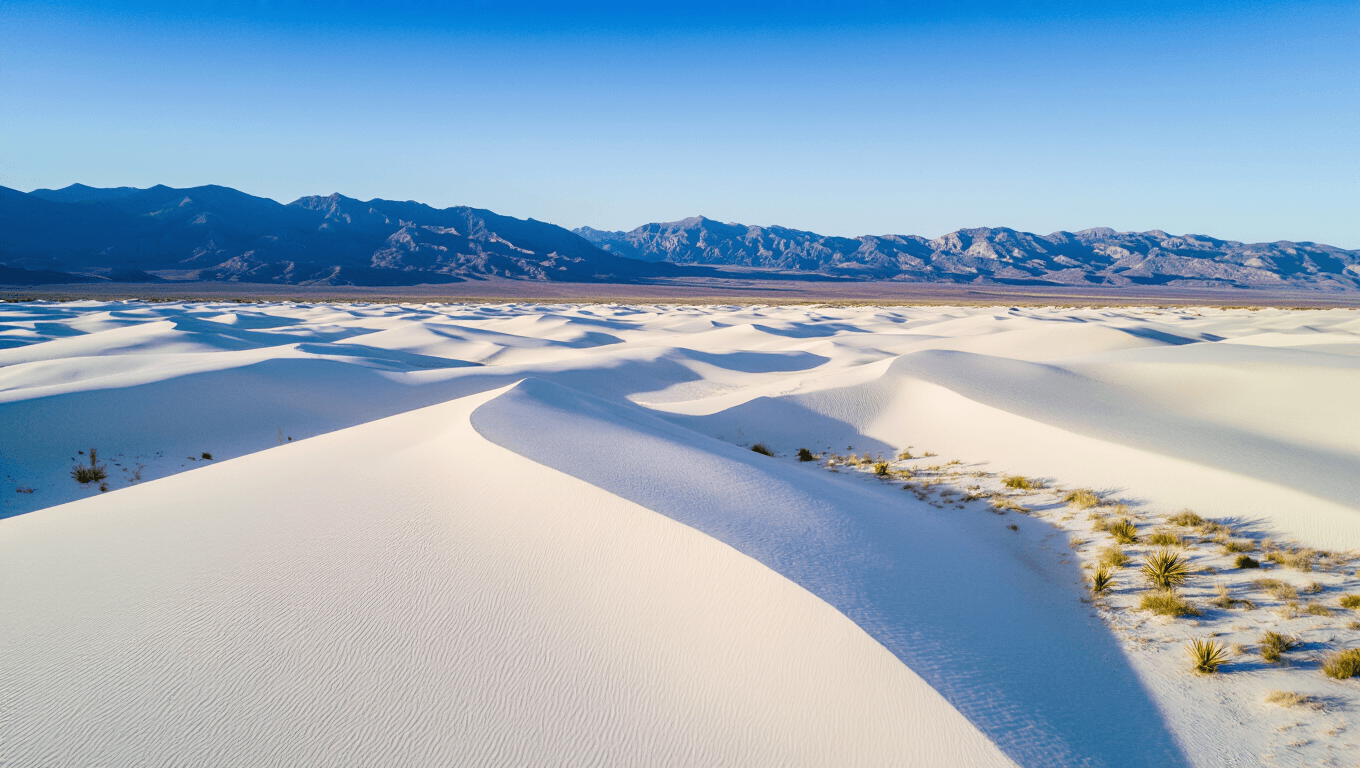
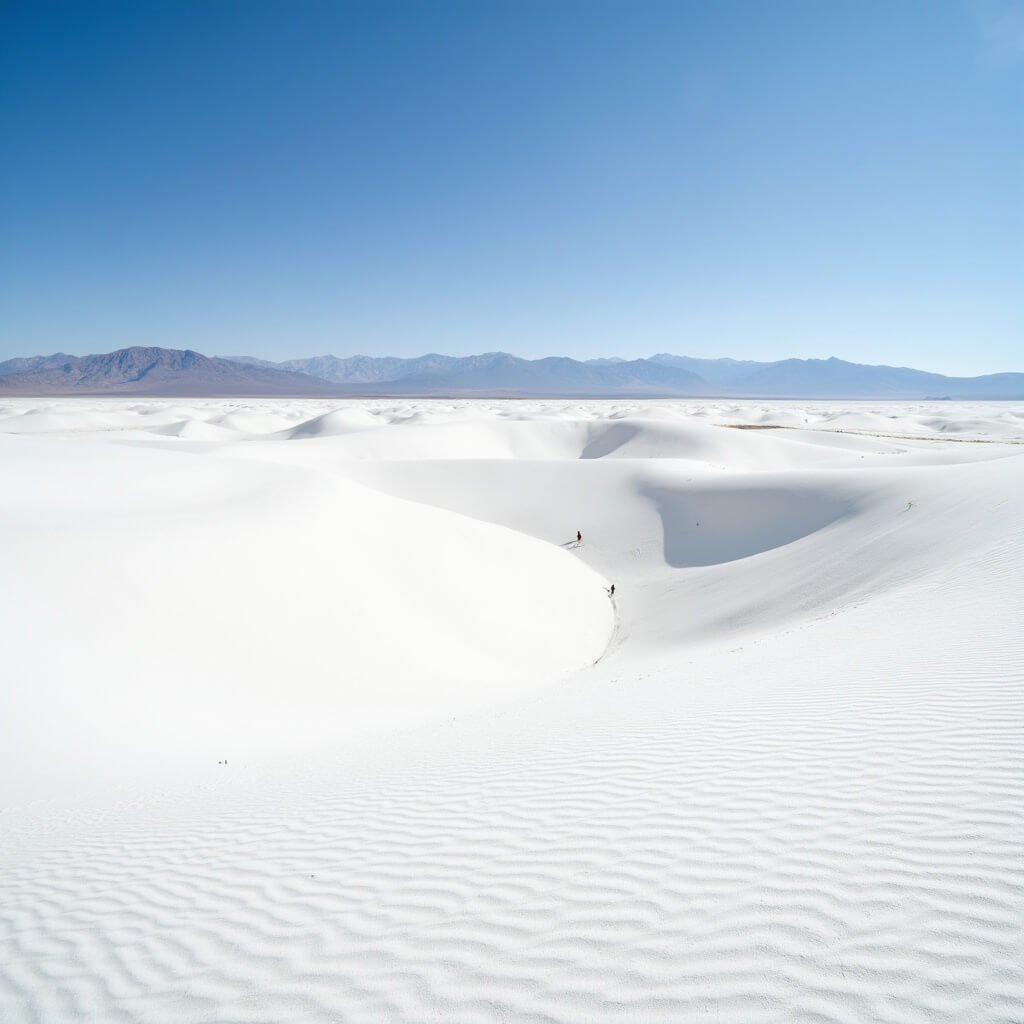
White Sands National Park sits in southern New Mexico like something plucked from another planet entirely.
Picture this: 275 square miles of brilliant white gypsum sand dunes stretching endlessly under an impossibly blue sky. The landscape looks so alien that NASA actually uses it to test equipment for Mars missions.
Most people drive past this wonder on their way to other destinations, completely unaware they’re missing the world’s largest gypsum dune field. But once you experience the surreal beauty of these shifting white mountains, you’ll understand why this place earned its stripes as America’s newest national park.
Why White Sands National Park Defies Every Desert Stereotype
Forget everything you think you know about desert landscapes.
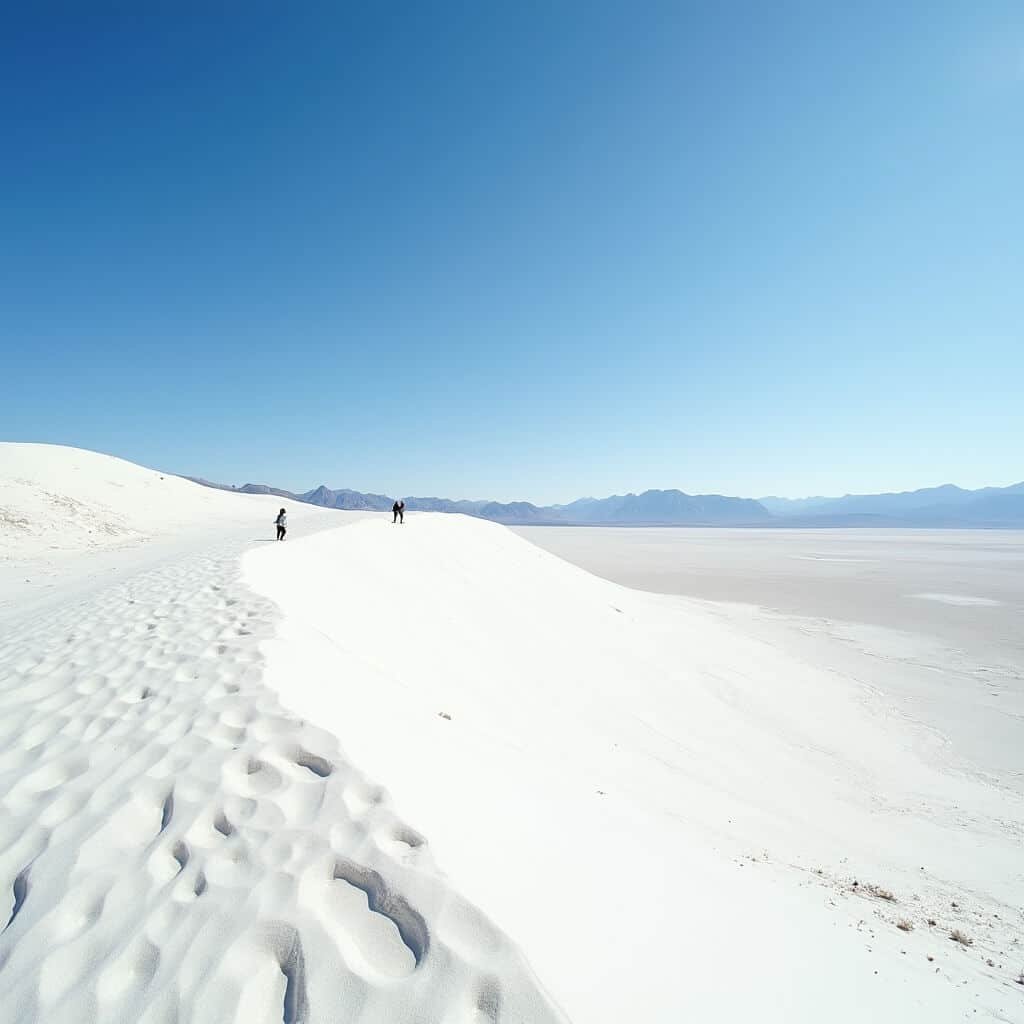
White Sands doesn’t follow the rules. Instead of red rocks or brown sand, you’ll find yourself surrounded by pristine white dunes that feel cool to the touch even on scorching summer days.
The park sprawls across the Tularosa Basin, nestled between the Sacramento and San Andres Mountain ranges in southern New Mexico. This geographic isolation creates the perfect storm of conditions that make White Sands possible.
Here’s what makes this place scientifically fascinating: gypsum typically dissolves when it encounters water. You won’t find gypsum sand anywhere else on Earth because it simply washes away. But the Tularosa Basin has no outlet to the sea, creating a closed system where the gypsum gets trapped and refined by wind and weather into these spectacular dunes.
The numbers tell the story:
- 275 square miles of total dune coverage
- 230 square miles open for public exploration
- World’s largest gypsum dune field
- 1933 establishment as a national monument
- 2019 redesignation as a national park
What strikes you first isn’t the size—it’s the silence. Step away from the car park and you’ll hear nothing but wind shifting sand crystals. The white expanse creates an almost meditative quality that’s impossible to find in our noisy world.
The Secret to Timing Your White Sands Adventure Perfectly
Smart travellers know that timing can make or break a desert experience.
White Sands operates year-round (closed only on Christmas Day), but not all seasons are created equal. The park’s hours shift seasonally, and temporary closures occasionally happen due to missile testing at nearby White Sands Missile Range or severe weather.
Best months to visit:
- Fall (September-November): Crisp mornings, comfortable afternoons
- Winter (December-February): Cool temperatures, fewer crowds
- Spring (March-May): Perfect hiking weather, wildflower blooms
Summer brings scorching temperatures that can make sand hot enough to burn feet through thin shoes. I learned this lesson the hard way during a July visit when I foolishly wore flip-flops for what I thought would be a quick photo stop. Twenty minutes later, I was hopping from shade patch to shade patch like some demented desert dancer, desperately trying to avoid third-degree burns on my soles.
The lesson? Respect the desert, pack proper footwear, and visit during cooler months when you can actually enjoy the experience rather than endure it.
Always check the official website before travelling, as missile tests can close the park with little notice. It’s frustrating to drive hours only to find gates locked, but these temporary closures are non-negotiable for safety reasons.
Your Gateway Experience: The Visitor Center That Sets the Stage
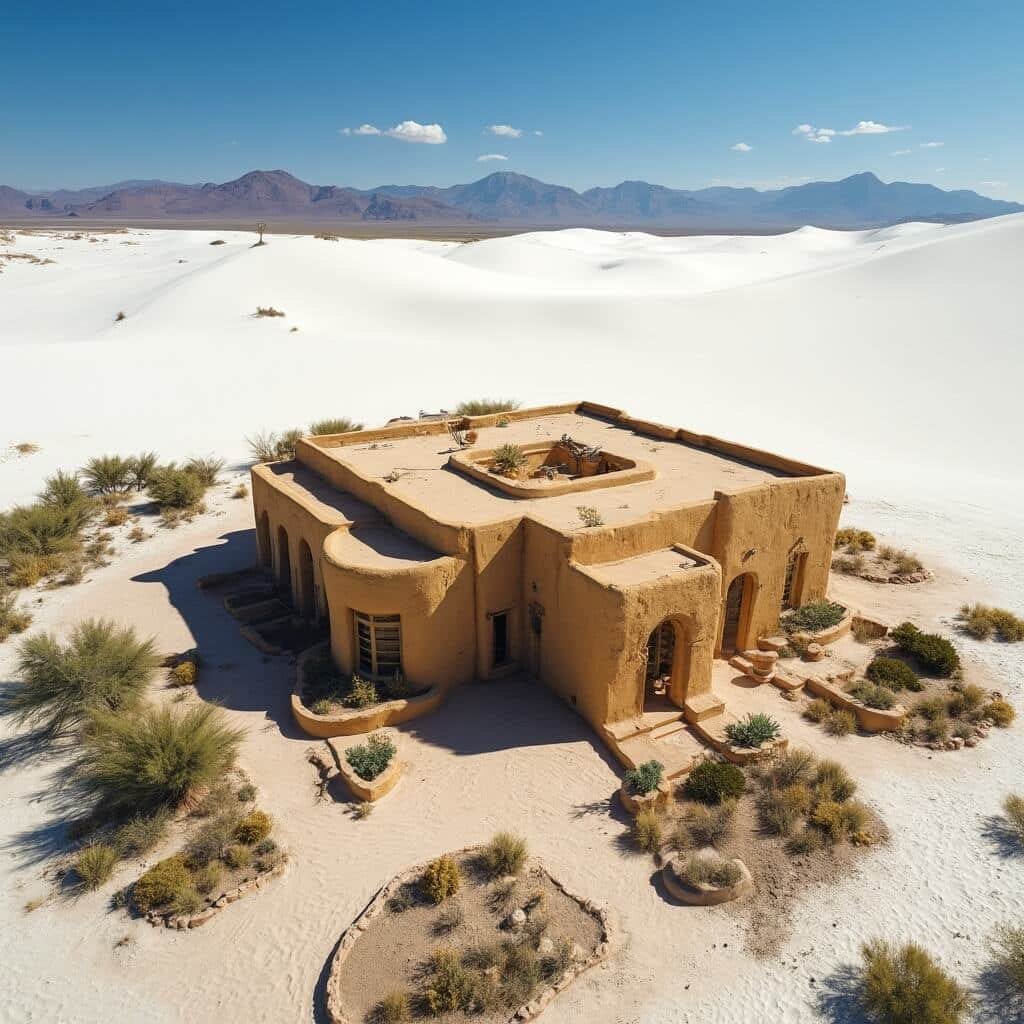
The White Sands Visitor Center deserves recognition as more than just a starting point—it’s an attraction in itself.
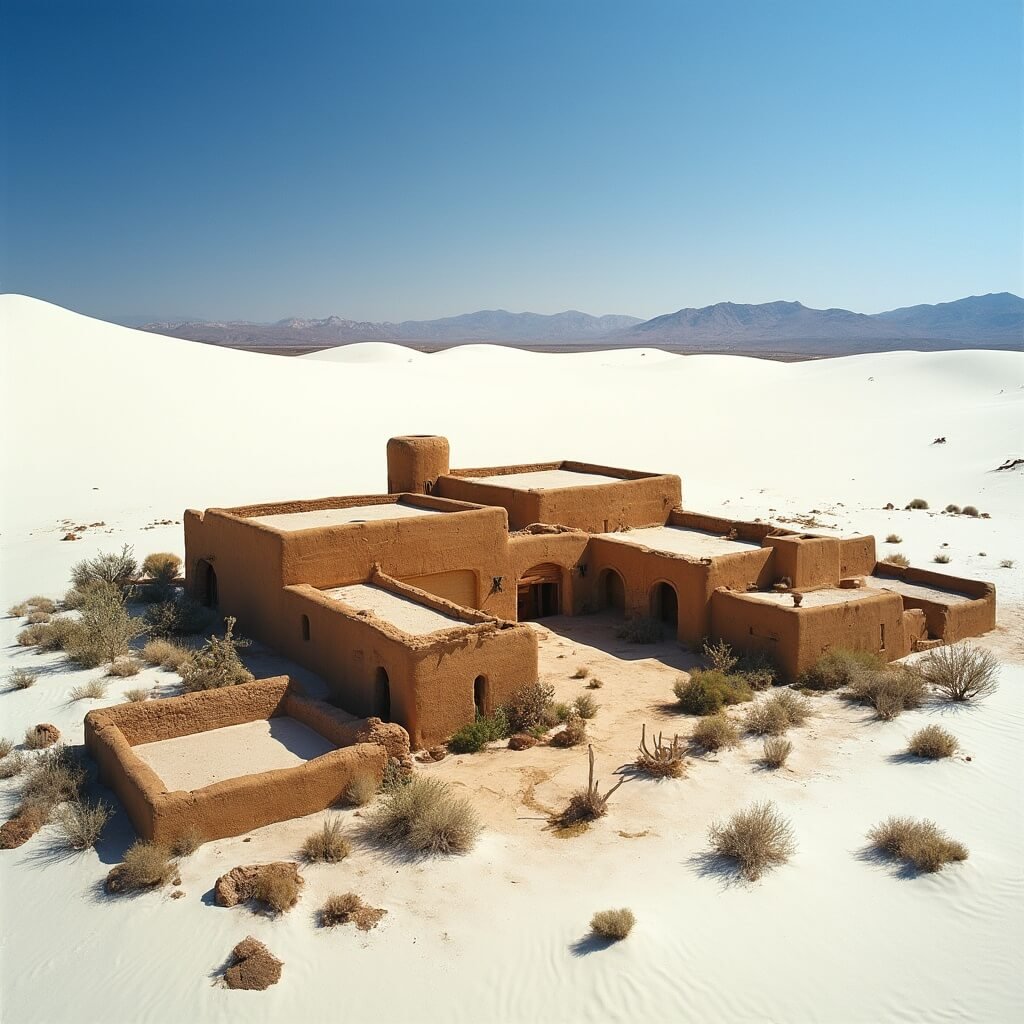
Built between 1936 and 1938, this stunning example of Spanish Pueblo-style adobe architecture immediately transports you to the Southwest’s golden age of craftsmanship. The building’s thick walls and traditional design aren’t just aesthetic choices; they’re practical solutions for desert living that keep interiors cool even when outside temperatures soar.
What you’ll find inside:
- Interactive museum explaining the area’s unique geology
- “A Land in Motion”—an award-winning orientation film
- Well-stocked gift shop and park store
- Native plant garden showcasing desert adaptation
The museum answers questions you didn’t even know you had. How do plants survive in shifting sand? What animals call this seemingly barren landscape home? Why don’t these dunes blow away like sand at the beach?
Spend at least 30 minutes here before heading into the dunes. The context transforms your experience from simple sightseeing into genuine understanding of this remarkable ecosystem.
The native plant garden outside demonstrates nature’s incredible adaptability. Plants here have evolved fascinating survival strategies: some migrate with moving dunes, others grow faster than sand can bury them, and a few actually thrive on gypsum’s unique mineral content.
explore Death Valley National Park
Dunes Drive: Your 16-Mile Journey Into Another World
Dunes Drive isn’t just transportation—it’s a carefully designed progression into the heart of this white wilderness.
This 16-mile round-trip scenic route takes about 45 minutes to complete, but smart visitors budget several hours for stops, short walks, and photography.
The route breaks down into two distinct sections:
- First 4 miles: Paved road suitable for any vehicle
- Final 4 miles: Hard-packed gypsum surface (still suitable for cars, RVs, motorcycles, and buses)
As you drive deeper into the dune field, the landscape gradually transforms around you. Scrubby desert vegetation gives way to scattered yucca plants, then isolated islands of greenery, and finally pure white sand as far as the eye can see.
The hard-packed gypsum road feels surreal under your tyres. You’re literally driving on crystallised mineral formations, and the surface provides surprisingly good traction even for standard passenger cars.
Strategic stops along Dunes Drive:
- Wayside exhibits explaining geological processes
- Trailheads for various hiking options
- Designated picnic areas with tables and grills
- Photography viewpoints with mountain backdrops
The road ends at a large loop where most visitors park and explore on foot. This is where the real magic begins—where you can climb the highest dunes for panoramic views or find your own private valley between white peaks.
Don’t rush this drive. The changing perspectives and play of light on white sand create constantly shifting scenes worthy of multiple stops.
Five Trails That Reveal White Sands’ Hidden Secrets
White Sands offers five official hiking trails, each designed to showcase different aspects of this unique ecosystem.
Easy Trails for Everyone:
The Interdune Boardwalk spans just 0.4 miles and accommodates wheelchairs and pushchairs perfectly. This elevated walkway lets you experience the dunes without fighting through soft sand, making it ideal for visitors with mobility concerns or anyone wanting a gentle introduction to the landscape.
The Playa Trail stretches 0.5 miles across relatively flat terrain, offering easy walking with rewarding views of the surrounding dune field and distant mountains.
For slightly more adventure, the Dune Life Nature Trail creates a 1-mile loop that teaches fascinating lessons about desert survival. Educational signs explain how plants and animals have adapted to this shifting white world, transforming a simple walk into an outdoor classroom.
Challenging Adventures for the Bold:
The Backcountry Camping Trail covers 2 miles roundtrip and leads to primitive camping sites (currently closed but scheduled to reopen). Even as a day hike, this trail offers solitude and deeper immersion in the dune environment.
The Alkali Flat Trail represents the park’s ultimate challenge: 5 miles roundtrip across shifting sand to the edge of ancient Lake Otero. This demanding hike requires serious preparation, plenty of water, and respect for the desert’s harsh realities.
During the Ice Age, Lake Otero covered this entire basin. As climate changed and the lake dried up, it left behind the gypsum deposits that wind and weather eventually sculpted into today’s dunes. Standing at the Alkali Flat’s edge connects you to geological time scales that dwarf human existence.
The trail’s difficulty comes not from steep grades but from walking in soft sand for miles. Your leg muscles will burn, your feet will sink with every step, and the white expanse can become disorienting without proper navigation skills.
Each trail offers its own rewards, but they all share one magical quality: the deeper you venture into the dunes, the more you appreciate the complex beauty of this deceptively simple landscape.
hike to Delicate Arch in Arches National Park
👇Find The Cheapest Flights To Anywhere Here👇
The Activity That Makes Grown Adults Feel Like Kids Again
Sand sledding at White Sands isn’t just an activity—it’s a revelation.
Where else on Earth can you grab a plastic saucer and rocket down pristine white slopes that look like they belong in Antarctica?
The gypsum’s unique properties create perfect sledding conditions. Unlike regular sand that’s rough and hot, gypsum crystals are smooth and cool, forming slopes that rival any snowy hillside.
Sledding essentials:
Purchase sleds: Available at visitor centre gift shop for around $24.99
Rental option: $15 deposit with $10 rental charge
Wax: $2.99 for enhanced speed (absolutely worth it)
Best equipment: Waxed plastic snow saucers work perfectly
The key to epic sledding lies in finding the right slope and applying wax generously. Without wax, you’ll slide about as fast as molasses. With proper waxing, you’ll fly down dunes at speeds that make you question your adult decision-making abilities.
I watched a family spend three hours perfecting their sledding technique, with kids teaching parents how to lean for maximum speed and optimal steering. The youngest member, maybe eight years old, became the family expert after discovering that a running start combined with a belly-flop landing created the fastest rides.
Important sledding rules:
- Stay in designated areas away from roads and vegetation
- Use only the loop portion of Dunes Drive
- Respect plant life and wildlife habitats
- Share slopes courteously with other visitors
The beauty of sledding here isn’t just the activity itself—it’s watching people of all ages rediscover pure joy in simple pleasures.
Beyond the Dunes: Activities That Round Out Your Adventure
White Sands offers surprising diversity beyond hiking and sledding.
Cycling transforms the park experience entirely. Pedaling along Dunes Drive on hard-packed gypsum creates an otherworldly cycling adventure, though bikes are restricted to the road only—no trail or backcountry cycling allowed.
The contrast between smooth road surface and shifting dune walls creates a surreal cycling environment unlike anywhere else in America. Early morning rides offer the best conditions, with cool temperatures and dramatic lighting that makes every pedal stroke feel cinematic.
Photography opportunities here challenge every skill level. Phone cameras capture stunning images just as effectively as professional equipment, thanks to the incredible natural contrast between white sand and blue sky.
The constantly shifting dunes create new compositions throughout the day. Morning light casts purple shadows in the valleys, midday sun creates stark contrasts, and evening brings warm tones that soften the entire landscape.
Professional photography tips:
- Polarising filters reduce glare and enhance sky contrast
- Early morning and late afternoon provide the best lighting
- Underexpose slightly to maintain detail in white sand
- Use people or objects for scale in vast landscape shots
Family-focused activities make White Sands exceptionally welcoming for all ages. The Junior Ranger program engages children with hands-on activities and educational challenges that culminate in official certification.
Picnicking in the dunes feels like dining on another planet. Designated areas throughout the park provide tables and grills, though most visitors prefer spreading blankets directly on the soft sand for impromptu meals with million-dollar views.
Ranger-led programs operate seasonally and offer expert insights into the park’s geology, ecology, and cultural history. These programs transform casual visits into educational experiences that deepen appreciation for this unique environment.
The Camping Experience That Redefines “Remote”
Backcountry camping at White Sands offers one of America’s most unique overnight experiences—when available.
Currently closed as of 2024, the backcountry camping program typically features ten primitive sites scattered throughout the dune field, available on a first-come, first-served basis with ranger permits required.
What makes this camping special:
- Complete isolation in pure white wilderness
- Nocturnal desert ecosystem comes alive after dark
- Star gazing with minimal light pollution
- Sunrise and sunset views unobstructed by vegetation
When camping reopens, expect no amenities whatsoever. You pack everything in and pack everything out, including all water and waste. The payoff comes in experiencing the desert’s dramatic transformation after dark.
As temperatures drop, the seemingly empty landscape reveals hidden life. Nocturnal animals emerge, sounds carry incredible distances across the dunes, and the Milky Way appears with startling clarity above the white expanse.
Alternative accommodation options:
- Car camping and RV sites in surrounding areas
- Hotels and restaurants in nearby Alamogordo
- Limited food service within the park itself
Most visitors choose day trips, but overnight stays in nearby towns allow for multiple park visits and dawn photography sessions that capture the dunes in their most dramatic lighting.
The Science Behind the Magic: Understanding Gypsum’s Unique Properties
The geological story of White Sands reads like science fiction, but it’s entirely real.
Gypsum forms when ancient seas evaporate, leaving behind mineral deposits. In most places worldwide, rain quickly dissolves these deposits and washes them to the ocean. The Tularosa Basin’s closed drainage system traps these minerals, creating a natural laboratory for gypsum concentration and refinement.
The geological process:
- Mineral-rich groundwater emerges in nearby Lake Lucero
- Desert sun evaporates water, leaving pure gypsum crystals
- Prevailing winds blow crystals northeast into the basin
- Constant motion prevents vegetation establishment
- Wave-like dunes migrate across 275 square miles
This process continues today, meaning the dune field constantly evolves. Individual dunes migrate up to 30 feet per year, burying and exposing different areas in an endless cycle of transformation.
Wildlife adaptations showcase evolution in real-time. Several species have developed unique characteristics for survival in this white world:
- Apache pocket mice have evolved lighter coloration for camouflage
- Bleached earless lizards display nearly white scales
- Plants either migrate with moving sand or grow fast enough to stay above burial depth
The native plant garden at the visitor centre showcases these remarkable adaptations, demonstrating how life finds ways to thrive in seemingly impossible conditions.
These evolutionary adaptations happened relatively quickly in geological terms, as the current dune field only formed within the last 7,000 years—a blink of an eye in evolutionary time scales.
Safety Wisdom That Could Save Your Adventure (And Your Life)
Desert environments demand respect, and White Sands presents unique hazards that catch unprepared visitors off-guard.
Navigation challenges top the danger list. The uniform white landscape creates natural disorientation, especially when venturing off established trails. Landmarks disappear behind identical-looking dunes, and the sun’s reflection off white sand can impair vision.
Essential safety gear:
- Navigation app or GPS device with downloaded offline maps
- Plenty of water (more than you think you need)
- Sun protection including hat, sunglasses, and high-SPF sunscreen
- Proper footwear with closed toes and good traction
- Emergency whistle and basic first aid supplies
Heat-related risks intensify in the desert environment. Even during cooler months, physical exertion combined with high altitude and intense UV reflection can lead to rapid dehydration.
The white sand reflects sunlight upward, creating a dual exposure that burns skin faster than typical beach environments. I’ve seen visitors develop serious sunburns in under an hour, particularly on the undersides of their chins and nostrils where reflected light concentrates.
Getting lost protocols:
- Inform others of your planned route and return time
- Stay on marked trails when possible
- If disoriented, stop moving and signal for help rather than wandering further
- Follow your own footprints back to the last known landmark
Weather awareness prevents dangerous situations. Flash floods, though rare, can occur with little warning during monsoon season. High winds create sandstorm conditions that reduce visibility to near zero.
Rangers emphasise that visitors bear responsibility for their own safety. This isn’t negligence—it’s recognition that desert environments require self-reliance and good judgment that no amount of safety signage can replace.
Planning Your White Sands Experience Like a Pro
Strategic planning transforms good visits into unforgettable experiences.
Time allocation
- Quick visit: 2-3 hours for Dunes Drive and short walks
- Standard visit: 4-6 hours including hiking and sledding
- Full experience: Full day or multiple visits for all activities
Budget considerations
- Park entrance fees (check current rates)
- Optional sled purchase or rental
- Fuel for extended driving on Dunes Drive
- Food and lodging in surrounding areas
Photography planning requires considering light conditions. The best shots happen during golden hour periods—roughly one hour after sunrise and one hour before sunset—when warm light creates depth and definition in the white landscape.
Weather monitoring prevents disappointment. Beyond obvious factors like temperature and precipitation, pay attention to wind forecasts. High winds create sandstorm conditions that make photography impossible and hiking unpleasant.
Missile testing schedules occasionally close the park with minimal notice. These closures prioritise safety around nearby White Sands Missile Range operations. Check the official website or call ahead, especially for long-distance travel plans.
Seasonal considerations
- Spring: Possible wildflower blooms and comfortable hiking weather
- Summer: Extreme heat but longer daylight hours for photography
- Fall: Ideal weather conditions and fewer crowds
- Winter: Cool temperatures perfect for extended exploration
Why White Sands National Park Deserves Its Place on Your Must-Visit List
White Sands National Park delivers experiences impossible to replicate anywhere else on Earth.
This isn’t hyperbole—it’s geological fact. The combination of conditions that created this landscape exists nowhere else, making every visit genuinely unique.
The park’s 2019 upgrade from national monument to national park status reflects growing recognition of its extraordinary value. But despite this official recognition, White Sands remains surprisingly uncrowded compared to famous parks like Yellowstone or Yosemite.
What makes this place irreplaceable:
- World’s only large-scale gypsum dune field
- Playground-like activities for all ages
- Accessible trails accommodating various mobility levels
- Educational opportunities that reveal Earth’s geological processes
- Photography conditions that challenge and reward all skill levels
The silence here penetrates deeper than mere absence of noise. It’s the kind of profound quiet that helps you hear your own thoughts clearly, making White Sands as much a mental reset destination as a visual spectacle.
Whether you spend an afternoon sledding with family, challenge yourself on the Alkali Flat Trail, or simply drive through for photography, White Sands National Park offers encounters with natural beauty that will fundamentally change how you think about desert landscapes.
Explore Death Valley National Park
Hike to Delicate Arch in Arches National Park
Small towns in U.S. that feel straight out of a storybook
Walk the beaches of the Oregon coast
Drive the Hana Highway in Maui
In a world where truly unique experiences become increasingly rare, this hidden gem in southern New Mexico proves that our planet still holds surprises capable of taking your breath away—you just need to know where to look for them.
The next time someone mentions desert travel, skip the obvious choices and head straight for White Sands National Park.
👇Ready To Book Your Trip?👇
This post may contain affiliate links. Please see my disclosure policy for details.