
Walk the beaches of the Oregon Coast and you’ll discover something remarkable that most coastal destinations can’t offer: complete freedom to roam wherever your feet fancy going.
Picture this: 362 miles of uninterrupted coastline where every single beach belongs to you and me. Not the hotels. Not the millionaires with beachfront mansions. You.
The Only State That Got Beach Access Completely Right
Here’s what makes Oregon extraordinary amongst coastal states.
For four decades, Oregon has maintained something called the Beach Bill – legislation that guarantees public access to every grain of sand along the entire coastline.
Think about your last beach holiday. Remember those frustrating “Private Beach – No Trespassing” signs that blocked the best stretches of sand? **You won’t find a single one in Oregon.**
The entire 362-mile coastline remains open to public access with virtually no legal complications. Whether you’re facing towering sea stacks near Cannon Beach or exploring hidden coves accessible only by foot, you’re always welcome.
But here’s the bit that’ll make you pack your boots immediately: nearly 40% of the Oregon Coast Trail consists of pure beach walking. That’s over 140 miles of sand beneath your feet, waves beside you, and nothing but open Pacific ahead.
Geography That Looks Like It Escaped from Fantasy
Oregon’s coast doesn’t mess about with boring, flat beaches.
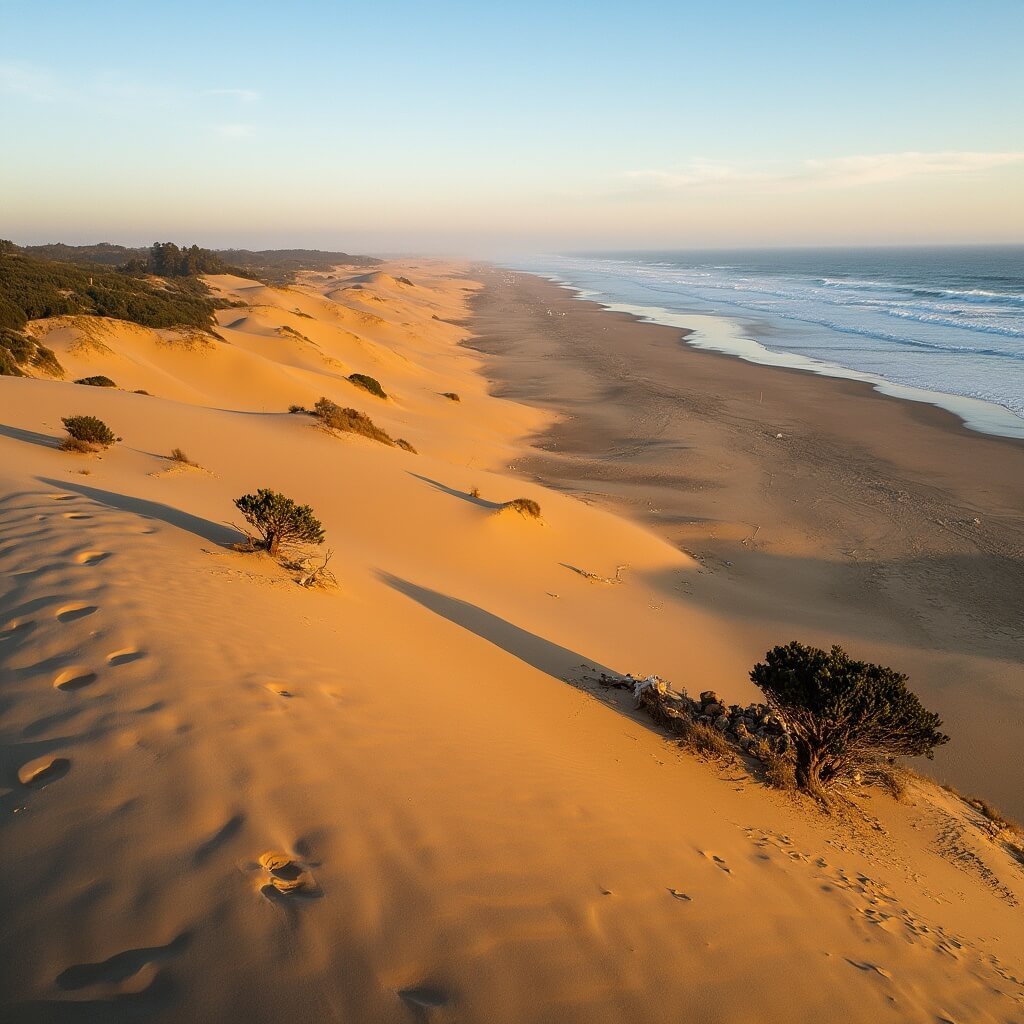
You’ll find the largest expanse of coastal sand dunes in the United States stretching along the central coast. These aren’t gentle rolling hills – we’re talking about massive, shifting mountains of sand that can swallow entire forests.
The coastline transitions from dramatic sea cliffs and towering rock formations to expansive sandy shores within miles. One moment you’re walking through coastal rainforest so lush it feels prehistoric. The next, you’re stepping onto beaches that stretch to the horizon.
Headlands jut into the Pacific like ancient guardians, creating protected coves and secluded beaches that feel untouched by modern life.
This isn’t just variety for variety’s sake. It means every few miles brings completely different terrain, different wildlife, and different experiences. You could spend weeks exploring and never see the same type of landscape twice.
The 425-Mile Trail That Changes Everything About Coastal Hiking
Most coastal walks offer you a choice: beach or forest trail. Oregon laughs at such limitations.
The Oregon Coast Trail stretches 425 miles from California to Washington, weaving together beach walks, forest trails, and coastal headlands into one epic adventure. It passes through 28 coastal towns, which means you’re never far from a proper meal or a comfortable bed.
But here’s what makes this trail special beyond its impressive length.
The Sound Journey Nobody Talks About
I’ll never forget my first morning on the trail near Yachats.
I started from the car park next to Highway 101, where the constant hum of traffic filled my ears. Within 200 yards, the trail curved towards the ocean, and something magical happened.
The highway noise faded. The sound of waves grew stronger. By the time I reached the beach proper, the only sounds were seabirds calling and waves rolling onto sand.
That sonic transition happens repeatedly along the entire trail. You’ll walk from civilisation into wilderness in minutes, guided by nothing but the increasing volume of the Pacific.
Low Tide = Easy Mode
Here’s a tip that’ll save your knees and your energy: time your beach walking with low tide.
The packed sand near the waterline provides firm, easy walking compared to the loose, energy-sapping sand higher up the beach. Check tide charts before you set out, and you’ll cover twice the distance with half the effort.
Wildlife viewing reaches its peak during these low tide windows too. Sea lions haul out onto exposed rocks. Tide pools reveal their hidden worlds. During migration season (late March through early June), you might spot whales just offshore.
Access That Actually Makes Sense
Unlike many long-distance trails that require complex logistics to reach trailheads, the Oregon Coast Trail keeps things simple.
Marked sidewalks and dirt paths guide you through coastal towns. Trailhead access from Highway 101 means you can start or stop virtually anywhere. Multiple entry and exit points throughout the coast let you customise your adventure based on available time and energy levels.
Want to walk for an hour? Perfect. Planning a week-long expedition? Also perfect.
Northern Oregon: Where Iconic Meets Accessible
Let’s talk about the northern section, where some of Oregon’s most famous coastal scenery awaits.
Cannon Beach – More Than Just a Pretty Postcard
Everyone knows Cannon Beach for Haystack Rock, but most visitors miss the best walking routes.
The downtown to midtown route covers just half a mile but connects multiple loop options through commercial and hotel districts. You can easily spend a morning exploring different paths, each offering unique perspectives of those famous sea stacks.
Multiple loop options mean you won’t retrace your steps unless you want to. Connect the commercial district to hotel areas, then loop back along the beach for different views of the same stunning coastline.
Ecola State Park – Where Crowds Disappear
Just south of Cannon Beach, Ecola State Park offers something precious: secluded beaches accessible only by hiking.
Crescent Beach Trail: Your Private Ocean Paradise
This 2.3-mile roundtrip trail with 538 feet of elevation gain leads to a beach that feels like your personal discovery.
The trail mixes forest and beach terrain, which means you’ll experience that magical transition from towering Sitka spruces to open sand. Because the beach requires effort to reach, you’ll often have long stretches entirely to yourself.
Pack a lunch and plan to linger. Crescent Beach rewards visitors who take time to simply sit and watch waves reshape the sand.
Clatsop Loop Trail: Lighthouses and Legends
The Clatsop Loop demands more effort – 900 feet of elevation gain through often muddy conditions – but delivers views of Tillamook Head Lighthouse, nicknamed “Terrible Tilly” for the brutal conditions lighthouse keepers endured.
Proper footwear becomes non-negotiable here. The trail can turn into a muddy challenge, especially during spring months. Waterproof boots with excellent traction will make the difference between enjoying spectacular views and struggling through slippery terrain.
Ecola Point to Indian Beach: Forest Meets Ocean Drama
At 4.7 miles roundtrip with 850 feet of elevation gain, this trail showcases lush coastal forest before opening to sweeping ocean views that stretch to the horizon.
The payoff comes in layers. First, you’ll walk through some of the most pristine coastal forest in Oregon. Then, as the trail opens to ocean views, you’ll understand why this stretch of coast inspired explorers and artists for generations.
Fort to Sea Trail: Walk in the Footsteps of History
Here’s where Oregon beach walking gets historically fascinating.
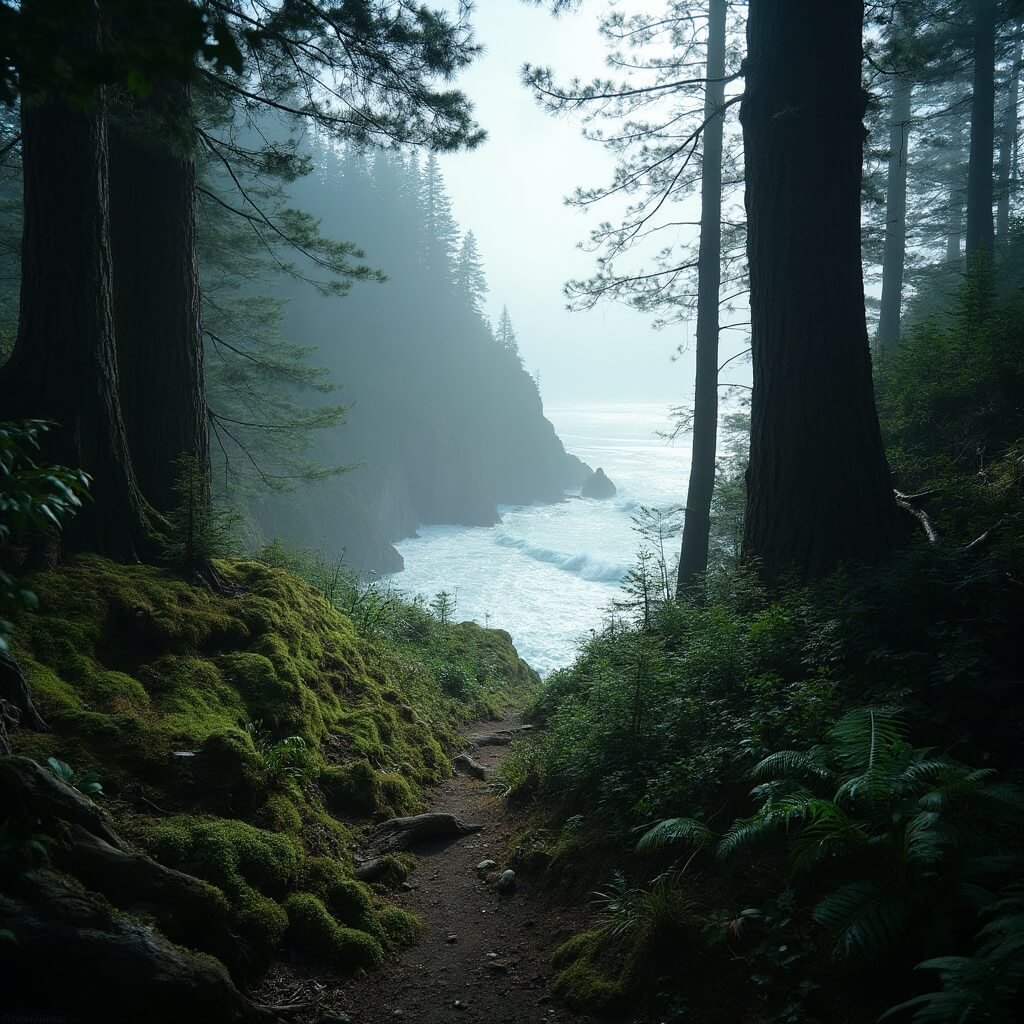
The Fort to Sea Trail stretches 6.5 miles one way (13 miles total) and follows the exact route of the Lewis and Clark expedition. You’ll walk through ancestral Clatsop Indian lands before terminating at Sunset Beach.
This isn’t just a history lesson with nice views. The trail passes through diverse ecosystems that haven’t changed much since 1805. You’ll experience the same transition from forest to shore that amazed the Corps of Discovery over two centuries ago.
The historical significance adds weight to every step. These aren’t just beautiful beaches – they’re places where American history unfolded, where different cultures met, where epic journeys reached their western terminus.
Now that you understand what makes Oregon’s northern coast special, you’re probably wondering about the central and southern sections, where some of the most spectacular and varied terrain awaits your boots.
Discover the Painted Hills in Oregon
👇Find The Cheapest Flights To Anywhere Here👇
Central Oregon Coast: Where Nature Shows Off Its Best Tricks
The central coast is where Oregon stops being merely beautiful and becomes genuinely mind-bending.
Oswald West State Park – Maximum Reward, Minimal Effort
Sometimes the best experiences require the least suffering.
Short Sands Beach Trail: Oregon’s Surfing Secret
This paved, easy trail leads to one of Oregon’s premier surfing beaches without demanding serious hiking credentials.
Low effort, high scenic reward perfectly describes this gem. You’ll reach a beach that regularly appears in surfing magazines, surrounded by towering headlands that create perfect wind protection.
The contrast hits you immediately. One moment you’re walking through dense coastal forest. The next, you’re watching surfers navigate waves that break against a backdrop of ancient sea stacks.
Cape Falcon Trail: Old Growth Magic
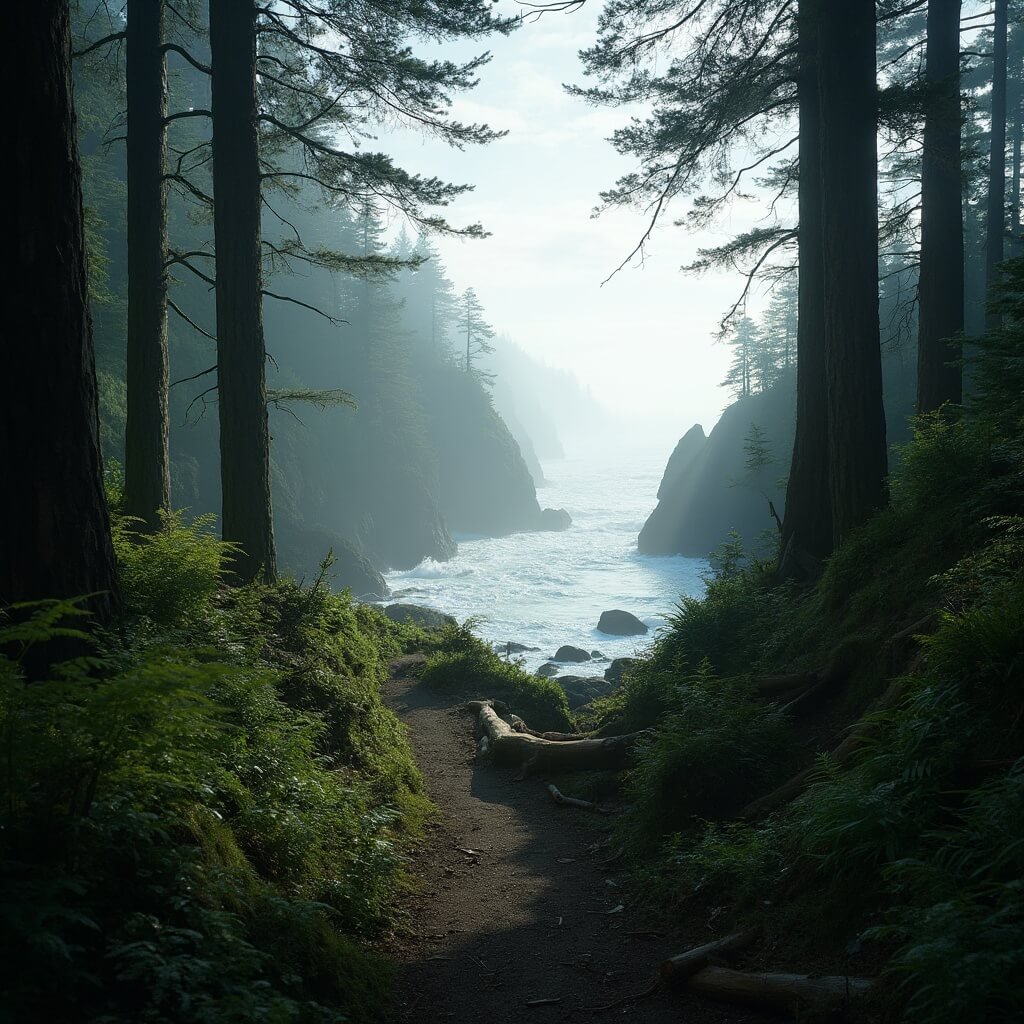
The Cape Falcon Trail stretches 4.6 miles roundtrip with 623 feet of elevation gain through old growth forest carpeted with moss and ferns.
Walking this trail feels like entering a living cathedral. Sitka spruces tower hundreds of feet overhead, their trunks draped in emerald moss that seems to glow in the filtered light.
The panoramic ocean vistas arrive gradually, revealed through breaks in the forest canopy before opening completely at Cape Falcon itself.
Elk Flats Trail: Natural Whirlpools and Wildlife
At 2.9 miles roundtrip with 616 feet of elevation gain, this trail delivers views of Devil’s Cauldron – a geological formation where waves create swirling foam pools that look almost supernatural.
The name “Elk Flats” isn’t just for show. Roosevelt elk frequently graze in the meadows along this trail, especially during early morning hours.
Neahkahnie Mountain: The Challenge That Pays Dividends
Ready for something more demanding?
Neahkahnie Mountain offers a moderate to difficult 5.1-mile trail with 1,000 feet of elevation gain that connects Short Sand Beach to Manzanita Beach.
This trail passes through three distinct ecosystems: coastal meadows bursting with wildflowers, old growth forest, and exposed headlands with unobstructed Pacific views.
The payoff comes in waves. First, wildflower meadows that peak in late spring. Then, ancient forest that feels unchanged since before European settlement. Finally, summit views that encompass dozens of miles of coastline.
Dog owners take note: this trail welcomes leashed companions, unlike some coastal trails that restrict pets during nesting seasons.
Cape Perpetua: Oregon’s Highest Coastal Viewpoint
Cape Perpetua rises 800 feet directly from the ocean – the highest point on the Oregon Coast.
Saint Perpetua Trail: Wildflowers and Rivers
The Saint Perpetua Trail winds through spruce forest carpeted with seasonal wildflowers before opening to panoramic coastal views that stretch from Lincoln City to Florence on clear days.
River views along the route add freshwater beauty to the marine landscape. You’ll cross streams that have carved their way through coastal mountains for millennia.
Thor’s Well: The Gate to the Underworld
Near Cape Perpetua, you’ll find Thor’s Well – a geological formation so mesmerizing it’s earned the nickname “Gate to Hell.”
Proper footwear becomes absolutely critical here. The basalt formations surrounding Thor’s Well turn treacherously slippery when wet, which is most of the time.
Time your visit with incoming tide for the most dramatic effect. Water rushes into the well then drains away, creating the illusion of an ocean drain that never fills.
Save this article
Enter your email and we'll send it straight to your inbox.
Yachats: Small Town, Big Trail Integration
Yachats (pronounced YAH-hots) proves that coastal towns can enhance trail experiences rather than interrupt them.
This community of about 1,000 residents has integrated itself seamlessly into the Oregon Coast Trail with marked sidewalks through residential neighborhoods that feel more like extended trail sections than urban interruptions.
The river mouth setting creates unique wildlife viewing opportunities. Steelhead and salmon runs attract both marine and terrestrial predators, turning the town’s edges into natural viewing platforms.
Southern Oregon Coast: Wild, Rugged, and Wonderfully Remote
The southern coast abandons all pretense of being tamed or civilized.
Cape Lookout: The Peninsula That Stops Traffic
Cape Lookout juts 1.5 miles directly into the Pacific Ocean like Oregon’s answer to a ship’s prow.
This cliff-lined ridge rises hundreds of feet above the sea and offers what longtime Oregon hikers call “multi-year impressions” – views so spectacular they resurface in memory for years afterward.
The trail follows the narrow ridge line with Pacific Ocean on three sides. On clear days, you can see the curvature of the earth along the horizon.
Gold Beach Area: Where Rivers Meet Ocean Drama
Otter Point Trail: Maximum Views, Minimum Distance
At just 0.5 miles roundtrip with only 32 feet of elevation gain, Otter Point Trail proves that spectacular doesn’t require suffering.
This easy walk leads to high cliffs with rocky formations below that create some of Oregon’s most photographed seascapes. Sea stacks rise from churning waters like ancient monuments to geological time.
The accessibility makes this trail perfect for families or anyone wanting dramatic coastal views without technical hiking challenges.
Florence Area: Sand Dunes That Defy Logic
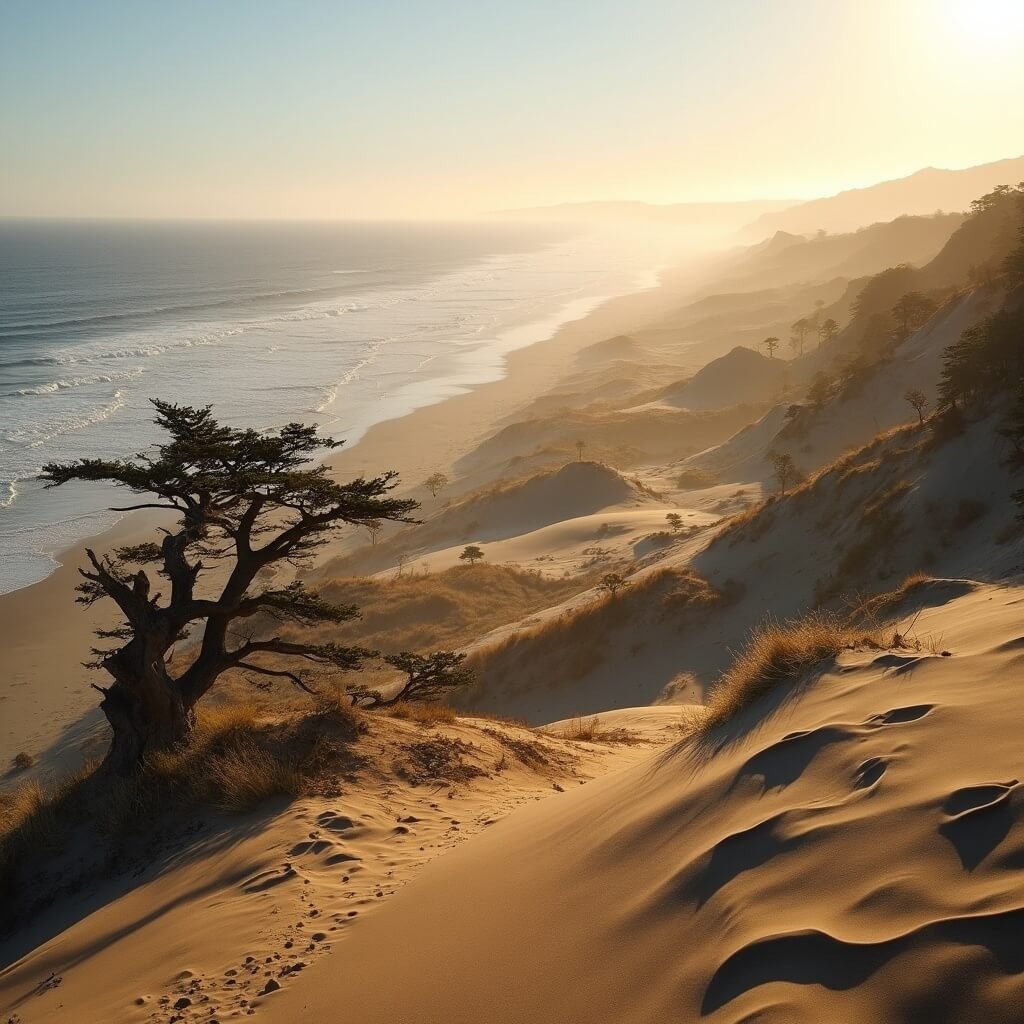
The Florence area showcases Oregon’s most unique coastal feature: massive sand dunes that can swallow forests.
John Dellenback Dunes Loop Trail: Desert Meets Ocean
Located in Oregon Dunes National Recreation Area, this trail offers unique varied terrain that transitions from woods to sand dunes to forest to beach in a single hike.
This remains a hiking-only trail with no motorized vehicles allowed, unlike other parts of the dunes where ATVs dominate. The result is an almost meditative experience of walking through landscapes that feel more like the Sahara than the Pacific Northwest.
Less trafficked than other dune areas, John Dellenback offers solitude that’s increasingly rare along the coast.
The Sand Dune Experience: Oregon’s Hidden Desert
Most people don’t expect to find massive sand dunes along a temperate rainforest coast.
Oregon doesn’t care about your expectations.
Oregon Dunes Loop: Seasonal Wilderness
The Oregon Dunes Loop covers 4.8 miles with 195 feet of elevation gain through rolling sand dunes and tree islands that create an otherworldly landscape.
Seasonal closure from March 15 to September 15 protects Western Snowy Plover nesting sites. This means the best hiking happens during fall and winter when the dunes feel most wild and empty.
Tree islands – patches of forest surrounded by sand – create microclimates where different plant and animal communities thrive just yards apart.
Walking here feels like exploring an alien planet. The sand shifts constantly, erasing all traces of previous visitors and creating the illusion that you’re the first human to see these landscapes.
Wildlife Encounters That Make Every Step Worth It
Oregon’s coastal wildlife viewing opportunities extend far beyond casual bird watching.
Sea lions frequently haul out onto beaches and rocky outcroppings, especially during pupping season. Their barking carries for miles along the coast.
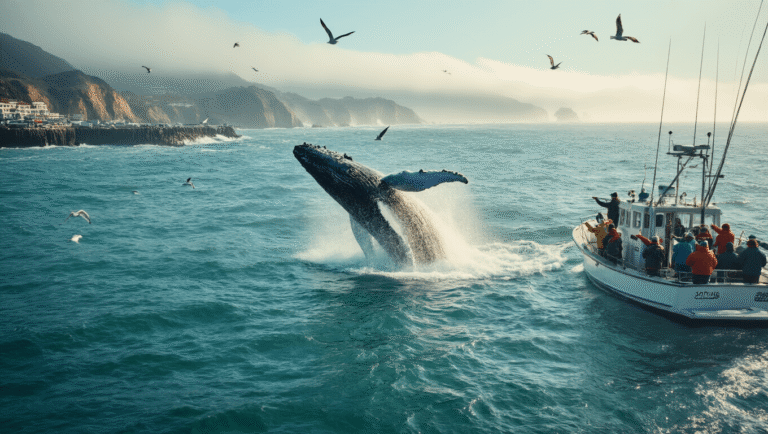
Whale migration provides spectacular viewing from late March through early June. Gray whales pass so close to shore that you can often spot them without binoculars.
Roosevelt elk graze in coastal meadows, particularly in the early morning hours before human activity increases. These massive animals can weigh up to 1,000 pounds and show remarkable tolerance for respectful observers.
Tide pool communities reveal themselves during low tide windows. Purple sea urchins, bright orange sea stars, and hermit crabs create miniature ecosystems in every rocky depression.
Planning Your Perfect Oregon Coast Beach Walk
Timing Is Everything
Summer through fall provides optimal hiking conditions with the most stable weather and driest trails.
Spring brings muddy conditions in forested areas but also peak wildflower blooms and the most active wildlife.
Early morning starts work best for coastal rainforest trails, when fog often creates magical lighting conditions and wildlife remains most active.
Match Trail Difficulty to Your Ambitions
Easy walks like Short Sands Beach Trail, Otter Point Trail, and Cannon Beach routes require minimal fitness and offer maximum scenic reward.
Moderate walks including Crescent Beach Trail, Cape Falcon, and Elk Flats Trail demand reasonable fitness but stay accessible to most hikers.
Challenging hikes like Neahkahnie Mountain, Cape Lookout, and Clatsop Loop require good fitness levels and proper preparation but deliver the most dramatic experiences.
Gear That Makes the Difference
Hiking shoes with excellent traction become essential for muddy coastal forest conditions. Waterproof boots will keep your feet dry and comfortable.
Proper footwear for tide pool exploration means shoes with sticky rubber soles that won’t slip on wet basalt.
Weather-appropriate clothing should account for fog and mist that can appear even on sunny days.
Trekking poles help significantly on challenging terrain and steep descents to beaches.
Logistics That Actually Work
Most trailheads offer direct access from Highway 101, which means no complex backroad navigation or high-clearance vehicle requirements.
Multiple entry points throughout the coast let you design custom itineraries based on available time, fitness levels, and interests.
Parking areas at major trailheads accommodate standard vehicles, though summer weekends can fill popular spots quickly.
Dog-friendly options exist throughout the coast, though leash requirements and seasonal restrictions vary by location.
Three Perfect Multi-Day Adventures
Northern Coast Immersion (3-4 Days)
Start with Ecola State Park’s multiple trails to experience forest-to-beach transitions and secluded coastal access.
Add the Fort to Sea Trail for historical significance and diverse ecosystem experience.
Finish with Cannon Beach town walks for iconic Oregon coast photography and comfortable accommodations.
This itinerary balances challenging hiking with accessible walks and provides plenty of opportunities for rest and resupply.
Central Coast Adventure (4-5 Days)
Oswald West State Park offers multiple trails within a compact area, minimizing driving time and maximizing hiking time.
Cape Perpetua and Thor’s Well provide geological wonders and the highest coastal viewpoints.
Neahkahnie Mountain delivers the most challenging single-day hike with correspondingly spectacular rewards.
This route showcases Oregon’s most diverse coastal ecosystems from sand dunes to old growth forest to exposed headlands.
Southern Coastal Exploration (3-4 Days)
John Dellenback Dunes Loop introduces you to Oregon’s unique desert-meets-ocean landscape.
Cape Lookout Trail offers the most dramatic headland experience on the entire coast.
Otter Point Trail provides an easy finish with maximum photographic opportunities.
This itinerary emphasizes Oregon’s most unique coastal features while balancing challenge levels throughout the trip.
The Complete Oregon Coast Trail: 425 Miles of Coastal Perfection
For those ready to attempt the entire route, the Oregon Coast Trail spans 425 miles and typically requires 7-10 days of hiking.
Alternating beach walking and forest sections prevent monotony while showcasing the full range of Oregon coastal ecosystems.
Multiple resupply opportunities in the 28 coastal towns along the route mean you won’t need to carry a week’s worth of food.
Accommodation options range from primitive camping to luxury hotels, depending on your preferences and budget.
Detailed maps and marked routes make navigation straightforward, though GPS devices provide helpful backup in foggy conditions.
The complete trail represents one of America’s most accessible long-distance hiking experiences, with spectacular scenery, reliable resupply, and escape routes at regular intervals.
Why Oregon Ruins Other Coastal Destinations
After experiencing Oregon’s coast, other beach destinations start feeling limited and frustrating.
Complete public access spoils you for places where private property blocks the best beaches.
Diverse ecosystems make simple beach walks elsewhere feel monotonous.
Wildlife viewing opportunities turn other coastal areas into disappointments when you realize how much life should exist along healthy shorelines.
Trail integration makes other coastal towns feel hostile to hikers rather than welcoming.
Geological diversity renders flat, featureless beaches almost boring by comparison.
Oregon doesn’t just offer great coastal hiking – it redefines what coastal hiking can be.
Once you’ve experienced the complete freedom to walk the beaches of the Oregon Coast wherever your curiosity leads, everywhere else feels like a compromise you no longer need to accept.
👇Ready To Book Your Trip?👇
This post may contain affiliate links. Please see my disclosure policy for details.
Want to keep this one?
We'll email you the link so you can find it again later.