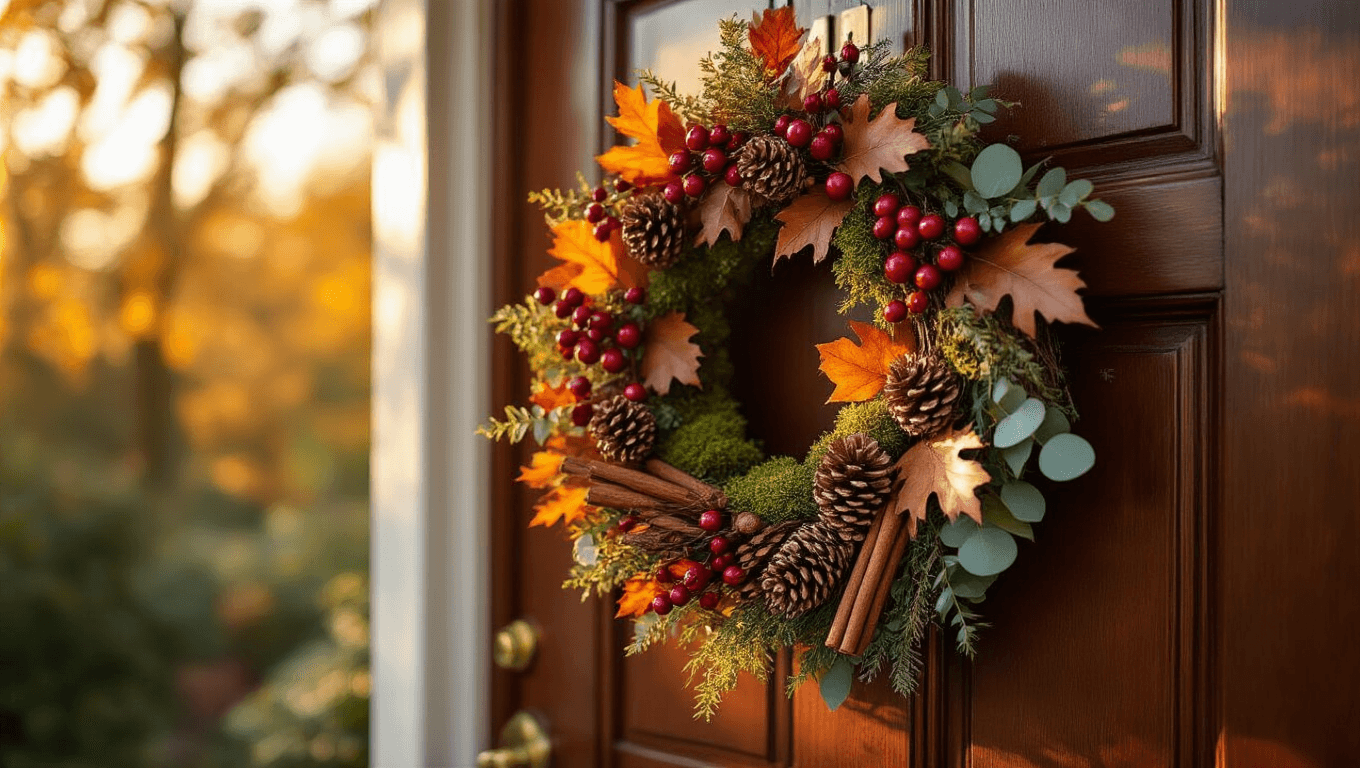
Autumn Wreaths for Front Doors: The Easiest Way to Make Your Home Look Expensive This Fall
Contents
- Autumn Wreaths for Front Doors: The Easiest Way to Make Your Home Look Expensive This Fall
- Why Your Front Door Desperately Needs a Fall Wreath
- The Most Popular Autumn Wreath Styles (And Which One Screams “You”)
- Foliage and Berry Wreaths: The Classic Overachiever
- Harvest Wreaths: When You Want People to Smell the Cinnamon
- Oak Leaf Wreaths: For the Subtle Sophisticates
- Eucalyptus and Evergreen: The Overachieving Multi-Tasker
- Pine Cone Wreaths: The Shape-Shifter
- Asymmetrical Designs: For the Artistically Inclined Show-Offs
- What Actually Goes Into These Things (Materials That Matter)
Autumn wreaths for front doors transformed my entryway from “forgot to decorate” to “Martha Stewart lives here” in about five minutes flat.
You know that sinking feeling when guests pull up and you realize your front door looks sadder than a November garden?
I’ve been there, frantically wiping cobwebs off the porch light as car doors slam.
Here’s the thing: a good fall wreath does the heavy lifting for your entire exterior. No ladder required, no complicated light displays, just one gorgeous circle that makes people think you’ve got your life together.
Spoiler alert—you might not, but nobody needs to know that.
Why Your Front Door Desperately Needs a Fall Wreath
Let me paint you a picture.
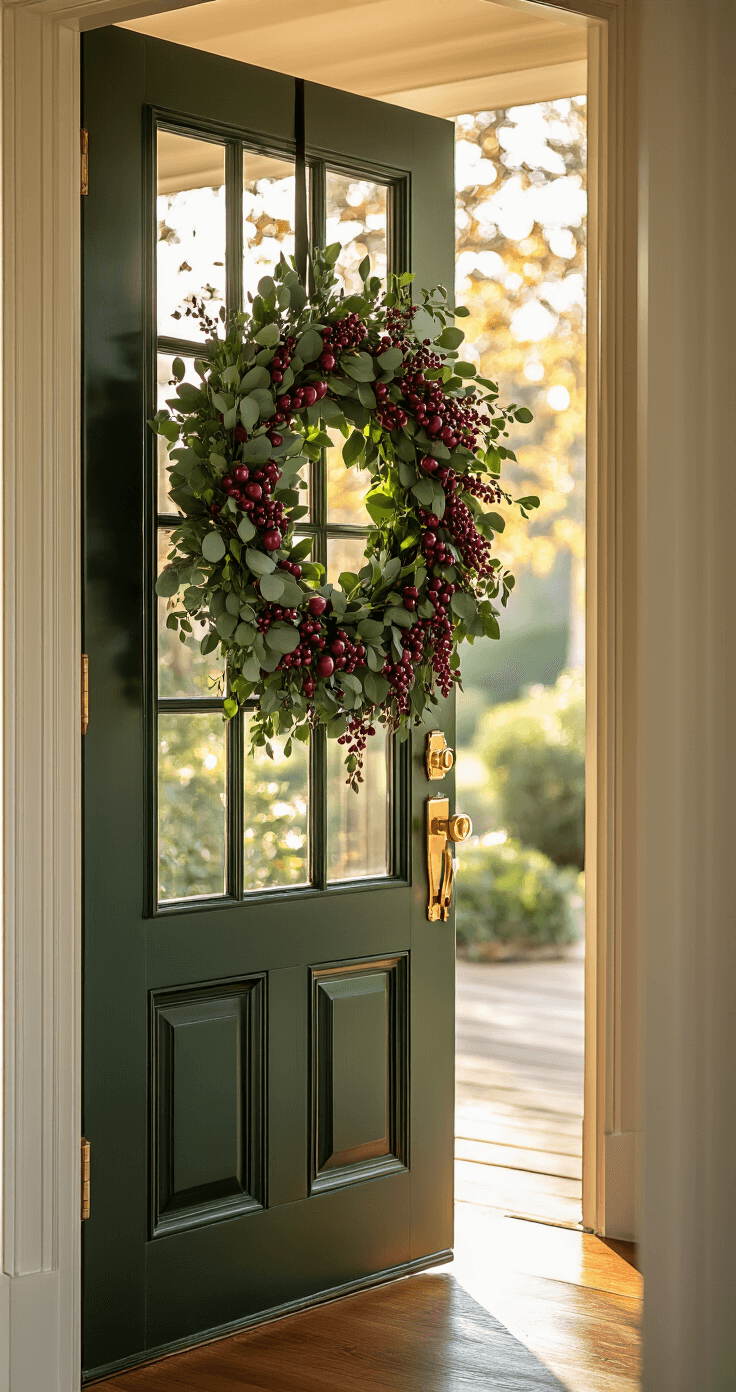
Last October, my neighbor hung a stunning wreath covered in deep red berries and copper-toned leaves. Suddenly, my plain wooden door looked like it had given up on life.
The difference was almost embarrassing.
A quality autumn wreath signals that someone who cares lives inside. It’s the equivalent of putting on real pants before answering the door—a basic courtesy that somehow feels like an achievement these days.
The best part? These beauties last 6-12 months with minimal fussing. That’s nearly a full year of looking like you know what you’re doing, seasonally speaking.
The Most Popular Autumn Wreath Styles (And Which One Screams “You”)
Foliage and Berry Wreaths: The Classic Overachiever
These are the autumn berry wreaths you see everywhere for good reason.
They combine varying shades of green with pops of red, orange, or burgundy berries that catch the light beautifully.
I’m talking about designs that look expensive but don’t require you to explain the purchase to your partner.
Perfect for anyone who wants traditional fall vibes without overthinking it.
Harvest Wreaths: When You Want People to Smell the Cinnamon
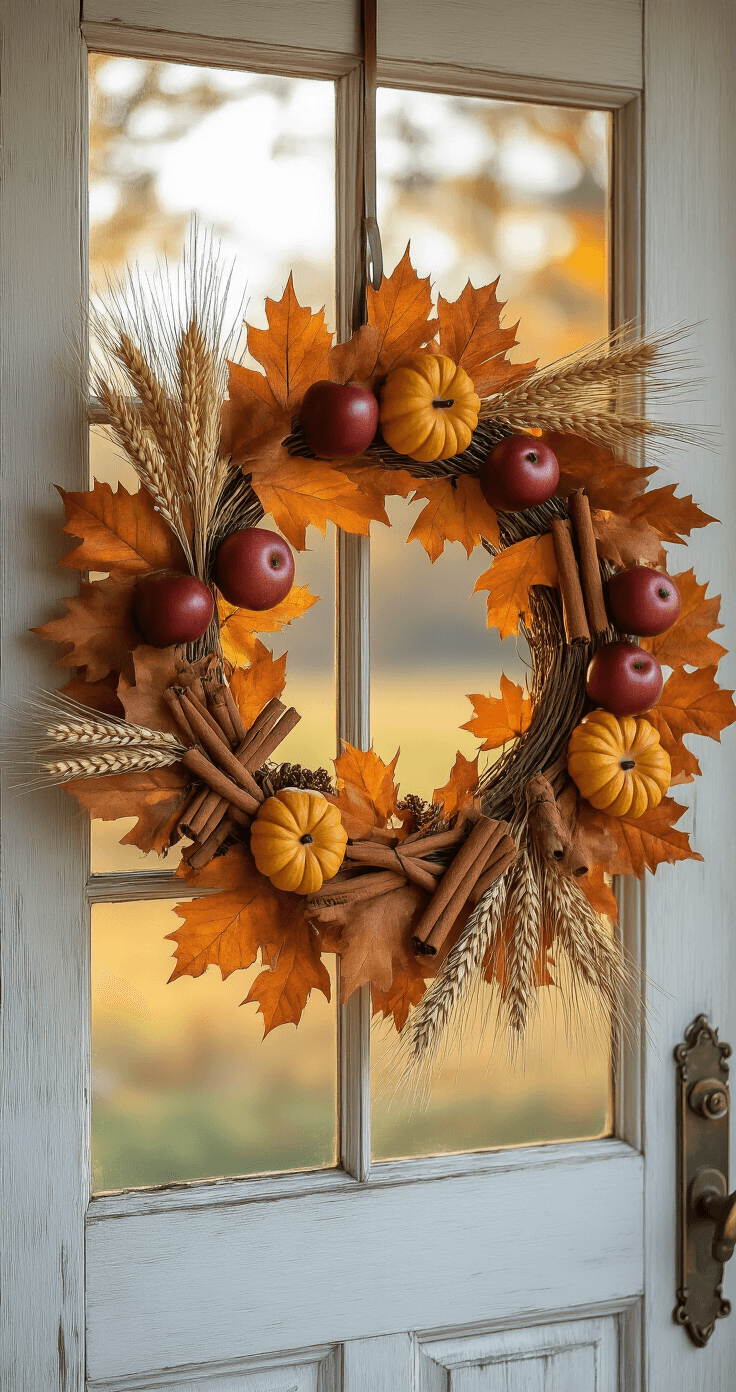
Picture this: preserved autumn leaves mixed with tiny decorative apples and actual cinnamon sticks poking out at artistic angles.
These harvest door wreaths smell incredible and look like you raided a very chic farmer’s market.
I made the mistake of hanging one too close to my face level. Spent three weeks getting cinnamon-scented nose bonks every time I unlocked the door.
Worth it, honestly.
Oak Leaf Wreaths: For the Subtle Sophisticates
Not everyone wants their front door screaming “PUMPKIN SPICE EVERYTHING.”
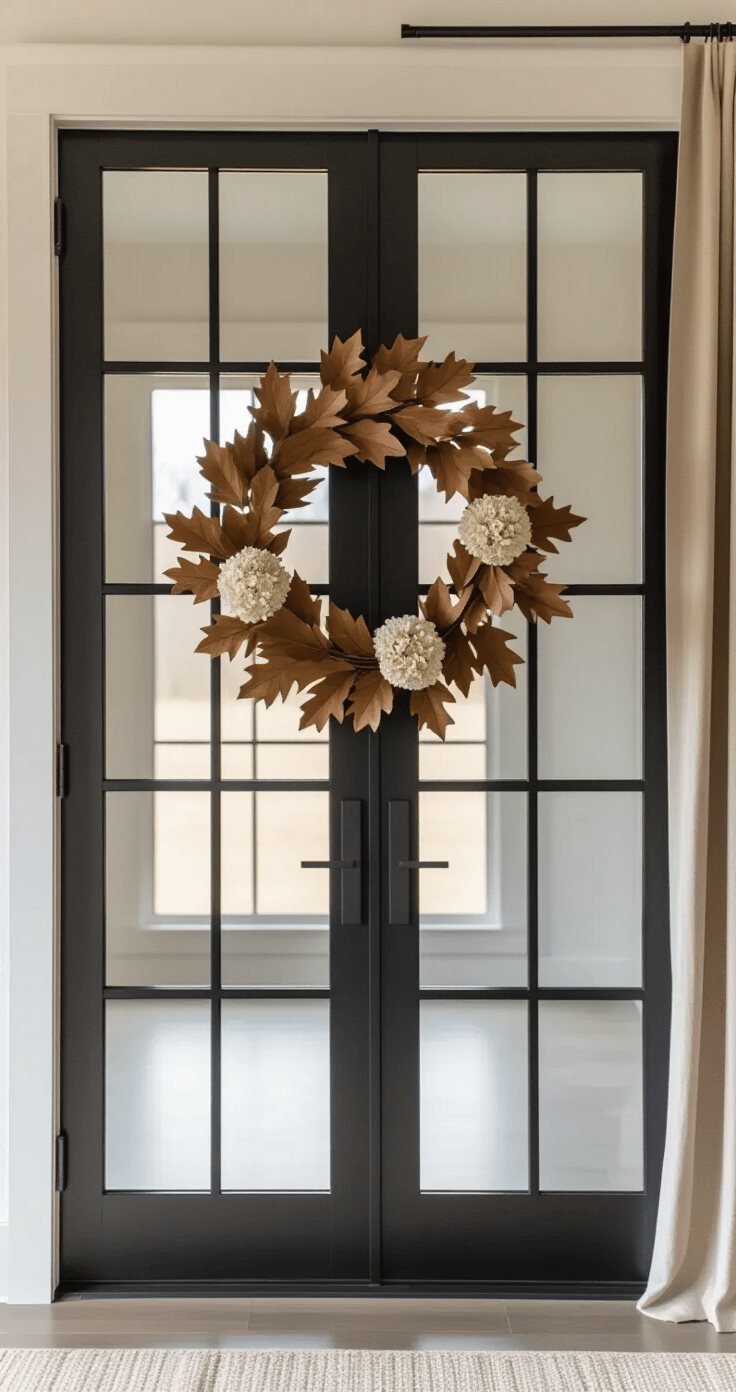
Oak leaf designs in muted tans, soft bronzes, or even neutral creams give you that understated elegance.
These work beautifully if your home has modern farmhouse vibes or if you’re the type who cringes at over-the-top Halloween decorations.
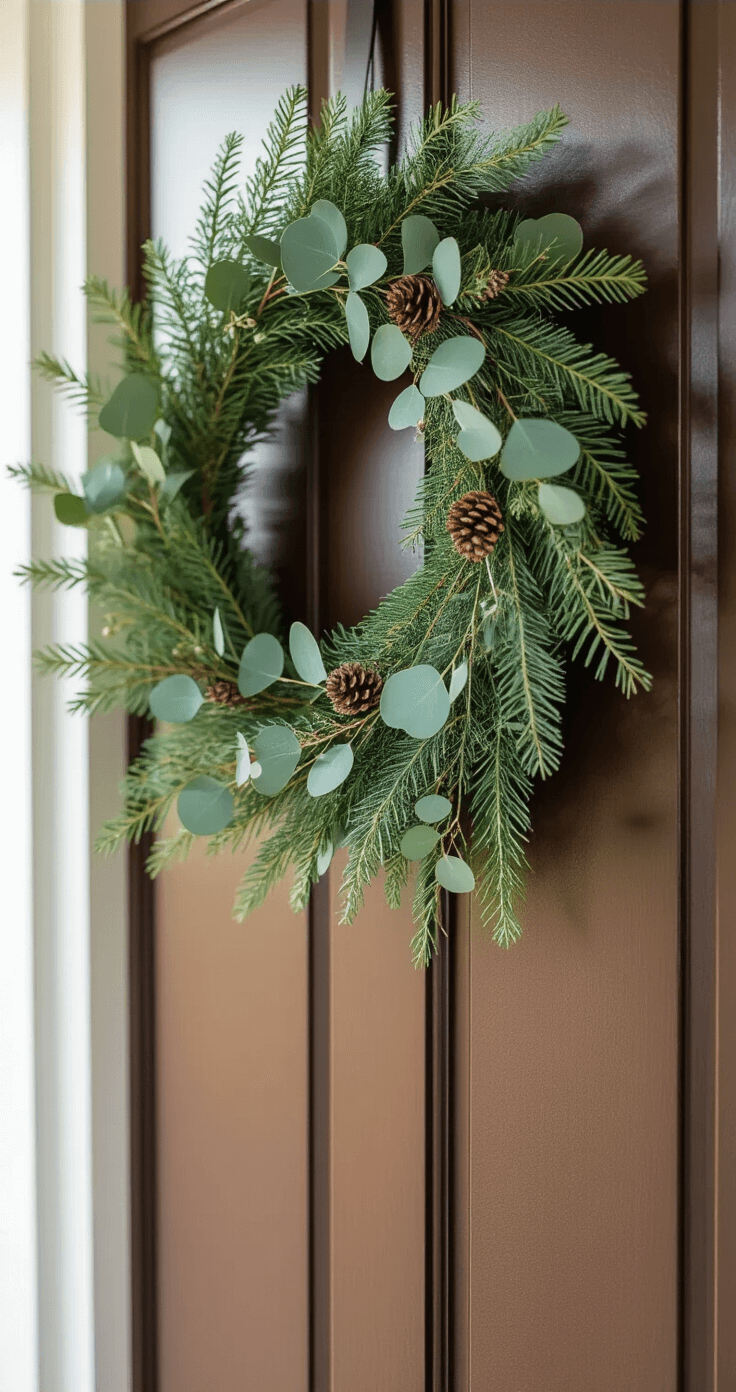
Eucalyptus and Evergreen: The Overachieving Multi-Tasker
Here’s where things get smart.
Eucalyptus wreaths work for fall, slide right into winter, and honestly look good all year.
I hung one in September and it’s still going strong, outlasting three of my houseplants and my enthusiasm for meal planning.
The silvery-green tones photograph beautifully, which matters if you’re the type who sends holiday cards or posts door selfies.
No judgment—I absolutely am.
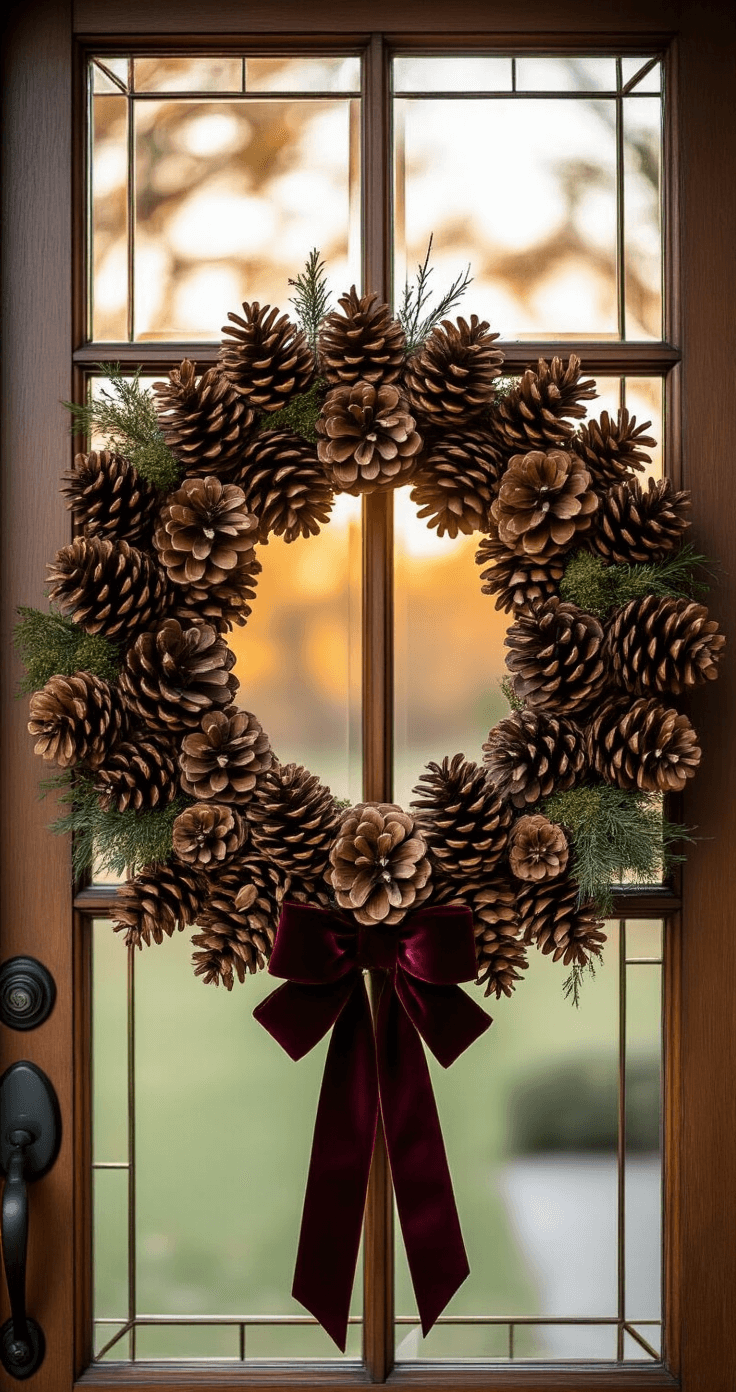
Pine Cone Wreaths: The Shape-Shifter
These rustic beauties have a party trick.
Hang a pine cone wreath in October for that cozy cabin aesthetic.
Come December, tie a fat red velvet bow on top and suddenly you’re festive as hell.
Two holidays, one wreath. That’s the kind of efficiency that makes my practical heart sing.
Asymmetrical Designs: For the Artistically Inclined Show-Offs
Traditional round wreaths are lovely, but asymmetrical designs with wild bracken, dramatic seed heads, and rose hips cascading to one side?
That’s architectural drama.
These look like they belong in a design magazine, which means your neighbors will either be inspired or slightly intimidated.
Both outcomes are acceptable.
What Actually Goes Into These Things (Materials That Matter)
Understanding what you’re buying helps you spot quality versus overpriced twigs.
Fresh Materials: The Heavy Hitters
Douglas fir brings that classic evergreen fullness and smells like you’re living in a forest.
Eucalyptus adds that silvery sophistication I mentioned earlier, plus it air-dries beautifully instead of turning brown and crispy.
Sphagnum moss acts as filler and gives wreaths that lush, just-foraged appearance.
Fresh materials mean your wreath starts strong, though they will gradually dry out. That’s not a bug, it’s a feature—dried wreaths last longer anyway.
Dried Elements: The Long-Distance Runners
These are your marathon materials:
- Bracken ferns add feathery texture
- Teasel brings architectural interest with those spiky seed heads
- Rose hips provide pops of deep red or orange
- Honesty seed pods catch light with their papery, translucent quality
- Strawflowers keep their color basically forever
- Ornamental grasses add movement and that windswept prairie vibe
The Accent Pieces That Make People Stop and Stare
Crab apples (real or artificial) add unexpected charm.
Berries in deep burgundy or burnt orange create focal points.
Foraged leaves—the crunchier and more irregular, the better—make everything look authentically gathered rather than assembly-line produced.
This post may contain affiliate links. Please see my disclosure policy for details.