
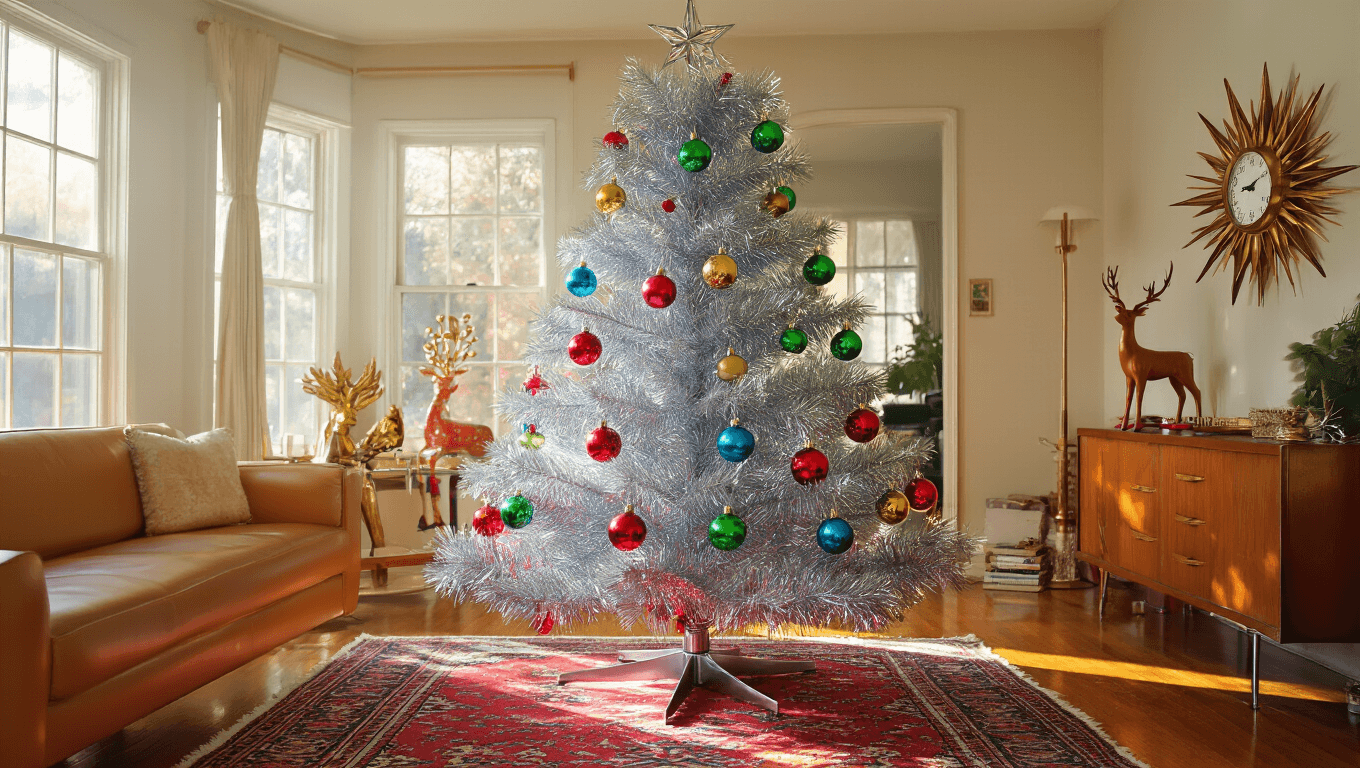
How to Style a Retro Christmas Tree That Brings Back All the Nostalgia
A retro Christmas tree transforms your home into a mid-century wonderland that makes everyone stop and stare.
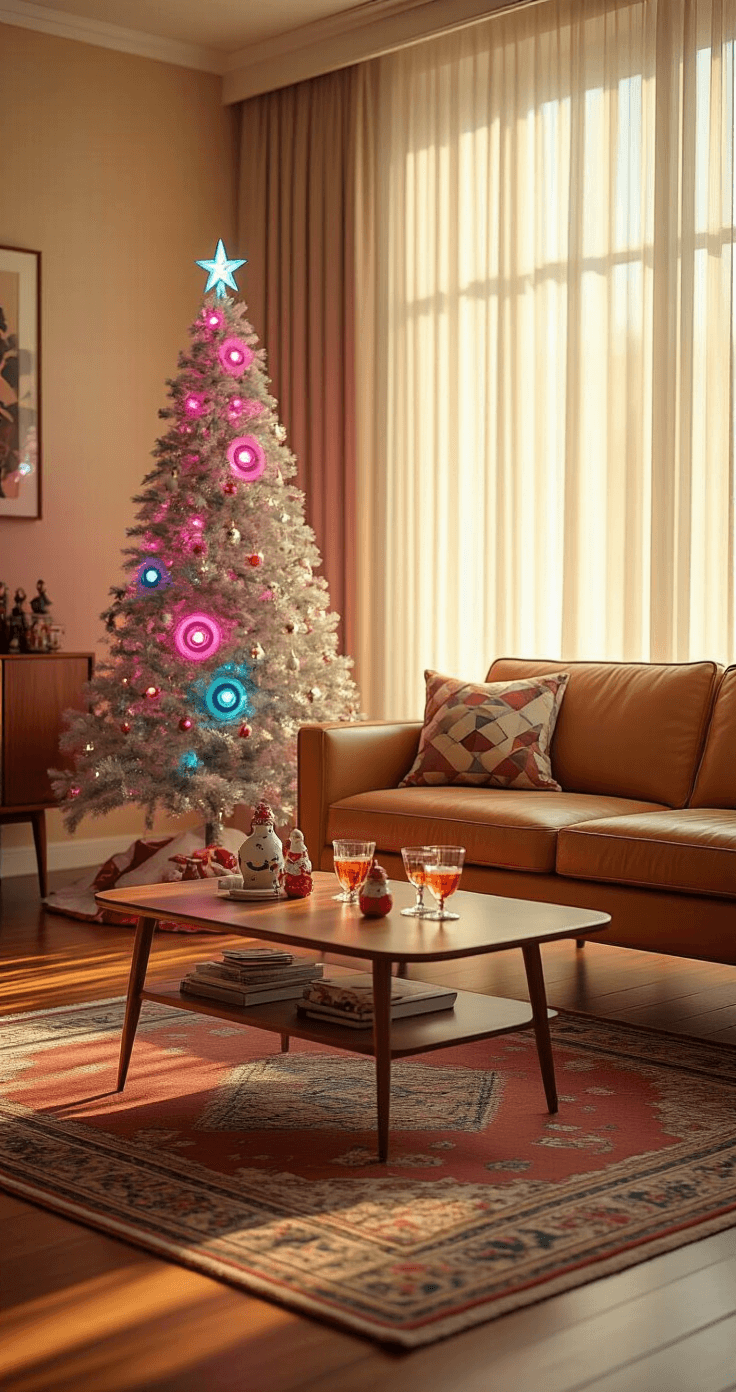
I still remember walking into my grandmother’s living room every December and seeing that magnificent aluminum tree spinning on its color wheel stand, throwing pink and blue and green light across walls covered in family photos.
That tree wasn’t just decoration—it was pure magic.
Now I’m obsessed with recreating that same nostalgic sparkle in my own home, and honestly?
It’s easier than you think.
Why Your Modern Tree Might Be Missing Something Special
Walk into most homes today and you’ll see the same thing: perfectly coordinated trees with matching ornaments in two or three tasteful colors, minimal tinsel, and those tiny LED lights that barely make an impact.
They’re fine.
But they’re also… forgettable.
The problem isn’t your decorating skills—it’s that we’ve somehow convinced ourselves that “less is more” applies to Christmas trees.
Spoiler alert: it absolutely does not.
Retro Christmas trees understood something we’ve forgotten: abundance creates magic.
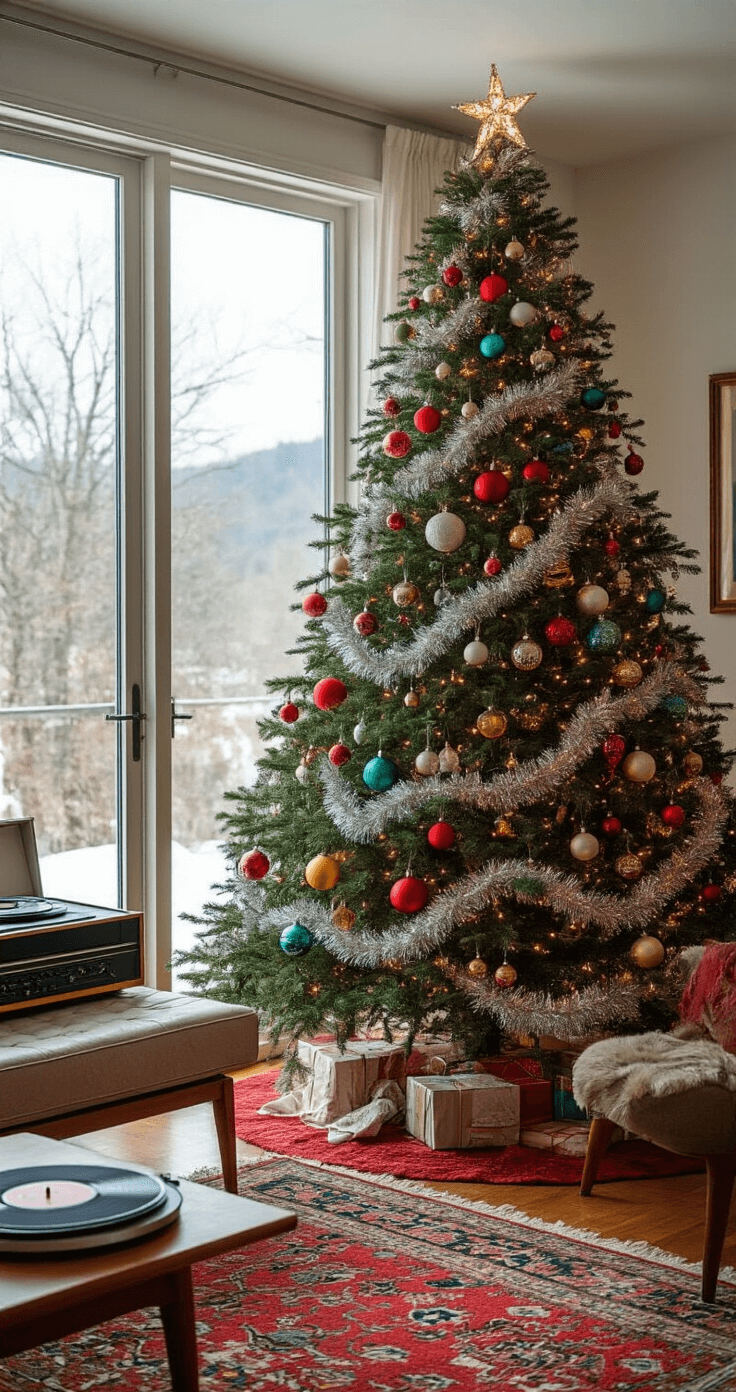
Those 1950s and ’60s trees were loaded with shiny glass balls, dripping with tinsel, glowing with big colorful bulbs, and absolutely unapologetic about being over-the-top.
They had personality.
They had joy.
They had that “I can’t look away” quality that modern minimalist trees just can’t touch.
What Makes a Christmas Tree Actually Look Retro
The Time Period Sweet Spot
We’re talking 1940s through 1980s here, with the peak retro aesthetic landing squarely in the 1950s and ’60s.
This was the golden age of American Christmas decor when families went absolutely wild with color, shine, and festive excess.
Post-war prosperity meant people could finally splurge on decorations, and boy, did they ever.
The Visual Signatures
Real retro trees share these unmistakable characteristics:
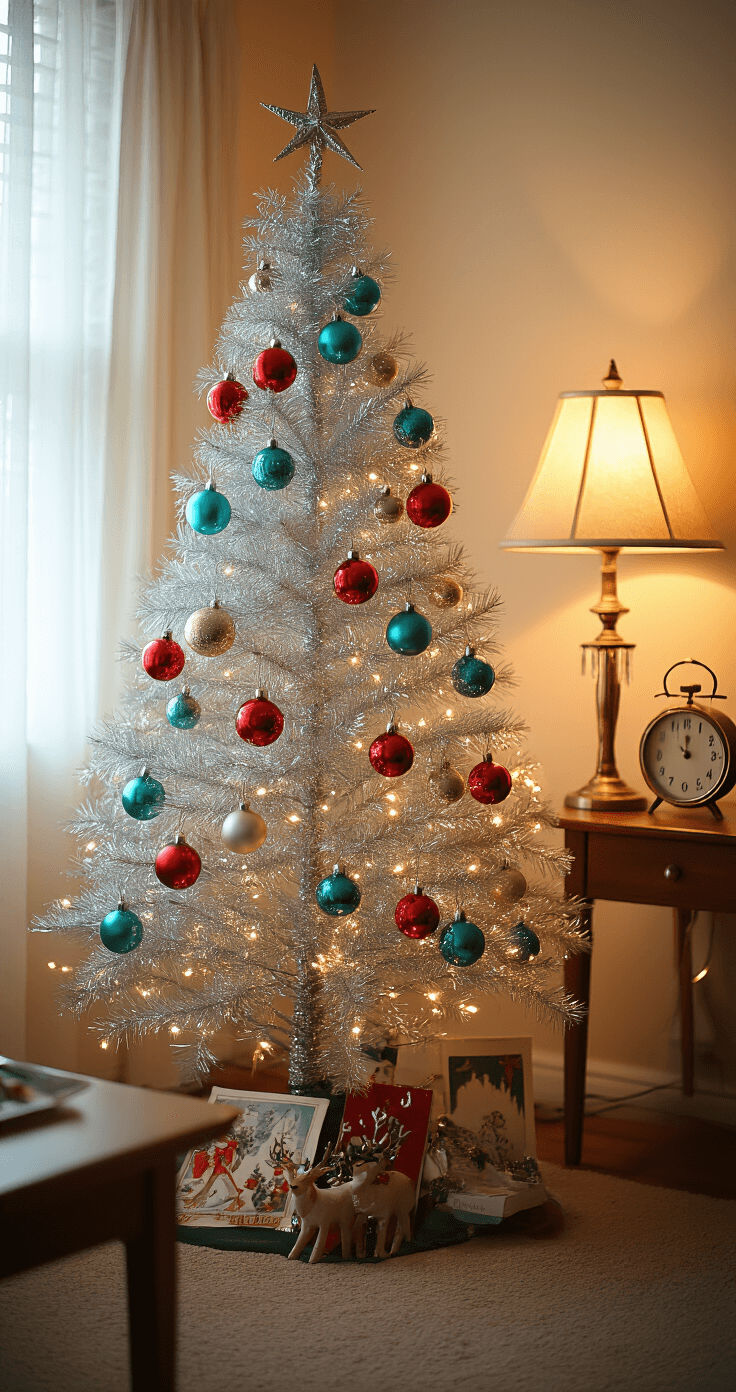
- Shiny Brite ornaments in bold primary colors with glitter caps and stripes
- Generous amounts of tinsel—and I mean generous, not those three sad strands people use now
- Large colorful bulbs (C7 or C6 size) that actually glow instead of just existing
- Aluminum or silver tinsel trees that look like something from a space-age fever dream
- Maximum abundance—gaps are the enemy, fullness is the goal
- Warm metallics mixing with bright jewel tones
The overall vibe should scream “more is more” while still feeling cohesive and intentional, not chaotic.
Save this article
Enter your email and we'll send it straight to your inbox.
Choosing Your Tree Foundation
The Evergreen Route
A full, symmetrical artificial Christmas tree works beautifully for retro styling.
Look for trees with:
- Dense branching that can support lots of ornaments
- Rich green color (not that weird blue-green some fake trees have)
- Full shape from top to bottom
- Height between 6-8 feet for maximum impact
Balsam fir shapes capture that classic mid-century silhouette perfectly.
Real trees work too, but you’ll be vacuuming pine needles until Valentine’s Day—ask me how I know.
The Aluminum Tree Experience
Now if you really want to commit to the retro aesthetic, you need to talk about aluminum Christmas trees.
These metallic beauties were THE status symbol of 1960s Christmas.
Sleek, shiny, and completely artificial in the best possible way.
They came in silver, pink, gold, and even that seafoam green that somehow worked.
Here’s what you need to know:
- Original vintage aluminum trees (1950s-70s) are collectible and expensive but absolutely stunning
- Modern reproductions capture the look at a fraction of the price
- They’re lightweight and store easily
- Never use lights on aluminum trees—the metal conducts electricity (this is why they came with rotating color wheel lights)
- They photograph like crazy—the reflection and shine is Instagram gold
I found a vintage pink aluminum tree at an estate sale three years ago for $75, and it’s now the centerpiece of my entire holiday aesthetic.
Worth every penny.
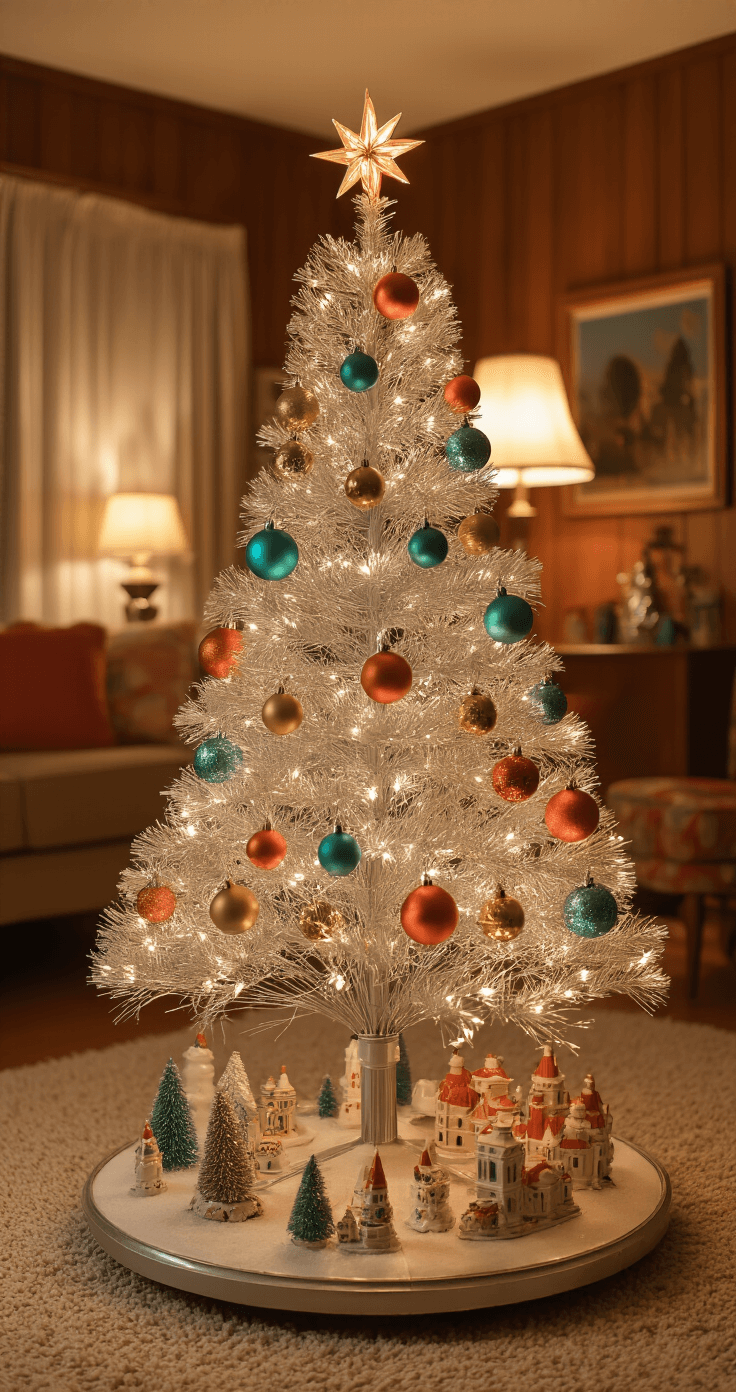
The Tinsel Tree Middle Ground
Can’t find or afford an aluminum tree?
Tinsel Christmas trees split the difference beautifully.
These trees have individual branches wrapped in metallic tinsel material, creating that shimmery retro look without going full aluminum.
They work especially well if you want some of that mid-century sparkle but still want to hang lights and ornaments traditionally.
Building Your Ornament Collection (The Fun Part)
Shiny Brite Ornaments: The Crown Jewels
If retro Christmas had a mascot, it would be Shiny Brite ornaments.
These cheerful glass balls with their distinctive glitter caps and striped designs defined American Christmas from the 1930s through the 1960s.
They came in every color imaginable—red, blue, pink, green, gold, silver—often with:
- Hand-painted stripes, dots, or geometric patterns
- Glittered caps (usually in contrasting colors)
- Indents (dimpled surfaces that caught light beautifully)
- Stenciled designs featuring snowflakes, trees, or stars
Finding authentic vintage pieces:
Hit up flea markets, estate sales, antique malls, and online marketplaces like eBay or Etsy.
I’ve found my best pieces at estate sales
This post may contain affiliate links. Please see my disclosure policy for details.
Want to keep this one?
We'll email you the link so you can find it again later.


