

Why Your Front Door Is Begging for a Wreath
Contents
I’ll be honest with you. Every time I walk up to a house with a beautiful wreath, I automatically assume the people inside have their life together. It’s completely irrational, but it works.
A wreath does three things brilliantly:
- Makes your home look intentional and cared for
- Gives guests something pretty to look at while they wait for you to answer the door
- Instantly updates your home’s exterior without painting or renovating

Spring Wreaths That Actually Look Fresh
Spring wreaths drive me crazy because so many people think they need to look like Easter threw up on their door. Wrong.
The best spring wreaths use real-looking florals and greenery that don’t scream “I bought this at a craft store in 2003.”
What works for spring:
- Tulips in soft pastels or bold jewel tones
- Peonies (the showstoppers of spring)
- Eucalyptus and fern fronds for texture
- Forsythia branches for that wild, just-picked look
- Magnolia leaves as a base (these are magic year-round)
I made a spring floral wreath last year using a simple grapevine base and hot-glued faux peonies around it. Took me 20 minutes. People still ask where I bought it.
Pro move: Add a nest with small eggs tucked into one side. It’s subtle, seasonal, and doesn’t look like you’re trying too hard.
Summer Wreaths Without the Tackiness
Summer wreaths can go sideways fast if you’re not careful. Nobody needs a wreath covered in American flag everything or neon tropical flowers that blind your neighbors.
Summer styles that work:
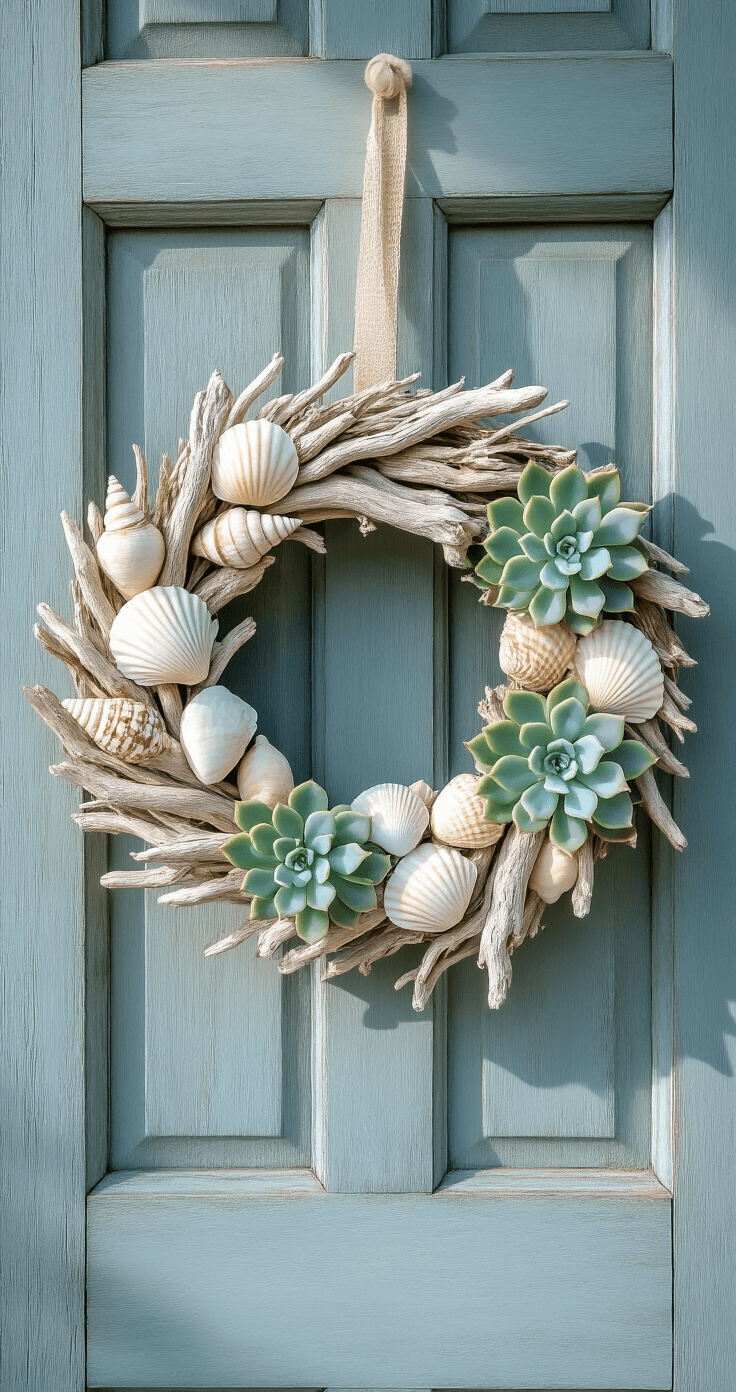
- Coastal themes: Rope, shells, starfish, driftwood
- Citrus vibes: Lemons, limes, oranges (faux ones, please)
- Sunflowers: But not the cheap plastic kind
- Succulents: For a modern, low-key look
- Lavender bundles: Simple and elegant
I’m obsessed with sunflower wreaths for summer because they’re cheerful without being obnoxious.
The trick with summer is keeping colors sun-bleached and soft rather than bright and aggressive. Think weathered blues, sandy neutrals, and natural greens.

Fall Wreaths (The Most Competitive Season)
Fall is when people lose their minds with wreaths. Every front door becomes a competition of who can stack the most pumpkins, corn stalks, and plaid ribbon.
I get it. Fall is intoxicating. But your wreath doesn’t need to announce the season like a megaphone.
Fall wreath elements that don’t look desperate:
- Dried wheat or pampas grass
- Deep burgundy and burnt orange florals
- Mini pumpkins (one or two, not seven)
- Berries in rust and wine tones
- Natural grapevine showing through
Last fall, I made a wreath in under 30 minutes using a grapevine wreath base, some eucalyptus, and three small white pumpkins. That’s it. Sometimes less really is more.
Bold move: Skip orange entirely and go for a moody palette of deep plum, olive green, and charcoal. Your neighbors will be taking notes.

Winter Wreaths That Work Beyond Christmas
Here’s where most people fumble. They put up a Christmas wreath in November and leave it until February because they don’t know what else to do.
Winter wreaths should feel elegant and crisp, not necessarily festive.
Winter wreath ingredients:
- Fresh or faux evergreen branches (cedar, pine, fir)
- Pinecones in their natural state
- Red or burgundy berries for pop
- Frosted or snow-dusted elements
- Metallic accents in silver or gold
- Bare branches for a minimalist look
A evergreen wreath with some simple pinecones works from December through March. No Santa hats required.
I like adding a thick velvet ribbon in a deep jewel tone. It feels luxurious and winter-appropriate without being holiday-specific.

Year-Round Wreaths for People Who Hate Swapping
Listen, I’m not changing my wreath every six weeks. I have things to do.
If you want one wreath that works all year, here’s your formula:
Base materials that never go out of style:
- Magnolia leaves (dark green, glossy, perfect)
- Eucalyptus (dries beautifully)
- Grapevine (shows texture, looks intentional)
- Wood elements (slices, branches, geometric shapes)
- Burlap and natural ribbon
I have a friend who made a magnolia wreath three years ago and just swaps out one small seasonal element every few months. Spring gets a nest. Summer gets a small starfish. Fall gets a single burgundy leaf cluster. Winter gets a pinecone.
Brilliant and lazy in the best way.

DIY Wreaths vs. Store-Bought: The Honest Truth
DIY wreaths can save
This post may contain affiliate links. Please see my disclosure policy for details.


