
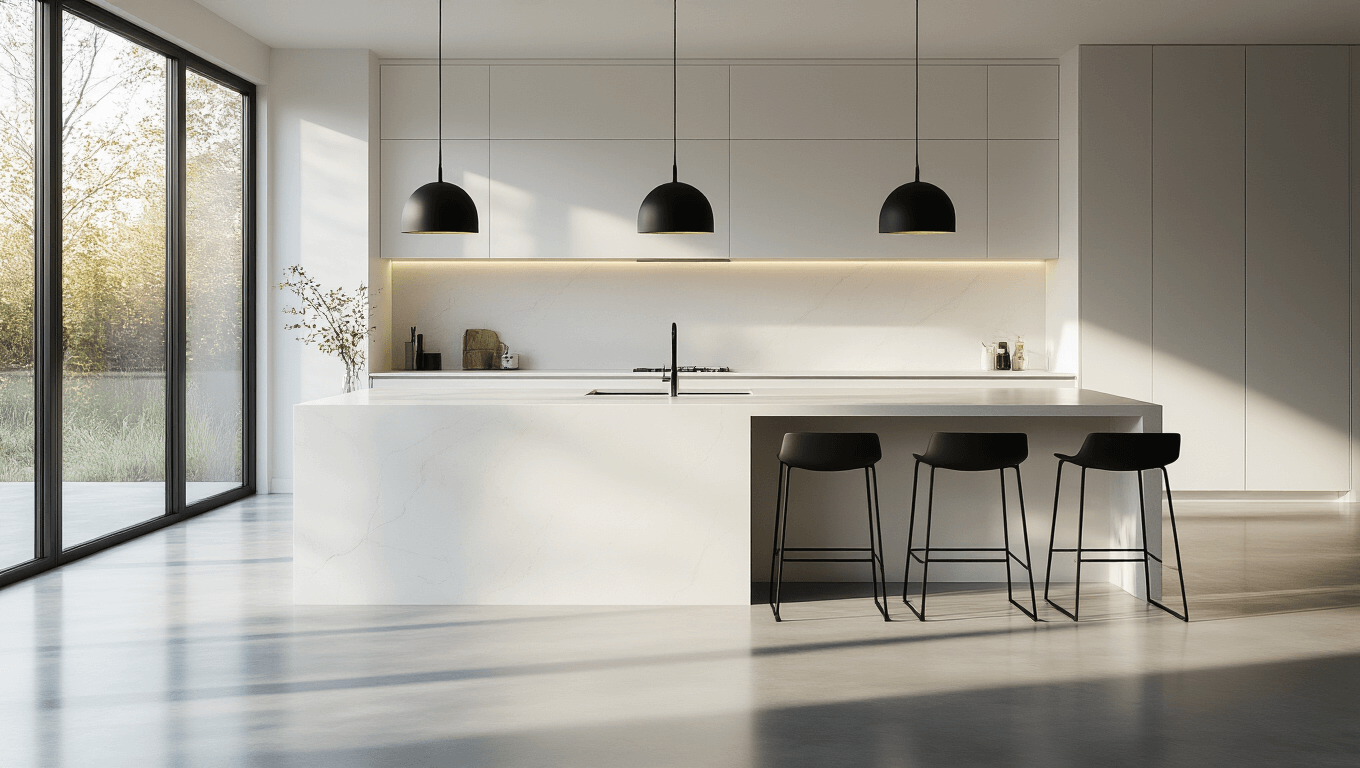
Why Your Kitchen Probably Needs an Island (Even If You Think It’s Too Small)
Contents
Let me guess. You’re standing in your kitchen right now, mentally measuring the space between your counter and the opposite wall, convinced there’s no way an island would fit.
I hear this constantly.
But here’s what most people don’t realize: islands come in every size imaginable, from massive custom kitchen islands that anchor sprawling open-concept spaces to slim rolling kitchen carts that tuck away when you need floor space.
The question isn’t whether an island will fit. The question is which style works for your layout, your budget, and your daily routine.
Project Overview: What You’re Actually Getting Into
Quick Style Snapshot
- Time needed: 1-2 weeks for planning and installation (or one afternoon for a mobile cart)
- Estimated cost range: $500–$5,000+ depending on whether you go DIY or custom
- Ideal space size: 70+ square feet for permanent installations; any size works with mobile options
- DIY skill level: Beginner to Expert (plenty of options at every level)
- Seasonal appeal: Year-round functionality with endless styling possibilities
Design Identity
Kitchen islands work across virtually every aesthetic you can imagine.
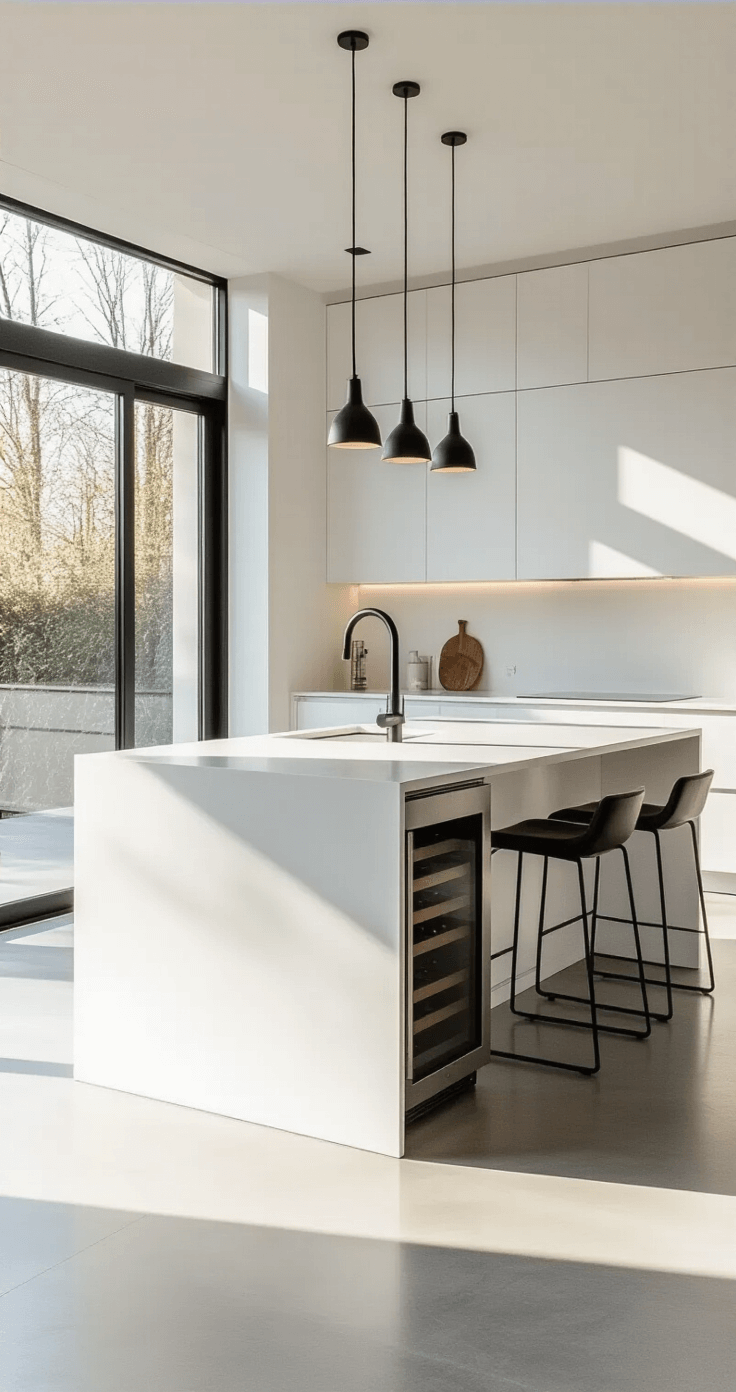
Sleek modern minimalist? Check.
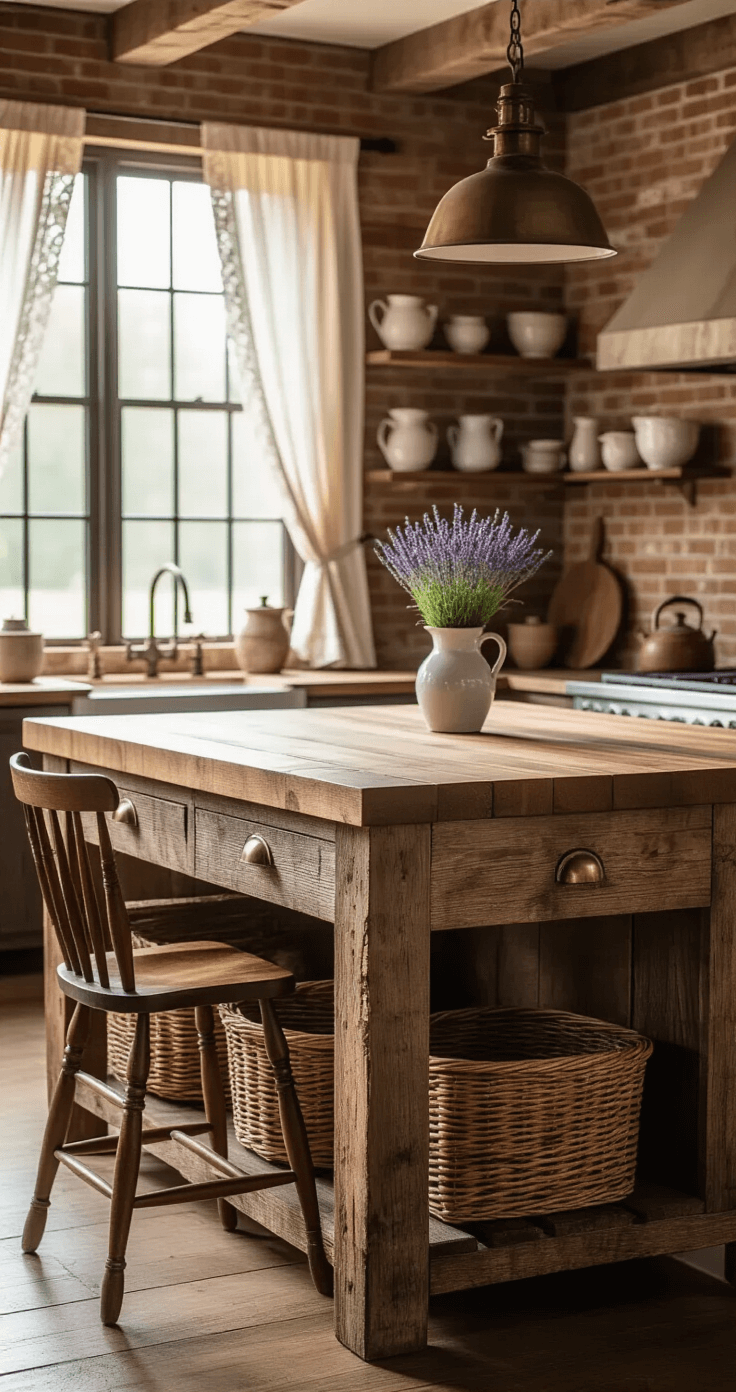
Cozy farmhouse with distressed wood? Absolutely.
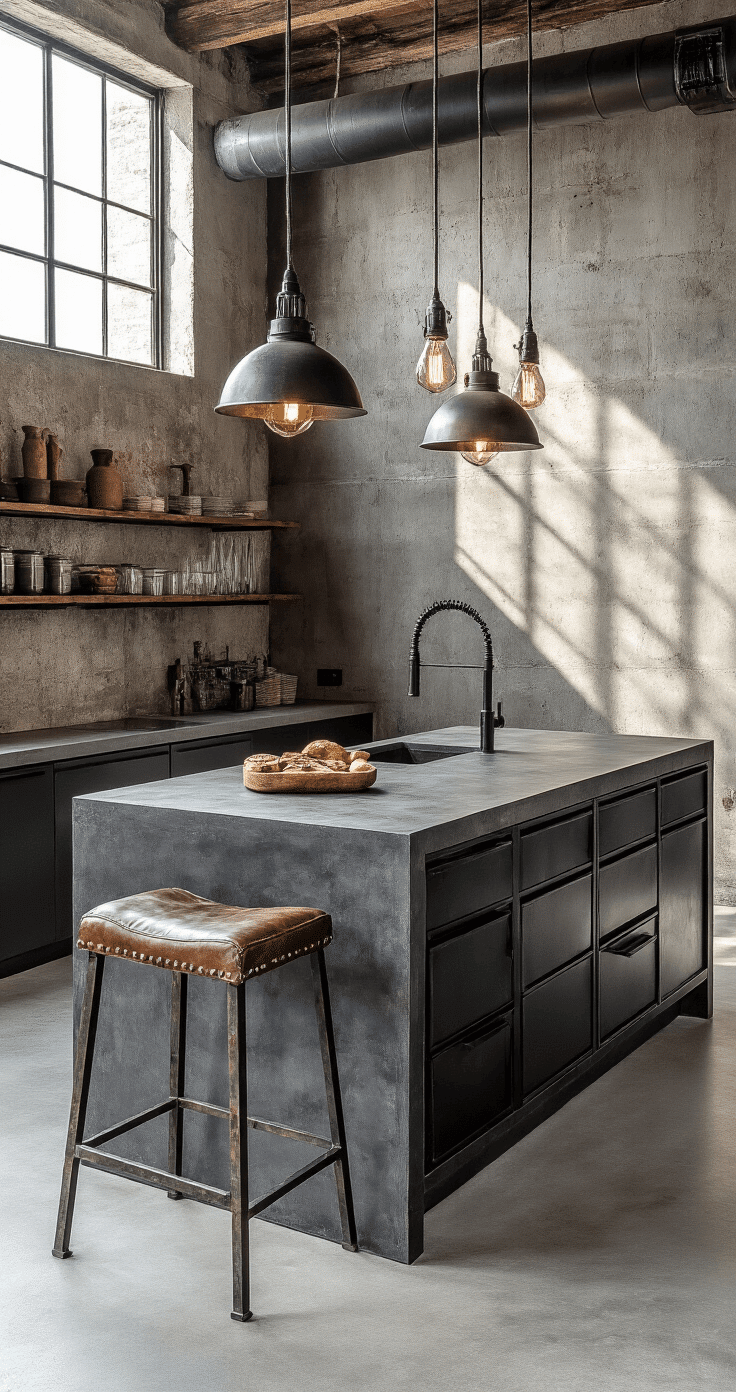
Industrial chic with metal accents? You bet.
The secret is choosing materials, finishes, and styling that complement your existing kitchen rather than fighting against it.
Understanding Your Kitchen Layout (Because Not All Islands Are Created Equal)
U-Shaped Kitchens: The Island Sweet Spot
U-shaped kitchens are practically begging for an island.
You’ve got three walls of cabinetry forming that classic “U” shape, which means the center of your kitchen is just sitting there, waiting to be useful.
Here’s how to nail the placement:
- Position your island parallel to the longest leg of the “U” for visual symmetry
- Maintain that sacred 3-4 feet of clearance between the island and your counters (trust me, you need it for opening drawers and not bumping into your partner during dinner prep)
- Consider placing the island just outside the open side of the “U” to create a fourth wall dedicated entirely to seating
This setup preserves your work triangle—that efficient path between sink, stove, and refrigerator that professional kitchens live and die by.
L-Shaped Kitchens: Opening Up Your Space
L-shaped layouts with islands shine in open-concept homes.
I’ve seen these transform cramped, closed-off kitchens into spaces that flow seamlessly into living and dining areas.
Strategic positioning tips:
- Place the island opposite the longer leg of the “L” to maximize flow and create visual balance
- Try a diagonal placement to open up sightlines and maintain your work triangle—an elongated oval-shaped island works beautifully here
- Use the island as a natural transition between kitchen and living spaces
- Add seating on the side facing your living area for casual meals and conversation
This approach turns your island into more than just kitchen real estate. It becomes the bridge between different zones in your home.
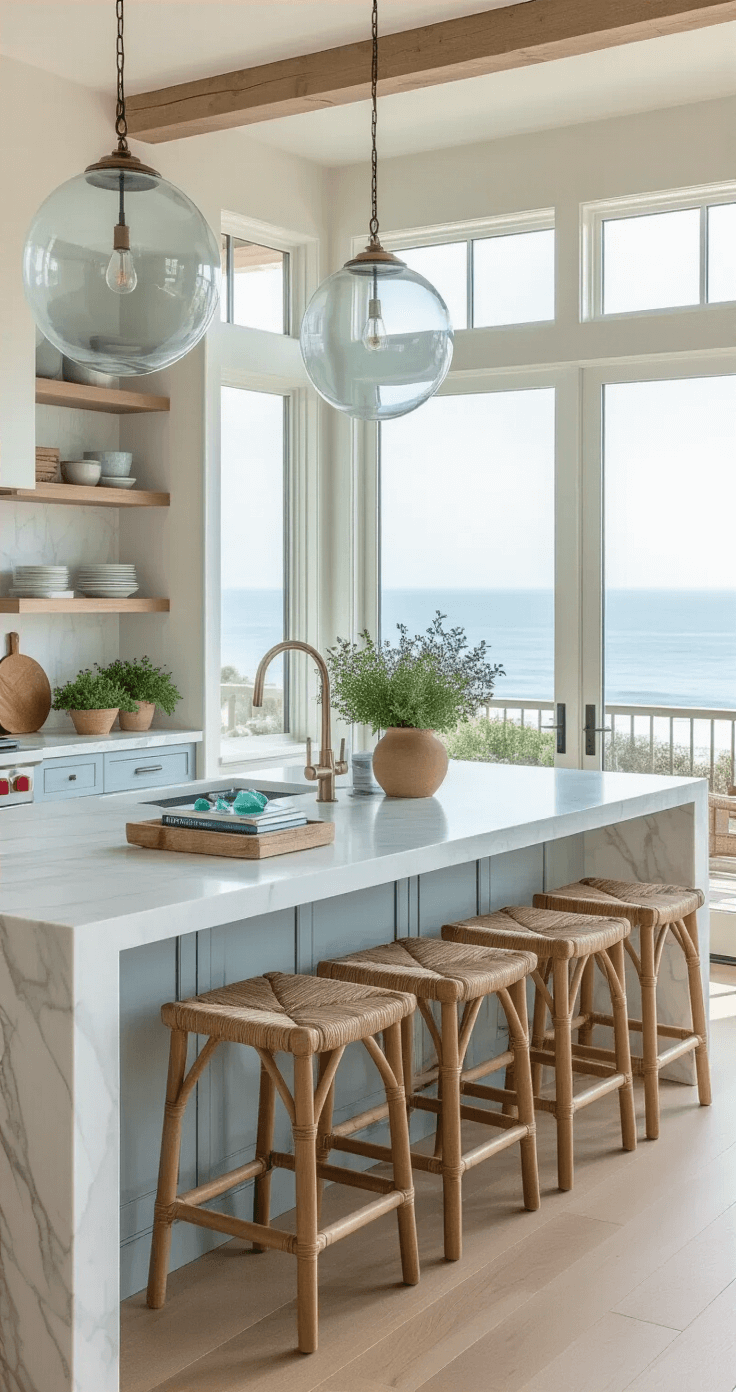
Galley Kitchens: Yes, Islands Can Work Here Too
Long, narrow galley kitchens present unique challenges.
But they also offer surprising opportunities for the right island.
What works in galley spaces:
- Slim islands that don’t obstruct the natural flow down the corridor
- Waterfall countertop islands that create a modern, seamless look while extending sightlines
- Hidden storage and integrated appliances that maximize every inch
- Stools that tuck completely under the island overhang when not in use
The key is proportion. Your island should enhance movement through the space, not create an obstacle course.
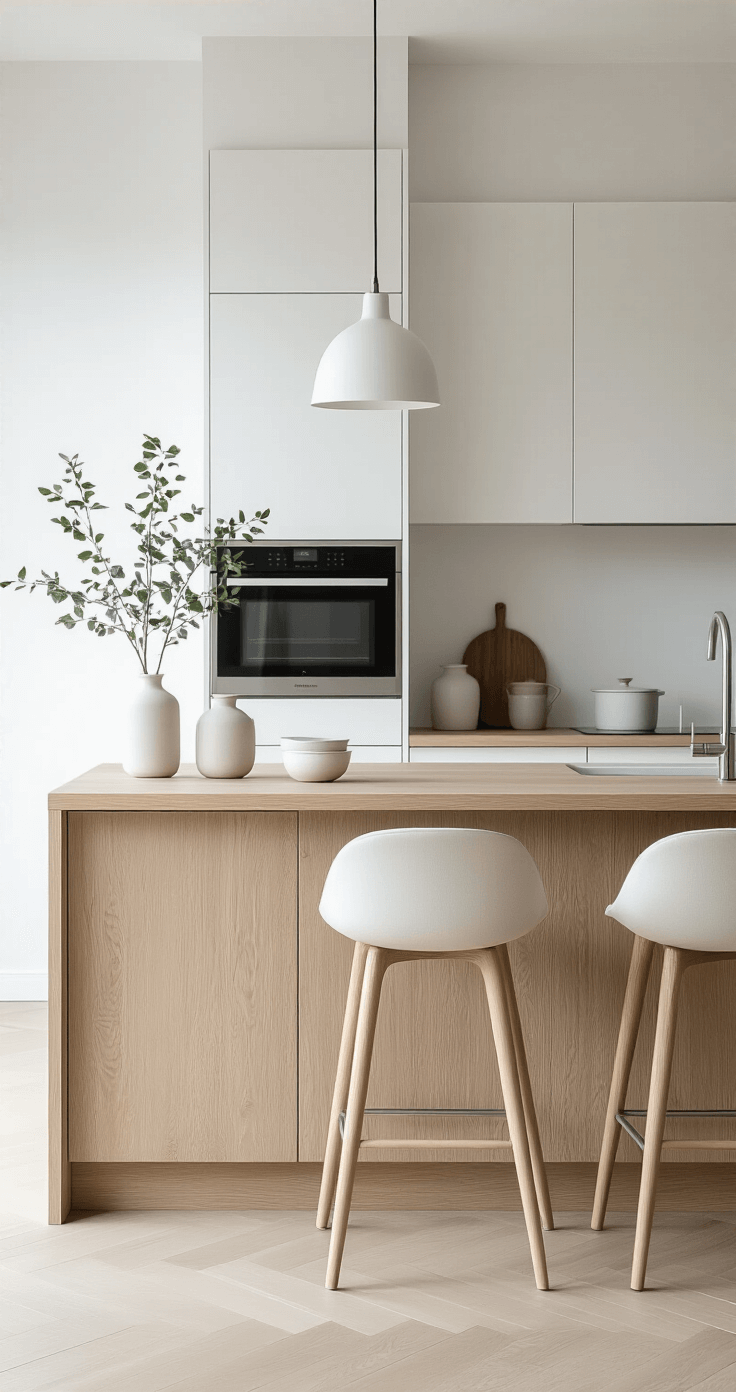
Small Kitchens: Size Doesn’t Have to Stop You
This is where creativity really counts.
Even compact kitchens benefit from a well-chosen island—you just need to think differently about what an “island” means.
Small-space solutions:
- Narrow butcher block carts that offer extra prep space without permanently claiming floor area
- Mobile islands you can roll out when cooking and tuck away afterward
- Slim tables that function as both island and dining surface
- Open shelving and light colors that keep the space feeling airy
I’ve seen 8×10 kitchens transformed by nothing more than a 24-inch-wide cart with a butcher block top.
Sometimes that’s all you need.
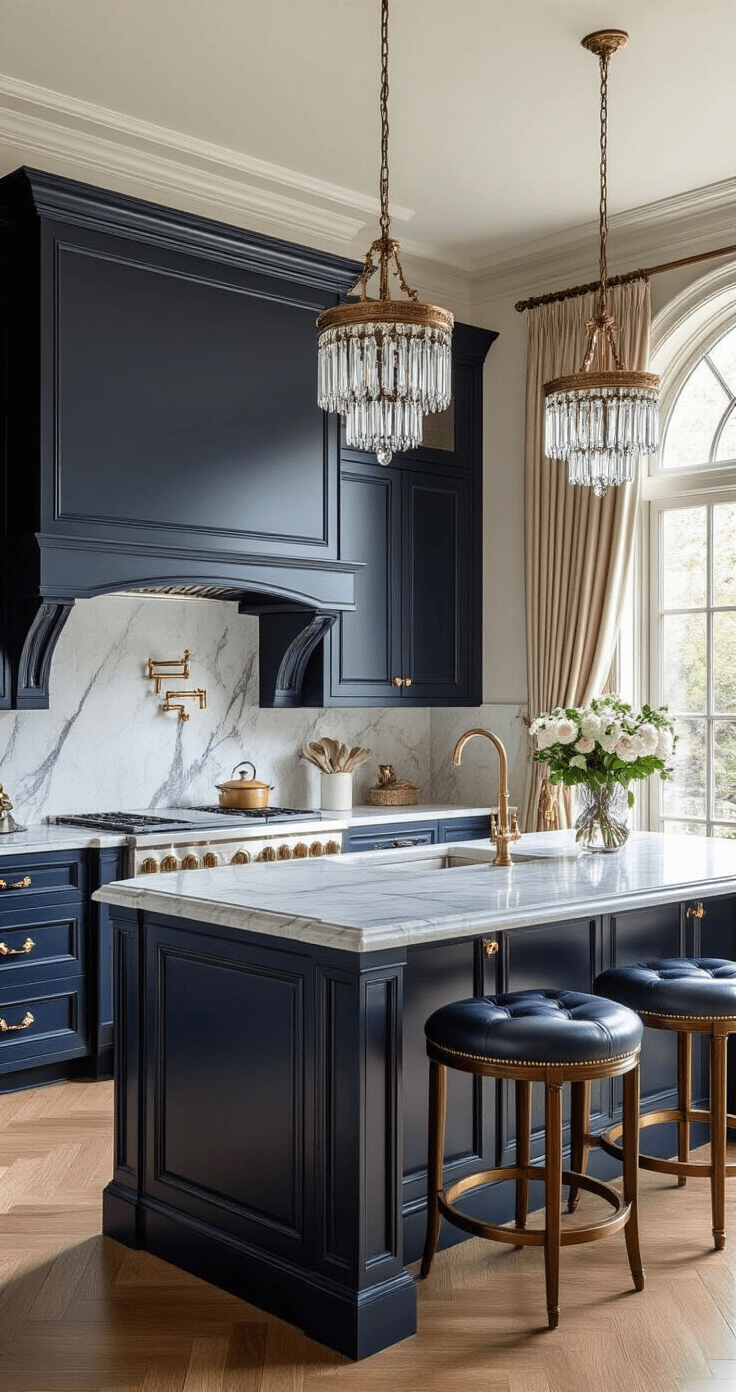
Storage Solutions That’ll Make You Wonder How You Lived Without Them
This is where islands really earn their keep.
Standard perimeter cabinets are great, but they force you to bend, reach, and dig through layers of pots to find what you need.
Islands put storage right at waist height, exactly where you’re already working.
Deep drawers are kitchen gold.
They hold more than you’d think—stand mixers, stockpots, small appliances you use weekly but not daily.
Pull out a drawer, grab what you need, push it closed. No excavation required.
Back-of-island storage needs careful planning.
- Standard door cabinets work perfectly if you’re not adding seating
- Shallower cabinets on both sides allow stools to tuck underneath
- Half doors
This post may contain affiliate links. Please see my disclosure policy for details.


