

How to Transform Your Attic Into a Bedroom Sanctuary You’ll Never Want to Leave
Attic bedroom ideas start with one simple truth: that awkward space under your roof can become the most enviable room in your house.
I’ve seen too many people treat their attics like forgotten storage dungeons when they’re sitting on prime real estate.
Those sloped ceilings you think are a problem?
They’re actually your secret weapon for creating a cozy retreat that flat-ceiling bedrooms can only dream about.
Why Your Attic Bedroom Feels Wrong (And How to Fix It)
Most attic bedrooms fail because people fight the architecture instead of working with it.
You can’t treat an attic like a regular bedroom and expect magic to happen.
The slanted walls, limited floor space, and weird angles need a completely different approach.
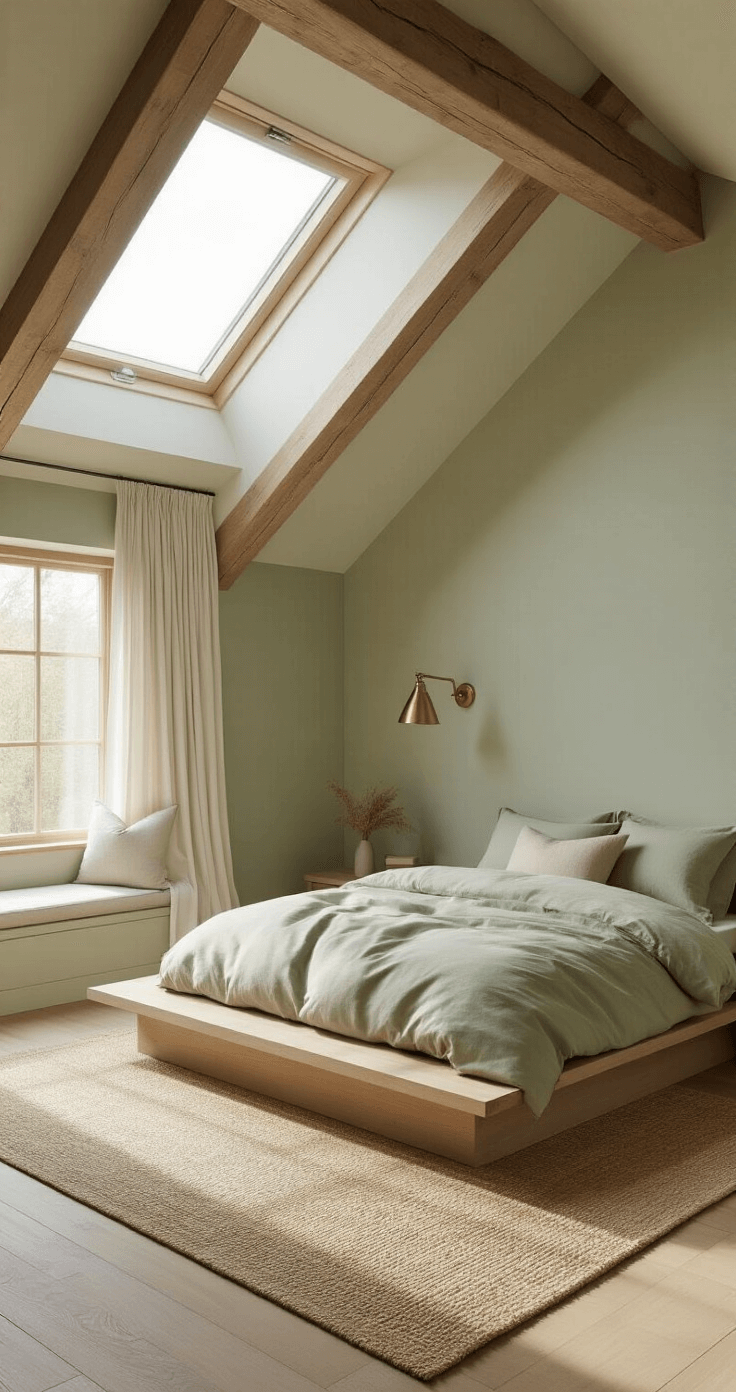
Here’s what actually works:
- Embrace the coziness instead of trying to make it feel like a cathedral
- Use the low ceiling areas for storage and sitting spots, not walking paths
- Let natural light do the heavy lifting for making the space feel bigger
- Choose furniture that fits the proportions instead of standard pieces that crowd the room
I learned this the hard way when I first converted my own attic.
I crammed in a king-sized bed, full-height dressers, and wondered why it felt like a furniture warehouse.
The Bright and Airy Approach (My Personal Favorite)
White walls and skylights changed everything for me.
I painted over the dark wood paneling everyone said was “charming” and installed skylight blinds that let me control the light.
Suddenly, I had a space that felt twice as big.
The trick is layering different whites and creams so it doesn’t look sterile:
- Warm white on the walls
- Cream-colored bedding
- Light wood or white-washed floors
- Natural fiber rugs to add texture
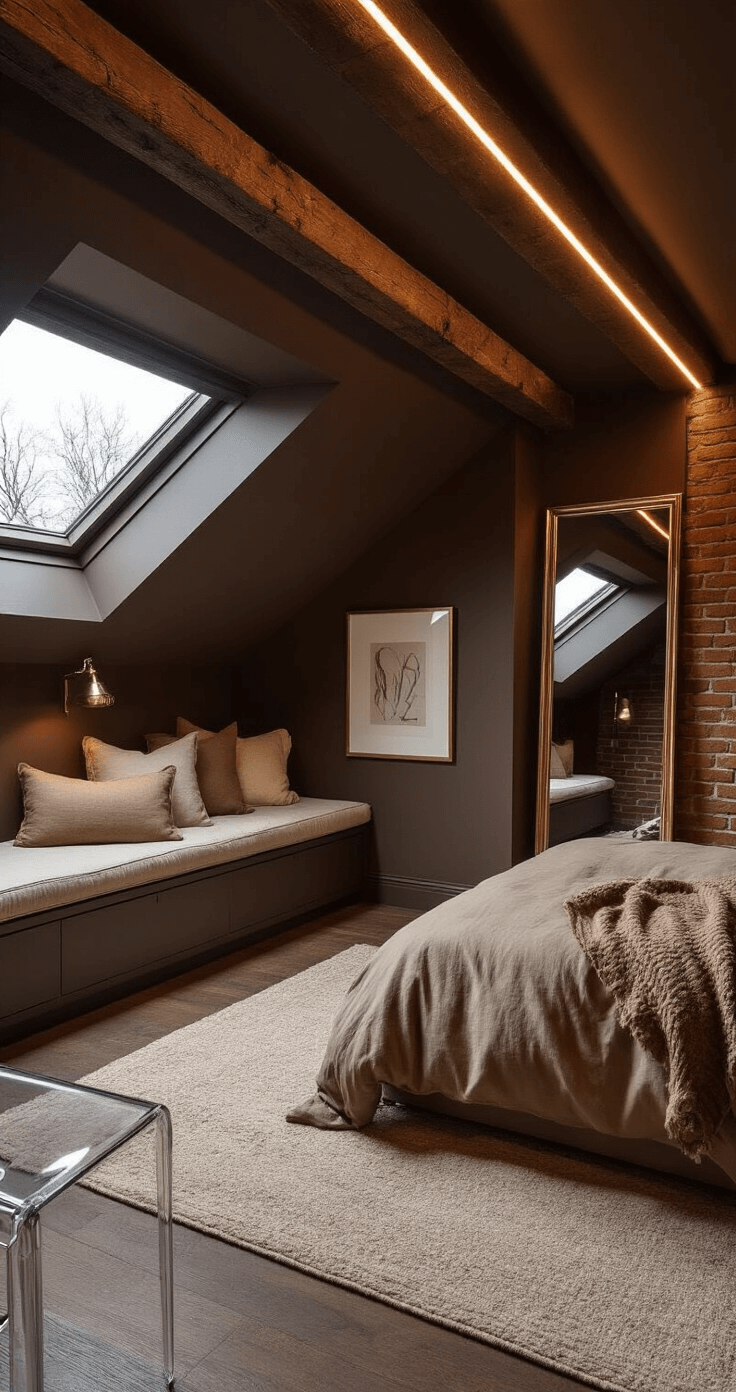
Natural light multipliers that actually work:
Position a full-length floor mirror opposite your skylights to bounce light around the room.
I placed mine at an angle in the corner and it literally doubled the brightness.
Glass or lucite furniture keeps sight lines open.
That acrylic desk chair I was skeptical about turned out to be genius because it doesn’t visually crowd the space.
When Dark and Moody Actually Works Better
My friend Sarah went the opposite direction and I was wrong to doubt her.
She painted her attic bedroom in deep charcoal with chocolate brown accents.
It looks like a luxury hotel suite now.
The cocooning effect is real when you:
- Use dark colors only if you have enough natural light during the day
- Balance dark walls with light bedding and floors
- Add warm metallics like brass or copper instead of chrome
- Layer in plenty of soft textiles so it doesn’t feel cold
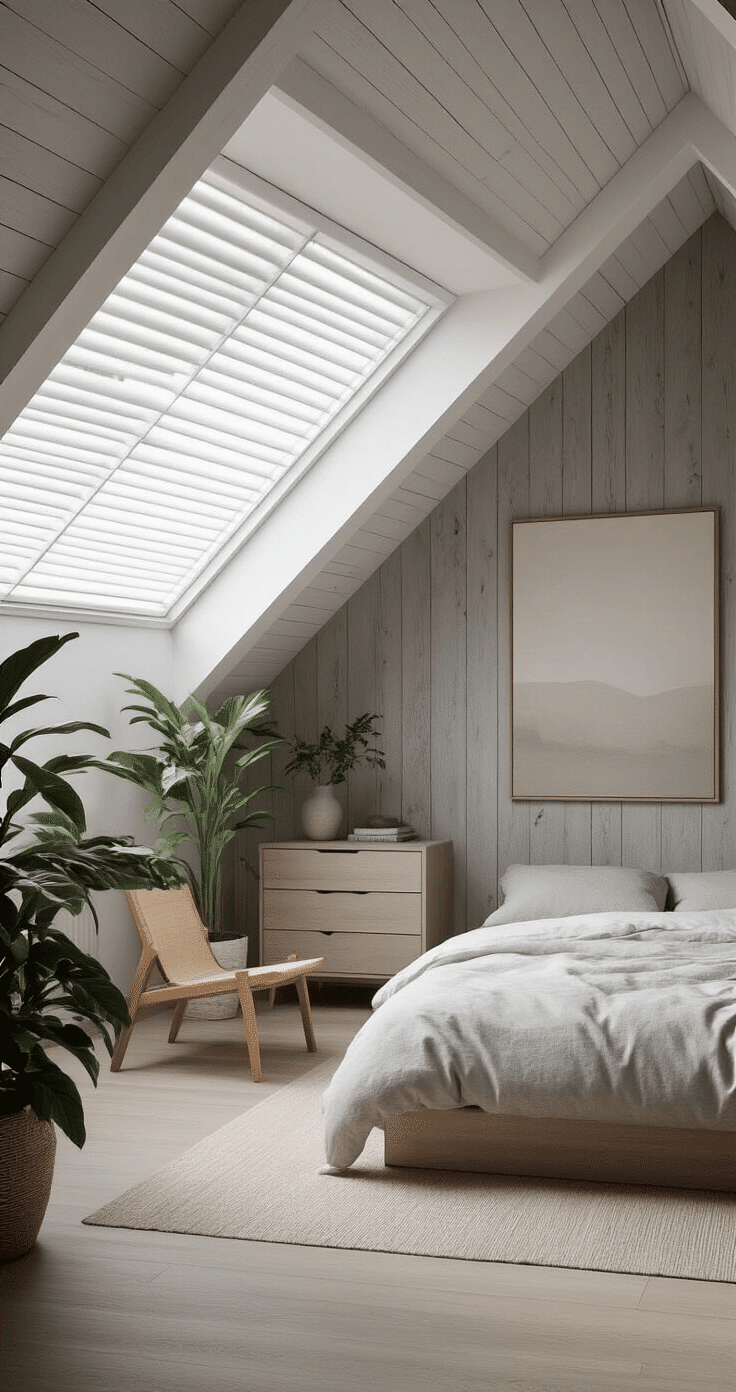
She installed dimmable LED strip lights along the ceiling beams.
At night, it creates this warm glow that makes the dark colors feel sophisticated instead of dungeon-like.
The key is controlling the mood with lighting, not fighting against darkness.
Furniture Placement That Doesn’t Make You Hate Your Life
Stop putting furniture where it “should” go.
Your bed doesn’t need to be centered on a wall because you don’t have full walls to center it on.
I put mine directly under the highest point of the ceiling, with the headboard against the knee wall.
This creates natural nightstand spaces in those awkward low-ceiling spots on either side.

The furniture hierarchy that actually makes sense:
- Bed placement first – under the peak or under a skylight
- Low-profile storage – under eaves and sloped areas
- Seating areas – in corners where ceiling height drops
- Tall furniture – only where you have full ceiling height
That low-profile platform bed frame I resisted buying turned out to be essential.
Regular height beds make you feel like you’re constantly ducking.
Storage solutions for the weird spaces:
Built-in drawers under the eaves are worth every penny.
I had a carpenter build pull-out units that slide right into the knee wall spaces.
If you’re not ready for custom work, those rolling storage bins work almost as well.
Just make sure they’re on wheels because you’ll be pulling them in and out constantly.
Creating Cozy Nooks That Serve Multiple Purposes
The absolute best decision I made was turning the lowest ceiling corner into a reading nook.
I can’t stand up there anyway, so why pretend it needs to be walking space?

Here’s my exact setup:
- A cushioned window seat with storage underneath
- A small side table that tucks perfectly into the sloped area
- A swing-arm wall lamp that doesn’t
This post may contain affiliate links. Please see my disclosure policy for details.


