Why Blue Actually Works (And Why You’re Smart to Consider It)
Blue isn’t just pretty—it’s scientifically proven to lower your heart rate and blood pressure. Your bedroom should be a sanctuary, and blue delivers that calm, serene vibe without trying too hard.
I’ve noticed something interesting: people sleep better in blue rooms. Not because I’m some sleep scientist, but because every single person who’s stayed in my blue guest room mentions how well they slept.
The real magic? Blue works with almost everything you already own.
Light Blues: When You Want Airy Without Boring
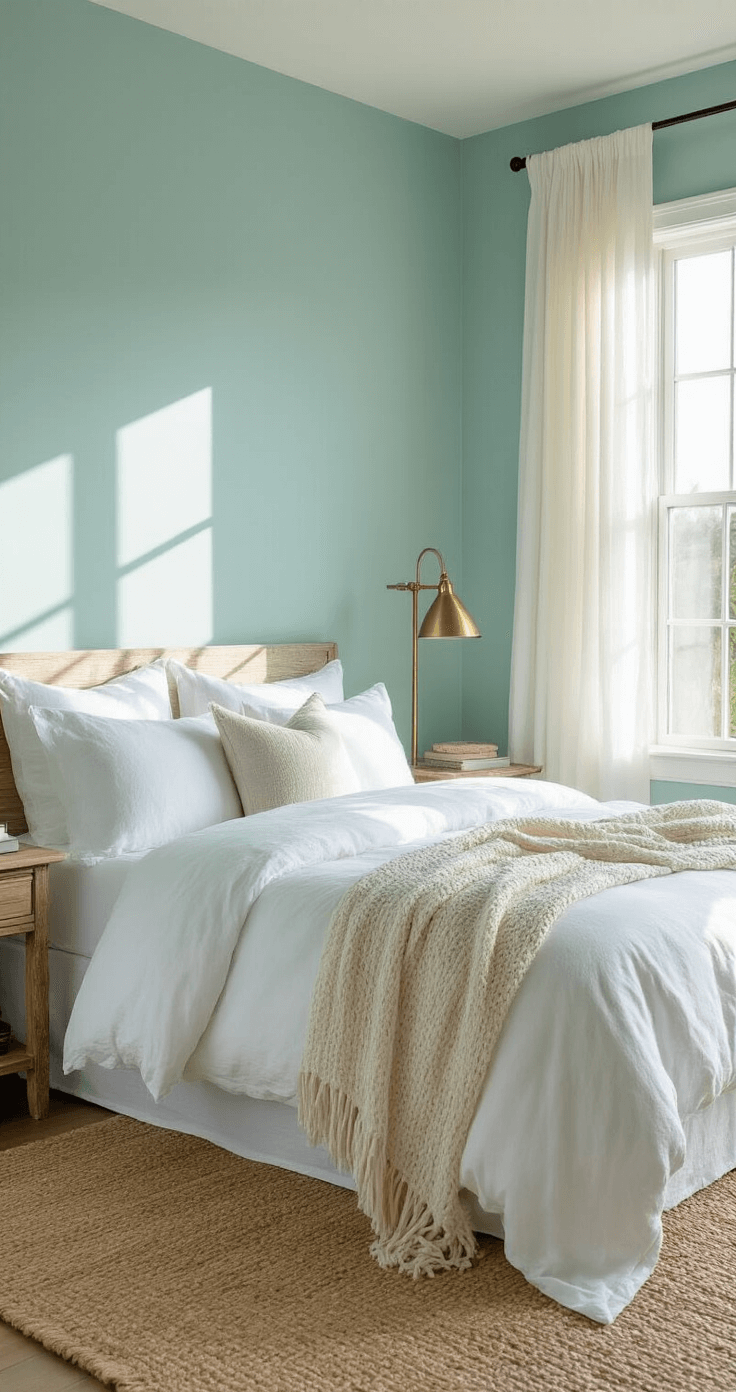
Light blue shades are your safety net—they’re forgiving, space-expanding, and remarkably sophisticated when done right.
Think Snow Crystal or Dream Of Flying tones that whisper rather than shout.
Here’s what I’ve learned about pale blues:
- They make small bedrooms feel twice their actual size
- Morning light turns them absolutely magical
- They’re the perfect backdrop when you can’t commit to bold color
- They never photograph badly (important if you’re the Instagram type)
Pro tip: Pair your light blue walls with white duvet covers and you’ll create that hotel-luxe feeling everyone craves.
Making Light Blues Work Harder
Don’t just slap pale blue on walls and call it done. That’s amateur hour.
Layer in texture:
- Linen curtains in cream or soft gray
- A chunky knit throw blanket in charcoal
- Wooden furniture with visible grain
- Brass or gold hardware on dressers and nightstands
The texture saves you from looking washed out.
Mid-Tone Blues: The Goldilocks Zone
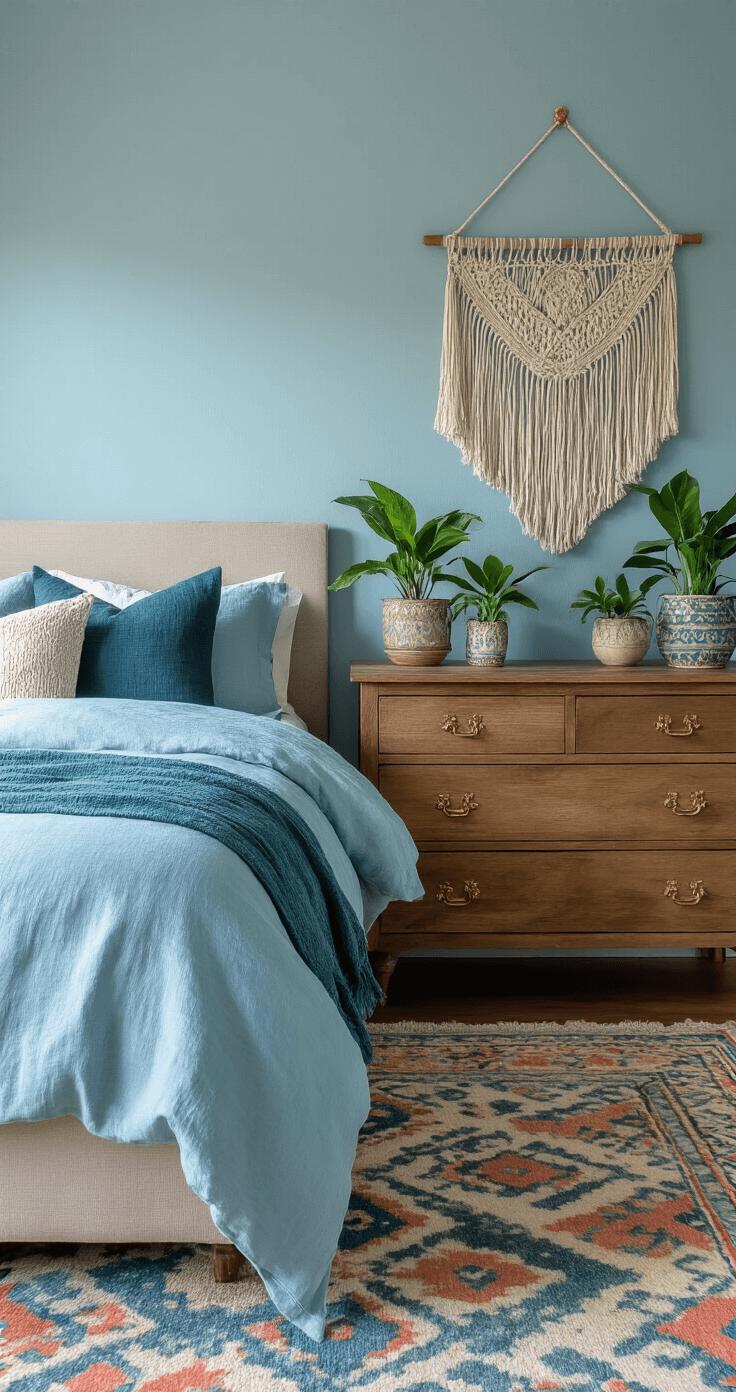
Duck Egg Blue and Water Lily shades sit in that perfect middle ground—colorful enough to make a statement, subtle enough to live with for years.
These are the blues I recommend when someone says, “I want color but I’m terrified.”
Mid-tone blues have personality without screaming for attention. They work morning, noon, and night, which matters more than design magazines admit.
I used a shade called Acapulco Cliffs in my main bedroom three years ago. Every single morning, I wake up and don’t hate my walls. That’s the test, honestly.
What to pair with mid-tone blues:
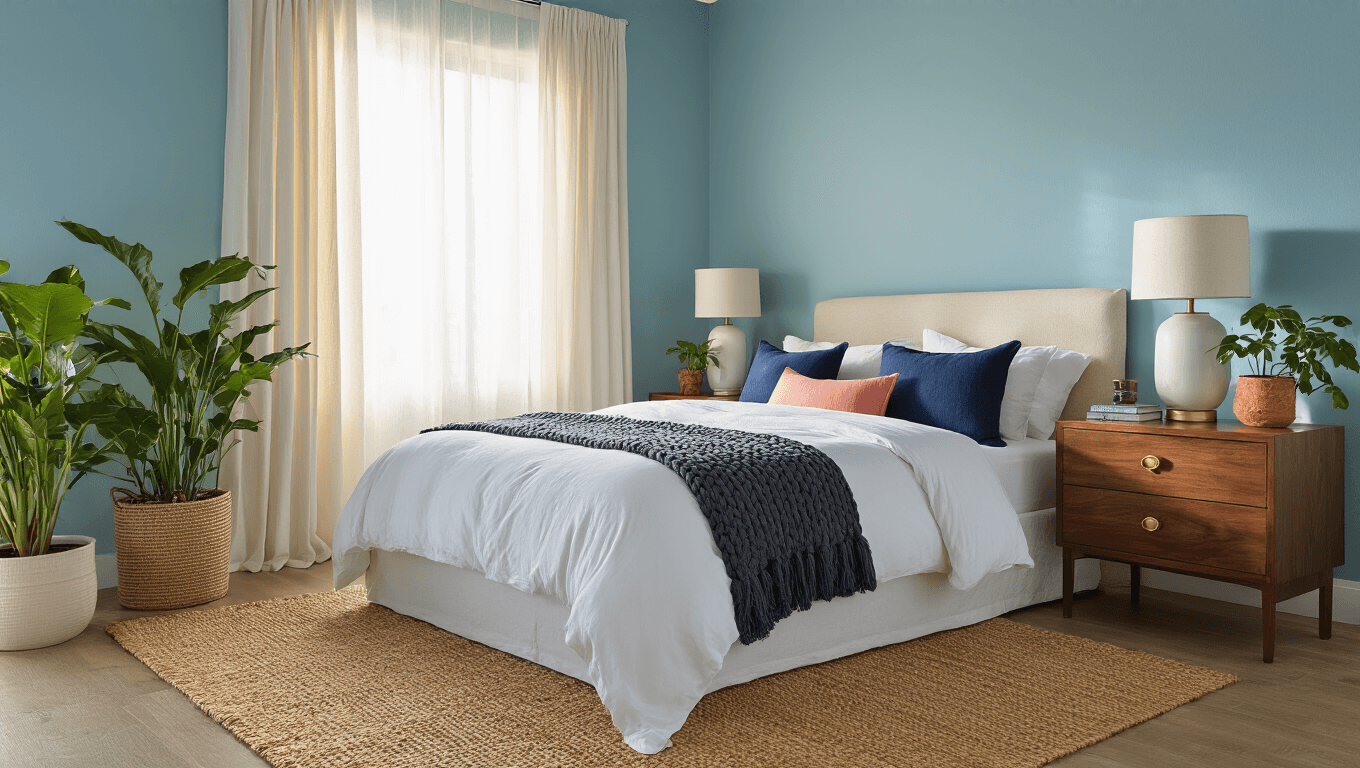
- Crisp white bedding (always, always white bedding)
- Natural fiber area rugs in jute or sisal
- Warm wood tones—walnut, oak, anything with richness
- Small doses of coral or blush pink for contrast
- Plants, lots of plants
Save this article
Enter your email and we'll send it straight to your inbox.
Dark Blues: For People Who Actually Have Courage
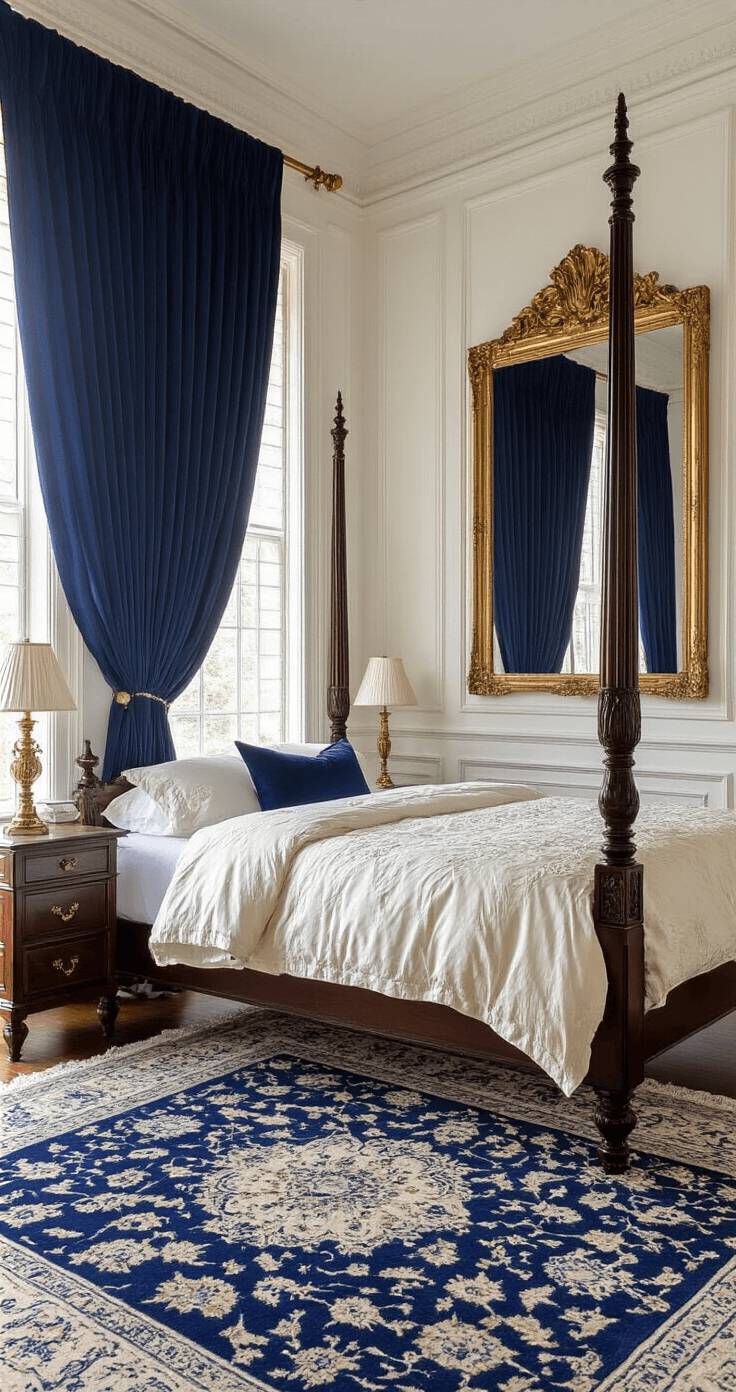
Navy, Wing Commander, and Nightcap shades are not for the faint of heart. They’re dramatic, moody, and absolutely stunning when you nail the lighting.
Dark blue bedrooms feel like expensive hotel rooms. Cocoon-like. Sophisticated. Slightly dangerous.
But here’s the reality check: dark blue in a small, poorly-lit room feels like a cave. And not the cool kind.
When Dark Blue Actually Works
You need these conditions:
- A room with at least two windows
- Ceiling height of at least 9 feet (preferably higher)
- Commitment to excellent lighting
- White or cream trim to break up the intensity
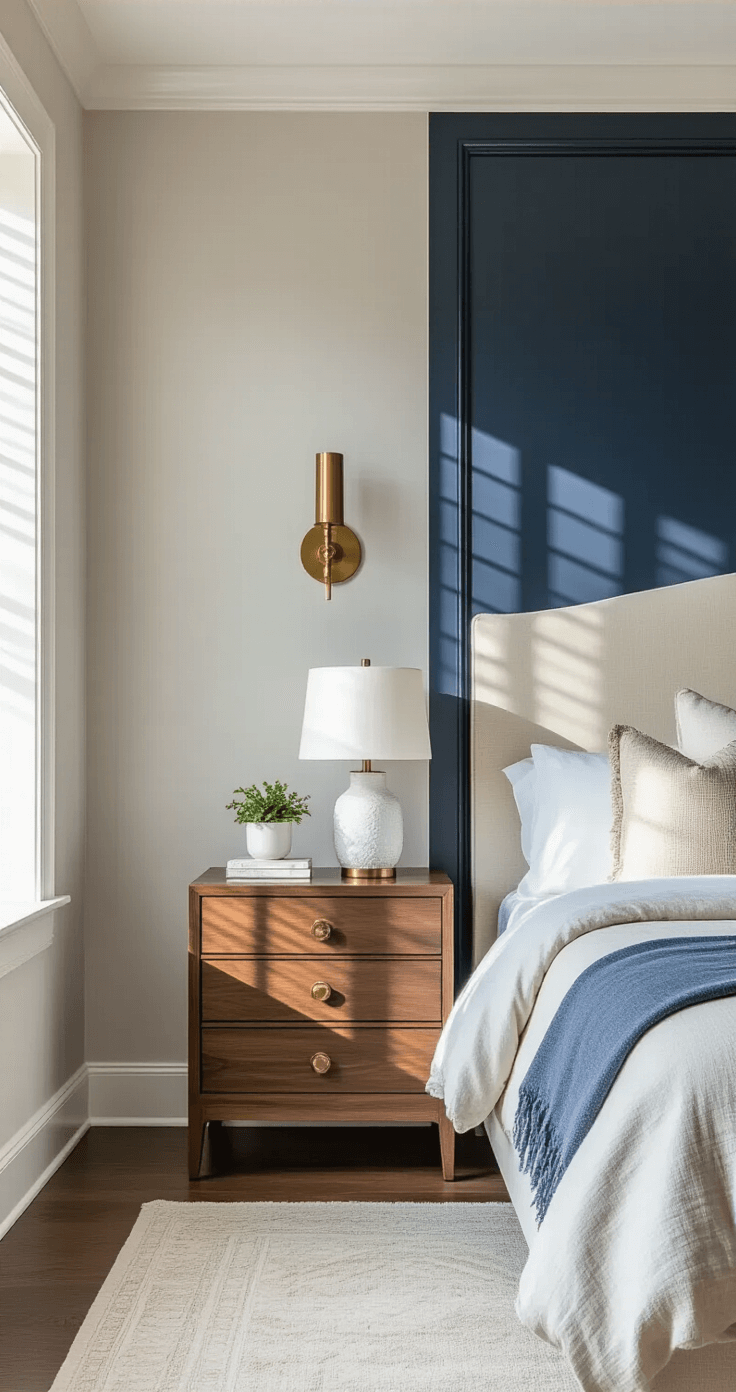
I visited my friend Sarah’s bedroom last month—full navy walls with white crown molding and brass wall sconces. Absolutely jaw-dropping. But she spent real money on lighting, which made all the difference.
The dark blue essentials:
- Multiple light sources (overhead, bedside, accent)
- Large mirrors to bounce light around
- White or cream bedding (sensing a theme?)
- Metallic accents in brass, gold, or copper
- One statement piece of art in warm tones
The Feature Wall Compromise
Can’t commit to four blue walls? Fair enough.
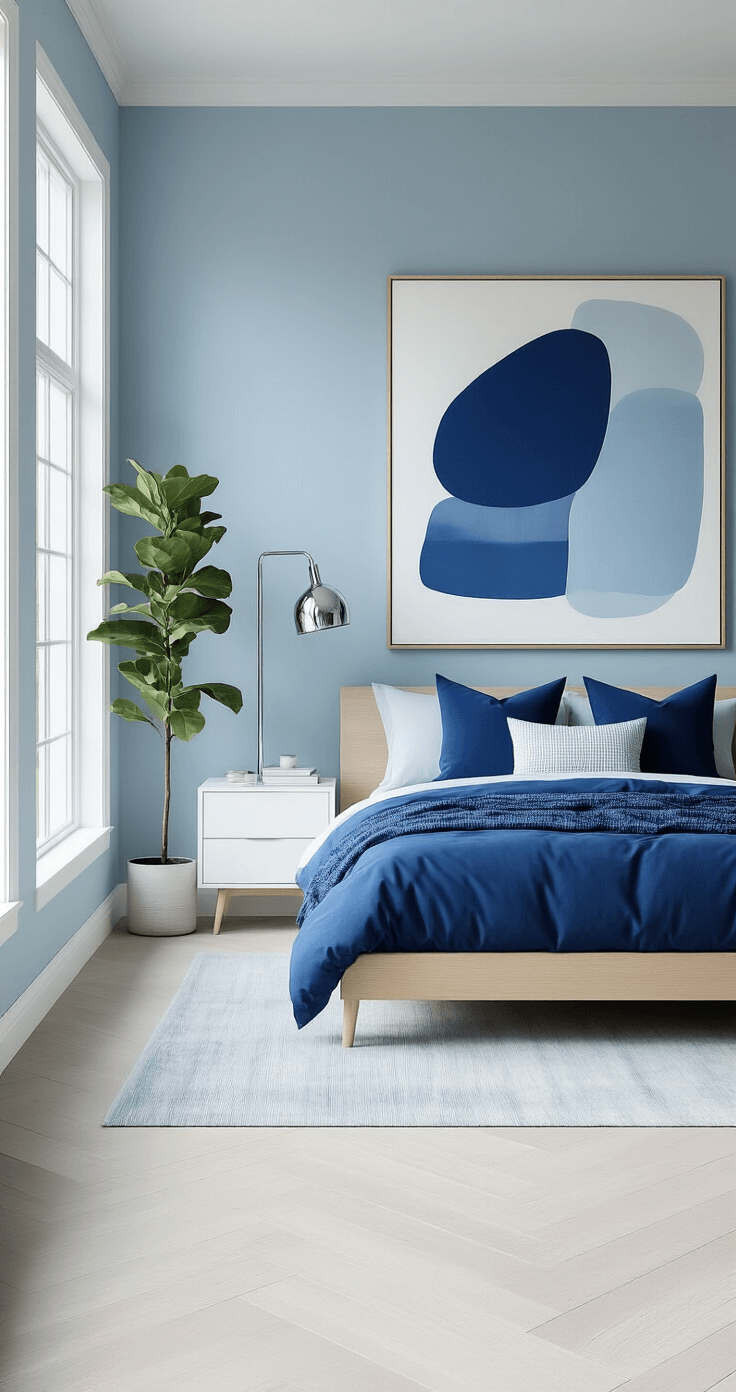
A blue feature wall behind your bed gives you impact without overwhelming the space.
I’m generally skeptical of accent walls—they often look indecisive. But behind a bed with a substantial headboard? That actually works.
Choose your darkest, boldest blue for this approach. Go big or go home. A wimpy feature wall is worse than no feature wall.
Pair your blue feature wall with:
- The other three walls in soft white or pale gray
- A tall upholstered headboard in cream or light gray
- Symmetrical nightstands in natural wood
- Matching table lamps (please, matching)
Tonal Blue: When You’re Feeling Brave and Coordinated
Tonal decorating with blues means layering different shades together—light blue walls, medium blue bedding, dark blue accents.
This is advanced-level stuff. But when it works, it’s magazine-worthy.
The trick is varying the intensities without creating chaos:
- Start with your wall color as the baseline
This post may contain affiliate links. Please see my disclosure policy for details.