
Boys Bedroom Ideas That Actually Work (Without Turning Into a Design Disaster)
Boys bedroom ideas need to walk a tightrope I’ve learned the hard way.
You want a space that screams personality without looking like a toy store exploded.
A room that feels mature enough for a teenager but still captures what makes your kid uniquely them.
I’ve watched too many parents invest thousands into themed nightmares that their sons outgrow in eighteen months flat.
The secret? Build smart, style flexible, and let personality shine through swappable pieces rather than permanent fixtures.
Why Most Boys Bedrooms Miss the Mark (And How to Fix Yours)
Walk into most boys’ rooms and you’ll see one of two extremes.
Either it’s a beige box with zero personality, or it’s a cartoon character explosion that screams “I’m seven years old” when your kid is pushing thirteen.
Neither approach works long-term.
The bedroom should be his retreat—a space where he actually wants to hang out, study, and decompress after school.
I’ve styled dozens of boys’ bedrooms, and the ones that succeed share three non-negotiables:
- Neutral foundation pieces that won’t need replacing as tastes evolve
- Bold personality injections through easily changeable accessories
- Functional zones for sleeping, studying, and whatever hobby currently has his attention
Think of it like building a house: solid bones, flexible finishes.
Start With Furniture That Won’t Betray You in Two Years
Your biggest investment needs to be timeless pieces that transcend trends.
The bed matters most.
Skip the race car beds and themed monstrosities that scream “kid zone.”
Instead, grab a quality upholstered bed in charcoal, navy, or neutral linen.
These work whether he’s into dinosaurs at eight or indie music at sixteen.
I’ve seen platform beds with clean lines last kids from middle school straight through college moves.
Pair it with a solid dresser.
Look for pieces with interesting hardware—brushed brass, matte black, or industrial pulls that add character without screaming a specific style.
A neutral dresser in grey, white, or natural wood becomes the backdrop for whatever phase comes next.
Nightstands create symmetry and function.
Flanking the bed with matching nightstands creates that pulled-together look that makes the room feel intentional rather than haphazard.
Choose simple designs with at least one drawer for corralling the inevitable clutter of charging cables, books, and whatever else accumulates.
The Feature Wall Strategy That Changes Everything
Here’s where you inject serious personality without commitment.
The wall behind the bed is your playground.
This single surface can transform the entire room’s vibe while leaving the other three walls neutral and calm.
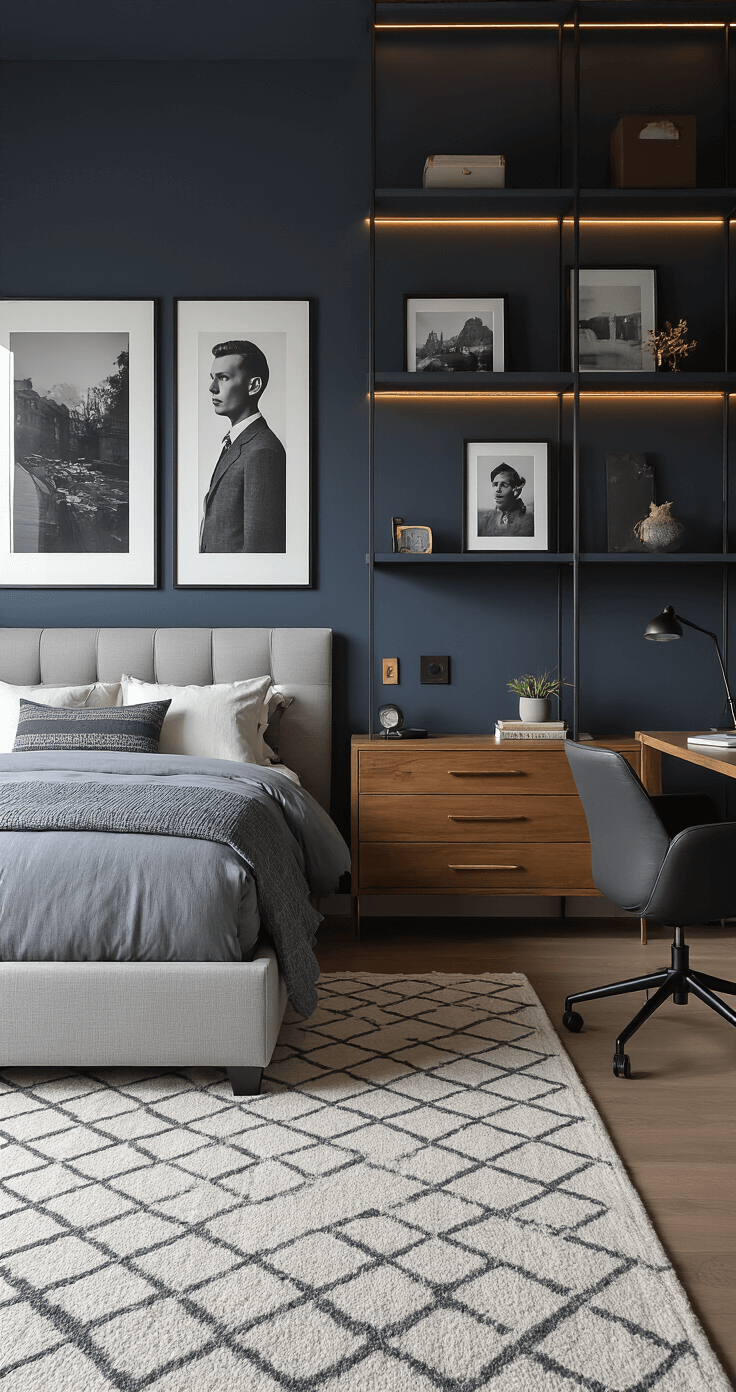
I’ve used board and batten paneling painted in deep navy for a sophisticated, grown-up feel.
Save this article
Enter your email and we'll send it straight to your inbox.
Shiplap works beautifully for industrial or farmhouse vibes.
Peel-and-stick wallpaper has become my secret weapon—it goes up easily, comes down cleanly, and gives you flexibility as interests shift.
Three feature wall approaches that actually work:
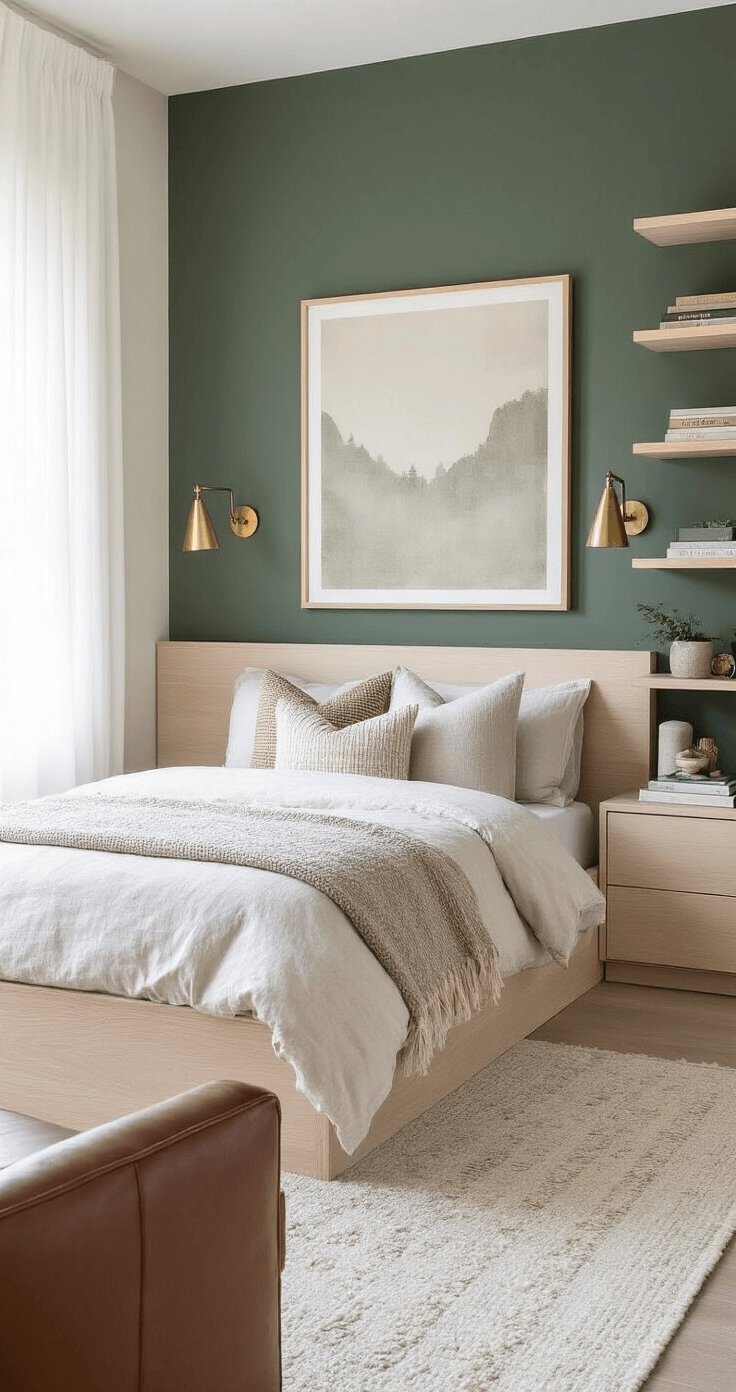
- Bold paint color – While keeping other walls neutral (soft grey, warm white, greige), hit that back wall with deep forest green, charcoal, burnt orange, or navy blue. The contrast creates instant depth.
- Textured paneling – Board and batten, shiplap, or geometric wood panels add dimension and sophistication that reads mature rather than juvenile.
- Wallpaper or murals – From subtle geometric patterns to topographic maps to music-inspired graphics, wallpaper lets you go bold on one surface without overwhelming the space.
The beauty? Change this wall in a weekend when he transitions from sports obsession to gaming enthusiast to music lover.
The furniture stays. The wall evolves.
Shelving That Does Double Duty (Looking Good While Staying Organized)
Open shelving flanking the bed creates magic.
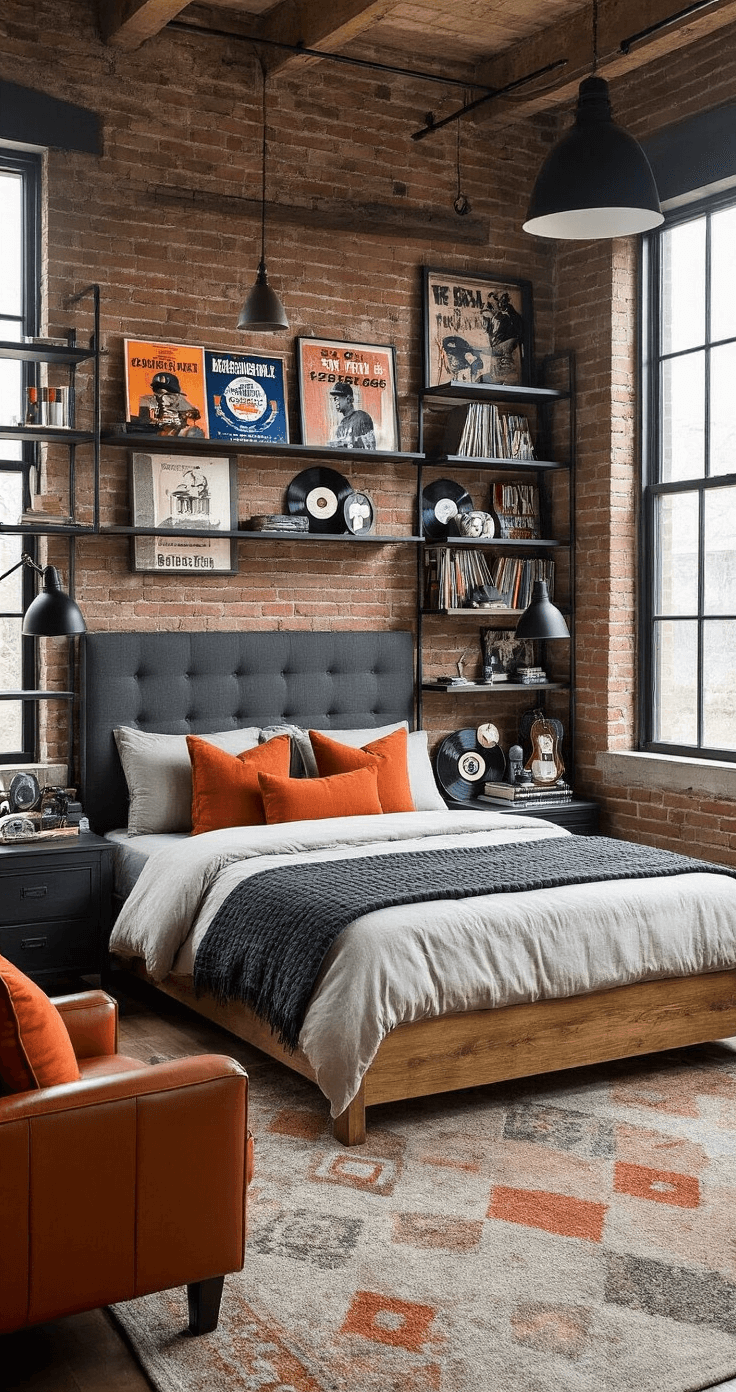
I’m talking floor-to-ceiling shelving units on one or both sides of the bed, turning that whole wall into a functional, personalized display.
This approach accomplishes three things simultaneously:
- It frames the bed beautifully, creating a built-in look even with freestanding units.
- It provides massive storage for books, collections, sports equipment, and school supplies.
- It becomes a curated gallery of what matters to him right now.
How to style these shelves without looking chaotic:
- Bottom shelves: Larger items like storage bins, sports equipment, stacked books
- Middle shelves: Mix of books (spine-out for color), small plants, framed photos, hobby items
- Top shelves: Trophies, collectibles, decorative pieces
The odd-number rule saves your sanity.
Group items in threes and fives rather than pairs or fours.
Three small frames look intentional. Four looks accidental.
Stack books horizontally, then add a small object on top for visual interest.
Leave some shelves partially empty—negative space prevents that cluttered, overwhelming feeling.
Color Schemes That Work Without Looking Like a Preschool
Stick to three or four colors maximum.
This is where most people derail spectacularly.
They see “boys bedroom” and think they need primary colors or cartoon character themes.
Wrong approach entirely.
The most sophisticated boys’ rooms use:
- One neutral base: Grey, charcoal, warm white, greige, or soft beige
- One or two accent colors: Navy and burnt orange, forest green and rust, black and mustard, burgundy and cream
- One metallic: Matte black fixtures, brushed brass hardware, or aged bronze accents
I recently designed a room around charcoal grey walls, rust orange bedding, and black metal shelving.
Mature, masculine, and completely flexible for accessory changes.
Another favorite combo? Soft grey walls, navy feature wall, natural wood furniture, and pops of warm cognac leather.
Colors to approach carefully:
-
This post may contain affiliate links. Please see my disclosure policy for details.